
Connect with us

News

US Senators Seek Nigeria’s Designation As CPC For Religious Intolerance

Published

on

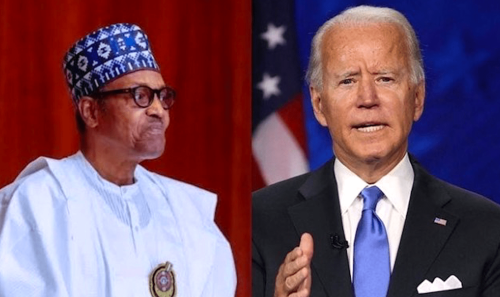
United States of America Senators, Marco Rubio and Josh Hawley have written to President Joe Biden to relist Nigeria as a “Country of Particular Concern” over increasing cases of violence against Christians in the country.

The letter was written by the two US Republican lawmakers and signed by another three senators, Mike Braun, Tom Cotton and Jim Inhofe.

In the letter to the U.S. Secretary of State, Antony Blinken, the senators urged President Biden to immediately reinstate Nigeria as a Country of Particular Concern (CPC) under the International Religious Freedom Act.

The US lawmakers noted that religious violence is still high in Nigeria which had been earlier put on the list of the countries of particular concern with regards to religious violence by President Donald Trump’s administration but was delisted by the current Biden administration.

The letter which was also published on Senator Rubio’s official website reads: “As you are well aware, horrific acts of deadly violence have been committed against Nigerian Christians in recent weeks, including the massacre of churchgoers on Pentecost Sunday and the stoning of a Christian college student. Sadly, such violence has become all too familiar for Christians in Africa’s most populous country.

“Last year, however, you inexplicably removed Nigeria’s designation as a Country of Particular Concern (CPC) despite no demonstrable improvement in the country’s religious freedom conditions. On the contrary, the situation in Nigeria has grown worse. We previously urged you to immediately reverse your misguided decision, and we write today to renew our call.

“Recent high-profile acts of violence underscore the intense religious persecution that is regularly experienced by Nigerian Christians. On Pentecost Sunday, gunmen attacked St. Francis Catholic Church in Nigeria’s Ondo state, reportedly killing at least 50 churchgoers.

“Last month, a violent mob brutally stoned to death Deborah Emmanuel Yakubu, a student at Shehu Shagari College of Education in northwest Nigeria. According to reports, some Islamist students were enraged by a “blasphemous” message Deborah had posted in a WhatsApp group, in which she said that “Jesus Christ is the greatest. He helped me pass my exams.” Merely expressing one’s Christian faith has apparently become tantamount to a death sentence in many parts of Nigeria.

“Religious violence and intolerance directed toward Nigerian Christians has worsened in recent years. One report documented more than 4,650 cases of Nigerian Christians who were killed for their faith in 2021. Accordingly, Nigeria earns the dubious honor—for the second consecutive year—of being the deadliest country on earth for Christians.

“We wrote last year that “not only has the government of Nigeria failed to take meaningful steps to mitigate such violence, but Nigerian authorities restrict and crack down on religious minorities and detain individuals indefinitely on blasphemy-related charges. We remain concerned that the Nigerian government is failing to protect the religious freedom and basic safety of its Christian citizens.

“Furthermore, as this year’s annual reports from the bipartisan U.S. Commission on International Religious Freedom (USCIRF) and from your own Department make clear, Nigerian government authorities directly participate in the persecution of Christians, Muslims, and even non-theists, most notoriously through arrests and convictions under blasphemy laws. Make no mistake: continued enforcement of state-sanctioned blasphemy laws enables the type of deadly violence that killed Deborah Emmanuel Yakubu and so many others.

“When we previously wrote you, we were met with a response which failed to answer our questions about why the State Department views Nigeria as not having engaged in or tolerated “systematic, ongoing, and egregious violations of religious freedom” or even “severe violations of religious freedom.” This is unacceptable, especially because you are required by federal law to consider the recommendation of USCIRF—which, since 2009, has been to designate Nigeria as a CPC. In fact, USCIRF reiterated in its 2022 Annual Report that it was “appalled” at the removal of Nigeria’s CPC designation. Despite public statements from you and other State Department officials condemning the recent bloodshed in Nigeria, the fact remains that the Department still does not officially regard Nigeria as a severe violator of religious freedom.

“The State Department released its 2021 Report on International Religious Freedom on June 2, which starts the 90-day timeline for the Department to make its religious freedom designations. Given the abysmal state of religious freedom in Nigeria, it is incumbent upon you to reverse last year’s decision and redesignate the country as a CPC. The moment demands that you do so without delay.”

 

News

I Delivered $15m Agency Cash To Ex-NIMASA DG Akpobolokemi, EFCC Witness Tells Court

Published

on

By

A prosecution witness, Captain Ezekiel Bala-Agaba, testified in a Lagos Federal High Court on Thursday, that he personally delivered $15 million in cash to former NIMASA DG, Patrick Akpobolokemi.

The witness, Bala-Agaba, a former Executive Director of Maritime Safety, Shipping Development and Marine Operations at NIMASA, made the disclosure while testifying before Justice Ayokunle Faji of the Federal High Court in Lagos.

Captain Agaba, who appeared as the 15th prosecution witness, told the court that funds meant for pipeline surveillance were withdrawn from NIMASA’s accounts, converted into dollars, and handed over to Dr Akpobolokemi.

According to him, the money was taken to a Bureau de Change, which converted it into $15 million before the cash was delivered to the NIMASA office on Burma Road, Apapa, Lagos.

He said he subsequently took the money to the office of the then Director-General.

“The money was sent to a Bureau de Change, which later brought the dollar equivalent to our office at Burma Road, Apapa, Lagos. I asked my Personal Assistant, Ekene Nwakuche, to carry the bag and follow me to the Director-General’s office,” he told the court.

The witness explained that he collected the bag from his aide before entering the office.

“When we got to the door of the Director-General’s office, I collected the bag from him and asked him to wait outside. I then personally delivered the sum of $15 million to the Director-General.”

The witness was initially a defendant in the case but later opted to testify for the prosecution.

While being led in evidence by prosecuting counsel, Suleiman Suleiman, he explained the chain of command within NIMASA and how financial approvals were processed in the agency.

According to him, the Director-General is the overall head of the agency and issues instructions to directors, who then implement policies in line with the NIMASA Act.

He told the court that he chaired the agency’s Intelligence Committee, which was responsible for certain security-related operations.

“As chairman of the committee, I oversaw its activities and reported directly to the Director-General, Dr. Patrick Akpobolokemi,” he said.

During the proceedings, the witness was also shown a document containing a letter from Access Bank to the Economic and Financial Crimes Commission (EFCC) detailing transactions in NIMASA’s accounts between 2013 and 2015.

When asked how much money he took to the former Director-General, Agaba replied: “$15 million.”

After listening to the testimony, Justice Faji adjourned the matter until April 22 and 23 for cross-examination of the witness.

The EFCC had in December 2015 arraigned Dr. Akpobolokemi and seven others before the court on a 30-count charge bordering on conspiracy, fraudulent conversion of funds and money laundering.

Those charged alongside the former NIMASA boss include, Warredi Enisuoh, Governor Juan, Ugo Frederick, Timi Alari, as well as Alkenzo Limited and Penniel Engineering Services Limited.

They pleaded not guilty to the offences.

The anti-graft agency alleged that the defendants conspired to divert funds running into over N1.15 billion under the guise of providing security intelligence in Nigeria’s maritime domain.

According to the EFCC, the NIMASA Intelligence Committee allegedly received N1,153,000,000 between December 2013 and July 2015.

Investigations further revealed that several companies contracted to execute the intelligence operations were either unregistered or lacked the capacity to perform the services, while some were allegedly linked to the defendants.

The prosecution also alleged that the defendants nominated or owned many of the companies used to execute the contracts.

One of the charges stated that the defendants conspired to commit offences punishable under the Money Laundering (Prohibition) Act, 2012.


Continue Reading

News

CBN Bars Chronic Loan Defaulters from Accessing New Banking Services

Published

on

By

The Central Bank of Nigeria (CBN) has issued a directive to all financial institutions to immediately restrict certain banking services for large-ticket borrowers with non-performing loans (NPLs).

This move is aimed at strengthening credit discipline and protecting the stability of the Nigerian financial system following a rise in the industry’s NPL ratio to approximately 7%, exceeding the regulatory 5% threshold.

This order is specifically targeted at large-ticket obligors.

The CBN issued the directive in a circular to banks on Monday.

The latest instruction comes almost a week after the CBN asked financial institutions to stress test.

It is uncertain if the two directives are connected or what may have triggered the loan-related instruction, but the apex bank said it furthers its mandate to protect Nigeria’s financial system.

“In furtherance of its mandate to promote a sound financial system, protect depositors, and enhance prudential compliance within the banking sector, the Central Bank of Nigeria (CBN) hereby directs all banks to restrict non-performing large ticket obligors, whose activities pose systemic risk to the financial system, from accessing specified banking services,” the circular reads in part.

“Any large-ticket obligor with a non-performing facility recorded in the CRMS and/or any licensed private credit bureau shall not be granted additional credit facilities. For the purpose of this restriction, credit facilities include loans and other forms of direct credit.

“In addition, such obligors shall not be granted banking facilities or contingent liabilities such as bankers’ confirmations, letters of credit, performance bonds, or advance payment guarantees.”


Continue Reading

News

Makinde Only In PDP Because He’s Not Seeking Re-election – Otitoju

Published

on

By

Babajide Kolade-Otitoju, the Director of News at TVC News, recently stated that Oyo State Governor Seyi Makinde would likely have defected from the People’s Democratic Party (PDP) if he was still serving his first term.

Otitoju stated this on Friday on TVC’s ‘Breakfast Show’.

He described the National Convention of the Peoples Democratic Party, PDP, in Ibadan last November as a mere waste of time.

“People must show good judgment at a critical phase. What was the point of having that convention? Two courts told you not to go ahead but you went ahead.

“I may not be a fan of former Senate President Bukola Saraki but if he says something that makes sense, I will be the first to admit it. He made sense when he said let’s go for caretaker. What’s the point of not listening to him?

“Later you will be shouting that the ruling party is behind your crisis, meanwhile you are the architect of your own misfortunes. You created this problem.

“If Makinde were in his first term, he would have fled like the dancing governor because his second term would have been in danger,” Otitoju said.

Continue Reading

Trending