
Connect with us

News

US Senators Seek Nigeria’s Designation As CPC For Religious Intolerance

Published

on

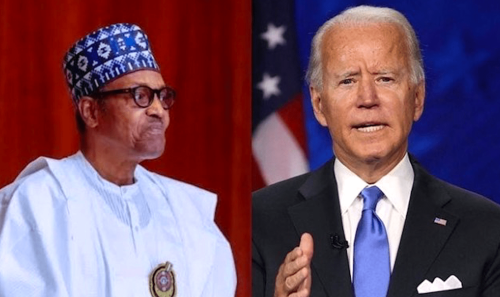
United States of America Senators, Marco Rubio and Josh Hawley have written to President Joe Biden to relist Nigeria as a “Country of Particular Concern” over increasing cases of violence against Christians in the country.

The letter was written by the two US Republican lawmakers and signed by another three senators, Mike Braun, Tom Cotton and Jim Inhofe.

In the letter to the U.S. Secretary of State, Antony Blinken, the senators urged President Biden to immediately reinstate Nigeria as a Country of Particular Concern (CPC) under the International Religious Freedom Act.

The US lawmakers noted that religious violence is still high in Nigeria which had been earlier put on the list of the countries of particular concern with regards to religious violence by President Donald Trump’s administration but was delisted by the current Biden administration.

The letter which was also published on Senator Rubio’s official website reads: “As you are well aware, horrific acts of deadly violence have been committed against Nigerian Christians in recent weeks, including the massacre of churchgoers on Pentecost Sunday and the stoning of a Christian college student. Sadly, such violence has become all too familiar for Christians in Africa’s most populous country.

“Last year, however, you inexplicably removed Nigeria’s designation as a Country of Particular Concern (CPC) despite no demonstrable improvement in the country’s religious freedom conditions. On the contrary, the situation in Nigeria has grown worse. We previously urged you to immediately reverse your misguided decision, and we write today to renew our call.

“Recent high-profile acts of violence underscore the intense religious persecution that is regularly experienced by Nigerian Christians. On Pentecost Sunday, gunmen attacked St. Francis Catholic Church in Nigeria’s Ondo state, reportedly killing at least 50 churchgoers.

“Last month, a violent mob brutally stoned to death Deborah Emmanuel Yakubu, a student at Shehu Shagari College of Education in northwest Nigeria. According to reports, some Islamist students were enraged by a “blasphemous” message Deborah had posted in a WhatsApp group, in which she said that “Jesus Christ is the greatest. He helped me pass my exams.” Merely expressing one’s Christian faith has apparently become tantamount to a death sentence in many parts of Nigeria.

“Religious violence and intolerance directed toward Nigerian Christians has worsened in recent years. One report documented more than 4,650 cases of Nigerian Christians who were killed for their faith in 2021. Accordingly, Nigeria earns the dubious honor—for the second consecutive year—of being the deadliest country on earth for Christians.

“We wrote last year that “not only has the government of Nigeria failed to take meaningful steps to mitigate such violence, but Nigerian authorities restrict and crack down on religious minorities and detain individuals indefinitely on blasphemy-related charges. We remain concerned that the Nigerian government is failing to protect the religious freedom and basic safety of its Christian citizens.

“Furthermore, as this year’s annual reports from the bipartisan U.S. Commission on International Religious Freedom (USCIRF) and from your own Department make clear, Nigerian government authorities directly participate in the persecution of Christians, Muslims, and even non-theists, most notoriously through arrests and convictions under blasphemy laws. Make no mistake: continued enforcement of state-sanctioned blasphemy laws enables the type of deadly violence that killed Deborah Emmanuel Yakubu and so many others.

“When we previously wrote you, we were met with a response which failed to answer our questions about why the State Department views Nigeria as not having engaged in or tolerated “systematic, ongoing, and egregious violations of religious freedom” or even “severe violations of religious freedom.” This is unacceptable, especially because you are required by federal law to consider the recommendation of USCIRF—which, since 2009, has been to designate Nigeria as a CPC. In fact, USCIRF reiterated in its 2022 Annual Report that it was “appalled” at the removal of Nigeria’s CPC designation. Despite public statements from you and other State Department officials condemning the recent bloodshed in Nigeria, the fact remains that the Department still does not officially regard Nigeria as a severe violator of religious freedom.

“The State Department released its 2021 Report on International Religious Freedom on June 2, which starts the 90-day timeline for the Department to make its religious freedom designations. Given the abysmal state of religious freedom in Nigeria, it is incumbent upon you to reverse last year’s decision and redesignate the country as a CPC. The moment demands that you do so without delay.”

 

News

EXPLOSIVE: How Titan Trust Bank allegedly used Union Bank’s assets to secure $300m takeover deal

Published

on

By

What was sold to Nigerians in May 2022 as a clean and powerful takeover is now looking like something far more troubling.

When Titan Trust Bank announced it had acquired Union Bank of Nigeria, a 100+ year-old institution, the story was simple: a young bank buying a legacy giant. But fresh documents are now pointing to a shocking twist that raises serious questions about how the deal was actually done.

According to findings, Titan Trust Bank allegedly secured a $300 million loan from African Export-Import Bank (Afreximbank) to fund the acquisition of Union Bank of Nigeria. On paper, Titan Trust Bank was the borrower. But in reality, the collateral reportedly included shares, treasury bills, and assets belonging to Union Bank itself.

Let that sink in: the bank being acquired was allegedly used to secure the loan that bought it. Titan Trust Bank—linked to Rahul Savara and Cornelius Vink— is believed to have engineered a scheme so bold it’s almost unbelievable. The plan? Have Union Bank allegedly repay the very illegal loan used to purchase it—using depositors’ funds! If allowed to succeed, the outcome is stark: TitanTrust Bank’s shareholders would end up owning one of Nigeria’s oldest banks for free!

Even more alarming is the alleged complicity of Godwin Emefiele, then Governor of the Central Bank of Nigeria (CBN), who is said to have turned a wilful blind eye to a deal that flew in the face of the CBN’s strict rules against using borrowed funds to acquire Nigerian banks.

It is unbelievable that Godwin Emefiele would allow an inconsequential bank like Titan Trust Bank to plunge a legacy and systemically important bank like Union Bank into a huge and needless debt – just to satisfy the greed of the owners of Titan Trust Bank.

The  Afreximbank loan is reportedly structured in a manner that will force Union Bank to keep using its depositors’ funds to repay the unlawful loan.

By the third quarter of 2025, the situation had reportedly worsened. Exchange rate shocks and rising interest costs pushed the total exposure to over ₦500 billion. What started as a $300 million facility ballooned into a massive financial burden.

It gets deeper. An audit later allegedly described the acquisition/loan arrangement as “unethical financial engineering.” The audit allegedly pointed to possible misuse of foreign loans, questionable financial reporting and improper withdrawals from customer funds.

The fallout has already begun. Following leadership changes at the CBN, the board and management of Union Bank were removed in January 2024. That decision is now being contested in court, adding another layer of controversy to an already explosive situation.

Behind the scenes, ownership of Titan Trust Bank also raises eyebrows. The bank, incorporated in 2018, is largely owned by Dubai-based firms linked to powerful business interests, including individuals such as Rahul Savara and Cornelius Vink.

This is no longer just a banking story. It is a test of transparency, regulation and accountability.
 
If these allegations hold true, then one question refuses to go away: Who really paid for the takeover of Union Bank and at what cost to depositors?

Continue Reading

News

Oyo 2027: Adelabu Quits As Power Minister To Focus On Guber Race

Published

on

By

The Minister of Power, Adebayo Adelabu has formally resigned from his position in the Federal Government to pursue his governorship ambition in Oyo State.

In a resignation letter dated April 22, 2026, and addressed to the President, Adelabu stated that his resignation will take effect on April 30, 2026, to enable him to focus on his governorship ambition in Oyo State.

The letter, routed through the Office of the Secretary to the Government of the Federation, stated that he was stepping down with “a deep sense of honour and profound gratitude.”

He wrote, “I write with a deep sense of honour and profound gratitude to formally tender my resignation as the Honourable Minister of Power of the Federal Republic of Nigeria. This resignation is to take effect on 30th April 2026, in order to allow sufficient time for a smooth and orderly handover of responsibilities.”

Adelabu thanked the President for the opportunity to serve, describing his appointment as a privilege.

He said, “Your Excellency, I remain sincerely grateful for the privilege and confidence you reposed in me by appointing me to serve our great nation in this capacity.

“It has been a rare honour to contribute to national development under your leadership and to play a role in advancing reforms in the power sector—one of the most critical foundations of Nigeria’s industrial growth and economic transformation.”

The former minister said his resignation was to enable him focus fully on his governorship ambition in Oyo State, citing provisions of the amended electoral law.

He added, “My decision to step down is informed by my intention to focus fully on my gubernatorial ambition in Oyo State. This aspiration, which dates back to 2016 during my service as Deputy Governor of the Central Bank of Nigeria, ultimately led to my voluntary resignation from the Central Bank in 2018 in order to pursue the same goal.”

“In line with the provisions of the Amended Electoral Act 2026, which preclude political office holders from contesting elections, I consider it both appropriate and necessary to resign at this time.”

Adelabu’s exit marks a major political development ahead of the next electoral cycle, particularly in Oyo State, where he is expected to contest the governorship election.

Continue Reading

News

Wale Edun, Musa Dangiwa Resigned Voluntarily, Not Sacked – Presidency

Published

on

By

The Presidency has clarified that Wale Edun (former Finance Minister) and Ahmed Musa Dangiwa (former Housing Minister) voluntarily resigned from their positions and were not sacked by President Tinubu.

In a statement released this evening April 22, presidential media aide, Bayo Onanuga, said that contrary to public opinions, Wale Edun resigned on health grounds while Dangiwa also tendered his resignation and thanked the President for the opportunity given him to serve in the Federal Executive Council.

Onanuga stated that Edun, who clocked 70 on Monday and has battled recent ill health, fittingly submitted his resignation letter on his birthday, thanking the President for the opportunity to serve Nigeria.

“It has been a pleasure and privilege to serve your administration and the Renewed Hope Agenda, Under your leadership, Nigeria has emerged stronger, more resilient and more internationally respected. I wish you and the administration every success in the future” he wrote

Onanuga stated that on Tuesday, before the Office of the Secretary of the Government of the Federation announced his departure from the Cabinet, Edun paid a valedictory visit to the President at the Villa and held an hour-long discussion with the president and then left to focus on his private businesses.

The presidential aide stated that President Tinubu has expressed deep appreciation to Edun and Dangiwa for their dedicated service and significant contributions to the administration’s economic reform programme and wished them continued success in their future endeavours.

‘’In the same vein, the President has urged the new Minister of Finance, Taiwo Oyedele, to consolidate ongoing reforms and advance the administration’s fiscal and economic objectives with renewed focus, discipline, and innovation.

President Tinubu will shortly send the ministerial nominee for housing, Muttaqha Rabe Darma, also from Katsina, like Dangiwa, to the Senate for confirmation” the statement concluded

Continue Reading

Trending