
News
Shehu Sanni Faults Senate Approval Of $22.7bn Loans To PMB
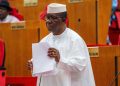
Former Senator, Shehu Sani has faulted the approval by the Senate to President Muhammadu Buhari in securing foreign loans of 22.7 billion dollars for Nigeria, saying that the administration has finally mortgaged the future of the nation and further plunged it into debts that cannot be repaid in half a century.
He said considering the circumstances surrounding the approval of the loans, the country’s overall interest and its future were not taken into consideration by the National Assembly, rather the commissioned agents, who are the beneficiaries of the foreign loans, are at advantage.
Sani reacted to the approval of the lawmakers to the loans that the 8th Assembly rejected, insisting that “the approval will plunge Nigeria into a deeper pit of debt.
“It is going to mortgage the future of our children. It is unfortunate that Nigeria has exhibited the London and Paris club, and also drag itself into the Washington and Beijing club. And we are very likely to remain there for a very long time. The debt profile of Nigeria is unsustainable. Most of the reasons why we are going to borrow money are not really tenable.
“We cannot repay this debt so easily, and what I know very well is that if this debt was approved under Jonathan, President Buhari and APC could have been in the forefront of protesting against it”.
“It is unfortunate that the very people who have raised issues on our national debt when they were in opposition or in Labour, today they have found themselves to be leaders in terms of promoting and also piling up debts for Nigeria. If we are not careful the whole country will be under the control and mortgage web of those foreign creditors’ institutions”.
Sani also remarked that “foreign debt is slavery, and we have simply worked ourselves into it under Buhari,” stressing, “as far as I am concerned, we supposed not to have reached this very level of poverty in the country if the past debt profile was well managed”.
“Debt should only be for critical infrastructure that would promote development and drive growth in our country. But, how can Buhari’s government that says it is netting over one billion naira every day through the closure of borders, and how can the government that says it has saved money as a result of subsidies and other critical measures, now go to borrow billions of dollars?”
“And, if you look at the revenue profile of Nigeria today, from what accrues to the country we will continue to service this debt for over half a century. And I don’t think that will go well for the nation”.
Adducing further reasons why Buhari’s government should not plunged the country into further debt, Senator Sani remarked, “there are critical infrastructure that simply needs a private-public partnership where the private sector will invest money, at the same time the profit would be shared by the public and the private sectors”.
“We don’t need to borrow money to build airport, we don’t need to borrow money to build infrastructure that will generate money, when if there are private interest that are ready to lend their money and to invest. So, I think the administration of the National Assembly have gotten themselves on the wrong side of history by getting us into debt. And this will continue to be an issue for the next 50 years.”
He also said that the 8th National Assembly refused to grant approval to Buhari request for foreign loans in order to protect the country’s critical interest, noting that “what matters to us then is the interest of the country and not the government, and serving the interest of somebody or becoming subservient to the executive”.
Sani further stressed: “We were concerned about our place in history and not piling up debts that the future generation will not be able to repay. So our signatures and approvals was very pressure to us and that was why we exercise restraint in terms of approving foreign loans.
“What you need to understand is that commissioned agents who facilitate this loan are only interested in their own commission. And loans are not charity, they must be repaid and with interest. So, those banks and those institutions and countries that are lending Nigeria money are simply investing for their own children, grandchildren and countries”.
“And as it is now, we are most likely to get into a quagmire of debts. During our time we rejected approval in order to save the country and save our children from being re-colonised by foreign creditors, so we were concerned of the future of our nation”, he added.
On the 350 million dollars acquired by Governor Nasir El-Rufai under the 9th National Assembly, remarked: “I wish the Kaduna Government and people luck, but during our time we rejected the loan for two reasons, first, the state is highly indebted to the tune of over 240 million dollars and we believe that if we add 250 million dollars that will strangulate the economy of the State and will also mortgage the future of the State”.
“And we rejected it also for the fact that there were also no defined reasons on how that money would be expended transparently. If the present National Assembly has seen it from a different perspective than the way we say it, we have no problem with that. But, I believe that history will be able to judge between the decision we took at that time and the one they have taken know”.

News
Fidelity Bank Supports Quality Education Delivery In Makoko
Tier-one lender, Fidelity Bank Plc, has reaffirmed its commitment to community development and educational empowerment with the donation of essential learning materials to schoolchildren in Makoko Community, Yaba, Lagos under its Fidelity Helping Hands Program (FHHP).
The outreach, which was facilitated by the bank’s Legal Services Division, saw the presentation of school bags, notebooks, mathematical sets, writing materials, and other learning materials to pupils of Makoko Anglican Nursery and Primary School; Aiyetoro Nursery and Primary School, and Adekunle Anglican Nursery and Primary School in Lagos.
Speaking during the presentation, Divisional Head of Legal Services, Fidelity Bank Plc, Kingsley Ohiri, explained that the gesture forms part of Fidelity Bank’s broader CSR initiatives centered on empowering young people, supporting education, and enhancing social welfare in vulnerable communities.
“The Fidelity Helping Hands Program is our staff volunteer program that enables employees to identify and execute impactful CSR projects,” he said. “Through this program, staff volunteers from the Legal Services Division are here today in Makoko to distribute back-to-school materials such as school bags, notebooks, pencils and other essential learning tools. This aligns strongly with one of our CSR pillars: education.”
Ohiri further emphasized the bank’s focus on improving access to quality education for children in public schools, especially those from indigent backgrounds.
“Over 500 school bags, more than 2,000 exercise books and several other learning items were distributed today. We at Fidelity Bank are proud to give back to Makoko community. We believe that by supporting these pupils with the tools they need to learn, we are helping to build a stronger future for the pupils, the community and Nigeria,” Ohiri added.
Aimed at enhancing the learning experience of children in one of Lagos’ most underserved riverine communities, the gesture received warm appreciation from school leaders, teachers, and parents who
expressed gratitude for the bank’s support.
“We sincerely appreciate Fidelity Bank for selecting our school as one of the beneficiaries. This gesture will go a long way in helping our pupils improve academically. Recognizing students who placed 1st to 10th in their classes is also a great motivation for our children”, stated the Head Teacher of Adekunle Nursery and Primary School, Mrs. Tinubu Abimbola.
Similarly, the School Manager of Makoko Anglican Nursery and Primary School, Mr. Laoye Joseph, described the donation as a profound act of compassion and responsibility, saying, “We truly appreciate Fidelity Bank and the continuous support for the educational development of our children. Many families here struggle to provide basic learning materials due to economic hardship, so this intervention is highly impactful. We pray that God continues to uplift the bank.”
Teachers present at the event also noted that many pupils often attend classes without basic supplies, a challenge that affects participation and performance. They commended Fidelity Bank for easing the financial burden on parents, especially amid rising household expenses.
Through FHHP, Fidelity Bank Plc’s staff identify impactful projects in their communities and raise funds to support them. The bank’s management matches these contributions, amplifying their reach and impact.
Ranked among the best banks in Nigeria, Fidelity Bank Plc is a full-fledged Commercial Deposit Money Bank serving over 9.1 million customers through digital banking channels, its 255 business offices in Nigeria and United Kingdom subsidiary, FidBank UK Limited.
The Bank is a recipient of multiple local and international Awards, including the 2024 Excellence in Digital Transformation & MSME Banking Award by BusinessDay Banks and Financial Institutions (BAFI) Awards; the 2024 Most Innovative Mobile Banking Application award for its Fidelity Mobile App by Global Business Outlook, and the 2024 Most Innovative Investment Banking Service Provider award by Global Brands Magazine. Additionally, the Bank was recognized as the Best Bank for SMEs in Nigeria by the Euromoney Awards for Excellence and as the Export Financing Bank of the Year by the BusinessDay Banks and Financial Institutions (BAFI) Awards.

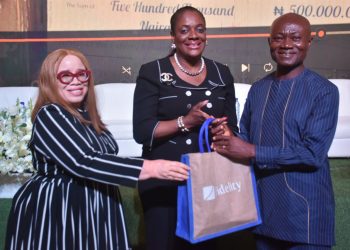
L–R: Head Teacher/School Manager, Aiyetoro African Church Primary School, Okoro Chineye Patricia; School Manager, Adekunle Anglican Nursery & Primary School, Tinubu Abimbola; Head, Legal Services Division, Fidelity Bank Plc, Kingsley Ohiri; School Manager, Makoko Anglican Nursery & Primary School, Olaoye Joseph; and Team Lead, Corporate Social Responsibility, Fidelity Bank Plc, Victoria Abuka; during the presentation of educational kits to pupils of Adekunle, Makoko, and Aiyetoro Nursery and Primary Schools in the Makoko area of Yaba, Lagos.
News
SANWO-OLU MOURNS BADAGRY MONARCH, DESCRIBES OBA AKRAN’S DEPARTURE AS GREAT LOSS
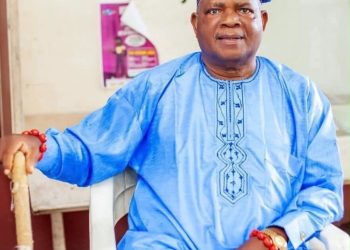
The Governor of Lagos State, Mr Babajide Sanwo-Olu, has mourned the passing of the revered Oba of Badagry (Paramount Ruler of Badagry Kingdom) and Permanent Vice Chairman of the Lagos State Council of Obas and Chiefs, Oba Babatunde Akran, the Wheno Aholu Menu-Toyi I, who joined his ancestors at the age of 89.
Governor Sanwo-Olu, in a statement issued on Monday by his Special Adviser on Media and Publicity, Mr Gboyega Akosile, described the departure of Oba Akran as a great loss not only to the people of Badagry but also to Lagos and Nigeria at large because of his remarkable impact as a respected monarch in Nigeria.
He said the revered king, who was on the throne for nearly 49 years, is a traditional ruler known for his wisdom, cultural preservation, and advocacy for Badagry’s development, adding that he rendered selfless service to the people and left behind a legacy of unity, tradition, uplifting and modern development.
Governor Sanwo-Olu commiserated with the people of Badagry and the family of the late Oba Akran of Badagry, over the passage of the paramount ruler, saying his departure is a great loss to the traditional institution in the State.
He said: “On behalf of my wife, the government and people of Lagos, I commiserate with the people of Badagry, the deceased’s family, friends, associates and traditional institutions on the transition of the paramount ruler of Badagry Kingdom and Permanent Vice Chairman of the Lagos State Council of Obas and Chiefs, Oba Babatunde Akran, Wheno Aholu Menu-Toyi I.
“The death of Oba Akran is a great loss to the people of the ancient town of Badagry, and he will be greatly missed. He was a respected journalist. As a traditional ruler, he made positive impacts during his lifetime and contributed meaningfully to the growth and development of his community, Lagos State and Nigeria.
“Oba Akran, as a first-class traditional ruler, left a lasting legacy that the people of Badagry Kingdom will continue to cherish. He served as the custodian of Badagry’s traditions, customs, and cultural heritage for nearly 49 years. He was a stabilising force known for uniting diverse interests within his kingdom and promoted Badagry’s historical sites and cultural festivals nationally and internationally, fostering tourism and cultural exchange.
“He also used his position to attract growth and development to the ancient town. I urge his family, friends, subjects and associates, as well as the entire people of Badagry, whose interests the departed traditional ruler represented and worked tirelessly for during his lifetime, to work towards immortalising him.
“I pray that Almighty God be pleased with the soul of the late monarch and grant the royal family and the people of the Badagry kingdom and Lagos State the fortitude to bear the irreparable loss.”
News
Khartoum Reclaimed: Sudan’s Government Ends Three-Year Exile In Port Sudan
The Sudanese government has returned to Khartoum after operating for almost three years from the eastern city of Port Sudan, following the outbreak of the country’s civil war.
Speaking to reporters on Sunday, Prime Minister Kamil Idris said the “government of hope” was officially back in the capital and would begin restoring services for residents affected by years of fighting.
Sudan’s military leadership was forced out of Khartoum in 2023 when conflict erupted between the army and the Rapid Support Forces (RSF).
The army regained control of the capital in March, marking a turning point in the war.
Khartoum has been recovering from prolonged conflict. According to the United Nations, about five million people fled the city at the height of the fighting.
Residents who remained described an RSF occupation marked by looting and the takeover of civilian homes, while large parts of the city remain damaged.
In October, UN official Ugochi Daniels said basic services in Khartoum were “barely functioning.”
On Sunday, Idris said the government would focus on restoring electricity, water, healthcare, and education in the capital.
He also said 2026 would be a “year of peace” for Sudan, where at least 150,000 people have died since the war began.
The UN has described the conflict as the world’s worst humanitarian crisis, with around 12 million people displaced across the country.
The war started after a power struggle between the army chief, General Abdel Fattah-al Burhan, and his former deputy, General Mohamed Hamdan Dagalo, who leads the RSF.
Both the RSF and the Sudanese military have been accused of committing atrocities during the conflict.
Attempts by international actors to broker peace have so far failed, with both sides receiving backing from foreign powers.
The United Arab Emirates (UAE) has faced scrutiny over allegations of supporting the RSF, claims it has strongly denied.
(BBC)
-
News2 days agoBoko Haram Demands $300,000 Ransom For Abducted Borno Ex-LG Chair, Another Victim
-
News14 hours agoI Have Delivered On Yahaya Bello Prosecution Promise — EFCC Chairman Olukoyede
-
News14 hours agoAtiku Issues Stern Warning To Tinubu Govt Over Detention Of Critic Abubakar Musa
-
News4 hours agoFidelity Bank Supports Quality Education Delivery In Makoko
-
News7 hours agoKhartoum Reclaimed: Sudan’s Government Ends Three-Year Exile In Port Sudan
-
News7 hours agoSANWO-OLU MOURNS BADAGRY MONARCH, DESCRIBES OBA AKRAN’S DEPARTURE AS GREAT LOSS