

News
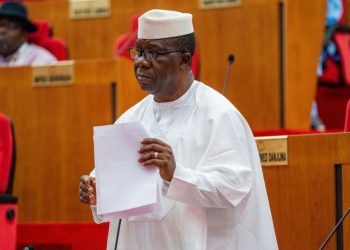
FG Approves Massive Pay Hike, Gratuity For Civil Servants
The Federal Government has approved a comprehensive welfare package for civil servants, headlined by the introduction of a new Exit Benefit Scheme (EBS) and a 100% Duty Tour Allowance (DTA) for training.
These reforms, announced by the Head of the Civil Service of the Federation, Didi Walson-Jack, on April 24, 2026, aim to improve take-home pay and boost workforce morale.
According to Walson-Jack, the review affects workers under both the Consolidated Public Service Salary Structure (CONPSS) and the Consolidated Research and Allied Institutions Salary Structure (CONRAISS), ensuring a broad-based impact across all cadres.
She said the revised peculiar allowances have been structured to reflect across all grade levels, resulting in a meaningful increase in earnings for both junior and senior officers.
In addition, the government approved an upward review of several key allowances, including duty tour allowance (DTA), estacode, and book allowance. Walson-Jack noted that virtually all allowances listed under the Public Service Rules have now been revised.
A major highlight of the reform is the approval of 100 percent Duty Tour Allowance for civil servants attending approved training programmes, regardless of whether travel is involved.
“Even if you are based in Abuja and attend training within Abuja, you are entitled to full DTA,” she said.
Beyond salary-related adjustments, the government also introduced a new exit benefit scheme for retiring civil servants under the Contributory Pension Scheme. The scheme provides 100 percent of a retiree’s total annual emoluments as an exit package, in addition to their pension, effective January 1, 2026.
Walson-Jack described the move as a step toward ensuring dignity in retirement, stressing that no public servant should leave service without adequate financial support.
The government also confirmed the operationalisation of the Employee Compensation Scheme, designed to provide financial protection for workers who suffer job-related injuries or death.
The reforms come amid growing calls from labour unions for improved welfare, as rising living costs continue to put pressure on workers. Analysts say the combined measures could significantly enhance financial stability for civil servants and improve overall productivity in the public sector.
News
South Africa and Xenophobia: A Crisis of Unity and Memory – By Dr George Ogunjimi
Xenophobia in South Africa has become a deeply troubling issue, raising questions about unity, historical memory, and the values that once defined the African struggle for liberation.
While concerns about illegal immigration and documentation are valid, they cannot justify the violence, hostility, and loss of life that have increasingly targeted foreign nationals, particularly fellow Africans.
The recurring outbreaks of violence—such as the 2008 South African xenophobic riots—highlight a pattern that continues to resurface. Incidents like the recent killing of a Nigerian taxi driver, widely shared in disturbing videos, serve as painful reminders of how severe and personal this crisis has become. These acts not only harm individuals and communities but also damage the broader vision of African solidarity.
Historically, many African nations, including Nigeria, stood firmly against Apartheid, offering financial, political, and moral support to movements like the African National Congress. This shared struggle fostered a sense of continental unity—an idea that now seems under strain.
Figures like Julius Malema have spoken about African unity and condemned xenophobic violence, though the broader political and social landscape remains complex. The persistence of these attacks suggests deeper underlying issues, including economic inequality, unemployment, and social frustration.
Ultimately, xenophobia in South Africa is not just a national issue—it is an African one. It challenges the continent to reflect on its shared history, its responsibilities to one another, and the urgent need to rebuild a sense of unity and mutual respect.
George Ogunjimi Esq
Juris Republic
jurisrepubliclegal@gmail.com
24/04/2026.
News
Fidelity Bank Strengthens SME Support with High Impact Masterclasses on Pricing, Digital Growth and Global Expansion
In line with its commitment to accelerating the growth of Small and Medium Enterprises (SMEs) across Nigeria, leading financial institution, Fidelity Bank Plc, has rolled out a series of high impact masterclasses designed to equip business owners with practical skills, improve operational efficiency and expand market access throughout the month of April 2026.
The first in the series, titled “Pricing That Works: How to Charge Right and Earn More,” held on Friday, April 10, 2026, at the Fidelity SME Hub in Gbagada, Lagos. The session focused on helping entrepreneurs set profitable, sustainable prices without losing customers, an essential factor for long-term business success.
About a hundred SMEs from different sectors attended the masterclass which saw participants receive guidance on key areas many small businesses struggle with including costing, value-based pricing, pricing psychology and customer perception.
Following the success of the pricing masterclass and testimonials from participants, the bank scheduled three additional masterclasses to run throughout April 2026. The second masterclass, held on Tuesday, 14 and Wednesday, 15 April 2026, was a practical, skill-building session titled, “Baking Masterclass: From Kitchen to Cashflow”. The session equipped bakers and food entrepreneurs with hands on techniques to refine their craft, improve product consistency and strengthen their earning potential.
Commenting on the initiative, Divisional Head, Small and Medium-scale Enterprises Banking, Fidelity Bank Plc, Ugochi Osinigwe said, “At Fidelity Bank, we believe that when SMEs succeed, the economy grows. That is why we have curated a suite of masterclasses that provide entrepreneurs with the practical skills they can apply immediately.
“Whether it is pricing correctly, improving product quality, mastering online sales, or preparing for international expansion, we are devoted to empowering SMEs with the tools they need to grow, thrive and prosper.”
She added that the SME Masterclass Series is part of Fidelity Bank’s broader mandate to support SMEs with business advisory, funding, market access and capacity-building initiatives delivered through the Fidelity SME Hub as well as dedicated SME support programmes nationwide. Osinigwe noted that the Bank recently received the Best Retail and SME Bank Award from Independent Newspapers, underscoring its industry leadership and unwavering commitment to growing Nigeria’s MSME sector.
A third masterclass, themed, “Grow Online Sales on a Budget”, is scheduled for April 24, 2026, and will equip entrepreneurs with practical strategies to boost visibility, engage customers, and increase sales using affordable online tools.
Similarly, the fourth and final masterclass, titled, “Take Your Business Global: One-on-One Trade Advisory”, will hold on April 29, 2026 and will serve as a personalized advisory clinic where SME owners will receive expert guidance on export readiness, cross-border payments, global market opportunities, and compliance requirements.
Ranked among the best banks in Nigeria, Fidelity Bank Plc is a full-fledged Commercial Deposit Money Bank serving over 10 million customers through digital banking channels, its 255 business offices in Nigeria and United Kingdom subsidiary, FidBank UK Limited.
The Bank is a recipient of multiple local and international Awards, including the 2024 Excellence in Digital Transformation & MSME Banking Award by BusinessDay Banks and Financial Institutions (BAFI) Awards; the 2024 Most Innovative Mobile Banking Application award for its Fidelity Mobile App by Global Business Outlook, and the 2024 Most Innovative Investment Banking Service Provider award by Global Brands Magazine. Additionally, the Bank was recognized as the Best Bank for SMEs in Nigeria by the Euromoney Awards for Excellence and as the Export Financing Bank of the Year by the BusinessDay Banks and Financial Institutions (BAFI) Awards.
News
Taiwo Oyedele Takes Helm At Finance Ministry, Vows To Sustain Reforms
Taiwo Oyedele officially has assumed office as the Minister of Finance and Coordinating Minister of the Economy.He takes over from Wale Edun following a cabinet reshuffle by President Bola Ahmed Tinubu announced earlier that week.
According to a statement issued on Friday by the Head of Information and Public Relations Unit, Efe Ovuakporie, the handover took place on Thursday, April 23, 2026, in line with a directive from President Bola Ahmed Tinubu.
The ministry noted that Edun’s time in office saw the implementation of several fiscal and economic measures aimed at stabilising the economy and setting it on a path of long-term growth. These efforts included steps to improve government revenue, strengthen coordination of public finances, and advance broader structural reforms under the current administration’s economic programme.
In his remarks after taking over, Oyedele praised his predecessor for his contributions to the country’s economic reforms. He commended Edun for his service and wished him well in his future endeavours.
The new minister also expressed gratitude to President Tinubu for entrusting him with the role. He said he is prepared to work closely with the leadership and staff of the ministry to achieve the government’s economic goals and deliver results that will benefit Nigerians.
Speaking on behalf of the ministry’s leadership, the Permanent Secretary, Raymond Omachi, along with the Permanent Secretary for Special Duties, Mohammed Sanusi Danjuma, assured the minister of their full cooperation and support in carrying out his responsibilities.
Oyedele said his focus would be on building on existing reforms while ensuring that government policies produce clear and measurable results across key sectors of the economy.
The ministry added that the change in leadership is expected to ensure continuity in its work, with ongoing attention on strengthening economic reforms, maintaining fiscal discipline, and improving outcomes for citizens.
-
News1 day agoEXPLOSIVE: How Titan Trust Bank allegedly used Union Bank’s assets to secure $300m takeover deal
-
News10 hours agoSterling, Partners Drive Nationwide Cleanup Movement
-
Breaking News4 hours agoEFCC Detains Former Skye Bank Chairman Tunde Ayeni Over Alleged ₦36bn, $30m Fraud
-
News10 hours agoProvidus Bank Expands Footprint with Ekiti Branch, Reaffirms Capital Strength
-
News7 hours agoExclusive: Actress Rosy Meurer Moves to Legally Dissolve Marriage to Businessman Olakunle Churchill
-
News38 minutes agoSouth Africa and Xenophobia: A Crisis of Unity and Memory – By Dr George Ogunjimi
-
News8 hours agoEx-Super Eagles Striker Michael Eneramo Dies At 40
-
News46 minutes agoFidelity Bank Strengthens SME Support with High Impact Masterclasses on Pricing, Digital Growth and Global Expansion