
Connect with us

News

Meet America’s Robert Francis Prevost, First American Chosen As New Pope

Published

on

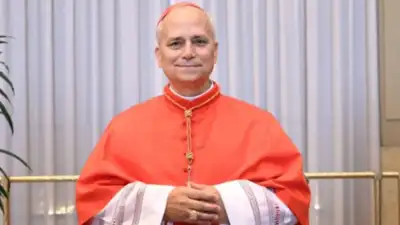
In a historic moment for the Catholic Church, Cardinal Robert Francis Prevost has been elected as the new pope, following a 24-hour conclave in the Vatican.

The white smoke that billowed from the chimney of the Sistine Chapel late Thursday signaled the Church had chosen its new spiritual leader—ushering in a new era with the election of the first American pontiff in the Church’s 2,000-year history.

Prevost, a former missionary in Peru and the head of the Vatican’s influential Dicastery for Bishops, will now be known as Pope Leone XIV.

He succeeds Pope Francis, who passed away last month at the age of 88 after over a decade at the helm of the global Catholic community.

Who Is Robert Francis Prevost?

Pope Leone XIV, born Robert Prevost, hails from the United States and brings with him decades of pastoral experience, much of it shaped by his work as a missionary in Peru.

Fluent in Spanish and known for his pastoral sensitivity and administrative rigor, he was tapped by Pope Francis in recent years to lead the Vatican’s powerful office responsible for the appointment of bishops—a key position that shaped the global episcopate.

His election marks a major milestone not only for American Catholics but also for the global Church, as it signals a possible continuity with Francis’ vision of a more inclusive, compassionate, and globally conscious Catholicism.

Cardinal Robert Francis Prevost has spent a lifetime marked by deep spiritual commitment, international service, and unwavering obedience to the Church’s call—no matter where it led him.

Born in Chicago in 1955, Prevost grew up in a home regularly visited by priests, drawn not just by the warmth of the family, but also by the cooking of his Spanish mother, Mildred Martínez. His early exposure to faith life was reinforced by his father, Louis Marius Prevost, a French-Italian catechist, and by his own involvement as an altar boy and parish school student.

Drawn to the priesthood from a young age, Prevost wrestled with whether to become a diocesan priest or join a religious order. He ultimately chose the Augustinian path, drawn to its emphasis on unity, communion, and the legacy of St. Augustine of Hippo. He entered the order’s minor seminary and later studied canon law at Rome’s Pontifical University of St. Thomas Aquinas (the Angelicum). He was ordained a priest in 1982 by Archbishop Jean Jadot, then pro-president of the Vatican’s Secretariat for Non-Christians.

Following his ordination, Prevost was sent to Peru to serve in the Territorial Prelature of Chulucanas, a region with strong ties to the U.S. Augustinians.

His work there — across the jungle, highlands, and coast — deepened his love for the country, and he later became a naturalized Peruvian citizen. In just ten years, he held multiple roles including community prior, director of formation, judicial vicar, and professor.

In 1999, Prevost was elected provincial prior of the Midwest Augustinians. A year into his tenure, he allowed a priest who had sexually abused minors to live in a rectory near a Catholic school in Chicago, a decision made at the archdiocese’s request and later scrutinized publicly.

Two years later, in 2001, he was elected Prior General of the worldwide Augustinian order, serving two six-year terms until 2013. The following year, Pope Francis appointed him apostolic administrator of the Diocese of Chiclayo in northwestern Peru. He was named bishop of the diocese in 2015, overseeing a region that includes one of Peru’s largest cities, as well as rural communities and shantytowns.

In 2022, his leadership in Chiclayo came under fire when individuals accused him of failing to act on abuse allegations against two priests. The diocese strongly denied the allegations when they surfaced in international reports in 2024.

Despite controversy, Prevost continued to rise within the Church’s hierarchy. In 2020, he was appointed to the Dicastery for Bishops, the Vatican body responsible for overseeing the appointment of Latin Rite bishops worldwide. Pope Francis later confided in him about the possibility of becoming its head. Prevost responded humbly:

“Whether you decide to appoint me or to leave me where I am, I will be happy; but if you ask me to take on a new role in the Church, I will accept.”

Advertisement

News

IGP Disu Appoints DCP Anthony Placid As New Force Spokesperson

Published

on

By

The Inspector-General of Police (IGP) Olatunji Rilwan Disu has appointed Deputy Commissioner of Police (DCP) Anthony Okon Placid as the new Force Public Relations Officer (FPRO) of the Nigeria Police Force.

He replaces ACP Benjamin Hundeyin, who served in the role from September 2025 until this latest reshuffle.

Placid is described as seasoned officer of the Nigeria Police Force with extensive experience in administration, operations, intelligence, training, and international peacekeeping.

Born on 2 December 1970, he hails from Mbiokporo Nsit, Nsit Ibom Local Government Area of Akwa Ibom State.

He holds a Bachelor of Science degree in Geography and Regional Planning from the University of Uyo, and Master of Arts in Law and Diplomacy (M.A.L.D) from the University of Jos.

He was recruited into the Nigeria Police Force as a Cadet Assistant Superintendent of Police at the Police Academy, Kano, in 1996, and was commissioned in August 1998.

He has attended several professional and international courses, including United Nations Peace Operations Specialised Training (POST), with certifications as expert in Police Studies, Military Studies, Gender Awareness, International Humanitarian Law, Human Rights, and Civilian Protection.

DCP Placid has served in various strategic capacities within and outside the country, including Police Public Relations Officer, PPRO, Adamawa State; Police Staff College, Jos; Chief of Training, African Union Mission in Sudan; Head of Training and Development, United Nations Mission in Darfur; Divisional Police Officer in Federal Housing Calabar, Bakassi, Uruan, and Gembu; Officer-in-Charge, Anti-Robbery Unit, Kaduna State; African Union Election Security Adviser; Assistant Commissioner of Police (Operations) in Akwa Ibom and Kogi states.

He equally served as Assistant Commissioner of Police, Intelligence Department, Abia State, and Deputy in charge of Administration and Finance, Zone 3 Headquarters, Yola.

Placid is also a member of the International Association of Chiefs of Police, IACP, Commonwealth Human Rights Trainer and International Committee of the Red Cross, ICRC, Trainer on International Humanitarian Law.

He is a graduate of the Senior Executive Course, SEC 47, of the National Institute for Policy and Strategic Studies, NIPSS, Kuru, and was inducted as a Member of the National Institute, mni, on 13 December 2025, prior to his redeployment to Cross River State.

He is happily married with children.

His hobbies include listening to good music, playing football, basketball, table tennis, badminton, and engaging with people.

DCP Placid can be reached on 07031179186.

He takes over from ACP Benjamin Hundeyin.

No official reason has been given for Hundeyin’s removal. His new posting has also not been disclosed.

Continue Reading

News

Polaris Bank Celebrates 2026 Int’l Women’s Day, Reaffirms Commitment to Empowering Women

Published

on

By

Polaris Bank has joined the global community in celebrating International Women’s Day 2026, reaffirming its commitment to promoting gender equality, empowering women, and supporting initiatives that foster inclusive growth across society.


International Women’s Day, celebrated annually on March 8, provides an opportunity to recognize the achievements of women across all sectors while highlighting the need to accelerate action towards gender equality. At Polaris Bank, the day serves as a reminder of the vital role women play in driving economic growth, innovation, and community development.


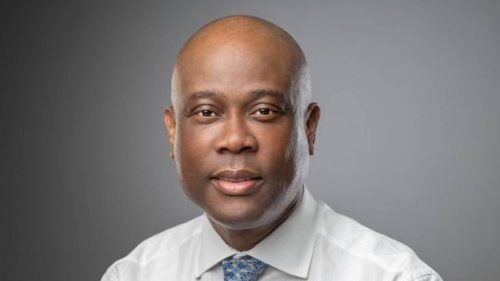
Speaking in commemoration of the day, the Managing Director/CEO of Polaris Bank, Kayode Lawal, emphasized the Bank’s commitment to creating an enabling environment where women can thrive professionally and financially.


“Polaris Bank remains dedicated to fostering a culture of inclusion, opportunity, and empowerment for women. From supporting female entrepreneurs to ensuring equal opportunities within our workforce, we believe empowering women is not only the right thing to do but also a key driver of sustainable development,” the CEO stated.


Over the years, Polaris Bank has implemented several initiatives aimed at supporting women-led businesses, promoting financial inclusion, and strengthening leadership opportunities for women within the organization. These efforts align with the Bank’s broader commitment to sustainable development and inclusive economic growth.


As part of this year’s celebration, the Bank will spotlight inspiring stories of hope from women across the community, within its workforce and customer base, while encouraging meaningful conversations around leadership, financial empowerment, and gender equity.


Polaris Bank continues to champion initiatives that create opportunities for women to succeed, recognizing that empowering women ultimately leads to stronger families, thriving communities, and a more resilient economy.


Continue Reading

News

“It Was All Politics” — Daniel Bwala Speaks Out On Past Tinubu Critiques

Published

on

By

Presidential media aide, Daniel Bwala, has broken his silence after Nigerians dragged him over his interview with Al Jazeerah’s Mehdi Hassan.

Bwala has received heat online after he repeatedly refuted all the damning things he said against President Tinubu before making a u-turn and agreeing to work with the Tinubu government. Watch here

In his statement, Bwala said all the things he said about Tinubu in the past were all “politics.”

He said he was in the opposition when he made all the negative comments. He said he knew what he signed up for when he agreed to have a debate with Hassan.

‘’In the last 24 hours, social media has exploded over my interview with Mehdi Hassan, albeit with varied opinions. Let me set the record straight.

When I signed on to the privileged job granted to me by Mr. President, I was well aware of its implications. Selling ice cream, looking fine, and seeking the praises of men were never part of it. Some of the fiercest critics of my interview can not even stand local TV anchors. But the task of promoting and defending the President and his administration is what I do with ease and joy. I am prepared to appear before any interviewer, anywhere in the world, any day and at any time, to defend this government and its policies.

I have never, and will never, subscribe to ducking or dodging interviews on matters that concern promoting and defending the administration I was appointed to serve. It is the least of what is required of me.

Head to Head contacted me requesting an interview, stating that they wanted to challenge our government on security, the economy, and corruption. Nowhere in our almost six months of communication did they mention that they were going to challenge my past. If that had been their plan, ethically and professionally, they were supposed to inform me so I could prepare my response. But that’s okay, ethically, that is on them, not on me.

I refused to swallow the pill of Mehdi’s “opposition research-style journalism,” and even today, if you carefully compare what he read as quotes from organisations and groups, you will see that many were inaccurate and some were outright fake news. But I will leave that for another day.

As for what I said about President Tinubu in the past, I am glad those were things I said when I was in the opposition saddle with such zeal. It is all politics. Half of Donald Trump’s cabinet is made up of people who once spoke against him, and quite a number of people in our own cabinet also spoke against President Tinubu in the past. Those things do not bother him if you care to know.

The majority of the naysayers are members of the opposition and their sympathisers. It does not bother me one bit. Their temporary excitement over the interview has not lasted and will not last, because it does not take away their obvious problem of lack of vision, mission in conducting and managing a political party; yet they seek to manage Nigeria. Clearly they have no path to victory and no alternative policies or program for the Nigerian people. And if they say they do, they can as well go to head to head and be interrogated on that; as the saying in Hausa goes “Ga fili Ga doki”

I conclude by thanking the many Nigerians and non-Nigerians who sent in their commendations over my brave defence of our government in an interview where the anchor would hardly let you answer a question unless it suited his narrative.

I still have admiration and respect for Mehdi Hassan as arguably the best debater on the planet. I look forward to part two of the Head to Head interview, and I am glad that by then questions about my past will no longer be news so that we can focus on our administration’s policies, programs and what we have achieved so far.

Stay tuned.

– D.H Bwala

Special Adviser to President on Media and Policy Communication

(State House)

Continue Reading

Trending