
News
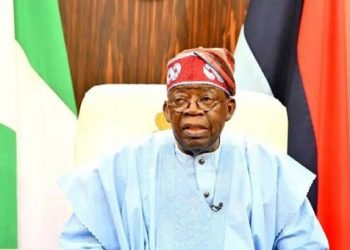
VAT Discourse And Tinubu’s Pan-Nigerian View
By Salamah Akindeko
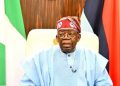
If we agree with the utilitarianist view that one thing a leader must do is consider making choices that produce the greatest good for the greatest number of people, then Nigerians should commend President Bola Tinubu for choosing to break away from the past by elevating common national interest to a new level.
And this did not start when he became president as this leadership trait had been demonstrated in various spheres he had held sway. His antecedents speak for him.
In May last year, President Bola Tinubu reinforced this view that he is for all. He pledged to govern Nigeria impartially and in accordance with the Constitution as well as the rule of law. He went further to task the citizenry to embrace national affinity and brotherhood. To observers who look at things dispassionately, this avowed commitment of the President has largely reflected in how he has been running his administration since he took over the reins of government.
President Tinubu, in his inaugural speech, among other things, said: “Today, let us recommit our very selves to placing Nigeria in our hearts as the indispensable home for each and every one of us regardless of creed, ethnicity, or place of birth…The South must not only seek good for itself but must understand that its interests are served when good comes to the North. The North must see the South likewise,” he had said.
One area where President Tinubu has again shown fidelity to his commitment is on the discourse around sharing formula for Value-Added Tax (VAT). Let me use this opportunity to correct erroneous impression that the North is against the president’s tax bills. The disagreement voiced by some northern leaders is on the proposed adoption of derivation model/approach to sharing of VAT revenue. VAT is only a portion of the bills. For emphasis, the four bills currently being scrutinized by the parliament seek to overhaul and modernise the country’s fiscal landscape in a way that brings benefits to the citizens and the three tiers of government.
Revealing President Tinubu’s position at an interactive session with members of the parliament recently, chairman of the Federal Inland Revenue Service (FIRS), Zacch Adedeji, said the president is concerned that Lagos and three other states go home with 70% of VAT revenue monthly, with Lagos (the president’s state) collecting the lion’s share of 42%.
“Today, I just signed the data on VAT [sharing] for October. Lagos will take 42% of the VAT[revenue], Rivers will take 16%, Oyo State will take 5.2%, and the FCT will take 10%. Go and check; these three states [and the FCT] are taking more than 70%. Why? Because those are the places where the head offices of those companies.…states like Borno and Bauchi collect only 0.32% and 0.4% of VAT proceeds respectively, compared to Lagos’ 42%.
“Any day I sign off on the data, I don’t feel like I am a Nigerian because this is not what we represent in our prayer as a nation. That is why, in the wisdom of Mr. President, we need to change this structure,” Adedeji told the lawmakers.
Listening to Adedeji, one would know that President Tinubu is a fair and just leader. He could have directed that status quo be maintained when some northern leaders apparently misjudged his intention on the subject. After all, Lagos and two other states will continue to cash out, while majority of the states will be left with what they currently get from the pool. So, the current attempt at reengineering the tax system is a big sacrifice for which Tinubu should be commended.
While there has been opposition to an aspect of the bills from the North, it is salutary that there are equally voices of reason who have studied the Bills and have seen the goodness of the heart of President Tinubu. A pro-North former Kaduna senator, Shehu Sani, while commending the Bills, said they are not in any way anti-North. According to the fiery critic,” It’s in fact economically beneficial and fair to all parts. People should keep aside sentiments and read the Bills carefully. It is a comprehensive and bold move to harmonise and simplify tax administration and streamline its operations and enforcement “
The Speaker of the House of Representatives, Tajudeen Abass, at the interactive session, located the controversy surrounding the VAT aspect of the Bills rightly, describing it as a reflection of their importance. For him, such debates are healthy and necessary in a democracy.
Apart from the fact that these Bills will when passed into law and assented to make states to look inwards and rethink, the issues of imbalance, fairness would be addressed by promotion of equitable distribution of the VAT revenue. These are some of the grey areas the reforms seek to address.
That noted, the total benefits of the bills should have been considered by those raising issues on VAT. People forget easily the confusing overlap of multiple tax laws. For example, why should small businesses pay taxes to the three tiers of government, a development that makes taxation unnecessarily complex? Why should there be multiple laws dealing with almost similar aspects of taxes in such a way that compliance with tax obligation is made difficult for taxpayers? Why should Nigeria not have a law that regulates cryptocurrency operations within its territory? Why in 2024 should we as a country be operating under laws that were made in 1939 (Stamp Duty Act), laws that are archaic and unfit for businesses in this modern time? The Federal Inland Revenue Service (FIRS) has to give way for the Nigeria Revenue Service (NRS) in order to accurately reflect the agency’s comprehensive services.
If there is any state that should be bellyaching over the proposal on restructuring of VAT sharing formula, it should be Lagos State. If there is any region whose voice should be loudest against the bills, it should be the South-West. But Lagos and the South-West understand where the President is coming from and have strong faith in his capacity to act in the best interest of the country.
With the town hall meeting held by Channels TV on the subject and with the kind of end-of-discussion explanation provided by Mr Taiwo Oyedele, who chaired the presidential committee on the matter, all opposition should stop henceforth. The National Assembly is there to look into the concerns raised by a few people and seek out ways to iron out those issues with vitiating the general objective of the Bills. It will not serve the interest of those speaking against the Bills if Lagos, which is going to be the biggest loser in the proposed VAT regime, sees reason to challenge either the status quo ante or the proposal. It will be recalled that in the immediate past administration, the issue of VAT sharing was litigated. A political option was sought to prevent the matter from running its full course.
Salamah Akindeko, a finance enthusiast, writes from Ila, Osun State
News
Union Bank Of Nigeria Marks International Women’s Month 2026 With Inclusion-First “Give to Gain” Campaign
In observance of International Women’s Month 2026, Union Bank of Nigeria reaffirms its commitment to gender equity through a focused initiative centred on women living with disabilities and women raising children with disabilities.
Aligned with the global theme “Give to Gain,” the Bank’s campaign “Give to Gain: Creating Pathways for Inclusion and Endless Opportunities” centres the lived experiences of women living with disabilities and underscores the need for intentional systems of support for social and economic advancement.
Throughout March, Union Bank will implement targeted initiatives to expand access, foster inclusion, and unlock sustainable opportunities. Activities include a flagship event which held at
The Stable, its multipurpose venue in Surulere, Lagos, on Saturday. The event convened women with disabilities, caregivers, supporting organisations, and advocates for dialogue, mentorship, and resource sharing.

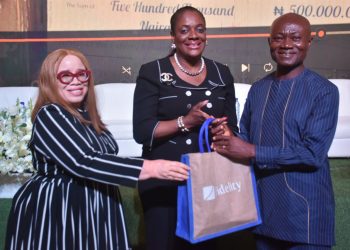
L-R: Chief Talent Officer, Union Bank of Nigeria, Omayuli Wale-Ajayi; Head, Corporate Banking, Union Bank of Nigeria, Ali Kadiri; Head, Retail and SME Business, Union Bank of Nigeria, Vivian Imoh-Ita; Founder/Executive Director, Deaf International Foundation, Funmilola Ogunro; MD/CEO, Union Bank of Nigeria, Yetunde Oni; SouthWest Coordinator, Nigeria Association of the Blind, Adenike Olorundare; Women Leader, Lagos Chapter, Nigeria Association of the Blind, Olubukola Salako; Executive Director, Corporate Bank & Business Banking Lagos & West, Union Bank of Nigeria, Taiwo Shote; Chief Brand and Marketing Officer, Union Bank of Nigeria, Olufunmilola Aluko; Regional Executive, Business Banking SouthWest and Lagos, Union Bank of Nigeria, Emmanuel Aihevba, and Lead Innovation, Events and Platform Management, Union Bank of Nigeria, Chiamaka Moses during the Bank’s commemoration of International Women’s Day 2026 at the Stable, Surulere, Lagos recently.
Complementary efforts include outreach to disability support facilities and collaboration with educational institutions to distribute learning materials to female students with disabilities. Tailored mentorship programmes will build confidence and capability in education, entrepreneurship, and careers. Through its women’s banking proposition alpher and strategic partnerships, the Bank will also deliver business sustainability training specifically designed for women living with disabilities and women raising children with disabilities.
Internally, Union Bank will activate WeHub — its employee-led women’s network — to strengthen inclusive culture and support professional growth across the organisation.
These actions reflect Union Bank’s long-standing commitment to advancing equity for underserved communities — and align with the United Nations Sustainable Development Goals 5 (Gender Equality) and 10 (Reduced Inequalities). For Union Bank, these are not frameworks to cite; they are commitments to live out.
Olufunmilola Aluko, Chief Brand and Marketing Officer, Union Bank of Nigeria, stated that “At Union Bank, inclusion is not an abstract ideal; it is a deliberate choice. While many conversations around women’s empowerment are important and necessary, women living with disabilities and women raising children with disabilities are too often left out entirely. This year’s theme, ‘Give to Gain,’ reflects exactly what we believe: that when we intentionally open access, support, and opportunity to these women, the value created extends to families, communities, and society at large.”
Union Bank’s IWD 2026 campaign is a statement of intent: that true inclusion requires us to go further, reach deeper, and serve those who have waited longest for a seat at the table. In 2026, Union Bank is committed to ensuring that a seat exists — and that it is built to last.
News
Just In: Dangote Refinery Announces Petrol, Diesel Price Reduction
The Dangote Petroleum Refinery officially reduced its gantry prices for petrol (PMS) and diesel (AGO) following a series of price hikes earlier in the week.
According to a new pricing template released by the refinery on March 10, 2026, the gantry price of petrol has been reduced by N100, dropping from N1,175 to N1,075 per litre.
The refinery also stated that the price of PMS for coastal supply will now be N1,050 per litre. The difference in price reflects additional costs linked to maritime distribution.
Similarly, the price of Automotive Gas Oil (diesel) has been reduced to N1,430 per litre at the gantry, down from the previous N1,620 per litre. This represents a decrease of N190 per litre.
The refinery noted that these gantry prices do not include regulatory charges from the Nigerian Midstream and Downstream Petroleum Regulatory Authority (NMDPRA).
Meanwhile, JomogNews earlier reported on Monday that Dangote Petroleum Refinery raised its gantry PMS price to N1,175 per litre — the third upward adjustment in seven days
The refinery communicated the new ex-depot price to marketers and depot operators, up ₦180 from the N995 per litre announced last week Friday, an 18.1 per cent increase in three days.
News
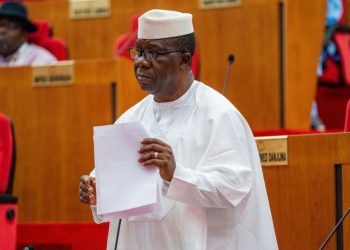
Drama At Rivers Assembly Over Nominee’s ‘I don’t pay tax’ Statement
A video circulating online has captured a tense moment during the screening of commissioner nominees submitted by Governor Siminalayi Fubara to the Rivers State House of Assembly.
The footage seen shows the Speaker of the Assembly, Martin Amaewhule, questioning one of the nominees, Charity Deemua, over the status of her tax clearance certificate.
During the screening of commissioner nominees, the Rivers State House of Assembly rejected nominee Charity Deemua after she claimed that as a politician, she did not pay taxes.
Speaker Martin Amaewhule and other lawmakers expressed shock at the statement, leading to the rejection of her nomination along with three others due to lack of tax compliance.
During the screening session, Amaewhule pointed out that the nominee’s tax clearance appeared outdated.
“I just wanted to know, so there’s no current tax clearance. Madam has not been paying tax since 2018. I just wanted to know if she’s been exempted from paying taxes. So let her tell us now,” the Speaker said.
Responding, Deemua explained that she had not had a steady source of income in recent years.
“Like I said before, I’m a politician, I don’t have work,” she stated.
When asked to clarify her employment history, Deemua told the lawmakers that she had previously served briefly in government.
“I was a member, a commissioner in the Rivers State House of Assembly Service Commission,” she said.
Amaewhule then pressed further about her role in a local government caretaker committee.
“When were you? Hold on… local government caretaker committee member, right?” the Speaker asked.
“I was just three months there,” Deemua replied.
“When? When was that?” Amaewhule asked.
“And I think November last year,” she responded.
“November when? What year?” the Speaker asked again.
“2025,” she answered.
The Speaker then questioned whether she earned income during that period.
“You were not paid salary? Were you not paid salary?” Amaewhule asked.
“In the caretaker committee, we were paid,” Deemua admitted.
“You were paid? Yes. Is that not income? But you said you have not had any income from 2018 to date as a politician. So no tax clearance, and that’s what you are telling Rivers people. Madam, that is not nice. You are misleading the 10th Rivers State House of Assembly,” Amaewhule said.
In response, Deemua apologised and suggested she could address the issue.
“I’m sorry, Mr. Speaker. But I think I can still go back for…,” she began before being interrupted.
“No, but you say you have not had any income now,” Amaewhule replied before moving on to the next nominee.
The video of the exchange has since drawn reactions online, with many Nigerians asking that if politicians say they don’t work, what exactly are taxpayers paying for.
See video:
-
News2 days agoDrama At Rivers Assembly Over Nominee’s ‘I don’t pay tax’ Statement
-
Business1 day agoIWD: Fidelity Bank Signs MoU with Partners, Launch ‘Give Her Power’ Initiative to Empower Nigerian Women
-
News1 day agoJust In: Dangote Refinery Announces Petrol, Diesel Price Reduction
-
Entertainment2 days agoRotimi Salami In Tears As ‘Kilanko’ Struggles At Box Office
-
News20 hours agoUnion Bank Of Nigeria Marks International Women’s Month 2026 With Inclusion-First “Give to Gain” Campaign
-
News2 days agoAiyedatiwa Loses Legal Bid To Stop Amendment Of Re-election Suit