
Connect with us

News

Defend Our Sovereignty: Falana, Ibrahim, Bugaje Reject US Military Presence

Published

on

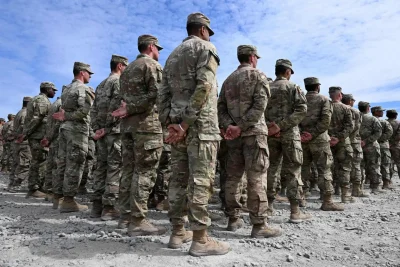
A group of Nigerian leaders, including Femi Falana and Jibrin Ibrahim, has condemned the recent deployment of U.S. troops as a violation of national sovereignty and a dangerous precedent for foreign meddling.

The backlash follows the arrival of U.S. military aircraft last week, part of a mission involving roughly 200 American soldiers tasked with advisory and training roles.

While U.S. officials describe the steady influx of personnel as a temporary counter-terrorism support measure, critics argue the presence of foreign forces undermines the country’s independence.

But Nigeria’s Defence Headquarters (DHQ) insisted that the US personnel are technical specialists serving strictly in an advisory and training capacity not combat troops and that all activities will be conducted under the authority, direction, and control of the Nigerian government in close coordination with the Armed Forces of Nigeria.

In a joint statement titled “No to Foreign Forces in Our Land: Defend Our Sovereignty”, the group said the presence of US soldiers in Nigeria raises serious constitutional and sovereignty concerns.

The statement was jointly signed by Femi Falana (SAN), Prof Jibrin Ibrahim, Dr Abubakar Siddique Mohammed, Dr Dauda Garuba, Prof Massaud Omar, Prof Mohammed Kuna, Engr YZ Ya’u, and Dr Usman Bugaje.

They recalled Nigeria’s historical resistance to foreign military domination and warned against what they described as a creeping neo-colonial arrangement.

“Nigeria’s history is replete with principled resistance to foreign military domination. At critical moments, our leaders civilian and military alike have asserted our sovereignty and rejected external interference. That legacy must not be abandoned,” the statement said.

They recalled the Anglo-Nigerian Defence Pact of 1960, which was abolished in 1962 following widespread public opposition. “Political independence without military sovereignty is incomplete,” the statement noted, stressing that Nigerians had always resisted external interference in military affairs.

The group also cited Nigeria’s role in rejecting American pressure during the 1976 Organisation of African Unity (OAU) summit on Angola.

At the time, General Murtala Mohammed famously declared that “Africa has come of age and would no longer operate under the orbit of any extra-continental power. His words were not mere rhetoric but a declaration of continental dignity and sovereign equality.”

The signatories highlighted what they described as a troubling pattern of attempts to impose military agreements on Nigeria. “In 2001, a proposed Military Cooperation Agreement between the United States and Nigeria was withdrawn after strong opposition from Nigeria’s Ministry of Defence,” they recalled.

Similarly, in 2003, Nigeria signed a Bilateral Immunity Agreement (BIA) with the United States, shielding American citizens from surrender to the International Criminal Court. “By 2005, the Nigerian Senate nullified the agreement, citing constitutional violations and inconsistency with the Rome Statute,” the group said.

“These episodes demonstrate a consistent national principle: foreign military arrangements must comply with Nigeria’s Constitution and must never compromise our sovereignty,” they added.

They cited Section 12(1) of the 1999 Constitution, which provides that no treaty between Nigeria and another country shall have the force of law unless enacted by the National Assembly.

The statement rejected any suggestion that Nigeria’s Armed Forces are incapable of defending the country. “Nigeria’s Armed Forces have a distinguished record in international peacekeeping under the United Nations and the African Union,” it said, citing Nigeria’s leading role in ECOMOG operations in Liberia and Sierra Leone.

“Rather than outsourcing our security, Nigeria should fully equip and modernise the Nigeria Police Force and the Armed Forces, strengthen intelligence coordination, improve welfare and morale of troops, invest in domestic defence production, and address socio-economic drivers of insecurity.”

They warned that sovereignty is not a ceremonial concept but the foundation of statehood. “Once foreign troops are stationed on national soil without transparent constitutional processes, sovereignty is diluted—incrementally, perhaps quietly—but meaningfully.

“Nigeria must not drift into arrangements that future generations will struggle to reverse. History teaches us that sovereignty surrendered in the name of expediency is rarely easily reclaimed,” the statement said.

They also urged the federal government to remain consistent with Nigeria’s tradition of rejecting neo-colonial defence pacts and unconstitutional agreements.

‘US security help has not improved any country’

Prof Jibrin Ibrahim, in an interview with Daily Trust, expressed worry that Nigerians appear less vigilant about potential defence arrangements compared to the 1960s, when the Anglo-Nigerian defence pact with the United Kingdom faced widespread public resistance.

“I’m concerned that, as we point out right from the 1960s, when the defence pacts were proposed by the government, there was resistance by the Nigerian people. They complained, they criticised them, they objected, and that led to the government backing down,” he said.

He lamented what he described as growing public indifference, noting that many Nigerians now argue that any foreign assistance, particularly from the United States, should be welcomed if it promises to address insecurity.

“Today, many people are saying that if the Americans are offering to help, why not accept it? But there is a lot of ignorance about the implications,” he added.

Prof Jibrin questioned the track record of U.S. military involvement abroad, arguing that American security interventions in other countries have not necessarily resulted in lasting peace or stability.

“In which country has America offered to help in security, led to improved security? There is none in the world. All their external involvements have been to deepen insecurity, rather than to improve the security situation,” he said.

 

News

Dangote Projects Naira Appreciation To N1,100/$ In 2026

Published

on

By

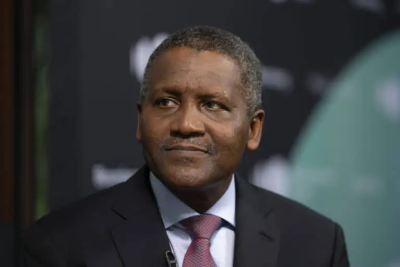
Aliko Dangote, Chairman of the Dangote Group, forecasts that the naira will appreciate to N1,100 per dollar within 2026.

He shared this outlook on Tuesday during the federal government’s unveiling of the National Industrial Policy 2025.

The naira has strengthened in recent weeks, appreciating to N1,335.95 per dollar at the official market and N1,380/$ at the black market on Tuesday.

Commenting on the development, the billionaire businessman said the country has the potential to generate large-scale consumption, industrial growth, and disposable incomes.

“I mean today if you look at it, your excellency, I believe with the policies that you have implemented in government, people now have started seeing the result and manufacturers are very very happy,” Dangote said.

“Today, the dollar is N1,340. Mr. Vice-President, I can assure you with what I know, blocking all this importation and co, naira this year will be as low as N1,100 if we are lucky.

“The only thing is for maybe the government to stop the naira from getting stronger so that they will keep collecting more naira.

“But it’s a catch-22 situation where, now, if the naira gets stronger it means that everything will go down. Everything will go down because we are an import-based country which we shouldn’t be.

“What you should be is to manufacture all the things that we need.”

On February 12, Femi Otedola, the chairman of First HoldCo, expressed optimism that the naira will strengthen meaningfully and will trade below N1,000/$1 before year-end as domestic refining is fully underway.


Continue Reading

News

Ramadan 2026: Saudi Arabia Sights Crescent Moon, Holy Month Begins Wednesday

Published

on

By

Saudi Arabia has officially confirmed the sighting of the crescent moon on Tuesday, 17 February 2026, meaning the holy month of Ramadan 1447 AH will begin on Wednesday, 18 February 2026.

The Saudi Supreme Court announced the sighting following verified reports from moon-sighting committees. Consequently, Taraweeh prayers began on Tuesday night across the Kingdom.

A post by @Muslim on X read, “BREAKING: Saudi Arabia announces the first day of fasting for Ramadan to begin on Wednesday, February 18, 2026.

“Taraweeh will begin tonight on the first evening of the blessed month.

“It’s recommended to follow the fasting time designated by your local community and country.”

Muslims in Saudi Arabia, Nigeria, Qatar, the United Arab Emirates and some other parts of the world will begin their first day of fasting at dawn on Wednesday, ushering in a month dedicated to prayer, reflection and devotion.

In Japan, however, Ramadan 2026 will begin on Thursday, February 19. The Hilal Vision Committee confirmed the decision after the crescent moon was not sighted.

Muslims across the country will observe their first fast on Thursday, marking the start of the holy month of fasting and prayer.

Meanwhile, Iran, Oman, Singapore and Turkey have also officially announced that Thursday, February 19, will mark the first day of Ramadan 2026.

The decision was made after the crescent moon was not sighted, in line with their traditional lunar observation processes. Muslims in these countries will begin fasting on Thursday as the holy month commences.

Ramadan is the ninth month of the Islamic lunar calendar, which has 12 months and lasts 354 or 355 days. Because it follows the lunar cycle, the start date of Ramadan changes every year.

Fasting during Ramadan is one of the five pillars of Islam and is compulsory for healthy adult Muslims. However, exemptions are granted to young children, the sick, travellers and women who are pregnant, nursing or menstruating.

The sighting of the crescent moon is a long-standing tradition used to determine the beginning of Ramadan and the major Islamic festivals of Eid al-Fitr and Eid al-Adha.

During the holy month, working hours and school schedules are often shortened in many Muslim-majority countries to allow more time for worship and family activities.

More than 1.8 billion Muslims worldwide are expected to observe the month of fasting from sunrise to sunset each day.


Continue Reading

News

DSS Witness Details How ISWAP Unit Planned And Executed Owo Church Massacre

Published

on

By

A DSS lead investigator testified at the Federal High Court in Abuja regarding the funding, arming, and mobilization of terrorists for the June 5, 2022, attack on St. Francis Xavier Catholic Church in Owo.

The witness detailed the roles of the defendants and stated that over 40 people died and more than 100 individuals sustained various injuries.

The prosecution also tendered what it described as a comprehensive investigation report on the incident, in court on Tuesday, which the court admitted in evidence in the absence of objection from the defence.

The witness, who was identified simply as SSI and featured as the ninth prosecution witness (PW9) testified at the resumed hearing in the trial of five men accused of complicity in the attack.

The five men are: Idris Abdulmalik Omeiza (25 years), Al Qasim Idris 20 years), Jamiu Abdulmalik (26 years), Abdulhaleem Idris (25 years) and Momoh Otuho Abubakar (47 years). They are being prosecuted by the DSS.

Led in evidence by prosecuting lawyer, Ayodeji Adedipe (SAN), the witness said he is the Deputy Director in charge of Counter Terrorism Investigation and led the investigation team.

He said his team was mandated to unravel the perpetrators, the cause of the incident, their sponsors and any other findings that may arise .

SSI said: “With that, we proceeded to gather intelligence and also exploited technical resources, which eventually led us to the arrest of five persons in the month of August 2022.

“The arrest occurred both in Kogi and Ondo states and the persons we arrested were Al-Qasim Idris (2nd defendant) and his brother Abdulhalid Idris (4th defendant), then Omaiza Abdulmalik (1st), then his brother, Jamiu Abdulmalik (3rd),” he said, and gave the name of the fifth defendant as Momoh Otuho Abubakar.

The witness added: “Our investigation found out that the persons we arrested were members of Islamic State West African Province (ISWAP), a proscribed terrorist group, who belong to a cell that operated around Okene/Adavi Local Government Area of Kogi State, as well as Omielafa and Omielege in Ose Local Government Area of Ondo State under the coordination of one Odoba.

“Odoba usually hibernate around Ogaminana in Adavi LGA of Kogi State,” he said.

Giving details of how the attack was planned, the witness said: “On the 30th of May, 2022, Odoba called a meeting of some of the group’s members, who are members of his ISWAP cell. They go with alliance, Al-Shabab.

“So on the 30 of May, 2022, they met at the Government Secondary School, Ogaminana where Al-Qasim Idris was present in the meeting and Odoba passed the instruction for them to prepare to attack the Catholic Church Owo.

“And, his instruction was clear that they should attack on Sunday and ensure that they kill the priest. So when Al-Qasim returned to Omilafia, he gathered some of the cell members, including Abdulhalid (4th defendant), his brother, Jamiu (3rd defendant) and all the four were in the meeting, except the 5th defendant.

“There was equally one Kabir, who is a cousin to Al-Qasim and Addulmalik. The meeting was held after the jumaat prayer at the mosque where the Idris bothers’ father is the Chief Iman.

“He (Al-Qasim) told them (those at the meeting) to be prepared for the attack as instructed by Odoba. He only told them they will be getting two other persons to reinforce the team

“The names of these individuals (the other two) are Mohammed and Abdullahi. On Saturday, the next day, being the 4th of June, 2022, Abdulhaleem Idris (4th) travelled to Adavi, where he hired a Volkswagen Golf 3 car.

“He proceeded to lead Odoba, who supported them with five AK47, 10.magazines, rounds of ammunition and improvised explosive devices (IED) for the planned attack,” he said.

The PW9 said by evening of the same day, they all gathered in Abdulhaleem’s house in Omilafia, where Al-Quasim allegedly, reviewed with the others, the attack plan and subsequently engaged in some dry practice.

When asked to explain what he meant by dry practice, the witness said it is the practice done with weapon, without live rounds, to reorient oneself on the safety precaution of the weapons

He added that at the end of the dry practice, they all spent the night in Al-Quasim’s room, adding that on the night of June 4, Al Qasim took a motorbike belonging to his father, which he rode most of the time, to deliver items to Mohammed and Abdullahi, to facilitate their movement for surveillance on the church and also during the attack.

Giving a graphic detail of how the attack was carried out, the witness said: “The next morning, 5th of June, the first to 4th defendants and Kabir, now at large, were driven in the Golf car, with the weapons concealed in sacks, to the church about 8 to 8:30 am.

“They met Abdullahi and Mohammed. The got to the church, removed the sacks and pulled out their weapons. Two of them sat with a woman roasting corn.

“They bought some corns. A young man hawking stuff was observing them. One of them (the attackers) went and whispered to the hawker. When he was about leaving after being whispered to, he was shot dead instantly.

“This triggered chaos in front of the church. In the midst of that, they accosted a man coming from the Deeper Life Bible Church in a Nissan Sunny car. They snatched his car and drove into the church premises.

“Under Al Qasim’s directive, they proceeded in the directions he had told them to take. Abdulhaleem was carrying the bag containing the improvised explosives.

“They shot sporadically in the church’s sanctuary, outside and all over, including worshippers trying to escape.

“Abdulhaleem, who had the bag containing IEDs, detonated at least three explosives. Other attackers engaged the worshippers with gunshots.

“40 people, including women and children, died at the Federal Medical Centre (FMC). 23 were wounded and rushed to the hospital.,” he said.

The witness added that apart from the 40 church members, who were killed, a non-member was the first to be killed by the attackers in front of the church, adding that some of the 40 deceased were taken to the hospital dead.

The prosecution subsequently tendered a medical report, signed by one Dr Ayodeji O.O, in respect of which the witness said: “We have made effort to see how the doctor could come but was not possible.”

The prosecution equally tendered 30 photographs taken from the incident’s scene by investigators, which the court admitted as Exhibit M – M30.

SSI told the court that at the end of the investigation, his team made a comprehensive investigation report.

On whether the fifth defendant played no role, since he spoke extensively about the first four defendants, the witness said it was an oversight that he did not speak about the fifth defendant.

He then proceeded to give details of the role the fifth defendant allegedly played in the whole incident.

The witness said: “Investigation revealed that the 5th defendant worked in tandem with the 1st to 4th defendants .He was operating a Point of Sales (POS) units in five deferent locations.

“About two to three weeks prior to the attack, his account was credited at two different instances with 800k. He used the POS machine to distribute the money to the individuals, who aree members of the Al-Shabab Unit of ISWAP, and the defendants were beneficiaries of this money, with no evidence of business transactions between them.”

PW9 added that technical evidence established that the fifth defendant was in communication with them (the other four), within the period of the attack.

He confirmed that autopsy examination was conducted on some of the dead bodies and a report was generated. The prosecution tendered the report which was admitted in evidence without objection from the defence.

The court also admitted in evidence, the comprehensive investigation report on the attack, which the prosecution tendered through the witness.

The defence lawyer, Abdullahi Mohammad said he would not object to the tendering of the report, but would require time to study it, because it was served on his team few days ago.

He sought an adjornment to enable him study the investigation report before he could cross examine the witness.

In the absence of objection from the prosecuting lawyer, the court adjourned further proceedings till Wednesday, February 18 at 11am.

Continue Reading

Trending