
Breaking News
BREAKING: FG Orders Conditional Lifting Of Ban On Twitter
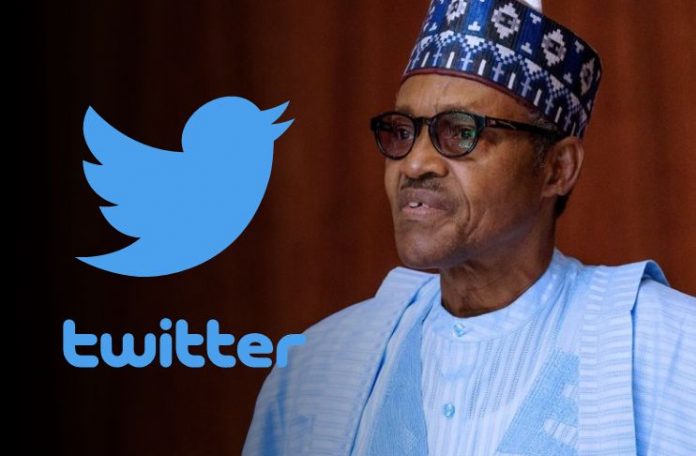
President Muhammadu Buhari on Friday, said he had directed a conditional lifting of the ban placed on the operations of the micro blogging site, Twitter, in Nigeria in June.
This was disclosed in his nationwide broadcast to Nigerians to mark the nation’s 61st independence.
However, the President said, the lifting of the ban is based on Twitter meeting the conditions set by the Presidential Committee (and its Technical Team) over which they engaged with Twitter.
The federal government had banned Twitter in June, ironically making the announcement via Twitter.
Although the presidency has giving on resolution of the issues, this is the first time Buhari is being categorical.
He described the social media as a very useful platform but regretted that some users have misused the platform to organise, coordinate, and execute criminal activities, propagate fake news, and promote ethnic and religious sentiments.
The President in his Independence Day speech said, “Social media is a very useful platform that has enabled millions of Nigerians to connect with loved ones, promote their businesses, socialise, and access news and other information.
“However, recent events have shown that the platform is not just an innocuous platform for information dissemination.
“Rather some users have misused the platform to organise, coordinate, and execute criminal activities, propagate fake news, and promote ethnic and religious sentiments.
“To address these negative trends, the Federal Government of Nigeria suspended the operations of Twitter in Nigeria on June 5, 2021 to allow the Government put measures in place to address these challenges.
“Following the suspension of Twitter operations, Twitter Inc. reached out to the Federal Government of Nigeria to resolve the impasse. Subsequently, I constituted a Presidential Committee to engage Twitter to explore the possibility of resolving the issue.
“The Committee, along with its Technical Team, has engaged with Twitter and have addressed a number of key issues. These are National Security and Cohesion; Registration, Physical presence and Representation; Fair Taxation; Dispute Resolution; and Local Content.
“Following the extensive engagements, the issues are being addressed and I have directed that the suspension be lifted but only if the conditions are met to allow our citizens continue the use of the platform for business and positive engagements.
“As a country, we are committed to ensuring that digital companies use their platform to enhance the lives of our citizens, respect Nigeria’s sovereignty, cultural values and promote online safety.”
Breaking News
Corruption Battle: Dangote Drags Ex-NMDPRA Boss To EFCC After ICPC Withdrawal
Aliko Dangote, Chairman of Dangote Industries, through his legal representative, has formally submitted a corruption petition to the Economic and Financial Crimes Commission (EFCC) against Farouk Ahmed, the former Chief Executive Officer of the Nigerian Midstream and Downstream Petroleum Regulatory Authority (NMDPRA).
This was disclosed in a statement made available to our correspondent by the Dangote Group media team on Friday.
Recall that Dangote had earlier petitioned the Independent Corrupt Practices and Other Related Offences Commission to investigate Ahmed for allegedly spending $5 million on his children’s secondary education in Switzerland. He withdrew the petition a few days ago, even as the ICPC vowed to continue with its investigation.
The statement on Friday said Dangote’s petition to the EFCC followed “The withdrawal of the same petition from the Independent Corrupt Practices and Other Related Offences Commission, a strategic decision aimed at accelerating the prosecution process.”
In the petition, signed by Lead Counsel Dr O.J. Onoja, Dangote urged the EFCC to investigate allegations of abuse of office and corrupt enrichment against Ahmed, and to prosecute him if found culpable.
The petition further stated that Dangote would provide evidence to substantiate claims of financial misconduct and impunity.
“We make bold to state that the commission is strategically positioned, along with sister agencies, to prosecute financial crimes and corruption-related offences, and upon establishing a prima facie case, the courts do not hesitate to punish offenders. See Lawan v. F.R.N (2024) 12 NWLR (Pt. 1953) 501 and Shema v. F.R.N. (2018) 9 NWLR (Pt.1624) 337,” the petition read.
Onoja further urged the commission, under the leadership of Mr Olanipekun Olukoyede, “To investigate the complaint of abuse of office and corruption against Engr. Farouk Ahmed and to accordingly prosecute him if found wanting.”
Breaking News
Rivers Assembly Reopens Impeachment Push Against Gov. Fubara, Deputy
The Rivers State House of Assembly formally recommenced impeachment proceedings against Governor Siminalayi Fubara and his deputy, Prof. Ngozi Odu.
This marks the second time within ten months that the state legislature has initiated such a move.
At a plenary session presided over by the Speaker, Martins Amaewhule, the Majority Leader of the House, Major Jack, formally read the notice detailing allegations of gross misconduct against Governor Fubara.
The notice, which was endorsed by 26 lawmakers, accused the governor of actions allegedly in violation of the Nigerian Constitution.
Amaewhule announced that the notice would be served on the governor within the next seven days.
During the same sitting, the Deputy Majority Leader, Linda Stewart, read the notice of allegations and gross misconduct leveled against Deputy Governor Ngozi Oduh.
Breaking News
Supreme Court: President Has Power To Declare Emergency Rule, Remove Elected Officials
The Supreme Court has reaffirmed that the President holds the constitutional power to declare a state of emergency in any state where circumstances threaten public safety or governance.
According to the ruling, this authority may be exercised to prevent a serious breakdown of law and order or to stop conditions from deteriorating into chaos or anarchy.
The court emphasized that such powers are intended to safeguard national stability and ensure the continued functioning of democratic institutions when extraordinary situations arise.
It noted that emergency measures are justified only in exceptional cases where normal governance mechanisms are unable to effectively address escalating crises.
More details later…