
News
Lagos Chief Sues IGP, Demands N50m For Alleged Unlawful Arrest


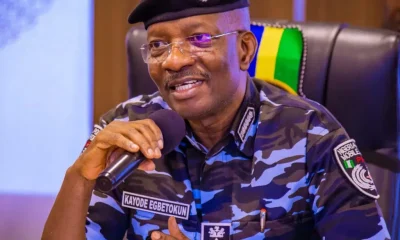
A Lagos community leader, Chief Busari Abatan Adeleye, has filed a N50 million fundamental rights enforcement suit against the Inspector-General of Police, IGP, Kayode Egbetokun, and the Commissioner of Police, Force Intelligence Department, FID, Lagos Annex, Akanniyene Ezima, over alleged harassment, intimidation, and unlawful arrest.
Chief Adeleye, who serves as the Baale of Adeleye Opeki Community in Abesan, Ipaja, Lagos, instituted the action at the Lagos State High Court, Ikeja. Two of his family members, Taiwo Adeleye and Akinola Akeem Adeleye, are co-applicants in the case, while one Egonte Chukwuma Onyema was joined as the third respondent.
The applicants are seeking a judicial declaration that their arrest and detention between September 15 and 16, allegedly orchestrated by Onyema, amounted to a gross violation of their fundamental rights to liberty, dignity of person, and property, as protected under Sections 35, 36, and 44 of the 1999 Constitution.
They urged the court to hold that their arrest, which stemmed from allegations of trespass, wrongful execution of judgment, and malicious damage, was unlawful and unconstitutional. According to them, the police actions, purportedly carried out on Onyema’s instructions, constituted abuse of power and unlawful interference with their rights.
In their prayers, the applicants are asking for restraining orders to prevent further arrests or harassment by the respondents. They are also demanding N50 million in general damages and N5 million in aggravated damages for the alleged violations.
In a 31-paragraph affidavit deposed to by Taiwo Adeleye, the applicants maintained that their family are the customary owners of Opeki Village land in Abesan, Lagos. He stated that their ownership claim had been legally affirmed by a Lagos State High Court judgment delivered on July 7, 2022, by Justice O.A. Taiwo in suit No: ID/1495/2010, Alhaji Sule Ajibade & Ors v. Hajia Rauf Ajala & Ors.
Despite being aware of the court’s decision, Onyema allegedly continued to instigate the police to interfere unlawfully with the family’s rights and to forcefully re-enter the disputed land.
The affidavit also noted that the land dispute had been the subject of a long-standing civil suit between the applicants and one Andrew Egonte, the father of the third respondent. Court records show that processes, including the writ of summons and hearing notices, were duly served on Egonte as far back as May 2011, but his counsel failed to file a defence, prompting the court to enter judgment in favour of the Adeleye family.
As of the time of filing, the IGP, Ezima, and Onyema have yet to file any response to the suit, and the court has not fixed a date for hearing.







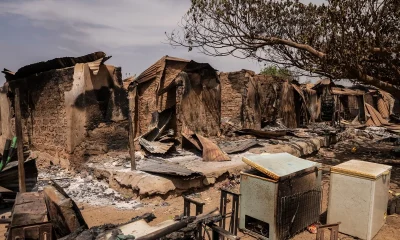

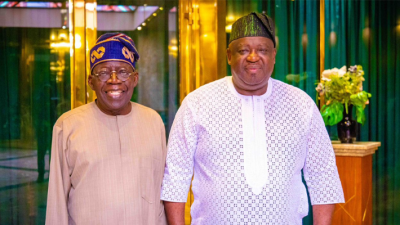
President Bola Tinubu on Tuesday met with top security and intelligence chiefs to review the recent wave of violence in Plateau State and has summoned Governor Caleb Mutfwang to Abuja for urgent consultations.
The attack, which occurred on Sunday in Angwan Rukuba community, Jos North Local Government Area, left at least 28 people dead and many others injured.
Briefing journalists in Abuja, Minister of Information and National Orientation, Mohammed Idris, described the incident as regrettable but emphasised that it does not indicate a breakdown of security.
He added that security agencies have launched clearance operations to prevent reprisal attacks and reiterated the Federal Government’s deep concern and condolences to the people of Plateau State.
According to the minister, the President’s meeting with security chiefs aims to assess the situation and implement decisive measures toward a lasting solution.
He said, “A few hours ago, His Excellency, President Bola Ahmed Tinubu, held a high-level meeting with the nation’s top security and intelligence chiefs to review the situation and take further decisive steps towards arriving at a lasting solution. Following this meeting, the Executive Governor of Plateau State, Caleb Manasseh Mutfwang, has been invited by President Tinubu to further deliberate and chart a coordinated path towards lasting peace and security.
“The outcome of the meeting between President Tinubu and Governor Mutfwang will be made public in due course. These actions underscore the seriousness with which the Federal Government is treating this matter and its firm commitment to ensuring that all necessary actions are taken promptly and effectively.”
The Minister also stressed, ”While this incident is deeply regrettable, it is important to place it in context. Plateau State has, over time, experienced localised security challenges linked to communal tensions and criminal activities. What occurred does not represent a breakdown of national security, but rather a criminal act within a known conflict-prone area—one that is being actively and decisively addressed by the authorities.
“The federal government has directed all security agencies to ensure that those responsible for this heinous act are identified, apprehended, and brought to justice. “There will be no safe haven for criminal elements anywhere in Nigeria. Ongoing operations are already generating actionable intelligence, and we are confident that those behind this attack will be held accountable.
“Let me reassure all Nigerians that the security situation in Plateau State is under control and is being actively managed. The Federal Government remains fully committed to protecting lives and property across the country, and we will continue to strengthen our intelligence capabilities, operational readiness, and inter-agency coordination to stay ahead of emerging threats.
“We urge all citizens to remain calm, law-abiding, and to cooperate fully with security agencies. It is also important to avoid the spread of unverified information that could heighten tensions or undermine ongoing efforts to restore peace.
“Nigeria’s unity remains strong, and we must not allow criminal elements to divide our communities. The Federal Government will continue to act decisively, in collaboration with the Plateau State Government and all relevant stakeholders, to ensure lasting peace and security.
“Nigeria will not yield to fear. We will protect our people, and we will prevail.”
The Minister also exonerated the security agencies, saying that they took swift action to contain the situation.
He said, “Let me assure Nigerians that security agencies responded immediately to the incident. Troops under Operation Enduring Peace were rapidly mobilised to the scene following distress calls.
“The military and other security agencies cordoned off the affected area, secured key access routes, and launched targeted search-and-clearance operations to track down the perpetrators. “These swift actions ensured that the situation was quickly contained and prevented further escalation.
“This response is part of a broader and sustained Federal Government security architecture in Plateau State and the wider North-Central region. The Nigerian Armed Forces have continued to carry out clearance operations and intelligence-led missions across vulnerable communities following attacks recorded in recent months. Reinforced surveillance and troop deployments have also been implemented in high-risk areas, supported by joint military-police patrols and strengthened rapid response mechanisms. “These coordinated efforts are designed to neutralise threats proactively and maintain stability.”
He also added, “At the national level, the Federal Government remains resolute in its commitment to security, as demonstrated through ongoing targeted military offensives and strategic deployments aimed at dismantling criminal and insurgent networks across the country. These efforts reflect a comprehensive and evolving approach to safeguarding lives and property.
“The Plateau State Government has also taken decisive and complementary measures in coordination with federal authorities. A 48-hour curfew was imposed in Jos North immediately after the incident to stabilise the security environment and support ongoing operations. The state government continues to work closely with security agencies to prevent reprisals, restore calm, and facilitate investigations.”

The Nigerian Senate has approved President Bola Tinubu’s request for a $6 billion external loan.
The approval was granted approximately three to four hours after the request letters were read by the Senate President, Godswill Akpabio on the Senate floor.
The red chamber of the National Assembly approved the loans after the presentation and consideration of a report by the Senator Aliyu Wamakko-led Committee on Local and Foreign Debts.
JomogNews had reported earlier that President Tinubu’s latest loan request was contained in two separate letters addressed to the President of the Senate, which were read during plenary on Tuesday.
In the first letter, Tinubu requested the approval to establish a structured total return swap (TRS) external financing programme of up to $5 billion with First Abu Dhabi Bank of the United Arab Emirates.
The President, in the second letter, also asked the Senate to approve a $1 billion UK export finance loan facility arranged by Citibank, London branch.
He said that the loan would be used for the reconstruction and rehabilitation of the Lagos Port Complex and Tin Can Island Port.

Nigeria’s digital banking revolution is raising the stakes for consumer trust. The question is whether the industry is rising to meet them.
Nigeria’s relationship with digital banking has changed almost beyond recognition in a decade. Where cash once dominated every transaction, from the roadside market to the corporate boardroom, mobile apps, instant transfers and USSD codes have reshaped how tens of millions of Nigerians interact with their money every single day.
The figures speak for themselves: point-of-sale transactions surged to a record N18 trillion in 2024, a 69 per cent increase from the year before, and the number of POS terminals in operation more than doubled to 5.5 million. Mobile banking is now the most widely used digital financial service in the country, with four in five users having accessed it within any given 90-day window.
This is, by any honest measure, an extraordinary story of financial inclusion and technological adoption. But it is an incomplete story if told without its other half.
Behind the growth curves and transaction volumes, a quieter and more troubling story has been unfolding. According to the 2024 Nigeria Consumer Protection Survey published by Innovations for Poverty Action, nearly one in four digital financial services users reported experiencing unexpected fees, charges or fraud attempts in the past year. Of those who encountered a problem, only half sought any form of formal redress. That silence is not apathy. It is the sound of eroded confidence: customers who have concluded that raising a complaint is unlikely to produce results.
The fraud data from the Nigeria Inter-Bank Settlement System tells the same story from a different angle. Actual losses to digital payment fraud rose to N52.26 billion in 2024, a figure inflated significantly by a single N31.1 billion incident involving one institution but still representing a 196 per cent increase in fraud losses over five years, even as the number of individual cases declined.
The decline in case counts is not reassurance enough. It suggests that while fraudsters are making fewer attempts, they are making each one count considerably more.
By channel, e-commerce and internet banking remain the most exposed, followed by point-of-sale, mobile and web platforms.
The most common technique is social engineering, which requires no sophisticated technology at all. It requires only a convincing conversation and a customer who does not know what to guard against. Insider abuse, where bank staff are complicit in fraud, is identified by NIBSS as the single greatest structural threat to the sector.
That is a sobering finding, and one that no institution should read past quickly.
What this data collectively points to is a gap that the industry must confront honestly. Nigeria’s digital banking infrastructure has expanded at speed. The consumer protection architecture that should travel alongside it has not always kept pace.
Convenience and safety are not natural enemies, but they require deliberate and sustained design to coexist. Left to grow at different speeds, they create precisely the conditions that fraudsters, rogue actors and complacent institutions exploit.
The encouraging news is that the gap is closing. Nigeria exited the Financial Action Task Force’s grey list in 2025, a signal that the country’s financial system has materially strengthened its safeguards. The CBN’s 2024 rollout of risk-based cybersecurity frameworks for deposit money banks formalised the standard of care that institutions are required to demonstrate.
Regulatory enforcement actions in 2024, including reported industry penalties totalling over N15 billion, have underscored that consumer protection is a compliance obligation with real and immediate consequence. The industry is being held to a higher standard, and that is the right direction.
Within institutions themselves, the most effective safeguards are often the ones customers never see. The strongest security infrastructure operates silently in the background: monitoring account behaviour in real time, identifying anomalies before they become losses and intervening before a suspicious transaction completes rather than after.
This is not glamorous work, but it is the work that matters most. A customer who never has to report a fraud incident has been protected more effectively than one who was offered a sympathetic apology after the damage was done.
Union Bank’s experience illustrates what this balance looks like in practice.
According to the bank’s full-year 2025 customer experience data, its digital channels recorded strong customer satisfaction scores across all platforms: UnionMobile achieved a customer satisfaction score of 87 per cent and a net promoter score of 77, while the USSD channel (*826#) returned scores of 82 per cent and 70 respectively.
These are not numbers that emerge from convenience alone. They reflect what customers value above all else when they transact digitally: the confidence that the experience will be safe, seamless and complete.
That confidence is built through sustained investment in security infrastructure, proactive monitoring and an institutional culture that treats customer protection as a core value rather than a compliance line item.
It is a culture Union Bank articulates through its ICARE values, where the commitment to being customer and community-focused is not a policy position but a founding organisational principle, reinforced consistently from the moment any member of staff joins the bank.
In March, as institutions across Nigeria marked World Consumer Rights Day, Union Bank reaffirmed to its staff the responsibility that every individual within the organisation carries to uphold the rights and dignity of the customers it serves. It is the kind of internal commitment that rarely makes headlines, but that ultimately determines the quality of every customer interaction that does.
Trust is the only currency in banking that cannot be manufactured on demand. It is built over time, through consistent behaviour, through systems that protect customers before they know they need protecting, and through institutions willing to be accountable when they fall short. Nigeria’s digital banking revolution has done extraordinary things for financial access and economic participation. Its next chapter must be defined by what it does for financial safety. The two are not in competition. In the long run, they are, in every meaningful sense, the same thing.

Plateau Crisis: Tinubu Summons Gov Mutfwang, Orders Security Crackdown

Tinubu’s $6bn External Borrowing Request Gets Senate Nod

When 8 million Customers Trust You, Safety Cannot Be an Afterthought

COURT UPDATE: Nasir El-Rufai Resumes Trial After Mother’s Passing

South African Locals Clash With Nigerians Over Disputed Igbo King Coronation

LIRS EXTENDS DEADLINE FOR FILING OF INDIVIDUAL ANNUAL INCOME TAX RETURNS TO APRIL 14, 2026

Polaris Bank Strengthens Legacy of Excellence with Major Renovation of Historic Faculty Building at University of Ibadan

President Tinubu Donates Salaries To Families Of Fallen Heroes, Injured Soldiers

Political Giants Unite: Ribadu, Tambuwal, and Gov. Sani Attend El-Rufai’s Mother’s Burial

NDLEA Seizes Cocaine Hidden In Stockfish Heads Bound For India
-
 News16 hours ago
LIRS EXTENDS DEADLINE FOR FILING OF INDIVIDUAL ANNUAL INCOME TAX RETURNS TO APRIL 14, 2026
-
 News14 hours ago
South African Locals Clash With Nigerians Over Disputed Igbo King Coronation
-
 News11 hours ago
COURT UPDATE: Nasir El-Rufai Resumes Trial After Mother’s Passing
-
 News1 day ago
Polaris Bank Strengthens Legacy of Excellence with Major Renovation of Historic Faculty Building at University of Ibadan
-
 News10 hours ago
When 8 million Customers Trust You, Safety Cannot Be an Afterthought
-
 News6 hours ago
Tinubu’s $6bn External Borrowing Request Gets Senate Nod
-
 News2 hours ago
Plateau Crisis: Tinubu Summons Gov Mutfwang, Orders Security Crackdown