
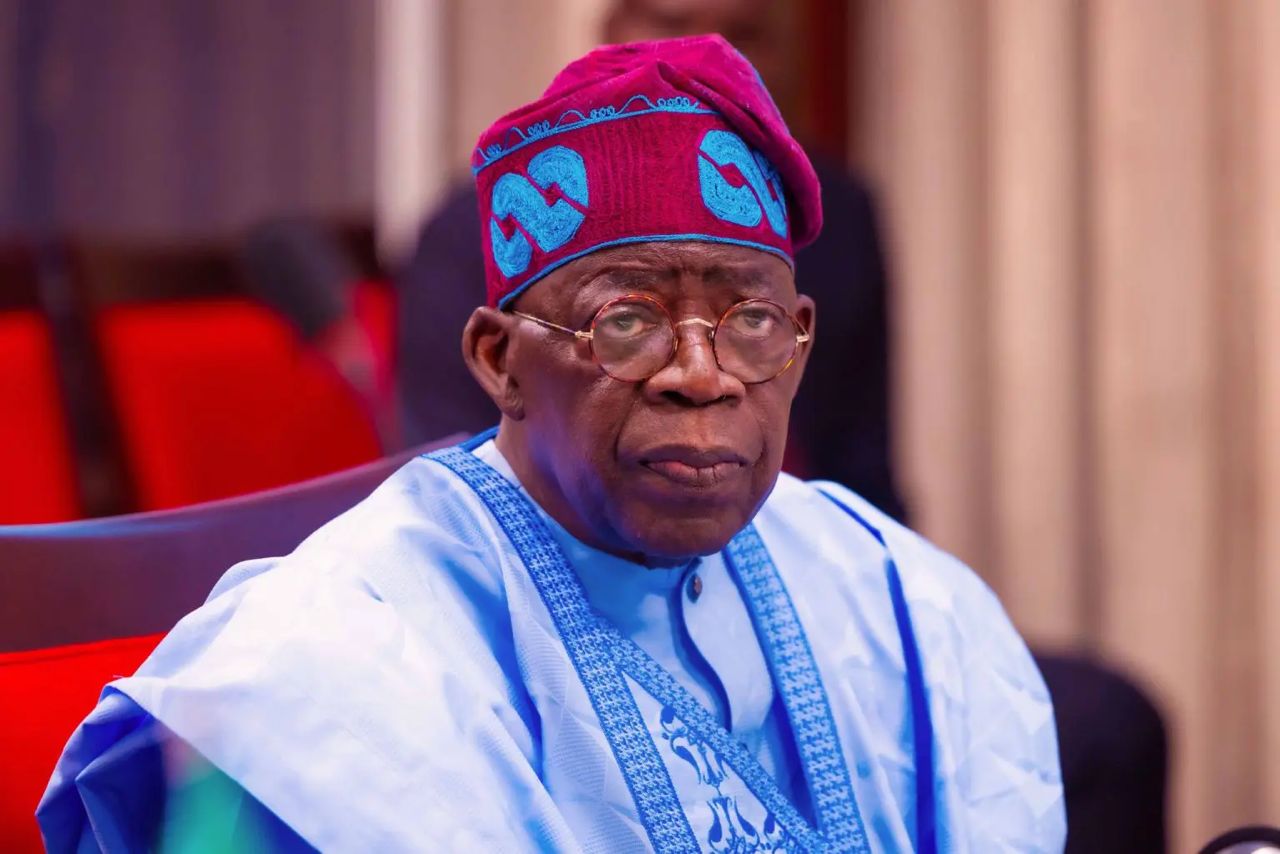
The transmission of four bills that aim to overhaul Nigeria’s tax system to the National Assembly two weeks ago by President Bola Tinubu has sparked debates in the polity about the purpose of the bills.
Some have expressed fears that the bills may encapsulate proposals calling for a raise in tax rates in a way that will further burden the citizens.
Some Nigerians have received the news with mixed feelings, while others have chosen to wait for details before commenting on the development.
There is no basis to entertain any fear about these bills. If anything, Nigerians are going to commend President Tinubu for focusing on laying a solid foundation that will ensure fiscal stability of the country. When Nigerians get to know the details of the in the documents, they will know that the president is actually working to bring reliefs to them and their businesses.
The four executive bills seek to tidy up the fiscal policy and legislation environment in the country. They are: Nigeria Tax Bill, Nigeria Tax Administration Bill, Nigeria Revenue Service (Establishment) Bill, and Joint Revenue Board (Establishment) Bill. These bills seek to translate the recommendations by the Presidential Committee on Fiscal Policy and Tax Reforms, chaired by Taiwo Oyedele, into implementable legislative framework for the benefits of Nigerians.
It is common knowledge that one factor which has continued to impede efficiency in Nigeria’s tax system and has negatively impacted revenue is multiplicity of taxes. President Tinubu, in his inauguration speech, had pledged to address the issue of multiple taxation and remove all hurdles against investment in the country. Multiplicity of taxes is one of the issues that the Nigeria Tax Bill seeks to end. This will certainly bring reliefs to corporate Nigeria. Imposition of tax by more than one agency or level of government, without a shadow of doubt, constitutes a chokehold on businesses, especially micro and small businesses as well as individuals.
How will this bill address multiplicity of taxes? In Nigeria today, laws dealing with various aspects of taxation are scattered in different legislations. Some of these laws are: Companies Income Tax Act, Personal Income Tax Act, Capital Gains Tax Act, Value-Added Tax Act, Stamp Duties Act, Petroleum Profits Act, Tertiary Education Fund Act, Petroleum Industry Act and so on. In addition to the tax-specific laws, there are plethora of tax provisions in non-tax laws such as the NLNG Act, Tertiary Education Trust Fund Act, NASENI Act, Lottery Act, Companies and Allied Matters Act, etc. The list is seemingly endless.
In enforcing these disparate tax provisions, unintended multiple taxation occurs and this is one of the things that the bill seeks to address. The Nigeria Tax Bill aims to codify of all taxing provisions into one single document to be known as the Nigeria Tax Act when passed into law. In the bill, chapters are devoted to the various tax types in a simplified format. The proposed tax law is also written in a simple language that anyone with basic literary education can read and understand. The complexity of the extant law, for instance, is such that it will be pretty difficult for a Professor of Mathematics to compute his personal income tax on his own because of all the inter-twinning provisions that will befuddle him as to what income is taxable or what deduction is allowable. All these complications and complexities have been removed in the new proposals.
In the proposed law, companies doing businesses within the country have been re-classified into two: small and large. This is done in accordance with the companies’ respective turnover thresholds.
A company will be deemed small if its turnover is N50m or less in a year. Under the extant law, any company which records a turnover of N25m or less is not required to pay Companies Income Tax (CIT).
In the new tax bill, companies with yearly turnover that is up to N50m will not pay CIT. As regards large companies, that is, those whose turnover thresholds are above N50m, there is a proposal in the bill to give some relief to them.
The objective of this succour for such companies is in line with President Tinubu’s avowed commitment to protect small businesses and eliminate inhibitions that negatively impact entrepreneurship in the country.
Perhaps the game-changer among the several pleasant provisions of this document is what the bill seeks to do with VAT. It is an eloquently testimony to the fact that President Tinubu has listened and harkened to the complaints by Nigerians, particularly the ordinary Nigerians who are bearing the substantial brunt of the initial pain of the government’s economic reformation policies.
In the proposed law, VAT will not be charged on all items that have direct existential impact on the common people. Items such as food, medicals, education, transport business and agriculture are not chargeable to VAT.
For instance, tuition fee or rent paid by proprietors or purchases made by school owners for the purpose of the business of educating Nigerians will be free from VAT. It is the same for owners of hospitals, those in agricbusiness as well as those who buy vehicles for transportation.
These are the areas where the lives of the common people will be significantly positively affected, especially in view of the temporary pain of the ongoing reforms.
In addition, certain input VAT which hitherto is not possible to claim under the current law can now be claimed. Another relief the president has put in the bill is that for VAT refunds will be made within 30 days upon completion of paper work by the such companies or entities.
Already VAT is not being charged on diesel and petrol. The president had in July this year directed the suspension of duties, tariffs and taxes on importation of food commodities as part of measures to arrest the rising cost of living.
It may interest many to know that VAT rate of 7.5% currently being charged in Nigeria is the lowest on the continent and one of the lowest in the world. Madagascar and Morocco charged 20% VAT in 2022, while it is 19.25% in Cameroon.
Many countries of the world, recognising the importance of tax revenue in providing public services, have this year reviewed their VAT upwards with one of the most striking examples being Saudi Arabia which upped its rate from 5% to 15% in July.
Further to the Nigeria Tax Bill, the table of tax rates for individuals has been restructured in a way that brings huge respite to low-income earners. It is worth mentioning that the Federal Inland Revenue Service (FIRS) does not collect taxes from individuals. It is within the jurisdiction of states’ revenue authorities to collect such income tax from individuals.
The only set of individuals who pay personal income tax to FIRS are members of the Armed Forces, members of the diplomatic corps and foreigners earning income in Nigeria. In the new bill, individuals whose annual income is N800, 000 after the deductions of pension and deductible items will not be required to pay personal income tax (PAYEE).
However, the elite who earn fat annually will pay more. This is in line with the global principle of progressive taxation which takes more tax from the high earners and a little lower tax from middle earners, while low income individuals pay very little. The pledge of Mr President is that his administration’s fiscal policy will tax prosperity and not poverty.
The second bill, the Nigeria Tax Administration Bill, basically seeks to consolidate administrative provisions for all taxes. This bill harmonises all tax administration issues such as registration, filing, payment, dispute resolution, etc for all tax-types and revenue authorities. It also clearly delineates the roles and objectives of all tax authorities in the country as well as their relevant jurisdictions. The aim of this bill is to promote the ease of tax administration, lessen tax compliance burden on the citizens and improve the ease of doing business in the country.
As for the proposed Joint Revenue Board (Establishment) Bill, this is seeking to replace the Joint Tax Board (JTB) which has been wobbly since its establishment because it was built on quicksand. The proposed replacement not only addresses the glaring shortcomings in JTB, but also retains the joint control of the body by the federal and state governments. It also seeks the creation of the office of Tax Ombudsto resolve all complaints that may arise from the operations of JRB.
Today, we cannot run away from the cryptocurrency ecosystem because it is the in-thing. But as it stands in Nigeria today, there is no law that regulates cryptocurrency operations. One key highlight of the Nigeria Tax Bill is that it seeks a legislation to regulate the digital currency market said to be worth $1trillion globally. The bill, when passed into law, will arrest the revenue the country has haemorrhaged in the sector. It will be recalled that some executives of one of the biggest cryptocurrency platforms, Binance, are in court for non-payment of taxes among other offences.
The Nigeria Revenue Service (Establishment) Bill is primarily proposing a change of name for the Federal Inland Revenue Service (FIRS) to the Nigeria Revenue Service. This bill is one which seeks to correct the error of 2007 when Nigeria’s apex tax authority, FIRS, became autonomous as an operational arm of the Federal Board of Inland Revenue (FBIR). The mandate of FIRS is to administer tax laws to assess, collect and account for revenue accruable to the federation and not the Federal Government. Especially when we consider the current sharing formula on VAT revenue, only 15% goes to the Federal Government. The remaining 85% is shared between the states and the local government areas.
Today, tax revenue from FIRS is the main reason the 36 states and the local government councils smile to the banks monthly during their Federation Account Allocation Committee (FAAC) meeting. A total of N17.8trillion accrued to the Federation Account between January and July this year. FIRS tax revenue alone contributed N11.7trillion, representing 65.8 percent of the total money disbursed to the federal, state and local government councils to meet their needs.
Giving such a critical agency an appellation which suggests it is collecting tax solely for Federal Government is improper and must be corrected. Another error in the current name is contained in the word ‘Inland’ which restricts the agency to the collection of taxes within the interior territory of the country. Nigeria has huge revenue to collect from offshore transactions and only a repeal of FIRS (Establishment) Act 2007 to pave the way for the Nigeria Revenue Service (Establishment) Act can make that happen. Those suggesting that the proposed name change will translate to other revenue agencies being subsumed or merged with NRS need to get copies of the bill to clear their doubt.
The general principle of the four tax bills is not just to modernise the tax system in the country, but also to ensure that relief is created for ordinary Nigerians and businesses. And so, for insulating the poor from VAT payment through exemptions of good and services that directly impact their lives, for making VAT neutral for businesses through enabling deduction of input tax from out VAT, President Tinubu has demonstrated fidelity to his commitment that government policies must allow the poor to breathe and not suffocate. Tinubu deserves to be applauded as a leader who listens to the yearnings of the citizens.
Dare Adekanmbi is the Special Adviser on Media to the FIRS chairman.