

In the Ijagemo community of Lagos State, a landlord’s alleged corruption and five-year avoidance of electricity bills has led to a petition against Ikeja Electric.
The situation underscores the need for justice, reform, and fairness in electricity consumption.
In a recent unfolding in the Ijagemo community of Lagos State, a collective outcry has emerged against a longstanding practice that has left many in astonishment and disbelief.
At the heart of this controversy is Mr. Gani Oladipupo, a landlord who has allegedly skirted the boundaries of legality by inhabiting his residence for over five years without once registering for or settling his electricity bills.
This action, or rather inaction, has propelled a group of concerned electricity consumers to step forward, petitioning Ikeja Electric, the power supplier to the area, in a bid to bring justice and equity back to their community’s electricity consumption dynamics.
The Spark of Controversy
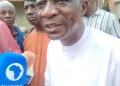
According to the petition spearheaded by Pastor Amos Moyo Fabiyi, representing the aggrieved consumers, Mr. Oladipupo, who is also an electrician by profession, has not only evaded payment but has allegedly engaged in corrupt practices to maintain his illegal electricity supply.
The accusation extends to claims of bribing staff of Ikeja Electric to prevent disconnection of his power supply and resorting to illicit reconnections whenever his supply was severed.
This situation has not only raised questions about the integrity of the electricity distribution system but has also highlighted the broader issue of electricity theft in rural communities, where such practices can significantly impact the financial and operational efficiency of utility providers.
The Community’s Outcry
The Ijagemo community, like many other rural areas in Nigeria, faces challenges with electricity distribution. A significant number of consumers in these areas are without meters, leading to a reliance on a central billing system.
This system, while designed to ensure fairness, often falls short, primarily when unregistered consumers like Mr. Oladipupo consume electricity without contributing to the cost.
This disparity has left registered consumers bearing the burden for those who bypass the system, a situation that the petitioning group argues is both unsustainable and unjust. “It’s high time authorities stepped in to rectify this anomaly,” Pastor Fabiyi remarked, emphasizing the need for a robust response to deter similar future infractions.
A Call for Justice and Reform
The case of Mr. Gani Oladipupo is not an isolated one, yet it starkly illustrates the broader challenges facing electricity distribution in Nigeria, especially in less urbanized regions.
The petitioners are calling for immediate action, urging Ikeja Electric and relevant authorities to not only ensure that Mr. Oladipupo is held accountable for his years of unpaid electricity bills but also to implement measures that prevent such incidents from recurring.
This includes the installation of meters for all consumers to facilitate fair billing and the strengthening of oversight mechanisms to detect and penalize unauthorized connections and corruption within the utility’s staff.
The goal, as outlined by the petitioning group, is to foster a culture of responsibility and fairness in electricity consumption, ensuring that all users contribute equitably to the cost of the service.