
News
El-Rufai Dumps President Tinubu’s Ministerial Appointment,Names Replacement


A former Governor of Kaduna State, Nasir El-Rufai, has withdrawn his interest in being part of President Bola Tinubu’s cabinet, PREMIUM TIMES can exclusively report.
Presidency sources said Mr El-Rufai told President Tinubu at a meeting on Tuesday that he was no longer interested in becoming a minister but would continue to contribute his quota to the development of Nigeria as a private citizen.
“He also told the president that he needed time to focus on his doctorate programme at a university in The Netherlands,” one of our sources said.
Another insider also told this medium that the former governor suggested a new ministerial nominee — Jafaru Ibrahim Sani — for Kaduna State, saying the President would find him very useful and resourceful.
Mr Sani served as commissioner in three ministries in Kaduna State (Local Government Education and Environment) while Mr El-Rufai was governor.
Mr El-Rufai visited the President at the presidential villa a day after the Senate confirmed 45 ministerial nominees after a week-long screening of 48 of them.
The upper legislative chamber, however, withheld his confirmation and those of two others, citing security reports from the State Security Service for the action.
The two others were a former senator from Taraba, Sani Danladi, and a nominee from Delta State, Stella Okotete.
Our sources said on becoming aware of the Senate pronouncement on his case, Mr El-Rufai, who only returned to Nigeria from London on Monday, sought and got an appointment to meet the president.
At the meeting on Tuesday afternoon, President Tinubu, according to our sources, told the former governor he received some petitions critical of his ministerial nomination.
The president then asked for 24 hours grace to review the petitions and the SSS report to the Senate to enable him to reach a decision.
It was at that point that Mr El-Rufai responded that he was no longer interested in being minister since it appeared some forces around the president were scheming intensely to block his emergence as federal minister.
Mr El-Rufai had disclosed during his confirmation hearing on 1 August that Mr Tinubu asked him to work with him on the power problem facing the country.
According to him, the President had given a target of seven years for Nigeria to stop experiencing power outages in the country.
At the Tuesday meeting, Mr El-Rufai also reportedly told the President that since he would no longer be in the federal executive council, he would return the next day with his team to present the preliminary work done so far on the energy sector.
The team that accompanied the former governor to make presentations to the president on Wednesday includes Eyo Ekpo, a former commissioner at the Nigerian Electricity Regulatory Commission (NERC); Hafiz Bayero, a former commissioner and administrator of the Kaduna Capital Territory Authority; Tolu Oyekan of the Boston Consulting Group and Ayodele Oni, a lawyer.
Mr El-Rufai is studying for a doctorate in public policy at the United Nations University, Maastricht.
His associates say as he prepared to leave office as governor in May this year, he had indicated his desire to exit public life and concentrate on his PhD programme.
But that was until then President-elect Tinubu asked him to join his cabinet so he could charge him with the responsibility of repositioning the inefficient power sector in Africa’s largest economy.
It is unclear what suddenly went wrong between the two men such that an agency of government would block Mr El-Rufai’s ministerial nomination without the president lifting a finger.
When contacted, Muyiwa Adekeye, the media adviser to Mr El-Rufai, declined to comment for this story.
PREMIUM TIMES.






News
Union Bank Of Nigeria Marks International Women’s Month 2026 With Inclusion-First “Give to Gain” Campaign

In observance of International Women’s Month 2026, Union Bank of Nigeria reaffirms its commitment to gender equity through a focused initiative centred on women living with disabilities and women raising children with disabilities.
Aligned with the global theme “Give to Gain,” the Bank’s campaign “Give to Gain: Creating Pathways for Inclusion and Endless Opportunities” centres the lived experiences of women living with disabilities and underscores the need for intentional systems of support for social and economic advancement.
Throughout March, Union Bank will implement targeted initiatives to expand access, foster inclusion, and unlock sustainable opportunities. Activities include a flagship event which held at
The Stable, its multipurpose venue in Surulere, Lagos, on Saturday. The event convened women with disabilities, caregivers, supporting organisations, and advocates for dialogue, mentorship, and resource sharing.
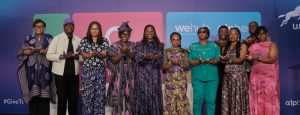
L-R: Chief Talent Officer, Union Bank of Nigeria, Omayuli Wale-Ajayi; Head, Corporate Banking, Union Bank of Nigeria, Ali Kadiri; Head, Retail and SME Business, Union Bank of Nigeria, Vivian Imoh-Ita; Founder/Executive Director, Deaf International Foundation, Funmilola Ogunro; MD/CEO, Union Bank of Nigeria, Yetunde Oni; SouthWest Coordinator, Nigeria Association of the Blind, Adenike Olorundare; Women Leader, Lagos Chapter, Nigeria Association of the Blind, Olubukola Salako; Executive Director, Corporate Bank & Business Banking Lagos & West, Union Bank of Nigeria, Taiwo Shote; Chief Brand and Marketing Officer, Union Bank of Nigeria, Olufunmilola Aluko; Regional Executive, Business Banking SouthWest and Lagos, Union Bank of Nigeria, Emmanuel Aihevba, and Lead Innovation, Events and Platform Management, Union Bank of Nigeria, Chiamaka Moses during the Bank’s commemoration of International Women’s Day 2026 at the Stable, Surulere, Lagos recently.
Complementary efforts include outreach to disability support facilities and collaboration with educational institutions to distribute learning materials to female students with disabilities. Tailored mentorship programmes will build confidence and capability in education, entrepreneurship, and careers. Through its women’s banking proposition alpher and strategic partnerships, the Bank will also deliver business sustainability training specifically designed for women living with disabilities and women raising children with disabilities.
Internally, Union Bank will activate WeHub — its employee-led women’s network — to strengthen inclusive culture and support professional growth across the organisation.
These actions reflect Union Bank’s long-standing commitment to advancing equity for underserved communities — and align with the United Nations Sustainable Development Goals 5 (Gender Equality) and 10 (Reduced Inequalities). For Union Bank, these are not frameworks to cite; they are commitments to live out.
Olufunmilola Aluko, Chief Brand and Marketing Officer, Union Bank of Nigeria, stated that “At Union Bank, inclusion is not an abstract ideal; it is a deliberate choice. While many conversations around women’s empowerment are important and necessary, women living with disabilities and women raising children with disabilities are too often left out entirely. This year’s theme, ‘Give to Gain,’ reflects exactly what we believe: that when we intentionally open access, support, and opportunity to these women, the value created extends to families, communities, and society at large.”
Union Bank’s IWD 2026 campaign is a statement of intent: that true inclusion requires us to go further, reach deeper, and serve those who have waited longest for a seat at the table. In 2026, Union Bank is committed to ensuring that a seat exists — and that it is built to last.
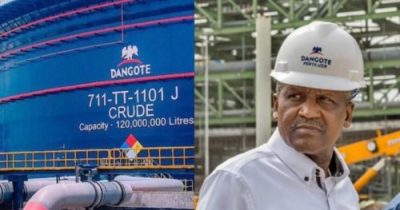
The Dangote Petroleum Refinery officially reduced its gantry prices for petrol (PMS) and diesel (AGO) following a series of price hikes earlier in the week.
According to a new pricing template released by the refinery on March 10, 2026, the gantry price of petrol has been reduced by N100, dropping from N1,175 to N1,075 per litre.
The refinery also stated that the price of PMS for coastal supply will now be N1,050 per litre. The difference in price reflects additional costs linked to maritime distribution.
Similarly, the price of Automotive Gas Oil (diesel) has been reduced to N1,430 per litre at the gantry, down from the previous N1,620 per litre. This represents a decrease of N190 per litre.
The refinery noted that these gantry prices do not include regulatory charges from the Nigerian Midstream and Downstream Petroleum Regulatory Authority (NMDPRA).
Meanwhile, JomogNews earlier reported on Monday that Dangote Petroleum Refinery raised its gantry PMS price to N1,175 per litre — the third upward adjustment in seven days
The refinery communicated the new ex-depot price to marketers and depot operators, up ₦180 from the N995 per litre announced last week Friday, an 18.1 per cent increase in three days.
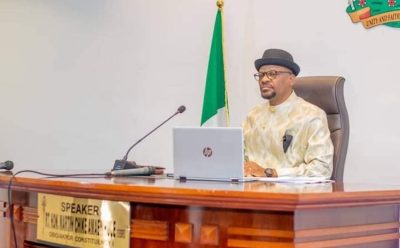
A video circulating online has captured a tense moment during the screening of commissioner nominees submitted by Governor Siminalayi Fubara to the Rivers State House of Assembly.
The footage seen shows the Speaker of the Assembly, Martin Amaewhule, questioning one of the nominees, Charity Deemua, over the status of her tax clearance certificate.
During the screening of commissioner nominees, the Rivers State House of Assembly rejected nominee Charity Deemua after she claimed that as a politician, she did not pay taxes.
Speaker Martin Amaewhule and other lawmakers expressed shock at the statement, leading to the rejection of her nomination along with three others due to lack of tax compliance.
During the screening session, Amaewhule pointed out that the nominee’s tax clearance appeared outdated.
“I just wanted to know, so there’s no current tax clearance. Madam has not been paying tax since 2018. I just wanted to know if she’s been exempted from paying taxes. So let her tell us now,” the Speaker said.
Responding, Deemua explained that she had not had a steady source of income in recent years.
“Like I said before, I’m a politician, I don’t have work,” she stated.
When asked to clarify her employment history, Deemua told the lawmakers that she had previously served briefly in government.
“I was a member, a commissioner in the Rivers State House of Assembly Service Commission,” she said.
Amaewhule then pressed further about her role in a local government caretaker committee.
“When were you? Hold on… local government caretaker committee member, right?” the Speaker asked.
“I was just three months there,” Deemua replied.
“When? When was that?” Amaewhule asked.
“And I think November last year,” she responded.
“November when? What year?” the Speaker asked again.
“2025,” she answered.
The Speaker then questioned whether she earned income during that period.
“You were not paid salary? Were you not paid salary?” Amaewhule asked.
“In the caretaker committee, we were paid,” Deemua admitted.
“You were paid? Yes. Is that not income? But you said you have not had any income from 2018 to date as a politician. So no tax clearance, and that’s what you are telling Rivers people. Madam, that is not nice. You are misleading the 10th Rivers State House of Assembly,” Amaewhule said.
In response, Deemua apologised and suggested she could address the issue.
“I’m sorry, Mr. Speaker. But I think I can still go back for…,” she began before being interrupted.
“No, but you say you have not had any income now,” Amaewhule replied before moving on to the next nominee.
The video of the exchange has since drawn reactions online, with many Nigerians asking that if politicians say they don’t work, what exactly are taxpayers paying for.
See video:

Union Bank Of Nigeria Marks International Women’s Month 2026 With Inclusion-First “Give to Gain” Campaign

IWD: Fidelity Bank Signs MoU with Partners, Launch ‘Give Her Power’ Initiative to Empower Nigerian Women

Just In: Dangote Refinery Announces Petrol, Diesel Price Reduction

Drama At Rivers Assembly Over Nominee’s ‘I don’t pay tax’ Statement

Rotimi Salami In Tears As ‘Kilanko’ Struggles At Box Office

Aiyedatiwa Loses Legal Bid To Stop Amendment Of Re-election Suit

BREAKING: Court Of Appeal Nullifies PDP Ibadan Convention

Boyfriend At Large Following Death Of 26-Year-Old Woman In Oyo State

FG Set To Begin N100bn Solar Energy Project For Public Institutions

Police Round Up More Suspects Over Killing of Ajiran Monarch’s Son
-
 News2 days ago
Drama At Rivers Assembly Over Nominee’s ‘I don’t pay tax’ Statement
-
 Business1 day ago
IWD: Fidelity Bank Signs MoU with Partners, Launch ‘Give Her Power’ Initiative to Empower Nigerian Women
-
 News2 days ago
Just In: Dangote Refinery Announces Petrol, Diesel Price Reduction
-
 Entertainment2 days ago
Rotimi Salami In Tears As ‘Kilanko’ Struggles At Box Office
-
 News21 hours ago
Union Bank Of Nigeria Marks International Women’s Month 2026 With Inclusion-First “Give to Gain” Campaign
-
 News2 days ago
Aiyedatiwa Loses Legal Bid To Stop Amendment Of Re-election Suit