
Connect with us

News

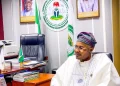
Tax Dialogues, Crucial For Strengthening Tax Administration — Muhammad Nami

Published

on

Tax dialogues, which provide a platform for exchange of diverse ideas on taxation, have been described as a tool for engendering tax compliance through collective ownership of the tax system, as well as a means to strengthening tax systems.

Speaking at the 2022 Kaduna State Tax Dialogue, held in Kaduna State today, Mr. Muhammad Nami, Executive Chairman of the Federal Inland Revenue Service (FIRS) stated that dialoguing on tax was very necessary for inclusivity, fairness and pooling expert ideas to aid tax policy formulation, which ultimately strengthens tax administration.

“Dialoguing on tax is very important for many reasons,” he stated.

“Tax dialogue is a multi-sided communication channel that enables every view to taxation be aired and considered.  By so doing, it lends itself to inclusiveness in the design and implementation of the tax system thereby engendering the spirit of collective ownership which, ultimately, promotes voluntary tax compliance;

“Dialoguing on tax prevents destructive conflicts as no one feels cheated or unfairly treated.

“Examples from history are rife on the importance of engagements on tax issues. For instance, the then British Parliament passed the Tea Act which constrained Americans to buy tea on which duty had been paid without dialoguing with the people.  Consequently, the Act was rejected.  According to Richard Murphy, in his book — the “Joy of Tax” —, one of the complaints cited by those who signed the Declaration of Independence in 1776 was ‘The King which was imposing taxes on us without our Consent’.

“When governments do not dialogue with the people on the taxes they wish to impose, they create room for conflict and even rebuff.

“Crucially, tax dialogue provides the platform for pooling expert ideas to aid tax policy formulation, review of tax laws and ultimately the strengthening of tax administration,” Mr. Nami said.

Speaking on the concept of the “Social Contract” that exists between the government and the citizens, Mr. Nami explained that for the government to provide public goods for the enjoyment of citizens, citizens had the duty to provide government with the needed resources to do so by paying their taxes.

“As much as individuals running the apparatus of government are liable to satisfy the yearnings of citizens for public goods, it is the duty of the citizens to supply the resources required. This is the Social Contract.

“The Social Contract is two-sided – it involves the duty of government to provide public goods for the enjoyment of citizens on the one hand; and the duty of citizens to provide government with the resources needed to provide those public goods on the other hand. Citizens fulfil their side of the Social Contract by paying taxes with minimal prompting.”

Mr. Nami further noted that two key drivers of voluntary tax compliance are effective communication and trust, and that “Tax Authorities must develop effective tax communications strategies while governments, at all levels, must ensure taxpayers receive value for taxes paid.”

The FIRS boss further called on tax authorities to implement data-driven tax administrations, noting that “modern and efficient tax administration is run with data.”

“The time is ripe for Nigerian tax authorities to start using data to identify all taxable persons, track all economic activities and determine tax payable.

“Nigeria needs appropriate statutory framework for a centralised data sourcing, warehousing, analysis and retrieval system that every tax authority can plug into.”

Muhammad Nami also called for the harmonisation, at all levels of government, of all revenue generating functions into a single platform under the administration of one revenue authority to reduce cases of uncertainty and instability in the economy.

 

News

2027: Sanwo-Olu Officially Endorses Obafemi Hamzat As Successor

Published

on

By

Lagos State Governor Babajide Sanwo-Olu has officially endorsed his deputy, Dr. Obafemi Hamzat, as his preferred successor for the 2027 governorship election.

The announcement was made on Monday, April 27, 2026, during a meeting at the Lagos House, Marina, where Hamzat formally declared his intention to run.

In the past few weeks, Hamzat has received widespread endorsement from political and community leaders across the state during his various consultative visits.

Recall that the Speaker of the Lagos State House of Assembly, Mudashiru Obasa, had expressed support for Hamzat’s governorship bid.

Also, the Chief of Staff to the President, Femi Gbajabiamila; Senator representing Lagos East, Tokunbo Abiru; and former Minister of Finance and Coordinating Minister of the Economy, Wale Edun, and other stakeholders have endorsed Hamzat’s gubernatorial bid.

Details shortly…

Continue Reading

News

Malami Hits Back; Sues EFCC To Reclaim Seized Assets

Published

on

By

Former Attorney General of the Federation (AGF) Abubakar Malami has formally challenged the Economic and Financial Crimes Commission (EFCC) in court, asserting that his wealth and properties were acquired through legitimate means.

In an affidavit filed on April 27, 2026, Malami urged the Federal High Court in Abuja to vacate an interim forfeiture order covering 57 properties allegedly linked to him and his family.

The order affected multiple assets said to be under investigation.

Malami, in court documents seen on Monday, pushed back strongly against the claims. He insisted that his wealth and properties were acquired legally over many years. He tied them to his career as a lawyer, as well as investments and other income sources.

“My Money Is Clean, My Properties Are Legit,” he declared while challenging the action in court.

The EFCC had argued that the properties may be linked to proceeds of crime. That position formed the basis of the interim forfeiture order granted in January 2026. But Malami said the agency failed to establish any direct connection between the assets and illegal activity.

“There is no document before the court showing these properties were acquired with proceeds of crime,” he stated.

He also accused the commission of presenting exaggerated figures for the value of the properties. According to him, assets bought for hundreds of millions of naira were portrayed as being worth billions. He said independent valuations show lower and more realistic figures.

Malami explained that his earnings came from different channels. He listed decades of legal practice, business ventures, and investments across sectors such as hospitality, agriculture, and education. He also mentioned financial support from banks and proceeds from asset sales.

“Loans from commercial banks, asset sales and other investments. Gifts and proceeds from book launches.”

He added that all his earnings were properly declared to the Code of Conduct Bureau in line with legal requirements.

Beyond the financial arguments, the former AGF accused the EFCC of going beyond its powers. He alleged that some of the properties were taken over without a final court order. He further claimed that family members were forced out of residences and personal documents were seized.

He described the actions as “extrajudicial” and a violation of due process.

The legal battle is also tied to an ongoing criminal case involving the former minister. Observers say the outcome could test the limits of the EFCC’s powers, especially in relation to asset forfeiture and compliance with the law.

Malami is asking the court to nullify the interim forfeiture order. He maintains that the properties are legitimate and have no link to any crime.

The court is expected to determine whether the assets will be permanently forfeited to the Federal Government or returned to him.


Continue Reading

News

 Journalists Blocked From Covering High-Profile Treason Hearing

Published

on

By

A Federal High Court sitting in Abuja on Monday has barred journalists from covering the bail proceedings of six defendants standing trial for an alleged coup plot against President Bola Tinubu’s administration.

Operatives of the Department of State Services, DSS, reportedly ordered reporters to leave the courtroom shortly before the trial judge, Justice Joyce Abdulmalik, took her seat.

The order was said to have come from the judge.

At the time of filing this report, the journalists complied and exited the courtroom.

This is coming after heightened public interest in the trial of the six defendants, who were arraigned last Wednesday by the FG over an alleged failed coup.

Those standing trial are Mohammed Ibrahim Gana, a retired major-general; Erasmus Victor, a retired navy captain; Ahmed Ibrahim, a police inspector; and Zekeri Umoru, an electrician at the Presidential Villa.

Others are Bukar Goni and Abdulkadir Sani, Zaria-based Islamic clerics.

Continue Reading

Trending