
News
Binta Garba: Usman Plotted My Removal From NPA Because I Demanded Transparency
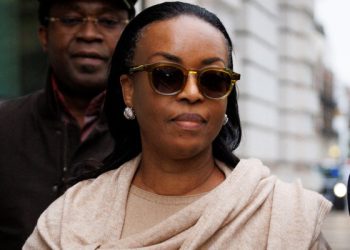
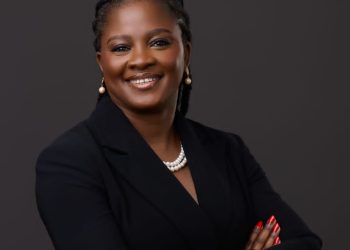
Senator Binta Garba, a former board member of the Nigerian Ports Authority (NPA), has alleged that Hadiza Bala Usman, suspended Managing Director of NPA, influenced her removal from the agency after she demanded financial transparency.
In a statement, Garba, who represented Adamawa North at the senate between 2015 and 2019, accused Usman of working against the directives of President Muhammadu Buhari and Minister of Transportation, Rotimi Amaechi.
The Minister of Transportation had suspended Usman over alleged non-remittance of some of the agency’s funds to the Federal Government but Usman denied the allegation.
Amaechi also set up a panel to probe the agency under the watch of Usman whom Buhari appointed in 2016.
In her statement, Garba said she was not comfortable with the way Usman ran the agency before she was suspended.
“In January 2021, Senator John Akpanudoedehe and I were removed from the board and our removal was clearly orchestrated by the now suspended Managing Director (MD) of NPA, Hadiza Bala Usman. Before my removal, I was not comfortable with the way the board and authority were run.”
“I consistently expressed my discomfort and displeasure with the way the MD was running the place and this, I have no iota of doubt in my mind made her to orchestrate my removal from the board. Note, I was removed without the knowledge of the supervising ministry/Minister of Transportation, which was very uncommon.
‘Bala Usman ignored my questions’
“My observations and complaints with the suspended NPA MD were more with the financial statements of NPA and I was worried that if she continued (doing) so, there would certainly be trouble and her sudden removal (suspension) would be inevitable. I noted discrepancies, I raised observations, I asked questions but I was completely ignored and disregarded. Answers were never provided, until my removal was plotted,” she said.
Garba said she wanted to resign from the board of the NPA over Usman’s conduct but she was advised against doing so.
She alleged that the suspended MD was not comfortable with the way and manner she asked questions about the financial record of the agency.
“When the board came in, its first meeting was in June 2020, with the aim of deliberating on the financial report. I made some observations on the report which, obviously, the MD, Hadiza Bala Usman, was not comfortable with. At the time, the report covered 2 years but I objected, pointing out that, under normal circumstances, procedurally and international norms, it should cover a minimum of 3 years. It was after my objection that the MD grudgingly and resentfully provided the third year’s report. I wasn’t really comfortable. I observed more discrepancies with the financials and asked questions about them. The MD was uncomfortable and even felt slighted by the objective comments and questions.
‘Bala Usman acted as if she had a lot to hide’
“Scrutinising the financial reports of the NPA is a very critical and very important aspect of my role and function as a member of its board, appointed by the President. I was not ready to abdicate that core responsibility. For me, my board membership of NPA, like every other public office I have held, was a call to serve my country and I was prepared to give it my all. But the suspended MD felt offended by my observations, questions, spotting obvious inconsistencies and acted like someone with a lot to hide. Answers were not forthcoming and, when they did, were less than satisfactory.
“Some members of the board felt I was the only one holding the financial report back. I had to meet with the Minister of Transportation and I told him I wasn’t comfortable with the way and manner the board was being handled and treated by the MD and that I wanted to resign.
“The board chairman, Chief Akin Ricketts (whose removal as board chairman was also orchestrated by the MD) and some other members, prevailed on me not to resign and that, if I did, it would send the wrong signal and would not be good for the President. We settled down to work on it (the financial reports). After sometime, my uneasiness did not go away. Again, I met with the Minister of Transportation and told him that I did not want to continue with the board with the way the MD was running the place. I met someone high up in the Presidential Villa and told him my own story and advised that the MD be called to order (sic).
“Instead of making amends, the suspended MD’s next move was to go against the NPA Act by designing my removal from the board. The Act stipulates that it is the minister who should send names of appointees to the board to the President for approval. For someone to unilaterally go against the Act and the Minister that brought her on board was rather unfortunate.
“I made it very clear to everyone I spoke with about the situation in NPA, stressing that it was not about me but the system, rules and procedures, as well as the survival of our institutions. I could not keep quiet and watch the suspended MD run the NPA aground. I wished she had listened but she didn’t and opted to plot my removal from the board. Unfortunately, I have been vindicated.”
News
Oyo 2027: Adelabu Quits As Power Minister To Focus On Guber Race
The Minister of Power, Adebayo Adelabu has formally resigned from his position in the Federal Government to pursue his governorship ambition in Oyo State.
In a resignation letter dated April 22, 2026, and addressed to the President, Adelabu stated that his resignation will take effect on April 30, 2026, to enable him to focus on his governorship ambition in Oyo State.
The letter, routed through the Office of the Secretary to the Government of the Federation, stated that he was stepping down with “a deep sense of honour and profound gratitude.”
He wrote, “I write with a deep sense of honour and profound gratitude to formally tender my resignation as the Honourable Minister of Power of the Federal Republic of Nigeria. This resignation is to take effect on 30th April 2026, in order to allow sufficient time for a smooth and orderly handover of responsibilities.”
Adelabu thanked the President for the opportunity to serve, describing his appointment as a privilege.
He said, “Your Excellency, I remain sincerely grateful for the privilege and confidence you reposed in me by appointing me to serve our great nation in this capacity.
“It has been a rare honour to contribute to national development under your leadership and to play a role in advancing reforms in the power sector—one of the most critical foundations of Nigeria’s industrial growth and economic transformation.”
The former minister said his resignation was to enable him focus fully on his governorship ambition in Oyo State, citing provisions of the amended electoral law.
He added, “My decision to step down is informed by my intention to focus fully on my gubernatorial ambition in Oyo State. This aspiration, which dates back to 2016 during my service as Deputy Governor of the Central Bank of Nigeria, ultimately led to my voluntary resignation from the Central Bank in 2018 in order to pursue the same goal.”
“In line with the provisions of the Amended Electoral Act 2026, which preclude political office holders from contesting elections, I consider it both appropriate and necessary to resign at this time.”
Adelabu’s exit marks a major political development ahead of the next electoral cycle, particularly in Oyo State, where he is expected to contest the governorship election.
News
Wale Edun, Musa Dangiwa Resigned Voluntarily, Not Sacked – Presidency
The Presidency has clarified that Wale Edun (former Finance Minister) and Ahmed Musa Dangiwa (former Housing Minister) voluntarily resigned from their positions and were not sacked by President Tinubu.
In a statement released this evening April 22, presidential media aide, Bayo Onanuga, said that contrary to public opinions, Wale Edun resigned on health grounds while Dangiwa also tendered his resignation and thanked the President for the opportunity given him to serve in the Federal Executive Council.
Onanuga stated that Edun, who clocked 70 on Monday and has battled recent ill health, fittingly submitted his resignation letter on his birthday, thanking the President for the opportunity to serve Nigeria.
“It has been a pleasure and privilege to serve your administration and the Renewed Hope Agenda, Under your leadership, Nigeria has emerged stronger, more resilient and more internationally respected. I wish you and the administration every success in the future” he wrote
Onanuga stated that on Tuesday, before the Office of the Secretary of the Government of the Federation announced his departure from the Cabinet, Edun paid a valedictory visit to the President at the Villa and held an hour-long discussion with the president and then left to focus on his private businesses.
The presidential aide stated that President Tinubu has expressed deep appreciation to Edun and Dangiwa for their dedicated service and significant contributions to the administration’s economic reform programme and wished them continued success in their future endeavours.
‘’In the same vein, the President has urged the new Minister of Finance, Taiwo Oyedele, to consolidate ongoing reforms and advance the administration’s fiscal and economic objectives with renewed focus, discipline, and innovation.
President Tinubu will shortly send the ministerial nominee for housing, Muttaqha Rabe Darma, also from Katsina, like Dangiwa, to the Senate for confirmation” the statement concluded
News
Unity Bank, Experts Advocate Green Investment, Climate Innovation To Drive Economic Resilience
Nigeria’s retail lender, Unity Bank Plc, alongside leading climate innovation experts, has called for increased investment in the green economy and the adoption of frontier technologies as critical pathways to driving economic resilience and reducing the impact of climate change on vulnerable populations across Africa.
The call was made during a thought-provoking webinar hosted by the Bank to commemorate this year’s Earth Day, themed “The True Cost of Climate Change and Who Pays?”. Climate experts and stakeholders convened to examine the human, economic, and institutional costs of climate change, while spotlighting practical solutions to address its growing impact.
In his opening remarks, Unity Bank’s Head of Strategy and Innovation, Ibukun Coker, emphasised the urgency of addressing climate risks from both a societal and business perspective.
He said: “Climate change is no longer a distant or abstract challenge. It is an existential threat with direct consequences for individuals, businesses, and economies. At Unity Bank, we recognise the role institutions must play in incorporating sustainability in project financing, supporting businesses and promoting solutions that build resilience in communities where we operate.”
The webinar featured Chinwe Udo-Davis, Founder and CEO of Instollar, and Oluwatosin Ajide, Programme Manager at the Nigeria Climate Innovation Centre, both of whom provided insights into the drivers of climate change and the pathways to mitigation and adaptation.
Speaking during the session, Udo-Davis highlighted the disproportionate burden which climate change places on underserved communities and the need for inclusive solutions.
“The true cost of climate change is not evenly distributed. Communities with the least resources are often the most affected, whether through energy poverty, environmental degradation, or limited access to sustainable alternatives. Addressing this imbalance requires intentional investment in clean energy solutions that are both accessible and scalable.”
Ajide underscored the importance of coordinated, system-wide approaches in tackling climate challenges, particularly through innovation and policy alignment.
“Climate change is fundamentally a structural problem, and its solution requires a paradigm shift: from innovation and policy to financing and implementation. Stakeholders must work collaboratively to drive solutions that are sustainable and inclusive.”
The session also explored emerging opportunities in climate technology, renewable energy, and ecosystem financing, reinforcing the role of innovation and cross-sector collaboration in building long-term resilience.
By hosting the webinar, Unity Bank continues to demonstrate its commitment to advancing sustainability-focused dialogue and supporting initiatives that promote responsible growth and environmental stewardship.
The initiative underscores the Bank’s broader strategic focus on environmental sustainability as well as its commitment to financial inclusion.
-
News21 hours agoNo Solar Permits Needed For Private Homes In Lagos, SSA Confirms
-
News19 hours agoMass Burial For 30 ISWAP Insurgents Following Lethal NAF Strikes In Borno
-
News1 day agoCourt Sentences Dismissed NECO Employee To 24 Years Over Fake Diploma
-
Breaking News2 days agoTinubu Appoints New Ministers, Sacks Edun, Dangiwa In Minor Shake-Up
-
News21 hours agoLagos Sets Rules, Penalties For April 25 Sanitation Relaunch
-
News17 hours agoUnity Bank, Experts Advocate Green Investment, Climate Innovation To Drive Economic Resilience
-
News15 hours agoWale Edun, Musa Dangiwa Resigned Voluntarily, Not Sacked – Presidency
-
News13 hours agoOyo 2027: Adelabu Quits As Power Minister To Focus On Guber Race