
Connect with us

News

NCC Committed To Regional Digital Integration – Maida

Published

on

The Nigerian Communications Commission (NCC), in line with its commitment to collaboration and regional integration, has reaffirmed its dedication to strengthening partnerships among telecommunications regulators within the West African sub-region.

The Executive Vice Chairman of NCC, Dr. Aminu Maida re-affirmed the commitment when the Commission hosted a high-level delegation from the Liberia Telecommunications Authority (LTA) at the NCC’s Head Office in Abuja at the weekend.

Speaking during the LTA’s visit, Maida, who was represented by the Director of Corporate Planning, Strategy and Risk Management at NCC, Dr. Kelechi Nwankwo, emphasized the Commission’s mandate to continually collaborate with sister regulatory institutions within the sub-region and beyond to drive the expansion of digital economy and improve the living conditions of citizen.

He said, given the NCC’s long-standing commitment to regional cooperation through platforms such as the West Africa Telecommunications Regulators Assembly (WATRA), the Commission believes the region becomes stronger and more prosperous when all countries are interconnected.
 

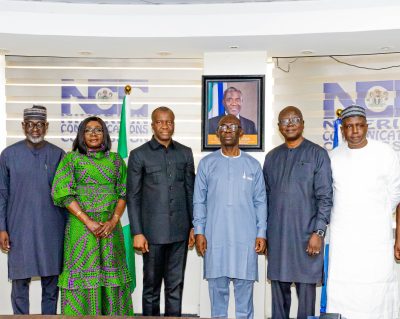
L-R – Engr. Aliyu Yusuf Aboki , Executive Secretary WATRA; Mrs Nneena Ukoa, Head Public Affairs, Nigerian Communications Commission; Hon. Clarence K. Massaquoi, Chairman Board of Commissioners, Liberia Telecommunications Authority; Kelechi Nwankwo, Director Corporate planning, strategy and Risk Management(NCC); Hon. Ben Fofana, Commissioner with oversight responsibility for Licensing and Regulation (LTA); Usman Mamman Director, Licensing & Authorization (NCC) during a courtesy visit to the Commission’s Headquarters in Abuja on 30th January, 2026.

The EVC further emphasized that collaboration remains a core driver of the NCC Board and that sustained engagement with regional partners is essential to advancing the interests of telecommunications consumers and various stakeholders.

Maida recalled the Commission’s advocacy for the recognition of Information and Communications Technology (ICT) as critical national infrastructure within the Economic Community of West African States (ECOWAS), noting that Nigeria has already designated ICT as part of its critical national information infrastructure to give it the prominence required for sustainable growth.

He assured the Liberian delegation of the NCC’s readiness to provide support in advancing regional shared initiatives and translating discussions into actionable outcomes within the sub-region.

In his remarks, the Chairman of the Board of Commissioners of the LTA, Hon. Clarence Massaquoi, commended the NCC for making itself available in the spirit of regional coordination and collaboration, describing the engagement as critical to strengthening regulatory responsibilities across the sub-region.

Massaquoi acknowledged that Nigeria remains the largest economy in the region and a central player in Africa’s communications, security, and economic structures, that progress made by Nigeria often has far-reaching impacts across other West African countries.

He explained that since his assumption of office as the Liberian chief telecom regulator, the LTA has prioritized strengthening relationships with regional institutions to support ECOWAS’ vision of integration as effective regional integration cannot be achieved without affordable and reliable communications services, particularly in addressing cross-border roaming challenges.

The LTA Chairman disclosed that Liberia had signed bilateral agreements with The Gambia and Côte d’Ivoire and is at advanced stages of discussion with Ghana and Guinea-Conakry and that the Liberian regulator remained committed to active participation in WATRA.

Massaquoi further sought NCC’s support in regulatory capacity building and the sharing of best practices, particularly as Liberia reviews its licensing regime to reflect emerging technologies and align with regional standards.

The two regulators also underscored the centrality of shared commitment to deepen collaboration, identify priority areas for engagement, and advance initiatives that will promote seamless connectivity, regional integration, and socio-economic development across West Africa.


News

How 2018 Federal Legal Advice Exonerated Saraki In Offa Robbery Case

Published

on

By

In light of the Kwara State Government’s fresh prosecution of Dr. Abubakar Bukola Saraki and his successor over the Offa robbery, fresh facts have emerged on why the Director of Public Prosecutions of the Federation, Mr. E. U. (Etsu Umar) Mohammed gave the duo a clean bill of health.

The Federal Director of Public Prosecutions cleared former Senate President Bukola Saraki of involvement in the Offa bank robbery in 2018, citing no evidence of a connection.

It was gathered that the DPP reviewed a 16-page police report prepared and signed by Abba Kyari, a Deputy Commissioner of Police and then head of the Inspector-General of Police Intelligence Response Team (IGP-IRT) at Force Headquarters, Abuja. The report detailed investigations into the April 5, 2018, multiple bank robbery attack in Offa, Kwara State.

The DPP in his first report dated June 22, 2018 and signed on behalf of the Attorney General of the Federation and Minister of Justice, prepared a five page legal advice in which he noted in paragraph 5 (f) that “for the Senate President (Saraki) and the Kwara State Governor (Ahmed), his office is unable to establish from the evidence in the interim report a nexus between the alleged offence and the suspects. Hence, it is our advice that further and thorough investigation in this regard be carried out”.

Following the submission of a second report by the police investigating team to his office on July 27, 2018, the DPP prepared a second legal advice, which was dated August 23, 2018. The three-page legal advice also has only three paragraphs.

In paragraph 3 (vi), he noted that “with regards to the Senate President, Senator Bukola Saraki, since there is no departure from the earlier findings in the interim report, this office is still unable to establish any prima facie case against him for any offences of criminal conspiracy, armed robbery, and culpable homicide punishable with death”.

Both legal advices had recommended six people for prosecution. They are: Ayoade Akinnibosun, Ibikunle Ogunleye, Adeola Ibrahim, Salawudeen Azeez, Niyi Ogundiran, and Michael Adiukwu.

One of the suspects, Michael Adiukwu, later died in police custody, while the other five had since been tried at the High Court in Ilorin.

During the trial, the suspects revealed how they were coerced into incriminating Senator Bukola Saraki.

They mentioned several inducements dangled before them, including money and the promise of a visa to travel out of the country.

The suspects have since been convicted and their convictions confirmed by the Court of Appeal. The matter is now pending before the apex court, the Supreme Court of Nigeria.

Continue Reading

News

₦400m Ransom Demanded As Gunmen Abduct Another Kwara Ruler

Published

on

By

Terrorists have abducted a traditional ruler in Olayinka community, located in the Ifelodun Local Government Area of Kwara State, Oba Salman Olátúnjí Aweda and are demanding a ₦400 million ransom for his release.

The abduction occurred on April 18, 2026, when armed men, suspected to be militia herdsmen, invaded the community and took the monarch, his wife, and another resident into the forest.

According to JomogNews, residents who witnessed the incident said the terrorists, numbering over 10, invaded the monarch’s residence around Saturday midnight, forced the door open, and abducted him alongside another person in the house.

The assailants reportedly led both victims into the bush.

Chairman of Ifelodun Local Government Area, Mr Abdulrasheed Femi Yusuf, visited the community on Saturday on a sympathy visit and assured residents that efforts were underway to secure the monarch’s release.

“We are deeply concerned about this incident, and we are taking swift and decisive action in collaboration with security agencies,” he said.

Continue Reading

News

FG Clarifies Reasons Behind FAAC Revenue Deductions

Published

on

By

The Federal Government has clarified that deductions from the Federation Account Allocation Committee (FAAC) are legitimate fiscal components and do not represent hidden spending or leakages.

This explanation follows a misinterpretation of a World Bank report, which some commentators allegedly used to claim that federation revenues were being diverted.

In a statement yesterday, Minister of State for Finance, Taiwo Oyedele, said claims that a significant portion of federation earnings is being siphoned off stem from a misinterpretation of recent analysis by the World Bank.

Oyedele stressed that deductions referenced in public discourse represent legitimate fiscal obligations, not leakages, as widely portrayed.

“These interpretations misrepresent the World Bank’s analysis and reflect a misunderstanding of the fiscal system,” he said.

The minister added that categorising FAAC deductions as “waste” or missing funds is factually incorrect.

According to Oyedele, the figures cited in the World Bank report cover a range of lawful fiscal activities, including statutory transfers, savings, investments and security-related expenditures.

He explained that the amounts also include cost-of-collection charges, refunds to ministries, departments, and agencies (MDAs), as well as targeted interventions designed to support sub-national governments.

The government emphasised that refunds and transfers to states and other tiers of government are not illegal deductions but legitimate repayments and allocations backed by existing laws and fiscal frameworks.

The statement noted that some commentaries have relied on selective or outdated data, while ignoring recent improvements in public financial management.

Among these is a newly signed Executive Order aimed at strengthening the remittance of petroleum revenues, which is projected to boost distributable income for all tiers of government by about 0.4 per cent of Gross Domestic Product (GDP) annually.

“The World Bank explicitly notes that reforms implemented in early 2026 are already addressing concerns around deductions and are expected to improve transparency,” the statement said.

The minister warned that focusing on isolated aspects of the report without recognising these corrective measures presents a distorted picture of the country’s fiscal position.

He maintained that the broader message of the World Bank report is positive, pointing to signs that economic growth is becoming more broad-based across sectors.

The statement added that inflation, although still elevated, is gradually easing as a result of deliberate policy actions, while Nigeria’s external position has strengthened, with improved reserves and a current account surplus.

It further noted that the country has recorded a decline in its debt-to-GDP ratio for the first time in over a decade, attributing the development to ongoing macroeconomic reforms.

“The World Bank does not conclude that Nigeria’s fiscal system is collapsing or that reforms have failed.

“Rather, it states that reforms are working and must be sustained and deepened to translate macroeconomic gains into inclusive growth,” Oyedele said.

Reiterating its position, the Federal Government urged the media and stakeholders to interpret fiscal data accurately and responsibly to avoid undermining public confidence.

It affirmed its commitment to enhancing revenue mobilisation and ensuring efficient public spending, while cautioning that misleading narratives could erode trust and create unnecessary tension.

“An accurate understanding and responsible reporting of fiscal information are critical to maintaining confidence in Nigeria’s reform trajectory,” the statement added.

Continue Reading

Trending