
News
Alaafin Rejects Appointment Of Olubadan As Chair Of Oyo Council Of Obas, Denies Makinde’s Consultation Claims
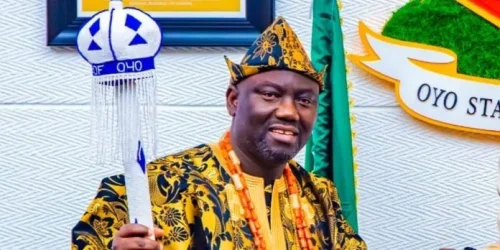
Oyo State Governor Seyi Makinde, on Thursday inaugurated the Oyo State Council of Obas and Chiefs after 15 years of inactivity, naming the Olubadan of Ibadanland, Oba Rashidi Ladoja, as its inaugural chairman.
The Alaafin of Oyo, Oba Abimbola Akeem Owoade I, who was conspicuously absent from the ceremony, has since “kicked” against the move by refuting the governor’s claims regarding the decision.
At the inauguration, Governor Makinde explained that the chairmanship of the Oba council will be rotated among the Olubadan, Alaafin and the Soun of Ogbomoso.
According to him, it was an agreement reached at a meeting with the three first-class monarchs.
But in a swift statement on Thursday by his media aide, Bode Durojaye, the Alaafin countered the governor, saying there was no such meeting.
The statement read: “The attention of the Alaafin’s palace has been drawn to a statement credited to His Excellency, Governor Seyi Makinde that he consulted with the three traditional rulers in the state, the Alaafin, the Olubadan and the Soun of Ogbomoso on the rotational Chairmanship of the State Council of Obas and Chiefs.
“The palace hereby wants to state clearly that there was no time that His Imperial Majesty, the Alaafin of Oyo , Oba Engineer Abimbola Akeem Owoade 1, held any meeting with either the state governor or any of the two traditional rulers mentioned above.
“Also, the Alaafin did not tell the governor or make a categorical statement on his endorsement of rotational chairmanship among the the three traditional rulers in the state.
“The position of the Alaafin and the entire Oyo community on the general issue of the, state, Council of Obas, and Chiefs has been enunciated in a Memo delivered to His Excellency by the Oyo Council of Elders.”
Thursday inaguration came amid rumours of a feud between the Alaafin and Oba Ladoja.
A viral video circulating on social media recently showed the Alaafin appearing not to rise to greet Oba Ladoja at a public function, while the Olubadan was also seen seemingly declining the Alaafin’s handshake.
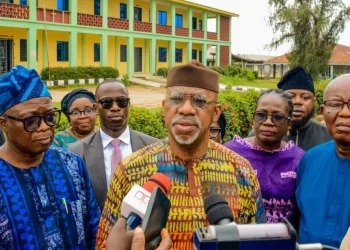
But speaking with journalists in Ibadan on Thursday, Oba Ladoja debunked claims of any rift with Oba Owoade.
Speaking during the inauguration, Makinde said the chairmanship of the council would be rotational among the Olubadan of Ibadan, the Alaafin of Oyo, and the Soun of Ogbomosoland, with each monarch serving a two-year term.
According to the governor, the arrangement was designed to promote unity, harmony, and cooperation among traditional institutions in the state.
Makinde said, “No matter how hard an issue is, we will definitely resolve it. My three fathers, the Alaafin of Oyo, the kabieyesi Olubadan and the Kabieyesi Soun, and the agreement is that they will start the rotation with the Olubadan of Ibadan land.
“So, on that basis, I hereby pronounce the Oyo State Council of Obas and Chiefs inaugurated, in person of Kabieyesi Olubadan of Ibadan land, for two years. The council, like the commissioner mentioned, last met like this in 2011. And we’ve been on this for a while. I mean, I’ve been here for close to seven years now.
“It will be seven years exactly in May 29 that this administration came into office. And the easiest thing for me to do, or for this administration to do, is to encourage a division. You know, when they say divide and rule, that is the easiest thing.
“But we know that some of the things that we have been able to achieve as an administration, they can be traced to our traditional institutions. You come to me, we discuss, we rub minds on what is happening in our various communities.
“I get most of that information from yourselves. And then we thought, is it not a shame that for 15 years running now we don’t have a Council of Obas and Chiefs?And if we don’t have a council, how do we play an active role as a state?
“At best, what we have will be an ad hoc arrangement, which is what has been happening since 2011. I’ve been here since 2019. So I encouraged the House of Assembly and also I consulted widely amongst the traditional rulers.
“I mean, if we look at this, this is House of Chiefs. We cannot see any improvement. We only come here for a few events. But our traditional institutions must be strengthened. The AC is not working because nobody is in charge. There’s no one telling us, calling the state government on this. We signed the law passed by the state House of Assembly, and I signed it on August 14, 2025.”
In his remarks, Oba Ladoja urged the public to have confidence in the council, describing the inauguration as the beginning of work rather than an achievement.
“The primary responsibility of the council is to ensure peace and safety across their domains while contributing to the continued progress of the state,” he said.
Ladoja stressed that public confidence in the council would grow after its first meeting, as residents would see that members were united in purpose rather than competition.
He said, “We appreciate the goodwill and congratulations we have received. This inauguration is not an achievement in itself; it marks the beginning of serious work. After our first meeting, people will begin to have confidence in us, because they will see that we are not in competition with one another. We are not here to fight or to pursue personal interests, so there is nothing to fear.
“Our sole concern is to ensure that our domains remain safe and peaceful, and that the state continues on the path of progress. We want the state to be a good place for everyone. That is the purpose of this council. This is not about any individual; it is about bringing people together and working collectively for the common good.”
Earlier, the Commissioner for Local Government and Chieftaincy Matters, Ademola Ojo, described traditional rulers as custodians of culture and communal harmony who have remained pillars of peace, moral authority, and grassroots development.
He said, “As we formally inaugurate this council, it’s my earnest hope that it will remain a beacon of harmony, a forum for constructive dialogue, and a strong partner in our shared quest for peace, security and socio-economic advancement.”
Also on Thursday, Oba Ladoja dismissed claims that he deliberately snubbed the Alaafin during an inter-faith gathering held in Ibadan on Monday.
Speaking with journalists, the Olubadan described the allegation as a misunderstanding that had been exaggerated on social media.
He said, “There was no intention whatsoever. What happened was not deliberate. It has been misinterpreted, particularly on social media.”
The PUNCH reports that a video circulated online suggesting that the Olubadan snubbed the Alaafin during the 2026 Inter-Faith Gathering held at the Grand Space behind the Oyo State House of Assembly.
Explaining his actions, Ladoja said he arrived late at the event and tried to take his seat quietly without disrupting proceedings.
He said, “When I go late to a place, I try to bring good news. Just like at the mosque, when prayers are ongoing, you wait until people are properly arranged before joining. I was simply trying to take my seat before anyone would say I could no longer move.”
According to him, seating arrangements and changes in positions of dignitaries affected his movement within the hall.
“My seat was between the Soun and the Alaafin. I had to pass through some people to get there. I did not take any decision to avoid or ignore anyone. Why should I?” he said.
The Olubadan expressed concern over what he described as deliberate mischief by some commentators.
“If you watch the full video, you will see that I greeted people, including the governor. But social media often takes things out of context.”
On whether he had addressed any perceived grievances, Ladoja insisted there was no tension between the traditional institutions.
He said, “I don’t believe anyone was being offensive, and I do not see the issue as an insult to anybody. My focus is to unite the present generation and those coming after us. We must raise standards, especially in education, and concentrate on what truly brings progress to our society.”
News
BANKING BEYOND THE BALANCE SHEET: UNION BANK’S ASBON RECOGNITION AND NIGERIA’S SMALL BUSINESS ECONOMY
Union Bank of Nigeria has been named winner of the Best SME Growth Banking Initiatives Award (2025) at the Nigeria National SME Business Awards, organised by the Association of Small Business Owners of Nigeria (ASBON) in partnership with the Lagos State Government through the Ministry of Commerce, Cooperatives, Trade and Investment.
The recognition arrives at a moment when the relationship between Nigerian banks and Nigerian small businesses is being quietly redefined. Awards in this space have historically rewarded scale and product breadth. The ASBON criteria, by contrast, ask a more practical question: which banks are actually making it easier for entrepreneurs to operate?
WHY THIS AWARD, AND WHY NOW?
Across Nigeria, growth is no longer the only measure of success for a small or medium-sized enterprise. For most owners, success now looks like stability. Cashflow that holds up. Payments that clear without disruption. Financing that arrives in time to seize an opportunity rather than rescue a crisis. Operations that are not slowed by administrative friction.
That shift in what SMEs need has changed what they look for in a bank. The institutions earning their attention are the ones that take the daily reality of running a business in Nigeria seriously, not those with the longest catalogue of products. It is in that environment that the ASBON recognition reads as something more than ceremonial.
Union Bank’s SME work over the past year has been organised around a small number of practical priorities, and many of the issues SMEs cite as their biggest pain points sit at the centre of them.
FASTER ONBOARDING, MORE USABLE DIGITAL TOOLS
Account opening and customer onboarding have long been one of the slowest stages of business banking in Nigeria. For an entrepreneur trying to receive payments, pay suppliers, or qualify for a tender, days lost at this stage are days lost from the business itself.
Union Bank addressed this directly with enhancements to its Union360 platform and the rollout of a Straight-Through-Processing (STP) Digital Onboarding Platform. The intent was simple: cut the time between an SME deciding to bank with Union Bank and actually being able to transact. The improvements have meaningfully shortened onboarding, raised digital activity among SME customers, and brought in a notable cohort of new business clients.
Behind those improvements is a recognition that Nigerian SMEs are increasingly multi-channel by default. A small retailer may take payments by transfer, POS, mobile money, and online checkout in the course of a single afternoon. The bank that supports them has to be reliable across all of those rails, not just the ones that photograph well in product brochures.
FINANCING THAT MEETS BUSINESSES WHERE THEY ARE
Access to credit remains the most frequently cited barrier for Nigerian SMEs, particularly for businesses without conventional collateral or a long paper trail of audited accounts.
Union Bank’s response has been less about loosening criteria and more about widening the range of evidence that counts.
Consistent transaction history, active account use, and clear cashflow patterns now carry meaningful weight in how the Bank assesses a small business. For a generation of entrepreneurs whose operations are real but whose paperwork is light, that is a material change.
The Bank’s SME lending over the review period reflected this orientation, with funding directed at working capital, inventory, equipment, and the kind of operational expansion that sits between mere survival and genuine scale.
THE HUMAN SIDE OF THE WORK
Digital infrastructure matters, but it does not replace the value of someone an entrepreneur can actually call.
Union Bank’s SME engagement is supported by a network of relationship managers, direct sales agents, and branches across the country. The Bank’s “Adopt, Engage and Grow” campaign was designed to reach SMEs at this human level, not as a once-a-year touchpoint, but as a sustained relationship that meets businesses where they are, both physically and operationally.
The approach reflects a basic truth about small business banking in Nigeria.
Entrepreneurs operate under pressure that is rarely visible from a head office. The institutions they trust tend to be the ones whose people understand that pressure, respond when it matters, and treat the relationship as ongoing rather than transactional.
UNION BANK OF NIGERIA AND ASBON
Union Bank’s recognition is also tied to its partnership with ASBON, through the SME Empowerment Challenge run jointly by the two organisations.
The Challenge encouraged entrepreneurs to open or reactivate business accounts, maintain proper transaction records, and develop structured plans for growth. On its surface, it was a campaign. In substance, it was an attempt to nudge a behaviour that Nigerian SMEs themselves often identify as one of the hardest to sustain: the discipline of running the business as a business, with clean books, separated finances, and a clear view of where it is going.
That discipline matters because it is the gateway to almost everything else. Loans, grants, supplier credit, partnerships, and public sector contracts all depend on a business being able to show how it actually operates. By building that habit alongside ASBON, Union Bank invested in something that outlasts any single campaign cycle.
WHAT THE AWARD ACTUALLY SIGNALS
There is a tendency to read awards as endpoints. This one reads better as a signpost. Nigerian SMEs are operating in one of the most demanding business environments on the continent. They are also, collectively, the largest source of employment in the country and the most direct route to broad-based prosperity. The banks that serve them well, with patient infrastructure, accessible financing, real human engagement, and a partnership posture toward the wider SME ecosystem, have a role to play that goes well beyond commercial performance.
Union Bank’s recognition at the ASBON SME Awards 2025 is, in that sense, an acknowledgement of a posture as much as a portfolio. The work it points to, faster systems, more accessible credit, sustained engagement, and a habit of building alongside SME institutions rather than around them, is the kind of work that compounds quietly over years.
For a bank, that is the most useful kind of award to win. Not the one that celebrates a moment, but the one that confirms a direction.
News
Polaris Bank Supports the Launch of NACCIMA Call Center to Drive Growth for Nigerian Exporters
Polaris Bank, Nigeria’s leading digital retail and commercial bank, has proudly facilitated the launch of the NACCIMA Export Support Call Center, a vital initiative designed to provide comprehensive support to Nigerian exporters, especially those operating in the non-oil sector and enhance their ability to access global markets.
This partnership marks a significant step in the Bank’s commitment to strengthening Nigeria’s export ecosystem.
Chris Ofikulu, Executive Director of Polaris Bank, in his address, emphasised the Bank’s commitment to empowering Nigerian businesses for global markets. He highlighted the importance of the NACCIMA Call Center as a key resource for exporters, offering valuable information, knowledge, expert guidance, and advisory services to navigate the complexities of international trade.
“Today, we are marking a pivotal moment in our mission to empower Nigerian businesses for global markets,” said Chris Ofikulu. “Through this collaboration, we are equipping exporters with the tools, infrastructure, and expertise needed to thrive in global markets.”
The NACCIMA Call Center, supported by Polaris Bank, will act as a key platform where exporters can access real-time information, technical assistance, and regulatory advisory services. This strategic initiative is in alignment with Polaris Bank’s vision to drive trade facilitation, improve market access, and support Nigeria’s economic growth.
Polaris Bank’s contribution includes providing advanced infrastructure such as laptops, a fully equipped workstation, internet-enabled modems, and high-capacity printers to support the operations of the center. This donation is aimed at ensuring the center runs smoothly and effectively meets the needs of Nigerian exporters.
During his speech, Ofikulu highlighted the importance of initiatives like the NACCIMA Call Center, emphasizing its role in bridging gaps for exporters, especially those in the non-oil export sector. “By offering exporters the right support, we are unlocking their potential to compete globally. This center is not just a call center; it is a catalyst for success, providing exporters with the resources, knowledge, and access they need to excel,” he added.
The partnership between Polaris Bank and NACCIMA also ties into the Bank’s broader mission to support Nigeria’s export sector. Polaris Bank provides a comprehensive range of solutions for exporters, including stock refinancing, working capital support, and advisory services on regulatory processes such as NXP documentation. Through its digital platform, VULTe, the Bank facilitates seamless intra-African trade, enabling faster and more efficient payments via the Pan-African Payment and Settlement System (PAPSS).
“We are excited to be part of this transformative initiative, which empowers Nigerian businesses to scale and compete on the global stage,” Ofikulu concluded. “Our focus on innovation and our dedication to supporting SMEs are central to our role in shaping the future of Nigeria’s export sector.”
Polaris Bank’s collaboration with NACCIMA reinforces its ongoing commitment to advancing Nigeria’s economic landscape by enhancing export readiness, improving access to finance, and supporting the growth of SMEs. The unveiling of the NACCIMA Call Center is a prime example of the Bank’s continuous dedication to driving positive change within Nigeria’s export ecosystem.
News
2027 Elections: INEC Announces Final Registration Deadline
The Independent National Electoral Commission (INEC) has announced that the third and final phase of the nationwide Continuous Voter Registration (CVR) exercise will run from Monday, 11 May 2026, to Friday, 10 July 2026.
This final window is the last opportunity for eligible Nigerians to register or update their records before the 2027 General Elections.
The announcement was contained in a statement released by the Chairman of the Information and Voter Education Committee, Mohammed Kudu Haruna.
According to the Commission, the exercise is part of efforts to ensure that all qualified Nigerians are captured in the voter register before preparations for the 2027 polls move into full gear.
INEC explained that the second phase of the registration exercise was suspended on April 17 to allow for the review and clean-up of records after the publication of claims and objections submitted by registrants.
The Commission said the final phase will run for two months and urged citizens who have attained the age of 18, as well as those who were unable to register during earlier phases, to seize the opportunity.
It stated, “The third phase of the CVR, commencing on Monday, 11th May 2026, will conclude on Friday, 10th July 2026.
“During this timeframe, eligible citizens who have reached the age of 18, as well as those who were unable to register in the previous phases, are encouraged to take advantage of this opportunity to register.”
INEC also advised already registered voters seeking to transfer their registration to new locations, replace lost or damaged Permanent Voter Cards, or correct personal details to make use of the Commission’s online portal or visit its offices in states and local government areas nationwide.
The Commission noted that following the close of registration, the voters’ register will be displayed for public scrutiny.
It added, “In continuation of the process, the Commission will display the Register of Voters for claims and objections from Thursday, 23rd July to Wednesday, 29th July 2026.
“This statutory exercise offers a significant opportunity for citizens to review the register and assist the Commission in ensuring its accuracy, completeness, and credibility.”
INEC assured Nigerians that all logistics and administrative arrangements have been concluded to guarantee a smooth exercise across the federation.
The Commission further appealed to citizens to actively participate, stressing that voter registration remains a critical step in strengthening Nigeria’s democratic process.
The fresh registration exercise is expected to draw significant participation, especially from first-time voters and Nigerians who recently relocated to new states or local government areas.
-
News2 days agoZENITH BANK CROSSES N1 TRILLION MARK IN Q1 2026 GROSS EARNINGS
-
News2 days agoAkpabio Declares ADC “Dead” Amid Massive NASS Defections
-
News2 days agoYahaya Bello: Court Never Ordered Abuja School to Refund Fees to EFCC, Witness Tells Court
-
News1 day agoOshiomhole Demands MTN, DStv Ban Following Xenophobic Attacks In SA
-
News18 hours ago2027 Elections: INEC Announces Final Registration Deadline
-
News17 hours agoBANKING BEYOND THE BALANCE SHEET: UNION BANK’S ASBON RECOGNITION AND NIGERIA’S SMALL BUSINESS ECONOMY
-
News22 hours agoCoup Trial: Islamic Cleric Denies Treason, Says ₦10m Was For Spiritual Intercession
-
News20 hours agoWike Accuses Fubara Of Chasing 2027 Re-election While Neglecting State Budget