
News
Bill Seeking Ban Of Dollars, Foreign Currencies In Nigeria Scales First Reading At Senate
A bill seeking to prohibit the use of foreign currencies for transactions in Nigeria has scaled first reading.
The bill was Senate initiated to restore Nigeria’s monetary sovereignty by outlawing the use of foreign currencies for payments and transactions within the country.
The proposed legislation, aimed at ensuring all payments—including salaries and transactions—are conducted in Naira, seeks to eliminate discriminatory practices and strengthen confidence in the local currency. This includes making it mandatory for exports to be paid for in Naira.
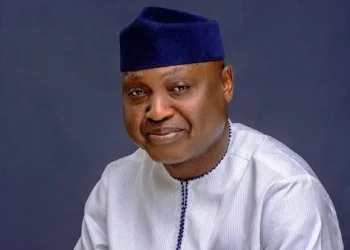
The bill, titled “A Bill for an Act to Alter the Central Bank of Nigeria Act, 2007, No. 7, to Prohibit the Use of Foreign Currencies for Remuneration and for Other Related Matters,” is sponsored by Senator Ned Munir Nwoko, Chairman of the Senate Committee on Reparations and Repatriation.
According to Senator Nwoko, the widespread use of foreign currencies in Nigeria’s financial system undermines the value of the Naira, perpetuating economic challenges. He described the use of the Dollar, Pound Sterling, and other foreign currencies for domestic transactions as a colonial relic that continues to hinder Nigeria’s economic independence.
Highlights of the bill include:
Prohibits salaries, transactions, and payments in foreign currencies, ensuring all workers, including expatriates, are paid in Naira.
Requires crude oil and other exports to be sold exclusively in Naira, compelling international buyers to purchase the currency and driving its demand and value.
Positions the Naira as the central currency for all financial operations, reinforcing its dominance in the economy.
Seeks to abolish informal currency markets that undermine the formal economy and encourage unethical practices such as round-tripping by banks.
Directs banks to provide loans at affordable interest rates to stimulate industrialization and economic growth.
Advocates for storing Nigeria’s foreign reserves domestically to safeguard the country’s economic sovereignty and reduce exposure to external vulnerabilities.
Reclaim monetary independence by prioritizing the Naira for both domestic and international transactions.
Increase the currency’s value through higher demand driven by its exclusive use for exports.
Foster fairness in salary payments by standardizing remuneration in Naira for both local and expatriate workers.
Support the manufacturing sector with accessible credit facilities to encourage local production and reduce dependency on imports.
Foster national pride and economic self-reliance by reducing reliance on foreign currencies.
Build a diversified and resilient economy through coordinated monetary and fiscal policies.
Senator Nwoko clarified that transitioning domiciliary account balances to Naira would be a voluntary process for account holders. As the Naira strengthens, the need to hold foreign currencies would diminish, making the transition seamless.
He also assured Nigerians that access to foreign exchange for travel and other legitimate purposes would be streamlined through banking reforms, alleviating concerns about access to Basic Travel Allowance (BTA) and other forex needs.
Drawing parallels with Morocco, Senator Nwoko noted the stability of the Moroccan Dirham, which has maintained consistent value against major currencies for over 35 years. He attributed this to Morocco’s policy of exclusively using its local currency for domestic transactions.
With its vast natural resources and a dynamic population, Nigeria is well-positioned to surpass Morocco’s achievements, provided there is a paradigm shift in how Nigerians perceive and use the Naira.
The bill envisions a future where Nigerian banks expand internationally, offering innovative financial tools like cashless wallets to simplify global transactions. These measures aim to address existing challenges, such as the inability of Nigerian debit cards to facilitate international online transactions, while making domiciliary accounts increasingly unnecessary.
If passed, this legislation could mark the beginning of a transformative era, driving economic growth, cultural pride, and sustainable development anchored in the strength of Nigeria’s currency—the Naira.
News
I Delivered $15m Agency Cash To Ex-NIMASA DG Akpobolokemi, EFCC Witness Tells Court
A prosecution witness, Captain Ezekiel Bala-Agaba, testified in a Lagos Federal High Court on Thursday, that he personally delivered $15 million in cash to former NIMASA DG, Patrick Akpobolokemi.
The witness, Bala-Agaba, a former Executive Director of Maritime Safety, Shipping Development and Marine Operations at NIMASA, made the disclosure while testifying before Justice Ayokunle Faji of the Federal High Court in Lagos.
Captain Agaba, who appeared as the 15th prosecution witness, told the court that funds meant for pipeline surveillance were withdrawn from NIMASA’s accounts, converted into dollars, and handed over to Dr Akpobolokemi.
According to him, the money was taken to a Bureau de Change, which converted it into $15 million before the cash was delivered to the NIMASA office on Burma Road, Apapa, Lagos.
He said he subsequently took the money to the office of the then Director-General.
“The money was sent to a Bureau de Change, which later brought the dollar equivalent to our office at Burma Road, Apapa, Lagos. I asked my Personal Assistant, Ekene Nwakuche, to carry the bag and follow me to the Director-General’s office,” he told the court.
The witness explained that he collected the bag from his aide before entering the office.
“When we got to the door of the Director-General’s office, I collected the bag from him and asked him to wait outside. I then personally delivered the sum of $15 million to the Director-General.”
The witness was initially a defendant in the case but later opted to testify for the prosecution.
While being led in evidence by prosecuting counsel, Suleiman Suleiman, he explained the chain of command within NIMASA and how financial approvals were processed in the agency.
According to him, the Director-General is the overall head of the agency and issues instructions to directors, who then implement policies in line with the NIMASA Act.
He told the court that he chaired the agency’s Intelligence Committee, which was responsible for certain security-related operations.
“As chairman of the committee, I oversaw its activities and reported directly to the Director-General, Dr. Patrick Akpobolokemi,” he said.
During the proceedings, the witness was also shown a document containing a letter from Access Bank to the Economic and Financial Crimes Commission (EFCC) detailing transactions in NIMASA’s accounts between 2013 and 2015.
When asked how much money he took to the former Director-General, Agaba replied: “$15 million.”
After listening to the testimony, Justice Faji adjourned the matter until April 22 and 23 for cross-examination of the witness.
The EFCC had in December 2015 arraigned Dr. Akpobolokemi and seven others before the court on a 30-count charge bordering on conspiracy, fraudulent conversion of funds and money laundering.
Those charged alongside the former NIMASA boss include, Warredi Enisuoh, Governor Juan, Ugo Frederick, Timi Alari, as well as Alkenzo Limited and Penniel Engineering Services Limited.
They pleaded not guilty to the offences.
The anti-graft agency alleged that the defendants conspired to divert funds running into over N1.15 billion under the guise of providing security intelligence in Nigeria’s maritime domain.
According to the EFCC, the NIMASA Intelligence Committee allegedly received N1,153,000,000 between December 2013 and July 2015.
Investigations further revealed that several companies contracted to execute the intelligence operations were either unregistered or lacked the capacity to perform the services, while some were allegedly linked to the defendants.
The prosecution also alleged that the defendants nominated or owned many of the companies used to execute the contracts.
One of the charges stated that the defendants conspired to commit offences punishable under the Money Laundering (Prohibition) Act, 2012.
News
CBN Bars Chronic Loan Defaulters from Accessing New Banking Services
The Central Bank of Nigeria (CBN) has issued a directive to all financial institutions to immediately restrict certain banking services for large-ticket borrowers with non-performing loans (NPLs).
This move is aimed at strengthening credit discipline and protecting the stability of the Nigerian financial system following a rise in the industry’s NPL ratio to approximately 7%, exceeding the regulatory 5% threshold.
This order is specifically targeted at large-ticket obligors.
The CBN issued the directive in a circular to banks on Monday.
The latest instruction comes almost a week after the CBN asked financial institutions to stress test.
It is uncertain if the two directives are connected or what may have triggered the loan-related instruction, but the apex bank said it furthers its mandate to protect Nigeria’s financial system.
“In furtherance of its mandate to promote a sound financial system, protect depositors, and enhance prudential compliance within the banking sector, the Central Bank of Nigeria (CBN) hereby directs all banks to restrict non-performing large ticket obligors, whose activities pose systemic risk to the financial system, from accessing specified banking services,” the circular reads in part.
“Any large-ticket obligor with a non-performing facility recorded in the CRMS and/or any licensed private credit bureau shall not be granted additional credit facilities. For the purpose of this restriction, credit facilities include loans and other forms of direct credit.
“In addition, such obligors shall not be granted banking facilities or contingent liabilities such as bankers’ confirmations, letters of credit, performance bonds, or advance payment guarantees.”
News
Makinde Only In PDP Because He’s Not Seeking Re-election – Otitoju
Babajide Kolade-Otitoju, the Director of News at TVC News, recently stated that Oyo State Governor Seyi Makinde would likely have defected from the People’s Democratic Party (PDP) if he was still serving his first term.
Otitoju stated this on Friday on TVC’s ‘Breakfast Show’.
He described the National Convention of the Peoples Democratic Party, PDP, in Ibadan last November as a mere waste of time.
“People must show good judgment at a critical phase. What was the point of having that convention? Two courts told you not to go ahead but you went ahead.
“I may not be a fan of former Senate President Bukola Saraki but if he says something that makes sense, I will be the first to admit it. He made sense when he said let’s go for caretaker. What’s the point of not listening to him?
“Later you will be shouting that the ruling party is behind your crisis, meanwhile you are the architect of your own misfortunes. You created this problem.
“If Makinde were in his first term, he would have fled like the dancing governor because his second term would have been in danger,” Otitoju said.
-
News2 days agoWorld War III Fears: Zelensky Reveals Warning To Trump
-
News1 day ago2027 Shakeup: 12 Lawmakers Defect To APC, ADC
-
News2 days agoTensions Rise As Makoko Communities Vow To Resist Relocation Order
-
News1 day agoTerror Surge: Tinubu Demands Results from Security Chiefs
-
News18 hours agoCorruption Probe: Court Grants ICPC Access To Data On El-Rufai’s Seized Gadgets
-
News14 hours agoMakinde Only In PDP Because He’s Not Seeking Re-election – Otitoju
-
News13 hours agoCBN Bars Chronic Loan Defaulters from Accessing New Banking Services
-
News22 hours agoBeyond My Wildest Dreams: Disu Opens Up During Handover From Egbetokun