
News
LCDAs Have Come To Stay, Lagos Speaker Says
…as Assembly holds public hearing on proposed local govt law
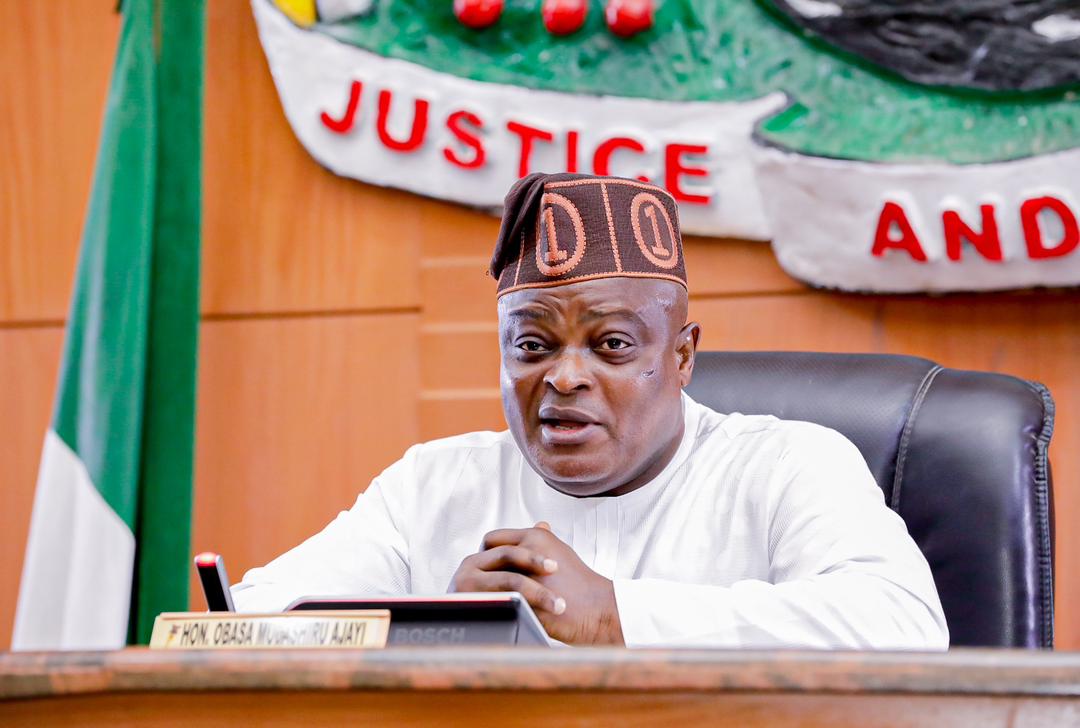
The Speaker of the Lagos State House of Assembly, Rt. Hon. Mudashiru Obasa, has said there are no plans to scrap the 37 Local Government Development Areas (LCDAs) of the state.
Dr. Obasa, represented by Deputy Speaker Mojisola Lasbat Meranda, said this at a second public hearing on the bill to amend the Local Government Administration law of the state on Thursday.
“We are gathered here to consider and reflect on a bill that seeks to further enhance how our third tier of government should be administered.
“The LCDAs have come to stay and they would remain so by the special grace of God. Nobody is killing the LCDAs. Instead, we have come to say here is the Supreme Court judgement; how do we go about it? I know we all have the interest of this state at heart.
“Did we follow the right part in creating the LCDAs? The answer is ‘yes’. So at this point, it is a call for every Lagosian to rise up and protect the LCDAs by reaching out to all our representatives at the national level.
“Our representatives and senators should lobby their colleagues there. We will continue to do our part and we are doing it to ensure that the 37 LCDAs are listed in the constitution,” the Speaker said.
He recalled that just about two weeks ago, people were also gathered to deliberate on the electoral bill for the Local government election which he said is the first right step before the House could go into how the local governments should function.
“This Bill has passed the preliminary stages and the House is hereby subjecting it to public appraisal in our transparent convention. At this stage, we subject the bill to public assessment, gathering public observations and thoughts to reflect on them in the next stage of the bill.
“The bill is seeking to consolidate all laws on local government administration. The law, when passed, will allow the local governments function optimally with strict adherence to the rule of law and separation of powers,” he added.
The Speaker stressed that the bill also made mention of four-year tenure for the elective offices in the local government, which, according to him, has finally removed the ambiguity of the past as regards tenure of these elective officers.
The bill, he said, has elaborated all that needs to be done for an effective administration of the local governments including declaration of assets, nomination of a chairman, removal of a chairman or vice chairman, discharge of functions of the chairman, local government area supervisors appointees, executive powers of the local government, street naming and many more.
Section 4(3) of the Bill states: “The 20 local governments shall have designated local council Development Areas as listed in the First Schedule to this law for effective and efficient local government administration in the State.
Section 4(1) of the Bill further states: “There shall be 37 Local Council Development Areas in the State with the names specified in Schedule II of the Creation of local government (Amendments) of 2004.”
Speaking after an overview by Hon. Noheem Adams, Majority Leader of the House, Lagos-based lawyer, Muiz Banire (SAN) identified some clauses in the Bill that needed further inputs.
Banire argued: “The import of the Supreme Court judgement is simple. The State Governor does not have the power over council chairmen, if any council chairman misbehaves, it is the councillors that can decide on what to do.”
He also advised that section 38 of the Bill should be expunged, noting “It is no longer legal for the Ministry of Local Government to be issuing guidelines for local governments.”
However, Banire was countered by former Deputy Speaker of the House, Hon. Kolawole Taiwo, who said: “The constitution gives power to the State House of Assembly to create local government, the law has been tested, our LCDAs have been in existence but only not listed.
“Nobody can say the law is not in existence, I was the Majority Leader as at then. You are saying the House should not have the power to do some things again; we need to be very careful. We know some governors are making nonsense of the local governments but Lagos is an exemption.”
Corroborating the position of Taiwo, another former Deputy Speaker of the House, Hon. Funmilayo Tejuoso said: “When you have a child that does not have a name, does it mean that the child is dead? It simply means that the LCDAs are still existing. The Supreme Court has recognised them, we are only waiting for the constitution to reflect the LCDAs.”
She therefore stated that the LCDAs should continue to exist, noting “We shouldn’t throw away the baby with the bath water.”
Also speaking, Imam Ibrahim Tijani from Itire-Ikate said he supported the continued existence of the LCDAs.
A stakeholder, Ajose Agbejoye, suggested that elections into local government councils should start six months before the expiration of the four-year term of a current administration so that electoral issues would have been settled before the swearing-in of a new chairman.
President of Greater Lagos Initiative, Adeniyi Olutimehin also appealed to the House to allow the LCDAs to continue to function irrespective of whatever amendments it makes to the Bill.
News
LASG Announces Resumption Of Monthly Environmental Sanitation For April 25
The Lagos State Government has officially announced the reintroduction of the monthly environmental sanitation exercise, set to resume on Saturday, April 25, 2026.
This marks the return of the state-wide cleaning culture nearly ten years after its suspension in 2016.
Residents are expected to clean their surroundings, clear drainage channels in front of their homes, and dispose of waste responsibly as part of efforts to improve environmental hygiene and tackle waste management challenges.
The Commissioner for Environment and Water Resources, Tokunbo Wahab, on Saturday, disclosed the development in a statement, explaining that the exercise would officially restart later in the year.
“I am pleased to inform all Lagosians that the monthly environmental sanitation exercise will resume effective Saturday, 25th April 2026, holding on the last Saturday of every month from 6:30 a.m. to 8:30 a.m.
“During this period, residents are enjoined to clean their surroundings, clear drainage channels in their frontages, and dispose of waste properly as a civic responsibility.”
Wahab urged residents to view the initiative as a shared duty toward building a healthier city, stressing that the government would ensure strict compliance.
“This exercise is a collective responsibility and a vital part of our commitment to a cleaner, healthier, and flood-resilient Lagos. And it shall be backed with the full enforcement weight of the Lagos State Government,” he said.
Explaining the significance of reintroducing the sanitation culture, the commissioner said the state was returning to a practice that once formed part of Lagosians’ lifestyle.
“Let me formally say this and say it boldly. Mr Governor and his deputy are taking a very audacious step. For those who don’t know, prior to 2016, we had a culture that emphasised cleanliness as next to godliness.
“Once every month, we took our time to clean up our surroundings and then maintain them sparkling. However, for some years, we stopped it.”
He said the absence of the exercise had contributed to mounting environmental pressures in the state.
“Now, waste, debt, and environmental challenges have become an existential challenge to us as a state. It’s taken us over a year to debate, talk, and agree that it’s time to reintroduce a monthly environmental sanitation,” Wahab said.
Appealing to residents for cooperation, he urged Lagosians to dedicate a small portion of their time each month to environmental cleanliness.
“It’s a plea that it is time for us to give up just one or two hours a month. In our marketplaces, every Thursday, we observe environmental cleanliness. But this time, we are saying as a state, let us sit back once a month and observe the cleanliness of our environment as we used to before 2016.”
JomogNews reports that the monthly sanitation exercise, previously held on the last Saturday of every month between 7 a.m. and 10 a.m., was suspended in November 2016 following a legal pronouncement restricting movement during the exercise.
The suspension later coincided with growing waste management concerns, including clogged drainage channels and indiscriminate refuse disposal across parts of the state.
News
States, LGA Now Have More Allocations — Tinubu Urges Media To Demand Accountability
President Bola Tinubu has urged the media to extend their scrutiny to State and Local Governments, noting that his administration’s reforms have significantly increased their financial allocations.
During an interfaith breaking of fast with media executives on Friday, the President emphasized that sub-national governments now enjoy greater financial autonomy and should be held accountable for grassroots development.
Tinubu said his administration’s economic reforms, especially the removal of the petrol subsidy, have increased funds available to states.
“We have opened up the principle of federalism to the extent that local governments are now getting their money. But how they use it is in your hands, so don’t bombard me alone. Look at local governments too, and equally, the sub-national,” Tinubu said.
“Today, there is no state that is borrowing to pay the salaries of employees. Yes, we can complain that it is not enough. We can complain we are not where we should be, but we have to manage what we have to sustain today, survive tomorrow, and make progress”.
Tinubu commended the media for criticising his government, saying it challenged and provoked him to serve Nigerians better.
“Thank you for inspiring me and challenging me in critical moments of my life. If I look at various barrages of negative comments as opposed to positive aspects of the assignment, I shouldn’t be standing here. That is the truth,” the president said.
“You didn’t spare me, but you challenged me, provoked that intellectual curiosity of a leader that must perform. There is no morning that I ever leave my house without going through the newspapers. It’s an addiction. I read all of you, it might not be in full detail, but the headlines, the ones that hit me.
“Leadership is about taking responsibility to make decisions at the right time. Otherwise, it’s a failure. At the time, we had to confront the subsidy. Nigeria was on the verge of bankruptcy.
“But having asked for the job and getting it, I cannot look back other than make corrections as I move along, save the nation, bring it back from the brink. Today, I can stand proudly before you that we are back from that brink.”
Tinubu added that he will continue to do his job with “patriotic dedication” to improve Nigeria.
News
I Delivered $15m Agency Cash To Ex-NIMASA DG Akpobolokemi, EFCC Witness Tells Court
A prosecution witness, Captain Ezekiel Bala-Agaba, testified in a Lagos Federal High Court on Thursday, that he personally delivered $15 million in cash to former NIMASA DG, Patrick Akpobolokemi.
The witness, Bala-Agaba, a former Executive Director of Maritime Safety, Shipping Development and Marine Operations at NIMASA, made the disclosure while testifying before Justice Ayokunle Faji of the Federal High Court in Lagos.
Captain Agaba, who appeared as the 15th prosecution witness, told the court that funds meant for pipeline surveillance were withdrawn from NIMASA’s accounts, converted into dollars, and handed over to Dr Akpobolokemi.
According to him, the money was taken to a Bureau de Change, which converted it into $15 million before the cash was delivered to the NIMASA office on Burma Road, Apapa, Lagos.
He said he subsequently took the money to the office of the then Director-General.
“The money was sent to a Bureau de Change, which later brought the dollar equivalent to our office at Burma Road, Apapa, Lagos. I asked my Personal Assistant, Ekene Nwakuche, to carry the bag and follow me to the Director-General’s office,” he told the court.
The witness explained that he collected the bag from his aide before entering the office.
“When we got to the door of the Director-General’s office, I collected the bag from him and asked him to wait outside. I then personally delivered the sum of $15 million to the Director-General.”
The witness was initially a defendant in the case but later opted to testify for the prosecution.
While being led in evidence by prosecuting counsel, Suleiman Suleiman, he explained the chain of command within NIMASA and how financial approvals were processed in the agency.
According to him, the Director-General is the overall head of the agency and issues instructions to directors, who then implement policies in line with the NIMASA Act.
He told the court that he chaired the agency’s Intelligence Committee, which was responsible for certain security-related operations.
“As chairman of the committee, I oversaw its activities and reported directly to the Director-General, Dr. Patrick Akpobolokemi,” he said.
During the proceedings, the witness was also shown a document containing a letter from Access Bank to the Economic and Financial Crimes Commission (EFCC) detailing transactions in NIMASA’s accounts between 2013 and 2015.
When asked how much money he took to the former Director-General, Agaba replied: “$15 million.”
After listening to the testimony, Justice Faji adjourned the matter until April 22 and 23 for cross-examination of the witness.
The EFCC had in December 2015 arraigned Dr. Akpobolokemi and seven others before the court on a 30-count charge bordering on conspiracy, fraudulent conversion of funds and money laundering.
Those charged alongside the former NIMASA boss include, Warredi Enisuoh, Governor Juan, Ugo Frederick, Timi Alari, as well as Alkenzo Limited and Penniel Engineering Services Limited.
They pleaded not guilty to the offences.
The anti-graft agency alleged that the defendants conspired to divert funds running into over N1.15 billion under the guise of providing security intelligence in Nigeria’s maritime domain.
According to the EFCC, the NIMASA Intelligence Committee allegedly received N1,153,000,000 between December 2013 and July 2015.
Investigations further revealed that several companies contracted to execute the intelligence operations were either unregistered or lacked the capacity to perform the services, while some were allegedly linked to the defendants.
The prosecution also alleged that the defendants nominated or owned many of the companies used to execute the contracts.
One of the charges stated that the defendants conspired to commit offences punishable under the Money Laundering (Prohibition) Act, 2012.
-
News2 days agoTerror Surge: Tinubu Demands Results from Security Chiefs
-
News1 day agoCBN Bars Chronic Loan Defaulters from Accessing New Banking Services
-
News2 days agoCorruption Probe: Court Grants ICPC Access To Data On El-Rufai’s Seized Gadgets
-
News2 days agoBeyond My Wildest Dreams: Disu Opens Up During Handover From Egbetokun
-
News1 day agoMakinde Only In PDP Because He’s Not Seeking Re-election – Otitoju
-
News1 day agoI Delivered $15m Agency Cash To Ex-NIMASA DG Akpobolokemi, EFCC Witness Tells Court
-
News6 hours agoLASG Announces Resumption Of Monthly Environmental Sanitation For April 25
-
Sports8 hours agoJust In: Nigerian Football Legend Henry Nwosu Passes Away At 62