
News
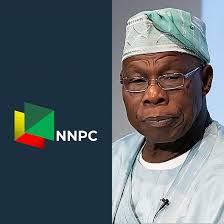
NNPC Refineries: Obasanjo Predicts Permanent Failure
Former President Olusegun Obasanjo has repeatedly declared that Nigeria’s government-run refineries specifically those in Port Harcourt, Warri, and Kaduna will never work effectively as long as they remain under state control.
In a recent interview aired on Saturday night by Sony Irabor Live, Obasanjo reiterated his long-standing position that structural inefficiencies and systemic issues have doomed these facilities to failure.
He said, “One of the lessons that I learnt is that PPP (public-private partnership) works. Look, one project that has not been destroyed by the government in Nigeria is the NLNG (Nigeria Liquefied Natural Gas), where the private sector has 51 per cent, and the Nigerian government has 49 per cent.
“See what we did with Nigerian railways. See what we did with the national shipping company. See what we are doing now, even with the NNPC. The NNPC has refineries, and I said to people that it will never work. And a man had the audacity to say, ‘Am I a chemical engineer?”
Obasanjo spoke about his failed efforts to woo Shell, a global energy firm, into running the refineries. “Look, when I was there, I called Shell. I said, ‘Look, please, I beg you, come and take 10 per cent equity and run the refinery for us.’ They said no. I said, ‘Okay, if you don’t want to take equity, don’t take equity. Come and run the refineries. They said no,” he stated.
The former president narrated how he invited a top official of Shell for a one-on-one conversation to know why his offers were turned down.
“So, I called him, and I said, ‘Tell me, be honest with me. Why don’t you want to handle this?’ He said first, they want to let me know that they make most of their profits on the upstream, not the downstream.
He said they run their downstream without making a loss, but they don’t make a lot of profit from it. It’s more of a service than a major profit-making. So that’s number one.
“Number two: he said our refineries are too small. This was when I was an elected President. He said our refineries are too small. One is 60,000 barrels, and another is 100,000 barrels. He said refineries at that time were in the range of 250,000 barrels to 300,000 barrels. Number three: he said our refineries are not well-maintained. We call quacks and amateurs to come and maintain our refineries. The refineries are not in good order. He said, ‘Number four, there’s too much corruption around our refineries, and they don’t want to be part of that,” Obansanjo explained.
He recalled that he counted the country lucky then when the President of the Dangote Group, Alhaji Aliko Dangote, told him of the willingness to offer $750m to take 51 per cent of two of the facilities.
“Until one day, Aliko (Dangote) came and offered $750m to take two of the refineries; that will be 51 per cent. I said, ‘Wow, God, you are really a God of miracles.’ I told Aliko to bring the money quickly. They brought the money, and they paid,” he said.
However, the Balogun Owu explained further that his successor, the late Umar Yar’adua, reversed the deal after he left office, claiming he was under too much pressure from the NNPC.
He mentioned that only the current NNPC Group Chief Executive Officer, Bayo Ojulari, has said the truth about the state of the refineries so far.
“When I left office, NNPC went to my successor and convinced him. So I got up. I went to Umar. I said, ‘Look, Umar, maybe you don’t know; this is why we did what we did.’ He said, ‘Well, NNPC came to me.’ I said, ‘But you know that NNPC cannot run this thing. He said he knew. I asked, ‘Then why did you give in? He said because of pressure. And I said, ‘Look, when you sell these refineries, you will not get 200 million (dollars) for them, because you will sell them as scrap.’
“Only the present NNPC head has told the country the truth. But in the meantime, I was told that they have spent about $16bn, which is only $4bn short of what Aliko used to build Africa’s largest refinery,” Obasanjo said.
In November 2025, the NNPC announced a fresh target of June 2026 to finalise the selection of technical partners for the refineries.
Ojulari said that despite the rehabilitation and reopening of the Port Harcourt and Warri refineries in 2024 before they were later reclosed, the facilities were operating “well below international standards”, making their products commercially uncompetitive, especially compared to the privately owned Dangote refinery.
Dangote said he built his refinery after the Yar’Adua administration reversed the sale of the NNPC refineries to him and his other associates. He is also of the opinion that the NNPC refineries may never work again.
The NNPC communications office has yet to respond to messages seeking reactions to the former president’s claims.
News
2027: Sanwo-Olu Officially Endorses Obafemi Hamzat As Successor
Lagos State Governor Babajide Sanwo-Olu has officially endorsed his deputy, Dr. Obafemi Hamzat, as his preferred successor for the 2027 governorship election.
The announcement was made on Monday, April 27, 2026, during a meeting at the Lagos House, Marina, where Hamzat formally declared his intention to run.
In the past few weeks, Hamzat has received widespread endorsement from political and community leaders across the state during his various consultative visits.
Recall that the Speaker of the Lagos State House of Assembly, Mudashiru Obasa, had expressed support for Hamzat’s governorship bid.
Also, the Chief of Staff to the President, Femi Gbajabiamila; Senator representing Lagos East, Tokunbo Abiru; and former Minister of Finance and Coordinating Minister of the Economy, Wale Edun, and other stakeholders have endorsed Hamzat’s gubernatorial bid.
Details shortly…
News
Malami Hits Back; Sues EFCC To Reclaim Seized Assets
Former Attorney General of the Federation (AGF) Abubakar Malami has formally challenged the Economic and Financial Crimes Commission (EFCC) in court, asserting that his wealth and properties were acquired through legitimate means.
In an affidavit filed on April 27, 2026, Malami urged the Federal High Court in Abuja to vacate an interim forfeiture order covering 57 properties allegedly linked to him and his family.
The order affected multiple assets said to be under investigation.
Malami, in court documents seen on Monday, pushed back strongly against the claims. He insisted that his wealth and properties were acquired legally over many years. He tied them to his career as a lawyer, as well as investments and other income sources.
“My Money Is Clean, My Properties Are Legit,” he declared while challenging the action in court.
The EFCC had argued that the properties may be linked to proceeds of crime. That position formed the basis of the interim forfeiture order granted in January 2026. But Malami said the agency failed to establish any direct connection between the assets and illegal activity.
“There is no document before the court showing these properties were acquired with proceeds of crime,” he stated.
He also accused the commission of presenting exaggerated figures for the value of the properties. According to him, assets bought for hundreds of millions of naira were portrayed as being worth billions. He said independent valuations show lower and more realistic figures.
Malami explained that his earnings came from different channels. He listed decades of legal practice, business ventures, and investments across sectors such as hospitality, agriculture, and education. He also mentioned financial support from banks and proceeds from asset sales.
“Loans from commercial banks, asset sales and other investments. Gifts and proceeds from book launches.”
He added that all his earnings were properly declared to the Code of Conduct Bureau in line with legal requirements.
Beyond the financial arguments, the former AGF accused the EFCC of going beyond its powers. He alleged that some of the properties were taken over without a final court order. He further claimed that family members were forced out of residences and personal documents were seized.
He described the actions as “extrajudicial” and a violation of due process.
The legal battle is also tied to an ongoing criminal case involving the former minister. Observers say the outcome could test the limits of the EFCC’s powers, especially in relation to asset forfeiture and compliance with the law.
Malami is asking the court to nullify the interim forfeiture order. He maintains that the properties are legitimate and have no link to any crime.
The court is expected to determine whether the assets will be permanently forfeited to the Federal Government or returned to him.
News
Journalists Blocked From Covering High-Profile Treason Hearing
A Federal High Court sitting in Abuja on Monday has barred journalists from covering the bail proceedings of six defendants standing trial for an alleged coup plot against President Bola Tinubu’s administration.
Operatives of the Department of State Services, DSS, reportedly ordered reporters to leave the courtroom shortly before the trial judge, Justice Joyce Abdulmalik, took her seat.
The order was said to have come from the judge.
At the time of filing this report, the journalists complied and exited the courtroom.
This is coming after heightened public interest in the trial of the six defendants, who were arraigned last Wednesday by the FG over an alleged failed coup.
Those standing trial are Mohammed Ibrahim Gana, a retired major-general; Erasmus Victor, a retired navy captain; Ahmed Ibrahim, a police inspector; and Zekeri Umoru, an electrician at the Presidential Villa.
Others are Bukar Goni and Abdulkadir Sani, Zaria-based Islamic clerics.
-
News1 day agoGlo’s New TV Commercials Focus On Power Of Seamless Connection, Infinite Possibilities
-
News14 hours ago2027 Elections: Sources Reveal Why Obasa Might Seek House Of Reps Seat
-
News12 hours agoJournalists Blocked From Covering High-Profile Treason Hearing
-
News2 days agoThe Rising Tide of Insecurity in Nigeria: Challenges and Solutions – By George Ogunjimi Esq.
-
News10 hours agoMalami Hits Back; Sues EFCC To Reclaim Seized Assets
-
News8 hours ago2027: Sanwo-Olu Officially Endorses Obafemi Hamzat As Successor