
News
Tensions Rise As Makoko Communities Vow To Resist Relocation Order


Residents of Makoko, Oko-Agbon, and Sogunro waterfront communities in Lagos have officially rejected a proposal by the Lagos State House of Assembly to relocate them to the Agbowa area of Epe.
The rejection comes after a recommendation made during Tuesday’s plenary session (March 10, 2026), following a series of controversial demolitions that began in late December 2025 and continued into early 2026.
Some residents, who spoke in separate interviews on Wednesday, said they never reached any agreement with the state government regarding relocation to another part of the state.
The Secretary of the Makoko Gunuvi Student Association, Zannu Silivester, told journalists that discussions between the communities and the government had only involved suggestions and deliberations, without any binding agreement on relocation.
According to him, the announcement of a relocation plan came as a surprise to many residents of the waterfront settlements.
“All discussions held so far have only involved suggestions and debates between the Lagos State Government and residents of the Makoko waterfront community.
“We are surprised that a conclusion was announced and published without the knowledge or agreement of the Makoko community.
“Nigeria is a democratic nation, and democracy means the people have the right to choose their future, not decisions being imposed on them without consultation,” he said.
Silvester also criticised claims that the Oloto Royal Family are the ancestral owners of the waterfront communities.
He alleged that during earlier visits by community representatives to the Lagos State House of Assembly, the chairman of the House Committee on Rules and Business, Noheem Babatunde Adams, had reportedly stated that Makoko waterfront belonged to the Federal Government and not to the Oloto family.
“However, we are now surprised to see the same Oloto family being mentioned and listed as the owners of Makoko. This sudden change raises serious questions and concerns that the public deserves answers to.
“Makoko waterfront community has existed for decades, with the Ogu (Gunuvi) people as the original residents due to their traditional occupation of fishing, which requires close access to the water,” he said.
Silvester added that residents would not rule out staging a peaceful protest if the relocation plan proceeds without their consent.
“The people of Makoko are law-abiding citizens, but we will continue to defend our rights, heritage and ancestral homes. We urge the government to fulfil the promises made to the citizens of Makoko and to engage with the community in a transparent and democratic manner.
“If our voices continue to be ignored, the people of Makoko are prepared to mobilise peacefully in large numbers again, even greater than our previous visit to the Lagos State House of Assembly, to defend our rights and seek justice,” he added.
Also speaking, a community leader, Isaac Dosugan, said earlier discussions with government officials centred on defining boundaries for the communities rather than relocating residents.
The 75-year-old resident said the understanding was that the government would designate specific areas for the communities while developing undemolished sections into affordable housing.
“I was born in this community, and I am 75 years old. In all the meetings we had with the government, our suggestion was that the government should designate a boundary for us in the water area. We also suggested that they should develop the remaining areas for us into befitting residences.
“It is surprising that they are now saying that they will relocate us. We will not agree to this, and we reject any relocation plan,” he said.
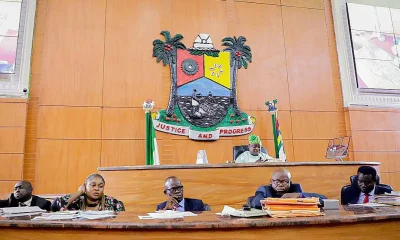
The residents’ reaction followed a recommendation by the Lagos State House of Assembly during plenary on Tuesday that those affected by the demolition in the waterfront communities be relocated to the Epe axis of the state.
According to a statement from the Assembly’s Public Affairs Directorate, the recommendation followed the adoption of a report by the House Committee on Rules and Business.
The report was presented after a petition was submitted to the Speaker, Mudashiru Obasa, titled “Urgent Appeal Regarding Ongoing Mass Forced Eviction and Illegal Demolition Threatening Tens of Thousands in Makoko, Oko-Agbon and Sogunro Communities.”
While presenting the report, Adams explained that the committee arrived at its recommendations after holding five separate meetings with the petitioners and conducting an oversight visit alongside government officials, relevant agencies and representatives of the affected communities.
The Assembly noted that the demolition exercise carried out by the state government displaced numerous residents, including women, children and the elderly, while homes and other property were destroyed.
Lawmakers also observed that the waterfront communities rely heavily on fishing for survival and have historically lived close to the water due to the nature of their occupation.
As part of its recommendations, the Assembly urged Governor Babajide Sanwo-Olu to direct the Special Adviser on E-GIS to verify the enumeration report submitted by the affected communities.
“The committee further recommended that the government relocate the remaining residents of Makoko, Sogunro and Oko-Agbon to a proposed low-cost housing estate to be constructed in the Agbowa area of the state, where they can continue their fishing activities,” the statement added.











Nigeria’s digital banking revolution is raising the stakes for consumer trust.
The question is whether the industry is rising to meet them.
Nigeria’s relationship with digital banking has changed almost beyond recognition in a decade. Where cash once dominated every transaction, from the roadside market to the corporate boardroom, mobile apps, instant transfers and USSD codes have reshaped how tens of millions of Nigerians interact with their money every single day. The figures speak for themselves: point-of-sale transactions surged to a record N18 trillion in 2024, a 69 per cent increase from the year before, and the number of POS terminals in operation more than doubled to 5.5 million. Mobile banking is now the most widely used digital financial service in the country, with four in five users having accessed it within any given 90-day window.
This is, by any honest measure, an extraordinary story of financial inclusion and technological adoption. But it is an incomplete story if told without its other half.
Behind the growth curves and transaction volumes, a quieter and more troubling story has been unfolding. According to the 2024 Nigeria Consumer Protection Survey published by Innovations for Poverty Action, nearly one in four digital financial services users reported experiencing unexpected fees, charges or fraud attempts in the past year. Of those who encountered a problem, only half sought any form of formal redress. That silence is not apathy. It is the sound of eroded confidence: customers who have concluded that raising a complaint is unlikely to produce results.
The fraud data from the Nigeria Inter-Bank Settlement System tells the same story from a different angle. Actual losses to digital payment fraud rose to N52.26 billion in 2024, a figure inflated significantly by a single N31.1 billion incident involving one institution but still representing a 196 per cent increase in fraud losses over five years, even as the number of individual cases declined.
The decline in case counts is not reassurance enough. It suggests that while fraudsters are making fewer attempts, they are making each one count considerably more.
By channel, e-commerce and internet banking remain the most exposed, followed by point-of-sale, mobile and web platforms. The most common technique is social engineering, which requires no sophisticated technology at all. It requires only a convincing conversation and a customer who does not know what to guard against. Insider abuse, where bank staff are complicit in fraud, is identified by NIBSS as the single greatest structural threat to the sector.
That is a sobering finding, and one that no institution should read past quickly.
What this data collectively points to is a gap that the industry must confront honestly. Nigeria’s digital banking infrastructure has expanded at speed.
The consumer protection architecture that should travel alongside it has not always kept pace. Convenience and safety are not natural enemies, but they require deliberate and sustained design to coexist. Left to grow at different speeds, they create precisely the conditions that fraudsters, rogue actors and complacent institutions exploit.
The encouraging news is that the gap is closing. Nigeria exited the Financial Action Task Force’s grey list in 2025, a signal that the country’s financial system has materially strengthened its safeguards. The CBN’s 2024 rollout of risk-based cybersecurity frameworks for deposit money banks formalised the standard of care that institutions are required to demonstrate. Regulatory enforcement actions in 2024, including reported industry penalties totalling over N15 billion, have underscored that consumer protection is a compliance obligation with real and immediate consequence. The industry is being held to a higher standard, and that is the right direction.
Within institutions themselves, the most effective safeguards are often the ones customers never see. The strongest security infrastructure operates silently in the background: monitoring account behaviour in real time, identifying anomalies before they become losses and intervening before a suspicious transaction completes rather than after.
This is not glamorous work, but it is the work that matters most. A customer who never has to report a fraud incident has been protected more effectively than one who was offered a sympathetic apology after the damage was done.
Union Bank’s experience illustrates what this balance looks like in practice. Across its digital channels, including UnionMobile, the USSD platform (*826#) and the Union360 business banking suite, the bank’s full-year 2025 customer experience data reflects consistently strong satisfaction and loyalty scores.
These are not outcomes that emerge from convenience alone. They reflect what customers value above all else when they transact digitally: the confidence that the experience will be safe, seamless and complete. That quality of outcome does not happen by accident.
It is the product of sustained investment in backend security infrastructure that operates largely out of sight, proactive monitoring systems that identify and intercept anomalies before they become losses, and an institutional culture that treats customer protection as a core organisational value rather than a compliance line item. It is a culture Union Bank articulates through its ICARE values, where the commitment to being customer and community-focused is not a policy position but a founding principle, reinforced consistently from the moment any member of staff joins the bank.
In March, as institutions across Nigeria marked World Consumer Rights Day, Union Bank reaffirmed to its staff the responsibility that every individual within the organisation carries to uphold the rights and dignity of the customers it serves. It is the kind of internal commitment that rarely makes headlines, but it ultimately determines the quality of every customer interaction that does.
Trust is the only currency in banking that cannot be manufactured on demand. It is built over time, through consistent behaviour, through systems that protect customers before they know they need protecting, and through institutions willing to be accountable when they fall short. Nigeria’s digital banking revolution has done extraordinary things for financial access and economic participation. Its next chapter must be defined by what it does for financial safety. The two are not in competition. In the long run, they are, in every meaningful sense, the same thing.
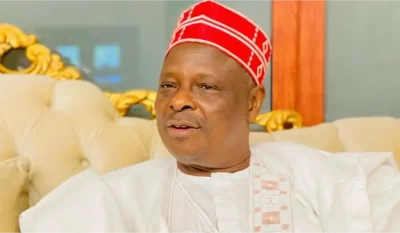
The Kwankwasiyya Movement has declared that the New Nigeria Peoples Party (NNPP) is effectively dead following the resignation of its national leader, Senator Rabiu Musa Kwankwaso, on March 29, 2026.
Spokesman for the Movement, Habibu Mohammed, made this statement on Tuesday during an interview on Arise Television.
Mohammad, stated that the NNPP was synonymous with Kwankwaso, and his departure leaves the party without a platform in Kano and across Nigeria ahead of the 2027 general elections.
He was reacting to the recent defection of Kwankwaso from the NNPP into the African Democratic Congress, ADC.
“Everybody knows that the NNPP is synonymous with Kwankwaso and him leaving the NNPP automatically means that the NNPP is actually dead in Kano, and maybe beyond Kano, which might be seen to be dead across the nation.
“Just like what Kwankwaso meant for the NNPP in Kano, he will now be seen to be the ADC in Kano State, and it will be an interesting scenario.
“So many people believe in Kwankwaso and his principles. There will be a lot of influx into the ADC.
“And I believe from the recent happening, it is going to be a very interesting scenario in Kano, because there are several others that are actually going to come along, and this is the result of the fact that so many people believe that Kwankwaso is a man with principle, and he’s the man that doesn’t actually meander. He goes straight to the point.
“He’s somebody who is ready to actually say it as it is, and for both parties to understand.
“So there are so many politicians that knew very well that they can align with him, even if they have different opinions, but the fact that he can lead, he can provide direction, he can protect his own and he will be able to actually turn things around, so many other people are coming,” Mohammed said.

The Lagos State Commissioner of Police (CP), Tijani Fatai, has ordered the immediate and complete withdrawal of the Lagos State Environmental Sanitation and Special Offences Unit (Taskforce) from all traffic control and enforcement duties across the state.
The state Police Public Relations Officer, Abimbola Adebisi, who disclosed this in a statement on Tuesday, stated that the directive was part of efforts to streamline traffic management operations and ensure professionalism and accountability.
Adebisi noted that the withdrawal only affects traffic-related responsibilities, adding that all other duties and operational mandates of the task force remain in force.
The statement read, “The Lagos State Police Command wishes to inform the general public that the Commissioner of Police, CP Tijani Fatai, psc, mnips, has directed the immediate and complete withdrawal of the Lagos State Environmental Sanitation and Special Offences Unit (Taskforce) from traffic control and traffic contravention enforcement across the state.
“This directive is part of ongoing efforts to streamline traffic management operations and ensure professionalism, accountability, and clarity in the discharge of duties. It is important to note that while the unit has been withdrawn from traffic-related responsibilities, all other assigned duties and operational mandates of the unit remain fully in force.”
The police also clarified that the Lagos State Environmental Sanitation and Special Offences Unit is not the only task force operating in the state.
Residents and motorists were therefore advised to verify the identity of personnel and agencies before making allegations, particularly on issues relating to traffic enforcement.
The command reiterated its commitment to safeguarding lives and property while ensuring that all operations in the state are carried out in line with the law.
It also urged members of the public to remain law-abiding and cooperate with legitimate security agencies.
The directive comes amid recent backlash against the task force operatives following allegations of extortion.
The controversy followed a viral video posted by ObjectvMedia, in which officials of the task force were accused of unlawful arrest and extorting money from motorists.
According to the video, a taskforce operative allegedly seized control of a driver’s vehicle, repositioned it on a one-way street to create false evidence of a traffic offence, and subsequently demanded payment.
The driver, in the footage seen by PUNCH Online, denied driving on the one-way route where the vehicle was captured.
A male voice in the video further alleged that the man was detained and later sent to prison despite contacting the task force chairman, Adetayo Akerele, who had reportedly promised to intervene.
The police authorities had since commenced an investigation into the incident.

When 8 million Customers Trust You, Safety Cannot Be an Afterthought

2027: Kwankwaso’s Exit Marks End Of NNPP – Kwankwasiyya Movement

Lagos CP Withdraws Taskforce From Traffic Duties

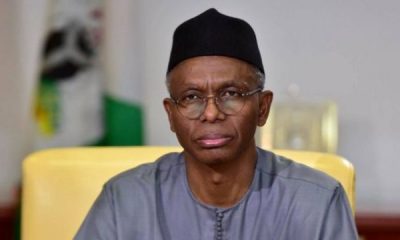
El-Rufai Back In Detention After Temporary Compassionate Release

Plateau Crisis: Tinubu Summons Gov Mutfwang, Orders Security Crackdown

Tinubu’s $6bn External Borrowing Request Gets Senate Nod
When 8 million Customers Trust You, Safety Cannot Be an Afterthought

COURT UPDATE: Nasir El-Rufai Resumes Trial After Mother’s Passing

South African Locals Clash With Nigerians Over Disputed Igbo King Coronation

LIRS EXTENDS DEADLINE FOR FILING OF INDIVIDUAL ANNUAL INCOME TAX RETURNS TO APRIL 14, 2026
-
 News1 day ago
LIRS EXTENDS DEADLINE FOR FILING OF INDIVIDUAL ANNUAL INCOME TAX RETURNS TO APRIL 14, 2026
-
 News1 day ago
COURT UPDATE: Nasir El-Rufai Resumes Trial After Mother’s Passing
-
 News1 day ago
South African Locals Clash With Nigerians Over Disputed Igbo King Coronation
-
 News1 day ago
Tinubu’s $6bn External Borrowing Request Gets Senate Nod
-
 News1 day ago
When 8 million Customers Trust You, Safety Cannot Be an Afterthought
-
 News22 hours ago
Plateau Crisis: Tinubu Summons Gov Mutfwang, Orders Security Crackdown
-
News5 hours ago
When 8 million Customers Trust You, Safety Cannot Be an Afterthought
-
 News12 hours ago
Lagos CP Withdraws Taskforce From Traffic Duties