
News
NCC Committed To Regional Digital Integration – Maida

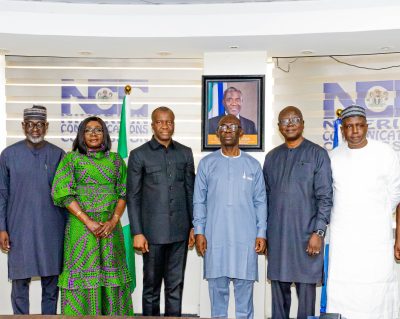
The Nigerian Communications Commission (NCC), in line with its commitment to collaboration and regional integration, has reaffirmed its dedication to strengthening partnerships among telecommunications regulators within the West African sub-region.
The Executive Vice Chairman of NCC, Dr. Aminu Maida re-affirmed the commitment when the Commission hosted a high-level delegation from the Liberia Telecommunications Authority (LTA) at the NCC’s Head Office in Abuja at the weekend.
Speaking during the LTA’s visit, Maida, who was represented by the Director of Corporate Planning, Strategy and Risk Management at NCC, Dr. Kelechi Nwankwo, emphasized the Commission’s mandate to continually collaborate with sister regulatory institutions within the sub-region and beyond to drive the expansion of digital economy and improve the living conditions of citizen.
He said, given the NCC’s long-standing commitment to regional cooperation through platforms such as the West Africa Telecommunications Regulators Assembly (WATRA), the Commission believes the region becomes stronger and more prosperous when all countries are interconnected.
L-R – Engr. Aliyu Yusuf Aboki , Executive Secretary WATRA; Mrs Nneena Ukoa, Head Public Affairs, Nigerian Communications Commission; Hon. Clarence K. Massaquoi, Chairman Board of Commissioners, Liberia Telecommunications Authority; Kelechi Nwankwo, Director Corporate planning, strategy and Risk Management(NCC); Hon. Ben Fofana, Commissioner with oversight responsibility for Licensing and Regulation (LTA); Usman Mamman Director, Licensing & Authorization (NCC) during a courtesy visit to the Commission’s Headquarters in Abuja on 30th January, 2026.
The EVC further emphasized that collaboration remains a core driver of the NCC Board and that sustained engagement with regional partners is essential to advancing the interests of telecommunications consumers and various stakeholders.
Maida recalled the Commission’s advocacy for the recognition of Information and Communications Technology (ICT) as critical national infrastructure within the Economic Community of West African States (ECOWAS), noting that Nigeria has already designated ICT as part of its critical national information infrastructure to give it the prominence required for sustainable growth.
He assured the Liberian delegation of the NCC’s readiness to provide support in advancing regional shared initiatives and translating discussions into actionable outcomes within the sub-region.
In his remarks, the Chairman of the Board of Commissioners of the LTA, Hon. Clarence Massaquoi, commended the NCC for making itself available in the spirit of regional coordination and collaboration, describing the engagement as critical to strengthening regulatory responsibilities across the sub-region.
Massaquoi acknowledged that Nigeria remains the largest economy in the region and a central player in Africa’s communications, security, and economic structures, that progress made by Nigeria often has far-reaching impacts across other West African countries.
He explained that since his assumption of office as the Liberian chief telecom regulator, the LTA has prioritized strengthening relationships with regional institutions to support ECOWAS’ vision of integration as effective regional integration cannot be achieved without affordable and reliable communications services, particularly in addressing cross-border roaming challenges.
The LTA Chairman disclosed that Liberia had signed bilateral agreements with The Gambia and Côte d’Ivoire and is at advanced stages of discussion with Ghana and Guinea-Conakry and that the Liberian regulator remained committed to active participation in WATRA.
Massaquoi further sought NCC’s support in regulatory capacity building and the sharing of best practices, particularly as Liberia reviews its licensing regime to reflect emerging technologies and align with regional standards.
The two regulators also underscored the centrality of shared commitment to deepen collaboration, identify priority areas for engagement, and advance initiatives that will promote seamless connectivity, regional integration, and socio-economic development across West Africa.




Oceangate Engineering Oil & Gas Limited has said it will appeal to the recent ruling of the Federal High Court ordering the forfeiture of certain assets.
Barr. Nnenna Onyeaso, the Company Secretary said in a statement on Thursday insisting that neither the company nor its leadership was found guilty of any wrongdoing.
Onyeaso said that the firm has described the court’s decision as a civil asset forfeiture order based on suspicion rather than proof, stressing that the judgment did not establish any criminal liability against the organisation.
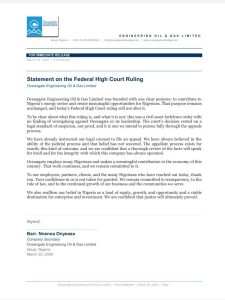
According to her, the company maintain that it has already directed its legal team to file an appeal, expressing confidence in the judicial process and the outcome of a thorough review of the case.
“To be clear, this ruling is a civil asset forfeiture order with no finding of wrongdoing against Oceangate or its leadership.
“The court’s decision rested on a legal standard of suspicion, not proof, and it is one we intend to pursue fully through the appeals process,” she said in a statement.
The firm secretary also said that Oceangate has reiterated its belief in the rule of law, noting that the appellate system exists to address such outcomes.
She added that the company remained confident that the facts of the case will ultimately affirm its integrity and business practices.
Onyeaso said that the firm also emphasised that its operations remained unaffected, stating that it continues to provide employment for many Nigerians while contributing to the country’s energy sector and broader economy.
“We have always believed in the ability of the judicial process, and that belief has not wavered,” she added.
She noted that Oceangate further expressed appreciation to its employees, partners, and clients for their continued support amid the development, assuring stakeholders of its commitment to transparency and accountability.
The Secretary said that the company reaffirmed its confidence in Nigeria as a viable destination for investment, describing the country as a land of equity, growth, and opportunity.
“We remain committed to the continued growth of our business and the communities we serve as we are optimistic that justice will prevail at the end of the legal process.
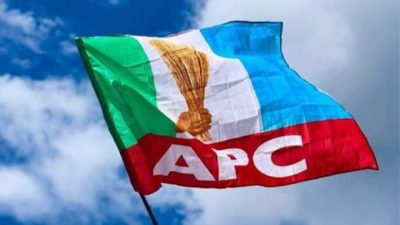
The Rivers State chapter of the All Progressives Congress (APC) has suspended a prominent member, Fubara Dagogo, following his legal attempts to halt the party’s national convention.
The decision was taken by the Ward 4 Executive Committee after allegations of anti-party activities and gross misconduct were levelled against the party chieftain.
The crisis arose after Dagogo took legal action against the APC over its upcoming national convention.
He approached a Federal High Court in Abuja, requesting an order to halt the party’s planned event.
In his suit, Dagogo alleged that he was unjustly prevented from contesting for the position of National Vice-Chairman (South-South).
Although Dagogo reportedly paid N5.1 million for the nomination form, he claimed the party refused to provide the required documents to formalize his candidacy.
He subsequently petitioned the court to suspend the South-South zonal congress and recognize his eligibility for the position.
Additionally, he sought the nullification of any election conducted without his participation and demanded N100 million in damages for what he described as marginalization.
However, the leadership of his ward in Bonny viewed this legal move as a direct violation of the party’s internal discipline.
The Ward Chairman, Richard Ibani, announced the suspension, stating that the resolution was passed during a committee meeting held on March 16.
The document confirming his removal was signed by the Ward Secretary, Donald Jumbo, and 21 other executive members.
The ward leaders maintained that Dagogo’s actions were an embarrassment to the party and a breach of the APC Constitution 2022 as amended. Specifically, they cited Article 21.2 (I), (II), and (VII), which deal with party discipline and the conduct of members.
In a strongly worded statement, the committee noted that they had previously cautioned members against acts that could ridicule the party.
They stated: “The ward exco has always advised its members to desist from actions capable of ridiculing our party, but your recent actions have shown that you are not willing to respect and abide by the constitution and actions of our great party.”
The suspension is indefinite and took effect immediately.
The ward leadership has also called on the state secretariat to uphold the resolution and apply further necessary actions.
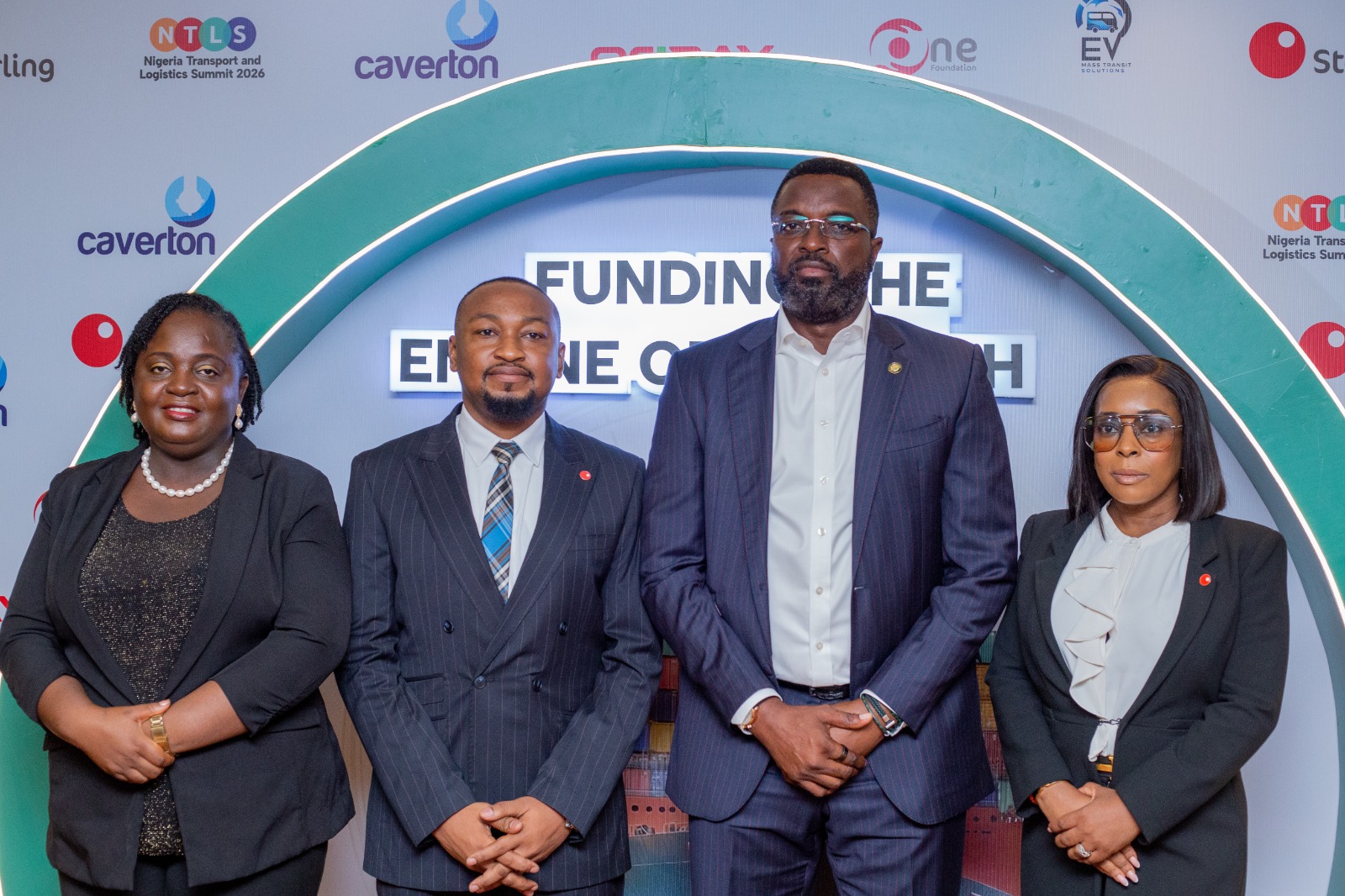
Industry leaders, policymakers, financiers, and innovators convened in Lagos today for the inaugural Nigeria Transport & Logistics Summit (NTLS) 2026, hosted by Sterling Bank at Eko Hotel & Suites, to forge actionable strategies for building a faster, more connected Nigeria through transport, mobility, and logistics.
Held under the theme “Funding the Engine of Growth,” the summit positioned Nigeria’s transport and logistics sector as a critical but under-leveraged driver of productivity, regional integration, and economic growth. Transport, mobility, and logistics collectively form the backbone of the Nigerian economy, yet chronic underinvestment, infrastructure deficits, and limited access to financing have long constrained its potential.
Transport, mobility, and logistics collectively form the backbone of Nigeria’s economy. While the logistics sub-sector alone contributes approximately ₦1 trillion to national GDP, experts estimate that the broader transport and logistics market exceeds ₦15 trillion in potential value. Yet persistent infrastructure gaps, inefficiencies, financing constraints, and policy fragmentation continue to limit the sector’s full impact.
NTLS 2026 brought together senior government officials, regulators, infrastructure operators, investors, development partners, and private sector leaders to address critical priorities including multimodal connectivity, airport and road modernization, energy-efficient mobility, digital trade facilitation, and innovative financing frameworks.
Speaking at the summit, Sterling Bank’s Managing Director and CEO, Mr. Abubakar Suleiman, represented by Sterling One Foundation CEO, Mrs. Olapeju Ibekwe, called for urgent, coordinated action to fix the systems that move Nigeria’s economy forward.
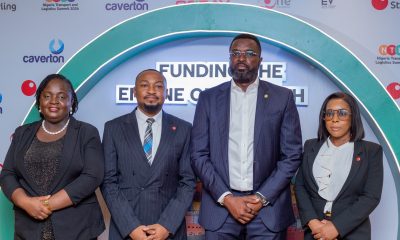
L-R Olapeju Ibekwe, CEO, Sterling One Foundation; Darlington Nwankwo, Divisional Head, Renewable Energy, Mobility and Tourism, Sterling Bank; Oluwaseun Osiyemi, Honorable Commissioner for Transportation, Lagos State: and Moyomade Akinyosoye, Divisional Head, Institutional Banking, Sterling Bank, at the recently concluded Nigeria Transport and Logistics Summit, hosted by Sterling Bank in Lagos recently.
He emphasized that while Nigeria’s transport and logistics challenges, ranging from port congestion to inefficient corridors and high operating costs, are well documented the real opportunity lies in effective execution.
“We must move beyond diagnosing the problem to building integrated, modern logistics systems that can power productivity at scale. This means fixing our ports, strengthening logistics corridors, improving road and rail connectivity, and embedding efficiency across the value chain.”
“Nigeria’s competitiveness, both regionally and globally will increasingly depend on how effectively we move goods, people, and services. The time for incremental change has passed; what is required now is bold, coordinated execution across public and private sectors,” Abubakar concluded.
Also speaking at the event, the Divisional Head, Renewable Energy, Mobility and Tourism at Sterling Bank, Mr. Darlington Nwankwo, described logistics as the backbone of trade, industry, and national competitiveness.
He noted that while the sector contributes just under four percent to Nigeria’s GDP, estimated at approximately ₦15trillion, its true economic impact is significantly larger when viewed as an enabler of productivity across agriculture, manufacturing, and trade.
“We must be deliberate about fixing the logistics backbone of the economy if we are to unlock the growth we need. Nigeria’s trade competitiveness is directly linked to the efficiency of its logistics corridors, from ports to inland distribution networks.”
“At Sterling, we see our role as connecting capital to execution, designing financing solutions that do not just fund infrastructure but unlock entire value chains. This includes supporting multimodal transport systems, enabling cleaner mobility solutions, and partnering with both government and private sector players to reduce investment risk. The opportunity before us is not just to fix what is broken, but to build a logistics ecosystem that is faster, more efficient, and globally competitive.”
Lagos State Commissioner for Transportation, Mr. Oluwaseun Osiyemi, echoed the call for bold ideas, strategic investments, and forward-looking policies, describing the summit as a vital platform to shape the future of movement, trade, and connectivity in Nigeria. He urged policymakers to move swiftly from planning to implementation, called on investors to support infrastructure and innovation, and encouraged industry leaders to champion efficiency, sustainability, and accountability.
In his keynote address, Professor Biodun Adedipe grounded these ambitions in hard realities, noting that with nearly 90 percent of Nigeria’s logistics dependent on road transport, the country faces mounting congestion and maintenance costs that demand diversification into rail and more durable infrastructure. He cautioned that economic transformation requires patience, with meaningful results unlikely to materialise in under 18 months.
Panel discussions throughout the day focused on reducing logistics costs, strengthening aviation and road integration, modernizing downstream energy distribution, and accelerating the adoption of cleaner and more sustainable mobility solutions.
The summit concluded with a call for sustained public-private collaboration, stronger regulatory coordination, and the creation of structured financing vehicles to de-risk infrastructure investments.
As Nigeria seeks to strengthen its regional trade position and unlock non-oil export growth, NTLS 2026 marks a decisive step toward building a more integrated, resilient, and globally competitive transport and logistics ecosystem.

Oceangate Engineering To Appeal Federal High Court Ruling over Forfeiture of Assets

Anti-Party Activities: Rivers APC Takes Disciplinary Action Against Fubara

Sterling Bank Charts Way Forward For Nigeria’s Transport, Logistics Sector

Fuel Price Relief: Dangote Refinery Announces Major Cut

Court Remands 30-Year-Old For Fatal Stabbing Of Elderly Mother

Ogun Nurse Remanded Over Abortion, Murder Of NYSC Member

FULL LIST: New UK Visa and Citizenship Costs For Nigerians, Global Applicants

Tinubu Govt Only Detained El-Rufai Because They Fear Him – Dalung

Ondo Court Sentences 21-Year-Old Emmanuel Akpan To Death For Employer’s Murder

Polaris Bank Positions Gender Equity As Growth Strategy At IWD 2026
-
 News2 days ago
Polaris Bank Positions Gender Equity As Growth Strategy At IWD 2026
-
 News2 days ago
Ondo Court Sentences 21-Year-Old Emmanuel Akpan To Death For Employer’s Murder
-
 News1 day ago
Tinubu Govt Only Detained El-Rufai Because They Fear Him – Dalung
-
 News1 day ago
FULL LIST: New UK Visa and Citizenship Costs For Nigerians, Global Applicants
-
 Security & Crime17 hours ago
Court Remands 30-Year-Old For Fatal Stabbing Of Elderly Mother
-
 News18 hours ago
Ogun Nurse Remanded Over Abortion, Murder Of NYSC Member
-
 News14 hours ago
Fuel Price Relief: Dangote Refinery Announces Major Cut
-
 News4 hours ago
Sterling Bank Charts Way Forward For Nigeria’s Transport, Logistics Sector