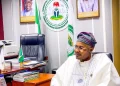


Chairman of the Presidential Fiscal Policy and Tax Reforms Committee, Taiwo Oyedele, has said that it was possible for Lagos State to generate up to N1tn annually from property tax if the potential in the sector is harnessed.
Oyedele said this on Tuesday in his keynote speech at the Tax Reform Summit 2026 titled, ‘From Reforms to Results: The Lagos Implementation Roadmap, Creating a Tax Environment that Works for All’, convened by the Office of the Special Adviser on Taxation and Revenue and the Lagos State Treasury Office.
While emphasising the need for standardisation, transparency, and harmonisation of tax practices to reduce compliance costs and improve taxpayer confidence at the subnational levels, Oyedele highlighted the potential for tax revenue from properties with just two million taxable properties in Lagos valued at N100m, generating N1tn annually in taxes.
He said, “Part of what you want me to speak to is also on property as a sustainable revenue anchor.
Property taxation is one of the most underutilised yet stable revenue sources available to states and local governments.
When done properly, property tax is difficult to evade. It grows with urban development, so it’s funding itself and aligns payment with visible public services. Every naira we collect, we invest back into the community. As you provide roads, potable water and other infrastructure, the value of those properties goes up. Living standards go up, and in turn, they finance even more development. However, success depends on proper property enumeration, accurate valuation, transparent dealing and predictable enforcement. All of those must work together.”
Speaking further on property tax, Oyedele asserted that data is critical to bringing in property tax: “Data is critical, a credible database of taxpayers, and not just taxpayers. The value of property is part of your tax base. How many people are employed and earning income is part of the size of your tax base, including a reliable valuation for those properties. I’ve said this before, and I’ll say it again: if just two million properties are taxable in Lagos State for property tax purposes, and they are worth an average of N100m, and you tax at just 0.5 per cent of the valuation. That’s N1tn every year invested back into the community. It can only grow.”
The tax man challenged Lagos State to demonstrate leadership as it relates to data and the enactment of the legal framework for tax operations at the subnational level.
He asserted, “One critical area for Lagos State is to demonstrate leadership in the quality of data for fiscal and economic planning, from the property register to fiscalisation and the taxpayer database for individuals. I think that, you know, in Nigeria today, the number of active individual taxpayers is under 10 million for the whole country. I think that’s the number we should have for Lagos State, and I think we need to make that possible. We cannot achieve all of these if we do not pay attention to data.
“So, what’s my call to action? I encourage us to focus on how best to make collaborative implementation work, not whether we want to collaborate. That question is not available anymore. Once we have the will, we will always find a way. To serve as a legal framework for collaboration, the Presidential Fiscal Policy and Tax Reform Committee, working with the Joint Revenue Board, has drafted a model tax harmonisation law for the consideration and enactment by states. So, we are glad to have our distinguished lawmakers in the room. Ekiti State, Zamfara, Anambra and Kano have passed the law already in their respective states, so we are expecting Lagos State to be the next. Revenue collection across agencies within the state also needs to be harmonised into the Lagos State Internal Revenue Service. There is a reason why the revenue agency knows how to collect taxes. When you ask other people to collect revenue in whatever form or shape, you promote inefficiency, which does not help anyone. Reform succeeds when states and local governments collaborate, and we rely on data rather than instinct or discretion.”
Oyedele also emphasised the importance of subnationals to the tax reform, saying, “We (must) leverage technology for transparency so that service delivery is not only visible but also commensurate to taxes. Collective tax reform is not an event. It’s a process, and it requires courage, consistency and work. Everyone was in doubt that courage was there for any reform, like taxes. Now that that has been cleared. In closing, the future of Nigeria’s fiscal sustainability will be decided not only in Abuja but also in states and local governments across the country. Country, if we get some national taxation rights, especially harmonisation of taxes and how we collect them, including property taxation, we create a stable, fair and predictable revenue base that supports growth, equity and inclusive development.”
In his opening remarks at the summit, the Governor of Lagos State, Babajide Sanwo-Olu, also reiterated that the success of Nigeria’s tax reform agenda will depend largely on effective implementation at the state level, with the state positioning itself as a leading sub-national driver of the reforms.
“As the Federal Government advances reforms to harmonise tax laws, strengthen VAT administration, improve coordination across tiers of government, and separate tax policy from administration, Lagos State is positioning itself as a leading sub-national in the implementation of these reforms. Our focus is not merely compliance with new frameworks but effective execution that delivers real value to citizens and businesses. This is why the theme of this summit, ‘The Lagos Implementation Road Map’, is particularly significant. It signals our readiness to move beyond policy conversations to practical implementation. In Lagos, tax reform is being approached as a governance reform, anchored on simplicity, transparency, digital efficiency, and fairness.
“Taxation is ultimately a social contract. People comply willingly when they trust that the government is responsible, accountable, and responsive. In Lagos State, tax revenues are continuously reinvested into transport infrastructure, healthcare delivery, education, security, environmental resilience, and targeted social protection programmes, all in alignment with our THEMES+ Development Agenda. As national reforms place greater emphasis on consumption-based taxation, data integration, and taxpayer protection, Lagos is strengthening its systems to ensure ease of compliance, efficient dispute resolution, and a predictable tax environment that encourages investment and innovation.”
Sanwo-Olu affirmed that the success of Nigeria’s tax reform journey will depend not only on legislation at the federal level but also on effective implementation at the state level.
“Lagos State is ready to play its leadership role by aligning policy with practice, strengthening inter-governmental collaboration, and maintaining continuous engagement with the private sector and professional bodies,” he added.
The Special Adviser to the Lagos State Governor on taxation and revenue, Abdul-Kabir Ogungbo, in his convener’s speech, spotlighted the solution expected from the summit.
He said, “A critical outcome we therefore seek is the establishment of a standardised revenue portal across all Local Governments/LCDAs, seamlessly interfacing with state revenue systems and fully aligned with the national Tax Identification Number framework, using the National Identification Number as the foundational identifier within our ecosystem. For instance, a taxpayer in Ketu and another in Alimosho should be distinctly and uniquely identifiable within a centralised database.
Beyond revenue collection, this capability enables effective governance. When social support or palliatives are to be distributed, the State must be able to accurately identify beneficiaries across all Local Governments/LCDAs through a unified and credible data system. In addition, we aim to establish a transparent and measurable framework for revenue mobilisation, one that clearly defines, on a need-to-know and need-to-use basis, what the State and the Local Governments are able to collect. This clarity strengthens accountability, planning, and performance monitoring across all tiers of government within the State.”
Highlighting the position of Lagos in the economic dynamics of the country, Ogungbo said the state’s annual budgetary estimates should be higher.
“It may interest us all to note that the cumulative budget of Conference 57, combined with the budget of the state government, still revolves around less than N5tn, which is below 10 per cent of the Federal Government’s budget trajectory, despite the scale of responsibility borne by Lagos. This responsibility includes a disproportionate share of Nigeria’s population, economic activity, and infrastructure demand.
Furthermore, when we place the Lagos State budget projection side by side with the Federal Government budget, this reality underscores the urgent need to intensify collective efforts towards achieving a sustainable revenue target for Lagos State in the range of N10tn to N15tn annually if we are to meet our developmental obligations to over 30 million residents. This situation further highlights the urgency of collectively reforming revenue mobilisation to match the scale, complexity, and dynamism of the Lagos economy and its needs.”