

Connect with us

News

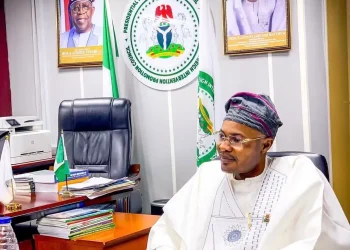
FG Insists On Transitioning WAEC, NECO To Computer Based Testing

Published

on

The Federal Government has declared that there will be no going back on the full transition of the National Examinations Council (NECO), West African Examinations Council (WAEC), and other public examination bodies from paper-pencil to Computer-Based Test (CBT) mode of examination by 2026.

Minister of Education, Dr Olatunji Alausa, stated this during the monitoring of the pilot CBT Senior School Certificate Examination (SSCE) conducted by NECO at Sascon International School, Maitama, on Tuesday in Abuja.

A total of 1,367,210 candidates registered to participate in this year’s school-based SSCE, a figure NECO described as the highest so far.

Reacting to complaints by the public on the lack of adequate infrastructure to support the phasing out of paper-pencil examinations, Alausa disclosed that both privately-owned CBT centres and those belonging to public institutions would be fully deployed in the conduct of the examinations.

Alausa, who hailed NECO for the seamless conduct of the pilot phase of the CBT SSCE, said that in the future, school-based SSCEs would be moved to designated CBT centres, rather than being held within schools.

He said: “WAEC and NECO exams are school-based exams being conducted at their schools. No, we will move away from that.

“It is going to be like the way JAMB exams are conducted at CBT centres. We have thousands of CBT centres across the nation.

“Those are the centres that we are going to use. It’s not a case that students do not have the facilities. Schools do not have the facilities.

“We have enough people. We also have to expand the value chain of these CBT centres. They should not just service JAMB alone.

“They should be able to service WAEC and NECO. The proprietors of these businesses, the owners of these businesses, have invested billions of naira to set up these CBT centres. So we also have to help develop a new value chain in our economy.

“They will create jobs. You see a lot of computer hardware and software. And more importantly, we have entrepreneurs in Nigeria that are creating and developing these solutions. These are home-grown solutions. We should all be proud. Today, we should all stand tall and be proud of what we utilise.

“These are the kinds of opportunities that President Bola Tinubu is unleashing in every sector of his economy.”

Alausa further commended NECO for its preparedness to fully transition to CBT, noting that the pilot was a demonstration of capacity and commitment to reform.

“This is the first in the history of NECO, which is conducting its annual O-Level Certificate exams for SS3 students. This is a pilot that we pushed to have, and I must tell you, I was very impressed with what I saw.

“I have to commend the Registrar of NECO for the hard work that he and his team have deployed to get us to this stage, because when we decided that we’re going to go CBT, everybody thought this was an insurmountable task, but today, we’ve seen that this is a process, this is a transition that is possible.

“We just have to work hard to get there. We cannot continue with this madness of exam malpractice, our exams being caught with cheating and leaked questions—both WAEC and NECO. If we allow this to continue, it will destroy the capacity of our youth, of our children.”

He also disclosed a phased rollout of the CBT format across all school examinations, starting with objective questions this year.

“I’m a very happy person today that NECO has transited to CBT from paper-based. By November of this year, both NECO and WAEC objective exams will be fully CBT.

“And by next year, 2026, all the essays and objective exams will be CBT. NECO and WAEC will be joining the league of JAMB. We are making significant progress,” he added.

Registrar of NECO, Prof Ibrahim Dantani Wushishi, acknowledged that there were obvious infrastructure challenges, but said this would not hamper the Council from conducting CBT examinations, stressing that NECO, as a professional examination body, is ready to conduct examinations using any medium.

Fielding questions from newsmen after monitoring the ongoing NECO exam alongside members of the Senate Committee on Basic and Secondary Education at Government Secondary School, Maitama, Abuja, Wushishi expressed the Council’s readiness for the CBT mode of examination.

He said: “NECO is ready as a professional body to conduct examinations using any medium.

“We may have challenges of infrastructure, that is obvious, but then that will not bog us down or stop us from doing it. There are facilities that will give us the opportunity to conduct CBT, and we are good to go for that. We are all aware that there are certain difficult terrains across the country where we will not be able to meet up with that, except there are exceptional infrastructures to give us the opportunity to do that.

“But by and large, we are very, very much ready to do that as a professional body. We are calling on governments at the state level to speed up provision of CBT infrastructure in their states, because that will greatly support the process. We believe the process will reduce a lot of issues related to examination malpractice and improve the quality of the examination and, consequently, the results and certificates.

“We are very happy that the results and certificates are recognised globally and we need to also do more in order to reach out across the world with our certificates and results. So NECO is fully ready as far as that is concerned.”

Prof Wushishi revealed that a total of 1,367,210 candidates registered for this year’s SSCE, the highest figure so far.

Of these, 685,551 are male and over 681,300 are female.

According to him, Kano State had the highest number of registered candidates with more than 137,000, while Kebbi had the least, just over 5,000.

He also noted that the centre with the lowest number of candidates was the Nigerian International School in Jeddah, Saudi Arabia, which registered eight students.

Speaking after monitoring the examination at the Model Secondary School, Maitama, Vice Chairman of the Senate Committee on Education (Basic and Secondary), Senator Ekong Samson, pledged lawmakers’ commitment to putting in place every measure that will ensure a seamless transition to CBT exams.

“We are living in an age of technology. Nigeria must come to terms with what happens globally, and whatever measures we need to keep our educational system abreast with the world over, we will do that as legislators.”

According to him, the Senate will continue to monitor the process and put measures in place that will guarantee the quality of education in the country.

On his part, Chairman of the House of Representatives Committee on Basic Examination Bodies, Hon Oboku Oforji (PDP, Bayelsa), who led the committee to monitor the NECO SSCE at Federal Government Boys College, Apo, Abuja, said the move was part of its oversight functions.

He commended NECO for the hitch-free examination.

“NECO is very important to us. This is our own. WAEC is also our own… We are very proud of what NECO is doing under the leadership of Prof Ibrahim Wushishi, and we pray that they sustain the tempo.

“We have gone round the school and we have seen the students’ commitment,” he said.

News

Oyo 2027: Adelabu Quits As Power Minister To Focus On Guber Race

Published

on

By

The Minister of Power, Adebayo Adelabu has formally resigned from his position in the Federal Government to pursue his governorship ambition in Oyo State.

In a resignation letter dated April 22, 2026, and addressed to the President, Adelabu stated that his resignation will take effect on April 30, 2026, to enable him to focus on his governorship ambition in Oyo State.

The letter, routed through the Office of the Secretary to the Government of the Federation, stated that he was stepping down with “a deep sense of honour and profound gratitude.”

He wrote, “I write with a deep sense of honour and profound gratitude to formally tender my resignation as the Honourable Minister of Power of the Federal Republic of Nigeria. This resignation is to take effect on 30th April 2026, in order to allow sufficient time for a smooth and orderly handover of responsibilities.”

Adelabu thanked the President for the opportunity to serve, describing his appointment as a privilege.

He said, “Your Excellency, I remain sincerely grateful for the privilege and confidence you reposed in me by appointing me to serve our great nation in this capacity.

“It has been a rare honour to contribute to national development under your leadership and to play a role in advancing reforms in the power sector—one of the most critical foundations of Nigeria’s industrial growth and economic transformation.”

The former minister said his resignation was to enable him focus fully on his governorship ambition in Oyo State, citing provisions of the amended electoral law.

He added, “My decision to step down is informed by my intention to focus fully on my gubernatorial ambition in Oyo State. This aspiration, which dates back to 2016 during my service as Deputy Governor of the Central Bank of Nigeria, ultimately led to my voluntary resignation from the Central Bank in 2018 in order to pursue the same goal.”

“In line with the provisions of the Amended Electoral Act 2026, which preclude political office holders from contesting elections, I consider it both appropriate and necessary to resign at this time.”

Adelabu’s exit marks a major political development ahead of the next electoral cycle, particularly in Oyo State, where he is expected to contest the governorship election.

Continue Reading

News

Wale Edun, Musa Dangiwa Resigned Voluntarily, Not Sacked – Presidency

Published

on

By

The Presidency has clarified that Wale Edun (former Finance Minister) and Ahmed Musa Dangiwa (former Housing Minister) voluntarily resigned from their positions and were not sacked by President Tinubu.

In a statement released this evening April 22, presidential media aide, Bayo Onanuga, said that contrary to public opinions, Wale Edun resigned on health grounds while Dangiwa also tendered his resignation and thanked the President for the opportunity given him to serve in the Federal Executive Council.

Onanuga stated that Edun, who clocked 70 on Monday and has battled recent ill health, fittingly submitted his resignation letter on his birthday, thanking the President for the opportunity to serve Nigeria.

“It has been a pleasure and privilege to serve your administration and the Renewed Hope Agenda, Under your leadership, Nigeria has emerged stronger, more resilient and more internationally respected. I wish you and the administration every success in the future” he wrote

Onanuga stated that on Tuesday, before the Office of the Secretary of the Government of the Federation announced his departure from the Cabinet, Edun paid a valedictory visit to the President at the Villa and held an hour-long discussion with the president and then left to focus on his private businesses.

The presidential aide stated that President Tinubu has expressed deep appreciation to Edun and Dangiwa for their dedicated service and significant contributions to the administration’s economic reform programme and wished them continued success in their future endeavours.

‘’In the same vein, the President has urged the new Minister of Finance, Taiwo Oyedele, to consolidate ongoing reforms and advance the administration’s fiscal and economic objectives with renewed focus, discipline, and innovation.

President Tinubu will shortly send the ministerial nominee for housing, Muttaqha Rabe Darma, also from Katsina, like Dangiwa, to the Senate for confirmation” the statement concluded

Continue Reading

News

Unity Bank, Experts Advocate Green Investment, Climate Innovation To Drive Economic Resilience

Published

on

By

Nigeria’s retail lender, Unity Bank Plc, alongside leading climate innovation experts, has called for increased investment in the green economy and the adoption of frontier technologies as critical pathways to driving economic resilience and reducing the impact of climate change on vulnerable populations across Africa.

The call was made during a thought-provoking webinar hosted by the Bank to commemorate this year’s Earth Day, themed “The True Cost of Climate Change and Who Pays?”. Climate experts and stakeholders convened to examine the human, economic, and institutional costs of climate change, while spotlighting practical solutions to address its growing impact.

In his opening remarks, Unity Bank’s Head of Strategy and Innovation, Ibukun Coker, emphasised the urgency of addressing climate risks from both a societal and business perspective.

He said: “Climate change is no longer a distant or abstract challenge. It is an existential threat with direct consequences for individuals, businesses, and economies. At Unity Bank, we recognise the role institutions must play in incorporating sustainability in project financing, supporting businesses and promoting solutions that build resilience in communities where we operate.”

The webinar featured Chinwe Udo-Davis, Founder and CEO of Instollar, and Oluwatosin Ajide, Programme Manager at the Nigeria Climate Innovation Centre, both of whom provided insights into the drivers of climate change and the pathways to mitigation and adaptation.

Speaking during the session, Udo-Davis highlighted the disproportionate burden which climate change places on underserved communities and the need for inclusive solutions.

“The true cost of climate change is not evenly distributed. Communities with the least resources are often the most affected, whether through energy poverty, environmental degradation, or limited access to sustainable alternatives. Addressing this imbalance requires intentional investment in clean energy solutions that are both accessible and scalable.”

Ajide underscored the importance of coordinated, system-wide approaches in tackling climate challenges, particularly through innovation and policy alignment.

“Climate change is fundamentally a structural problem, and its solution requires a paradigm shift: from innovation and policy to financing and implementation. Stakeholders must work collaboratively to drive solutions that are sustainable and inclusive.”

The session also explored emerging opportunities in climate technology, renewable energy, and ecosystem financing, reinforcing the role of innovation and cross-sector collaboration in building long-term resilience.

By hosting the webinar, Unity Bank continues to demonstrate its commitment to advancing sustainability-focused dialogue and supporting initiatives that promote responsible growth and environmental stewardship.

The initiative underscores the Bank’s broader strategic focus on environmental sustainability as well as its commitment to financial inclusion.

Continue Reading

Trending