News
Boko Haram Massacre Farmers, Fishermen In Borno For Supporting ISWAP


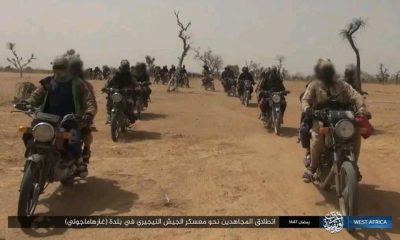
Terrorists of the Islamic State of West Africa Province, ISWAP, have killed at least 23 farmers and fishermen in the village of Malam Karanti near Baga, in the Kukawa Local Government Area of Borno State.
The attack reportedly took place on Thursday morning in Malam Karanti, a village five kilometres from Baga.
The terrorists were said to have gathered farmers and fishermen near the village and killed 23 of them.
“The terrorists spared an elderly man, who later alerted the community. The terrorists assembled people in Malam Karanti and killed them. Most of the victims were bean farmers,” a source told newsmen.
Residents trying to recover bodies of those killed were reportedly forced to retreat after ISWAP launched another attack.
“We tried to organise a rescue mission with security agencies to recover the victims’ bodies, but the terrorists returned and prevented us. Many families are waiting for their loved ones,” another source said.
JomogNews Nigeria reports that Malam Karanti is an ISWAP enclave where civilians often farm and fish despite risks.
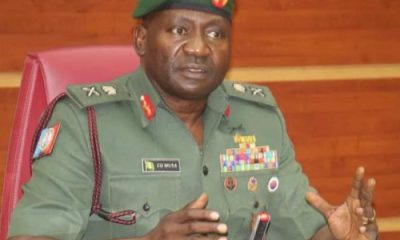
Meanwhile, the Chief of Defence Staff, General Christopher Musa, had assured residents of the State and the North-East that the military was frantically working to deal with the terrorists and flush them out of their enclaves to end the crisis.
General Musa reiterated that the military was collaborating with friendly countries such as Russia, France, among others, to deploy sophisticated weapons that could bring the war quickly to an end.
According to him, recharging of the Lake Chad will also enable troops to navigate the Lake Chad axis to eliminate the terrorists, especially the ISWAP, who have capitalised on the economic fortunes of the Chad Basin, such as fishing and farming, to boost their logistics base.







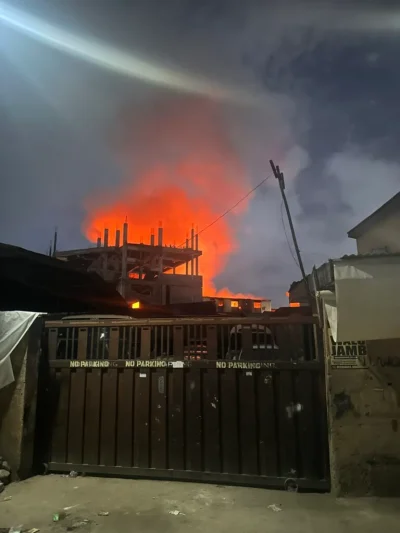
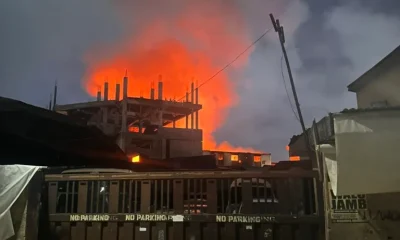
A major fire outbreak occurred at a market in the Yaba area of Lagos State in the early hours of Saturday.
The blaze, which reportedly began between 1:00 AM and 3:00 AM, has destroyed several shops and goods worth millions of naira, leaving numerous traders stranded and counting their losses.
Videos circulating on social media showed thick smoke and flames consuming parts of the market, while traders and residents scrambled to salvage belongings.
An eyewitness, Lugar Feliz, livestreaming on TikTok, noted that firefighters were already at the scene and identified the affected area as the Popo section of Yaba Market. Another user, Olamilekan Iyiola (@Olamilekan0932), described the incident as a “terrible fire outbreak in Yaba right now.”
Some residents expressed frustration over emergency response efforts. Adeoluwa (@Okunlola_Jude) reported that shops behind his property were completely destroyed, with losses estimated in the billions of naira. He added, “Fire service headquarters is just 10 minutes away, yet only one truck was brought to the scene.”
Sullex Print and Branding (@SullexBranding) also highlighted equipment challenges, claiming, “Three fire service trucks responded, but only one had water. The fire is currently at Ajibode Street, Yaba.”
As of Saturday morning, the cause of the fire remained unknown. No official statement has been released by the Lagos State Fire and Rescue Service regarding the extent of damage or potential casualties. Firefighting and containment efforts were ongoing, while residents called for enhanced emergency preparedness to prevent further losses.
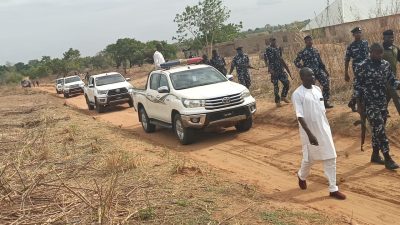
The Nasarawa State Police Command has confirmed that 11 people were killed and over 50 houses were burnt following violent clashes between the Akyawa and Udege Kasa communities in the Nasarawa Local Government Area on Friday.
The two warring communities, Akyawa and Udege Kasa, clashed in the early hours of Friday over some disagreements.
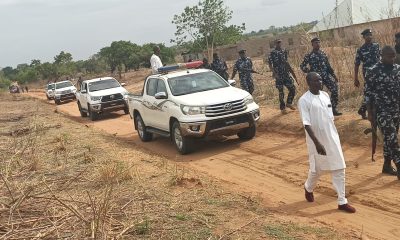
In a statement made available to journalists in Lafia, the Nasarawa State capital, on Saturday, the Police Public Relations Officer of the command, SP Ramhan Nansel, explained that the casualties prompted the Commissioner of Police, Shetima Jauro Mohammed, to visit the communities with a view to restoring normalcy.
According to Nansel, during the CP’s visit to the affected communities of Akyawa and Udege Kasa on April 3, 2026, Mohammed expressed deep sorrow over the tragic incident, which claimed the lives of 11 persons and led to the burning of several houses.
He stated that the CP commiserated with the families of the deceased and the entire community, assuring them of the command’s unwavering commitment to ensuring that justice is served.
The PPRO said, “The incident, which occurred in the early hours of the same day, involved hoodlums suspected to have carried out a reprisal attack over the alleged killing of two of their kinsmen.
“In the course of the attack, 11 persons were killed, while about 50 houses were burnt in Akyawa and two houses in Udege Kasa.
“In response, CP Shetima has ordered an intensive manhunt for all perpetrators of the heinous act, directing tactical teams and investigative units to ensure their prompt identification, arrest, and prosecution.”
Nansel noted that in order to prevent any further breakdown of law and order, the CP had also directed the immediate reinforcement and sustained deployment of police personnel, in synergy with the military and the Nigeria Security and Civil Defence Corps, to provide adequate security and restore lasting peace in the area.
“A stakeholders’ meeting was held during the visit, where the CP urged residents to remain calm, law-abiding, and cooperate with security agencies by providing credible information to support ongoing investigations.
“The Command reassures members of the public that normalcy has been restored to the affected communities, while proactive measures are in place to prevent any recurrence of violence,” the statement added.
Meanwhile, there are rumours that the communities came under violent attacks, as suspected Fulani militias, believed to be bandits, reportedly invaded Akyawa and Udege Kasa late Thursday night.
The latest assault, according to local sources, is believed to be a continuation of an earlier violence in nearby Sabon Gida (Gidan Ada Ogiri), where houses, farm produce and other valuable properties were destroyed.
Residents lamented that barely 48 hours after the attack on Sabon Gida, the fresh assault occurred, heightening fears among residents who say no one can predict which community may be targeted next.
Sources expressed concern that the attackers had been sighted moving around neighbouring communities prior to the incident, yet no decisive preventive measures were taken by security authorities.
“It is becoming unbearable. They abduct at will and now invade our entire communities unchecked. People are living in fear and fleeing their homes for safety,” a resident lamented.
Our correspondent gathered that the affected communities, once known for their mining activities and vibrant local economy, have in recent times been severely impacted by recurring insecurity attributed to suspected bandit groups.
Residents are therefore calling on the Nasarawa State Government to act swiftly to contain the situation and prevent further devastation, especially as farmers have begun planting for the new season amid fears of renewed attacks.
News
Union Bank Looted: How former directors gambled with billions and nearly destroyed a national bank

The former directors and owners of Union Bank did not just fail, they engineered a financial disaster. They manipulated reports, hid massive losses, diverted foreign loans and treated depositors’ money like a private wallet.
Investigators uncovered billions of dollars in misconduct. These directors buried over ₦250 billion in losses, piled a $300 million foreign loan onto the bank without protection and then forced Union Bank to carry the burden. They even used the bank’s own funds to buy its shares, an outrageous betrayal of trust.
It didn’t stop there. Over $100 million was pulled out improperly, leaving the bank exposed and struggling. Loans meant for customers were secretly diverted into shady transactions. False reports were sent to lenders. The system was deliberately deceived.
This was not incompetence. It was exploitation.
By 2025, their actions had created nearly ₦400 billion in losses and over ₦147 billion in unpaid charges. The bank was on the edge.
The Central Bank of Nigeria (CBN) stepped in just in time. Without that intervention, Union Bank could have collapsed, dragging others down with it.
Now, the bank is stabilising. But let’s be clear: this recovery is happening in spite of those former directors, not because of them.
They didn’t build value. They destroyed it.
And Nigerians deserve to never forget who was responsible.

Fire Outbreak Leaves Hundreds Of Traders Stranded At Yaba Market

11 Dead, 50 Homes Razed In Violent Nasarawa Community Clashes

Union Bank Looted: How former directors gambled with billions and nearly destroyed a national bank

Gumi Defends Dialogue As Sole Solution To Nigeria’s Insecurity

Court Clears Senator Ireti Kingibe To Remain Active In ADC

Tinubu: I Was Elected To Establish Peace, Not Comfort Widows, Widowers

COAS Shaibu Hits Jos To Restore Peace, Public Confidence

President Tinubu Appoints New PTDF Executive, Reappoints TCN Head

Simi Welcomes Second Child With Adekunle Gold