
News
Lagos Assembly: How Akande-Led Panel Forced Meranda Out, Reinstated Obasa

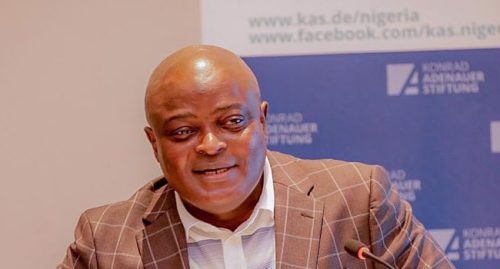
The 49-day reign of Mojisola Meranda as Speaker of the Lagos State House of Assembly ended on Monday, when the lawmakers re-elected Mudashiru Obasa to lead them.
The move is not unconnected to the resolutions of the mediating panel led by Chief Bisi Akande and Chief Olusegun Osoba, former governors of Osun and Ogun states, who intervened in the leadership crisis that rocked the assembly for almost 50 days.
Over a week ago, the heavyweights in the All Progressives Congress, including the aforementioned former governors, were drafted by President Bola Tinubu to find a lasting solution to the Assembly leadership crisis which began when Obasa was removed by over 30 lawmakers on January 13, 2025.
Obasa was away in the United States when he was removed and replaced with his deputy, Meranda, a move that Obasa vehemently rejected, and even approached the court to challenge.
At the plenary on Monday, other principal officers elected under Meranda also resigned from their positions, including Deputy Speaker, Mojeed Fatai, and Chief Whip, Okanlawon Sani.
Before the development, Obasa, Meranda and all the lawmakers had met with the leadership of the party in the state, led by the state Chairman, Cornelius Ojelabi.
The state Attorney General, Lawal Pedro (SAN), was also at the meeting held outside the assembly chamber, before the plenary where Meranda officially resigned.
In her resignation speech, Meranda stated that her decision was made in the interest of democracy and to prevent further crises within the Assembly.
She emphasised that leadership required selfless sacrifice and that stepping down was necessary to maintain stability.
“I wish to let every one of you know that I have made a personal sacrifice towards resolving the leadership crisis rocking the Lagos State House of Assembly.
“I recognise the role my family has played and continues to play in entrenching democracy, good governance, and the betterment of our people.
“I will never depart from the well-established path of honour, dignity, integrity, and service as personified by my late father,” she said.
The first female speaker in the history of the Assembly added, “I took this decision carefully and with firm consideration.
“On one hand, I accepted the position of Speaker on January 13, 2025, and on the other hand, I resigned the position as it is threatening the democracy of this House.
“I am not a quitter; however, I took this bold decision in order to save this legislative institution from further unnecessary conflict and embarrassment.
“Accordingly, I have agreed to yet again make a personal sacrifice by stepping down as the Speaker of this great Assembly.”
According to Meranda, the party is supreme.
“I sincerely thank you for your understanding and support, just as we know that party decisions are supreme,” she said.
Obasa, who took a fresh oath of office as the Speaker, pledged to Lagos residents that the assembly would continue to make laws for the progress of the state.
He appreciated the intervention of Akande and Osoba in resolving the crisis.
He said, “We want to assure Lagosians that we have resolved and determined to serve their interest and protect their interest always.
“Our major responsibility is to represent them and that’s what we have been doing.
“What is happening here today shows that the Lagos State House of Assembly is capable and is a House of integrity. It is a house that has an internal mechanism to resolve issues in the interest of the institution and our party.
“Today is not the day for speech making but to celebrate my colleagues and thank them for all they have been doing. I am sure we will continue to work together in peace, love and harmony.”
Obasa thereafter adjourned the plenary indefinitely.
The PUNCH earlier reported that part of the resolutions of the Akande-led panel who met with members of the Governance Advisory Council, Governor Babajide Sanwo-Olu and the lawmakers at Marina, was for Obasa to also resign after being re-elected as Speaker.
A GAC member, Chief Muraina Taiwo, who was at the meeting and spoke with The PUNCH in February, said that “The APC leaders, including Chief Bisi Akande and Chief Olusegun Osoba, came to mediate.
“They will go back to Abuja to brief our leader (Tinubu) how they feel about everything. They are suggesting to Speaker Obasa that he should step down and the other woman (Meranda) to also step down and they will bring in another new person.
“They are thinking of submitting a few names but all will land at the table of the leader.”
Another top source in the APC in the state had also said, “Meranda will step down and Obasa will also step down. They will now pick someone else from Lagos West.
“Lagos West is the largest senatorial zone in Lagos. The lawmakers seem to have agreed, otherwise, there won’t be peace.
“Part of the understanding is that the case the man (Obasa) took to court, he will withdraw it as well.”
However, it is not certain if the resolution still subsists, or if Obasa would resign anytime soon.
The GAC member, Chief Muraina, when asked about it in a telephone interview on Monday, said it was left for Obasa to resign or not, adding that the party was, however, in support of his return to the House as Speaker.
Chief Muraina said, “The whole party is in support. You can see the resignation address of the former Speaker. She did it wholeheartedly and she abided by the decision of the party.”
When asked if Obasa would be resigning, he said, “That is his own personal decision, If he chooses to resign tomorrow, fine, if he insists on staying on the seat, it’s left to him.
“Resignation is not by force unless a directive comes from the party’s leadership. For now, I don’t see him resigning. The party has not decided that he should resign.”
Another GAC member, Anthony Adefuye, said the party had allowed peace to reign in the House.
He said the resolution of the leadership crisis was due to the intervention of many people.
“Many of us intervened. We are happy and glad that the whole thing has been settled. Let us allow peace.
“God has given us a President, let us also behave like people who have a President, and let the town be peaceful,” the GAC member said.
The APC Chairman in Lagos, Cornelius Ojelabi, commenting on the development in an interview with our correspondent, expressed satisfaction with the resolution of the House leadership crisis.
When asked about the resolution of the party that Obasa was to resign after Meranda, Cornelius said, “That (the current situation) is where the party resolved it for now. That’s where we resolved it.”
When quizzed further if Obasa would no longer be resigning, he said, “No, that’s where we resolved it. We just want peace in the House generally.
“The kind of harmonious relationship that existed among them before in the House, we want to try as much as possible to bring it back.”
In a statement released by the APC, signed by its spokesperson in the state, Seye Oladejo, the party congratulated Lagosians and members of the Lagos State House of Assembly and general members of the APC for finding an amicable solution to the rift within the House of Assembly.
Oladejo said the crux of the disagreement which had been mainly to draw the attention of the public and the party to intractable internal issues “stretched the well-tested and trusted internal conflict resolution mechanism of the party.”
He said, “As a truly democratic party, we refrained from needless interference in the affairs of the legislature whose independence we hold in high esteem.
“However, the House deferred to the party when the conflict festered and defied all suggestions for settlement.
“We want to put it on record that the members of the House officially briefed the party about the untoward development and requested wise counsel from the party just a few days ago.”
He said the party met with all the members and proffered practical solutions which were sacrificial, stabilising and in the best interest of the state.
“You may wish to note that our role remained basically advisory and could only be binding if upheld in the hallowed chamber of the House of Assembly,” he added.
Obasa suit pending
Obasa’s counsel, Chief Afolabi Fashanu (SAN), said the Lagos Speaker will be deciding on the withdrawal of the suit against the Assembly and Meranda.
Obasa had, earlier in February, dragged Meranda and the Assembly to court to challenge his removal by the lawmakers on January 13, 2025.
Obasa, in suit number ID/9047GCM/2025, filed before Justice Yetunde Pinheiro of the Lagos State High Court, Ikeja, is contesting the constitutionality of the sitting and proceedings during a recess, which occurred without him reconvening the House or delegating the authority to someone else.
On Friday, Justice Pinheiro fixed March 7, 2025, for the hearing of all pending applications on the matter.
When asked in a telephone interview on Monday if Obasa would discontinue the suit, following his official return as Speaker, his lawyer said, “Withdrawing the case still has to be at his instance.”
He added, “Just as you saw what transpired with respect to him coming back (to the House), he still has to formally brief us on what he wants us to do in terms of withdrawing the case. So, as of now, he has not gotten back to us.
“So maybe by tomorrow (Tuesday), we will have a meeting with him on how to proceed. Because I do not know the terms of his return, whether it was conditioned upon fulfilment of certain things or not.”
Lawmakers eulogise Meranda
Meanwhile, lawmakers have praised Meranda for heeding the directives of the APC and “letting go.”
They saluted her 49 days of leadership and wished her well in her future endeavours.
“The entire chamber is in tears. You have restored the spirit of friendship, comradeship, and loyalty to this House.
“We now have a renewed sense of belonging and an understanding that the party is supreme,” said lawmaker Temitope Adewale.
He added, “To my dear colleagues, this is not the end—this is Asiwaju’s House. Let’s not lose hope; things will change for the better.”
Another lawmaker, Tobun Abiodun, said, “You did very well, but as we know, we are politicians, and in politics, our party is supreme.
“We are proud party members, and our party has spoken. I thank the Deputy Speaker and everyone else affected. We are here to obey the party, and we are not ashamed of it. Madam Speaker, I pray for you—may God Almighty be with you.”
He added, “You have listened to the party and are willing to let go.”
The lawmaker representing Surulere, Desmond Elliot, could not control his emotion, as he asked not to speak, and almost burst into tears.
All other members commended Meranda for her unique leadership style, describing her as a dedicated and visionary lawmaker with a track record of selfless service and commitment to legislative excellence.
They expressed confidence in her ability to further strengthen the Assembly’s legislative agenda in her new role as Deputy Speaker.
Assembly security tightened
The Assembly complex was under heavy security surveillance before and after the plenary.
Operatives of the state police command, Lagos Neighbourhood Security Corps, Nigeria Security and Civil Defence Corps and the Department of State Services cordoned off the Assembly premises.
Earlier in the day, there was strict screening at the assembly gate with journalists denied entry until around 1 pm.








Nigeria’s digital banking revolution is raising the stakes for consumer trust. The question is whether the industry is rising to meet them.
Nigeria’s relationship with digital banking has changed almost beyond recognition in a decade. Where cash once dominated every transaction, from the roadside market to the corporate boardroom, mobile apps, instant transfers and USSD codes have reshaped how tens of millions of Nigerians interact with their money every single day.
The figures speak for themselves: point-of-sale transactions surged to a record N18 trillion in 2024, a 69 per cent increase from the year before, and the number of POS terminals in operation more than doubled to 5.5 million. Mobile banking is now the most widely used digital financial service in the country, with four in five users having accessed it within any given 90-day window.
This is, by any honest measure, an extraordinary story of financial inclusion and technological adoption. But it is an incomplete story if told without its other half.
Behind the growth curves and transaction volumes, a quieter and more troubling story has been unfolding. According to the 2024 Nigeria Consumer Protection Survey published by Innovations for Poverty Action, nearly one in four digital financial services users reported experiencing unexpected fees, charges or fraud attempts in the past year. Of those who encountered a problem, only half sought any form of formal redress. That silence is not apathy. It is the sound of eroded confidence: customers who have concluded that raising a complaint is unlikely to produce results.
The fraud data from the Nigeria Inter-Bank Settlement System tells the same story from a different angle. Actual losses to digital payment fraud rose to N52.26 billion in 2024, a figure inflated significantly by a single N31.1 billion incident involving one institution but still representing a 196 per cent increase in fraud losses over five years, even as the number of individual cases declined.
The decline in case counts is not reassurance enough. It suggests that while fraudsters are making fewer attempts, they are making each one count considerably more.
By channel, e-commerce and internet banking remain the most exposed, followed by point-of-sale, mobile and web platforms.
The most common technique is social engineering, which requires no sophisticated technology at all. It requires only a convincing conversation and a customer who does not know what to guard against. Insider abuse, where bank staff are complicit in fraud, is identified by NIBSS as the single greatest structural threat to the sector.
That is a sobering finding, and one that no institution should read past quickly.
What this data collectively points to is a gap that the industry must confront honestly. Nigeria’s digital banking infrastructure has expanded at speed. The consumer protection architecture that should travel alongside it has not always kept pace.
Convenience and safety are not natural enemies, but they require deliberate and sustained design to coexist. Left to grow at different speeds, they create precisely the conditions that fraudsters, rogue actors and complacent institutions exploit.
The encouraging news is that the gap is closing. Nigeria exited the Financial Action Task Force’s grey list in 2025, a signal that the country’s financial system has materially strengthened its safeguards. The CBN’s 2024 rollout of risk-based cybersecurity frameworks for deposit money banks formalised the standard of care that institutions are required to demonstrate.
Regulatory enforcement actions in 2024, including reported industry penalties totalling over N15 billion, have underscored that consumer protection is a compliance obligation with real and immediate consequence. The industry is being held to a higher standard, and that is the right direction.
Within institutions themselves, the most effective safeguards are often the ones customers never see. The strongest security infrastructure operates silently in the background: monitoring account behaviour in real time, identifying anomalies before they become losses and intervening before a suspicious transaction completes rather than after.
This is not glamorous work, but it is the work that matters most. A customer who never has to report a fraud incident has been protected more effectively than one who was offered a sympathetic apology after the damage was done.
Union Bank’s experience illustrates what this balance looks like in practice.
According to the bank’s full-year 2025 customer experience data, its digital channels recorded strong customer satisfaction scores across all platforms: UnionMobile achieved a customer satisfaction score of 87 per cent and a net promoter score of 77, while the USSD channel (*826#) returned scores of 82 per cent and 70 respectively.
These are not numbers that emerge from convenience alone. They reflect what customers value above all else when they transact digitally: the confidence that the experience will be safe, seamless and complete.
That confidence is built through sustained investment in security infrastructure, proactive monitoring and an institutional culture that treats customer protection as a core value rather than a compliance line item.
It is a culture Union Bank articulates through its ICARE values, where the commitment to being customer and community-focused is not a policy position but a founding organisational principle, reinforced consistently from the moment any member of staff joins the bank.
In March, as institutions across Nigeria marked World Consumer Rights Day, Union Bank reaffirmed to its staff the responsibility that every individual within the organisation carries to uphold the rights and dignity of the customers it serves. It is the kind of internal commitment that rarely makes headlines, but that ultimately determines the quality of every customer interaction that does.
Trust is the only currency in banking that cannot be manufactured on demand. It is built over time, through consistent behaviour, through systems that protect customers before they know they need protecting, and through institutions willing to be accountable when they fall short. Nigeria’s digital banking revolution has done extraordinary things for financial access and economic participation. Its next chapter must be defined by what it does for financial safety. The two are not in competition. In the long run, they are, in every meaningful sense, the same thing.
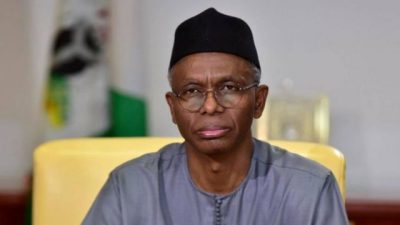
Former Kaduna State Governor Nasir El-Rufai has returned to the Federal High Court in Kaduna to resume his trial over alleged financial improprieties following the burial of his mother, Hajiya Umma El-Rufai.
El-Rufai was seen entering the court premises under tight but orderly security presence, with officials closely monitoring movements around the facility as proceedings resumed.
The former governor’s return in the court comes after subsequent temporary release by the Independent Corrupt Practices and Other Related Offences Commission, ICPC.
JomogNews reported how he was allowed to attend the funeral rites of his late mother, Hajiya Umma El-Rufai, who died in Cairo, Egypt.
The release was alleged to have been approved on compassionate grounds following the family’s bereavement, although the ICPC has yet to officially disclose the specific conditions attached to the bail.
As of the time of filing this report, it remains unclear whether the former governor will retain his temporary bail status or be required to return to ICPC custody pending further court decisions.

Violent protests broke out in the Eastern Cape province of South Africa following the controversial coronation of a Nigerian national, Solomon Ogbonna Eziko, as a traditional Igbo king, with demonstrators torching vehicles and looting shops owned by foreign nationals.
The protests, led by members of ActionSA alongside traditional leaders and residents on Monday, were initially staged in opposition to what organisers described as a violation of the province’s sovereignty, constitutional order, and recognised traditional leadership structures.
However, tensions escalated rapidly in KuGompo City, where the protests turned violent, forcing police to intervene and disperse crowds, according to SABC News.
Video evidence shared on X showed protesters setting several vehicles and buildings allegedly belonging to foreigners on fire, while security forces intensified efforts to restore order.
“Protesters have torched vehicles and buildings allegedly belonging to foreign nationals in protest against the installation of a Nigerian king in the Eastern Cape,” Newsroom Afrika reported.
Similarly, CDR Africa disclosed that the unrest reflected growing outrage over the coronation, with foreign-owned properties becoming primary targets.
The situation further deteriorated, with eNCA reporting that the violence turned deadly following a stabbing incident allegedly involving Ethiopian shop owners.
At least two people were taken to the hospital for treatment, while several vehicles were destroyed in the chaos.
ActionSA’s Eastern Cape chair, Athol Trollip, reaffirmed the party’s opposition to the coronation in East London, describing it as unlawful and inconsistent with South Africa’s traditional leadership framework.
He said, “With the traditional leadership of the Eastern Cape, all the traditional leaders, and the people of the province, let me state clearly that ActionSA’s policy on illegal immigration is very clear. If you are in this country illegally and commit any offence, you will be sent back home.
“This is a sovereign nation. It is our nation, and we are protected by a constitution. Nowhere in our constitution is there a provision for a Nigerian from the Igbo tribe to be crowned as a king in the Eastern Cape.
“Beyond that, the utterances made at the coronation are what concern us as a party. They claimed to have established a kingship.”
He added that the party stood firmly with recognised traditional authorities, insisting that due process must be followed in matters of cultural and traditional governance.
“We have a painful history of homelands in this province—the former Ciskei and Transkei—where people were displaced, their land expropriated, and opportunities limited. We will not tolerate the establishment of another homeland.
“They went further to say they would encourage their brothers and sisters in Nigeria, in their hundreds of thousands, to come and establish a homeland here. That will not happen. This province is not up for the taking.
“We respect our traditional leaders. There are five recognised kingships acknowledged by the president and the constitution.
“We also take exception to the Nigerian Embassy’s claim that the coronation was merely customary. We want the Nigerian government to speak clearly against it, and we want our government to make an unambiguous statement affirming its recognition of existing traditional leaders and rejecting any Igbo kingship in the Eastern Cape or South Africa,” he added.
Some protesters issued stark warnings, vowing to escalate resistance if authorities fail to address their concerns.
A protester, Inoksi Sigcawu, said residents were prepared to “take up arms” if the matter remained unresolved, while others called for the deportation of Nigerians linked to the coronation.
Sigcawu said, “Our sovereignty is defined by the Constitution and the laws of this country. No one can come from elsewhere and undermine the authority of this nation or this kingdom.
“We are led by King Jongilizwe Sandile, a descendant of King Palo. We are appealing to the government to ensure that anyone involved in this illegal coronation is removed from the country immediately, whether they entered legally or not.
“We also call on authorities to investigate foreign-owned businesses, including spaza shops, to verify documentation.
“If law enforcement fails to act, people may take matters into their own hands. We do not want that, but we will not allow our authority to be undermined.”
He added that tensions must be addressed urgently to prevent further escalation.
The protesters had earlier marched through parts of the province, demanding immediate government intervention and warning that failure to act could trigger further unrest.
Meanwhile, the Nigerians in Diaspora Commission said it had yet to receive any official report regarding alleged attacks on Nigerians abroad, dismissing claims circulating on social media.
Speaking on the issue, NiDCOM spokesperson Abdur-Rahman Balogun said the commission could not act on unverified reports and would rely on official diplomatic channels.
“Well, we will get a report from our embassy there. I cannot comment on your report,” he said.
Balogun noted that neither the victims nor any official body had formally reported the incident to the commission.
“I cannot respond to social media reports. When incidents of this magnitude occur, they are usually reported through official channels and captured by our diplomatic missions,” he added.
He assured us that the commission would liaise with Nigeria’s embassy in South Africa to verify the situation.
However, the Nigerian High Commission in Pretoria issued an advisory on Monday evening, urging Nigerians in South Africa to remain cautious and vigilant.
The advisory urged Nigerians to maintain a low profile, avoid large gatherings, limit unnecessary travel, and be mindful of their social media activities, warning that misinformation could escalate tensions.
It emphasised the importance of unity, caution, and adherence to local laws, noting that while South Africa offers significant opportunities, safety must remain a priority amid rising tensions.
The High Commission stressed that the advisory was not meant to cause panic but to encourage responsible behaviour and prevent avoidable risks during the period of uncertainty.

When 8 million Customers Trust You, Safety Cannot Be an Afterthought

COURT UPDATE: Nasir El-Rufai Resumes Trial After Mother’s Passing

South African Locals Clash With Nigerians Over Disputed Igbo King Coronation

LIRS EXTENDS DEADLINE FOR FILING OF INDIVIDUAL ANNUAL INCOME TAX RETURNS TO APRIL 14, 2026

Polaris Bank Strengthens Legacy of Excellence with Major Renovation of Historic Faculty Building at University of Ibadan

President Tinubu Donates Salaries To Families Of Fallen Heroes, Injured Soldiers

Political Giants Unite: Ribadu, Tambuwal, and Gov. Sani Attend El-Rufai’s Mother’s Burial

NDLEA Seizes Cocaine Hidden In Stockfish Heads Bound For India

Nigeria’s Radiographers Vow To Fight “Profession-Scrapping” Bill

X Payout: Nigerian Creator Receives ₦32M In Accumulated Earnings
-
 News2 days ago
President Tinubu Donates Salaries To Families Of Fallen Heroes, Injured Soldiers
-
 News12 hours ago
LIRS EXTENDS DEADLINE FOR FILING OF INDIVIDUAL ANNUAL INCOME TAX RETURNS TO APRIL 14, 2026
-
 News7 hours ago
COURT UPDATE: Nasir El-Rufai Resumes Trial After Mother’s Passing
-
 News1 day ago
Polaris Bank Strengthens Legacy of Excellence with Major Renovation of Historic Faculty Building at University of Ibadan
-
 News10 hours ago
South African Locals Clash With Nigerians Over Disputed Igbo King Coronation
-
 News6 hours ago
When 8 million Customers Trust You, Safety Cannot Be an Afterthought