
Connect with us

News

Drama As Senate Committee Grills AIG Over 3,907 Missing Assault Riffles

Published

on

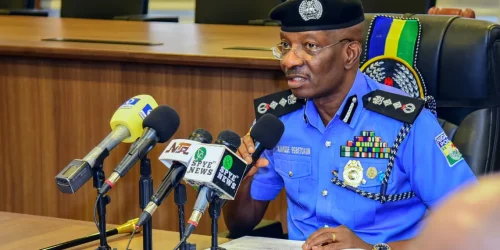
Drama played out on Tuesday at the Senate Committee on Public Accounts as the Assistant Inspector General of Police, AIG Suleiman Abdul was interrogated over 3,907 missing assault rifles, many of which were AK-47.

The AIG, who represented the Inspector General of Police, listened with rapt attention when the representative of the Auditor General for the Federation read the 2019 Audit Query where it was disclosed that “as at January 2020, a total of 3,907 assault rifles were either missing or could not be accounted for by the Police.”

This is as the Inspector-General of Police, Kayode Egbetokun, who appeared earlier, apologized to the Senate Committee on Public Accounts for not honoring previous invitations.

Egbetokun had after his apology to the Committee and oath taken, nominated Assistant Inspector General of Police in Charge of Public Accounts and Budget, AIG Suleiman Abdul, to answer to the eight queries issued against the Police by the office of Auditor-General.

While the Committee Chaired by its Deputy Chairman, Senator Peter Nwaebonyi representing Ebonyi North, vacated query one which borders on N1.136 billion contract splitting and stood down query two which borders on alleged non-execution of N925 million contract, it sustained query three which borders n allegedly missing 3,907 Assault Riffles, many of which were Ak 47.

According to him, “the total number of lost firearms as at December 2018 stood at 178,459 out of which 88,078 are AK-47 Riffles.

“However as at January, 2020 based on thorough Auditing carrried out, 3, 907 assault rifles and Pistols across different Police formations could not be accounted for.”

He broke down the missing firearms as 601 from 15 Training Institutions, 42 from 23 Police formations, 1,514 from 37 Police Command, 29 from Zone 1 to 12 and 1, 721 from Police Mobile Force (PMF) 1 to 68.

Irked by the report, members of the Committee bombarded the Police team with questions on why such queries have not been responded to, since issued.

In their responses, neither AIG Suleiman Abdul nor any of his lieutenants, could give the committee convincing reasons for the missing 3,907 assault rifles.

Apparently overwhelmed by barrage of questions fired at him, AIG Abdul sought for a closed door session which was however rejected by majority of the Committee members, including the Deputy Chairman who presided over the session, Senator Adams Oshiomhole and Senator Joel Onawakpo-Thomas.

Specifically in rejecting AIG Abdul’s request, Senator Nwaebonyi said no closed door session would be allowed under him.

“This is a public accounts committee that has no room for closed door session. In united states of America, proceeedings of Public Accounts Committee are televised live.

“So whatever response the AIG wants to make on the missing assault rifles, should be done in the full glare of all, particularly the journalists”, he said.

Also rejecting the AIG request for a closed door session, Senator Oshiomhole in his remarks said: “The Police is known for arresting and parading thieves of rats and rabbits which is expected of them on the missing assault rifles.

“The AIG should let Nigerians know steps that had been taken by the Police on the missing assault rifles over the years, who and who were involved and level of recovery made”.

In his feeble response, the AIG was only able to account for 15 out of the 3,907 missing assault riffles, 14 of which according to him, were lost through 14 personnel that were killed in active service and one in 1998, which further infuriated members of the committee.

For soft landing, the committee later resolved that the AIG and his team should go and tidy up their response to the query as it will never be swept under the carpet.

It consequently directed them to appear before it on Monday next week by 12 noon and suspended consideration of the remaining five queries.

News

Oyo 2027: Adelabu Quits As Power Minister To Focus On Guber Race

Published

on

By

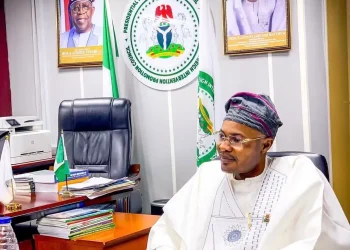
The Minister of Power, Adebayo Adelabu has formally resigned from his position in the Federal Government to pursue his governorship ambition in Oyo State.

In a resignation letter dated April 22, 2026, and addressed to the President, Adelabu stated that his resignation will take effect on April 30, 2026, to enable him to focus on his governorship ambition in Oyo State.

The letter, routed through the Office of the Secretary to the Government of the Federation, stated that he was stepping down with “a deep sense of honour and profound gratitude.”

He wrote, “I write with a deep sense of honour and profound gratitude to formally tender my resignation as the Honourable Minister of Power of the Federal Republic of Nigeria. This resignation is to take effect on 30th April 2026, in order to allow sufficient time for a smooth and orderly handover of responsibilities.”

Adelabu thanked the President for the opportunity to serve, describing his appointment as a privilege.

He said, “Your Excellency, I remain sincerely grateful for the privilege and confidence you reposed in me by appointing me to serve our great nation in this capacity.

“It has been a rare honour to contribute to national development under your leadership and to play a role in advancing reforms in the power sector—one of the most critical foundations of Nigeria’s industrial growth and economic transformation.”

The former minister said his resignation was to enable him focus fully on his governorship ambition in Oyo State, citing provisions of the amended electoral law.

He added, “My decision to step down is informed by my intention to focus fully on my gubernatorial ambition in Oyo State. This aspiration, which dates back to 2016 during my service as Deputy Governor of the Central Bank of Nigeria, ultimately led to my voluntary resignation from the Central Bank in 2018 in order to pursue the same goal.”

“In line with the provisions of the Amended Electoral Act 2026, which preclude political office holders from contesting elections, I consider it both appropriate and necessary to resign at this time.”

Adelabu’s exit marks a major political development ahead of the next electoral cycle, particularly in Oyo State, where he is expected to contest the governorship election.

Continue Reading

News

Wale Edun, Musa Dangiwa Resigned Voluntarily, Not Sacked – Presidency

Published

on

By

The Presidency has clarified that Wale Edun (former Finance Minister) and Ahmed Musa Dangiwa (former Housing Minister) voluntarily resigned from their positions and were not sacked by President Tinubu.

In a statement released this evening April 22, presidential media aide, Bayo Onanuga, said that contrary to public opinions, Wale Edun resigned on health grounds while Dangiwa also tendered his resignation and thanked the President for the opportunity given him to serve in the Federal Executive Council.

Onanuga stated that Edun, who clocked 70 on Monday and has battled recent ill health, fittingly submitted his resignation letter on his birthday, thanking the President for the opportunity to serve Nigeria.

“It has been a pleasure and privilege to serve your administration and the Renewed Hope Agenda, Under your leadership, Nigeria has emerged stronger, more resilient and more internationally respected. I wish you and the administration every success in the future” he wrote

Onanuga stated that on Tuesday, before the Office of the Secretary of the Government of the Federation announced his departure from the Cabinet, Edun paid a valedictory visit to the President at the Villa and held an hour-long discussion with the president and then left to focus on his private businesses.

The presidential aide stated that President Tinubu has expressed deep appreciation to Edun and Dangiwa for their dedicated service and significant contributions to the administration’s economic reform programme and wished them continued success in their future endeavours.

‘’In the same vein, the President has urged the new Minister of Finance, Taiwo Oyedele, to consolidate ongoing reforms and advance the administration’s fiscal and economic objectives with renewed focus, discipline, and innovation.

President Tinubu will shortly send the ministerial nominee for housing, Muttaqha Rabe Darma, also from Katsina, like Dangiwa, to the Senate for confirmation” the statement concluded

Continue Reading

News

Unity Bank, Experts Advocate Green Investment, Climate Innovation To Drive Economic Resilience

Published

on

By

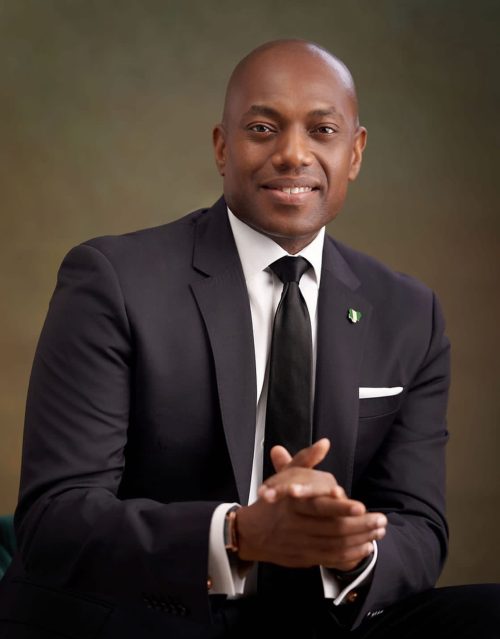
Nigeria’s retail lender, Unity Bank Plc, alongside leading climate innovation experts, has called for increased investment in the green economy and the adoption of frontier technologies as critical pathways to driving economic resilience and reducing the impact of climate change on vulnerable populations across Africa.

The call was made during a thought-provoking webinar hosted by the Bank to commemorate this year’s Earth Day, themed “The True Cost of Climate Change and Who Pays?”. Climate experts and stakeholders convened to examine the human, economic, and institutional costs of climate change, while spotlighting practical solutions to address its growing impact.

In his opening remarks, Unity Bank’s Head of Strategy and Innovation, Ibukun Coker, emphasised the urgency of addressing climate risks from both a societal and business perspective.

He said: “Climate change is no longer a distant or abstract challenge. It is an existential threat with direct consequences for individuals, businesses, and economies. At Unity Bank, we recognise the role institutions must play in incorporating sustainability in project financing, supporting businesses and promoting solutions that build resilience in communities where we operate.”

The webinar featured Chinwe Udo-Davis, Founder and CEO of Instollar, and Oluwatosin Ajide, Programme Manager at the Nigeria Climate Innovation Centre, both of whom provided insights into the drivers of climate change and the pathways to mitigation and adaptation.

Speaking during the session, Udo-Davis highlighted the disproportionate burden which climate change places on underserved communities and the need for inclusive solutions.

“The true cost of climate change is not evenly distributed. Communities with the least resources are often the most affected, whether through energy poverty, environmental degradation, or limited access to sustainable alternatives. Addressing this imbalance requires intentional investment in clean energy solutions that are both accessible and scalable.”

Ajide underscored the importance of coordinated, system-wide approaches in tackling climate challenges, particularly through innovation and policy alignment.

“Climate change is fundamentally a structural problem, and its solution requires a paradigm shift: from innovation and policy to financing and implementation. Stakeholders must work collaboratively to drive solutions that are sustainable and inclusive.”

The session also explored emerging opportunities in climate technology, renewable energy, and ecosystem financing, reinforcing the role of innovation and cross-sector collaboration in building long-term resilience.

By hosting the webinar, Unity Bank continues to demonstrate its commitment to advancing sustainability-focused dialogue and supporting initiatives that promote responsible growth and environmental stewardship.

The initiative underscores the Bank’s broader strategic focus on environmental sustainability as well as its commitment to financial inclusion.

Continue Reading

Trending