
News
What Trump’s Comeback May Mean for Africa – Farooq A. Kperogi


A few weeks ago, I spoke at a symposium in my university here in Georgia on the implications of the U.S. presidential election for the African diaspora.
To the bemusement of my audience (who were a mix of Donald Trump and Kamala Harris supporters), I explained the curious phenomenon of African support for Donald Trump, particularly among Nigerian and Kenyan evangelicals.
I described how a surprising number of African Christians (and, in fact, some Muslims) consider Trump “God’s chosen one,” a valiant defender of conservative religious values whom they imagine will take on global LGBTQ rights with righteous vengeance.
The audience was incredulous and struggled to reconcile Trump’s infamous moral transgressions with his appeal to African conservatives. When I explained that these supporters see Trump as a warrior against the “cultural liberalism” they believe threatens their faith, eyebrows raised.
The eyebrows raised even further when I pointed out that there are Muslims who are so disillusioned with the Biden/Harris administration’s support for Israel that they prayed for a Trump win even when Trump is more manifestly hawkish than Biden/Harris and so disdains Muslims that he enacted a “Muslim ban” (which actually included non-Muslims) within the first few months of his first presidency.
But here’s the crux: Donald Trump is no more interested in religious morality than he is in the theological reveries of his African fan base. He is, in truth, a transactional man, a walking paradox of deals and calculations, utterly bereft of the very spiritual or moral foundation his African supporters so naively project onto him.
Trump’s “faith” such as it is, is at best a performance, an asset to be deployed for strategic gains among America’s own conservative Christians, whom he has calculatedly courted for votes. To imagine Trump as the champion of conservative religious values is to mistake calculation for conviction and propaganda for principle.
His record speaks louder than his rhetoric. In 2015, for example, at a gathering of conservative Christians in Iowa, he openly admitted he never asks God for forgiveness, a theological anathema for any believer.
Later, on the campaign trail, he betrayed his biblical unfamiliarity, when he clumsily referred to “Two Corinthians” rather than the more common “Second Corinthians.” A slip of the tongue, perhaps, but in a subsequent interview, he tried to salvage his Christian credibility but ended up quoting a verse that doesn’t even exist: “Never bend to envy,” he offered, an adage Christians say is found nowhere in the Bible.
Even when cornered about his favorite Bible verse, he misfired by citing “an eye for an eye,” a command Jesus explicitly repudiated. These are not the errors of a deeply religious man but the floundering of someone who considers faith a tool, not a calling.
Two Trump biographers sum up his attitude to Christianity and God nicely. Timothy O’Brien, in a 2007 book titled TrumpNation: The Art of Being Donald, wrote: “Donald has never been a spiritually or religiously serious person.”
And in 2001 book titled The Trumps: Three Generations That Built an Empire (which was revised and reissued as The Trumps: Three Generations of Builders and a President), Gwenda Blair wrote: “He’s a transactional guy with humans, and it’s no different with God — it’s all about whatever is to his advantage with regard to his supporters, and referencing God is exactly and only that.”
Yet for all his transparent artifice, Trump has nonetheless cast a beguiling spell on certain parts of Africa and the African diaspora, who see in him a savior of conservative values.
They seem unfazed by the fact that his administration’s policies, his rhetoric, and his track record show little regard for Black humanity.
This disdain was palpable during his last tenure, and his recent rallies have done nothing to dispel it. Take, for instance, his unfounded claim during the first and only presidential debate that Black Haitian immigrants in Springfield, Ohio, were eating cats and dogs, a baseless assertion that isn’t just false but revelatory: it reveals a mind committed to degrading Blackness wherever he sees it.
There’s a dark and disheartening history here. Trump’s disdain for Black people isn’t new, nor has it emerged from thin air. His bigotry is old news, woven through an embroidery of disparaging comments, discriminatory practices, and racially motivated policies dating back decades.
In 1973, the Department of Justice sued Trump for refusing to rent apartments to Black families, citing his blatant violation of the Fair Housing Act. He fought the case before reluctantly signing an agreement to stop his racist practices.
His remarks afterward? He railed that the government was forcing him to rent to “welfare recipients,” the vile code by which he aligned poverty with Blackness. The sentiment was clear: in his mind, Black people didn’t belong, and it was his duty to keep them out.
Such is Trump’s enduring perspective, made all the more alarming by his political ascendance. The implications of his return for Africa are both direct and symbolic. During his previous presidency, Trump cut aid programs that many African countries rely on and dismissed African immigrants as a detriment to American society.
His rhetoric went beyond mere words; his policies made a statement, a policy posture that informed his supporters, shaped the broader narrative around Black immigration, and foreshadowed his now-infamous “shithole countries” comment in 2018.
When Trump disparaged Haiti, Nigeria, and other Black-majority nations in favor of immigration from Norway, it wasn’t just a one-off gaffe; it was a worldview rooted in negrophobic disdain.
In truth, Trump has never reckoned with the humanity of Black people. Even before his “shithole countries” remark, he lambasted a Black accountant in 1991, citing “laziness as a trait in Blacks.”
Years later, during his 2016 campaign, he praised Ann Coulter’s venomously xenophobic book, which decried the arrival of Nigerians in the United States as a criminal invasion.
His decision to block the appointment of Ngozi Okonjo-Iweala, a Nigerian-American, to lead the World Trade Organization in 2020, was yet another evidence to his disregard for Black excellence—American citizenship or no.
This is not a man whose opinions have been shaped by reasoned disagreement but by ingrained prejudice and an unwavering belief that Black lives, both within and outside of America, are lesser. Such a man at the helm of one of the world’s most powerful nations isn’t just a potential diplomatic nightmare; it’s a moral catastrophe for those who value the dignity of human life.
For Africa, the implications of a Trump resurgence are manifold. His approach to immigration alone could lead to increased restrictions on Africans seeking opportunity or refuge in the United States.
His contempt for Africans doesn’t only taint those who seek to immigrate but extends to those who remain. His willingness to denigrate entire nations with his vile language reinforces a global view of Africa as “the other,” a place he deemed too backward to deserve respect or dignify.
But Trump’s leadership affects more than just immigration.
His previous administration gutted health programs that African nations relied on to tackle AIDS, malaria, and other epidemics. His withdrawal from multilateral agreements and climate initiatives destabilized African countries that disproportionately suffer from the effects of global warming and benefit the least from its economic causes.
Africa is neither immune to nor shielded from Trump’s reign.
From economic pressures to ideological disrespect, his contempt manifests as policies that undermine progress and sow the seeds of isolationism.
For Africans, Trump’s victory isn’t just a foreign policy issue; it’s a personal affront. It’s a slap in the face to the millions of Africans who know America as a country that historically symbolized freedom, opportunity, and hope.
Africa’s bond with the United States transcends politics; it is the memory of independence movements supported by the promise of democracy, the aspiration for economic opportunity, and the reverence for cultural exchange. Trump’s worldview, with its utter disregard for Black humanity, threatens to erode this bond, leaving in its wake a continent left to question its ties with the West.
The challenge before Africa is to use this moment as an opportunity for unity and self-determination.
Trump’s contempt is an ugly mirror, a stark reminder that Africa cannot rely on foreign validation. Leaders and citizens alike must demand dignity, both in their interactions with the United States and in their own national narratives.
The message should be clear: Africa is neither a pawn nor a supplicant. It is a continent rich in resources, diversity, and human potential, undeserving of the scorn Trump so freely dispenses.
Trump’s victory may symbolize a return to darkness, but it is also an opportunity to galvanize resilience. Africa need not waste energy on a man who cannot see beyond his prejudice; instead, it should look to the future with resolve.
Africa’s destiny lies not in the hands of a foreign leader, and certainly not in one so blind to its humanity. Let his disdain be a rallying cry, not for despair, but for Africa to rise on its own terms.




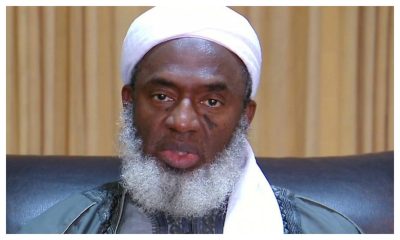
Islamic cleric Sheikh Ahmad Gumi recently defended his past interactions with armed groups, stating he “took the bull by the horns” in 2021 as a necessary step to address Nigeria’s insecurity.
In a post shared on Facebook on Thursday, Gumi said decades of neglect of disadvantaged populations had created deep socio-economic inequalities, leaving many youths vulnerable to manipulation by external forces seeking to destabilise the country.
According to him, the widening gap between the rich and the poor has turned many young people into “ready-made foot soldiers” in cycles of violence that enable the exploitation of Nigeria’s resources.
He also criticised the political class for being largely unresponsive, while noting that the intellectual community is preoccupied with survival struggles.
Reflecting on his past efforts, Gumi said he “took the bull by the horns” in 2021 by attempting to reintegrate violent elements into society rather than allowing them to be further radicalised.
He wrote: “Nigeria for decades has ignored the underprivileged section of its society. There is a significant socio-economic discrepancy, and the society is stratified. This makes our teaming youth ready-made foot soldiers for any foreign interest trying to divide us and rule. To plunder our resources while we are involved in a vicious circle of violence.
”Unfortunately, the political class is unattentive while the intelligentsia is held hostage in the struggle for existence.
“In 2021, I took the bull by the horns in an attempt to bring some of these uncouth elements back to our fold rather than letting them be exploited by the devil.
“I still believe this is the only way out of our predicament. However, it needs the political will and determination to achieve.
“May Allah bring peace back to our nation.”
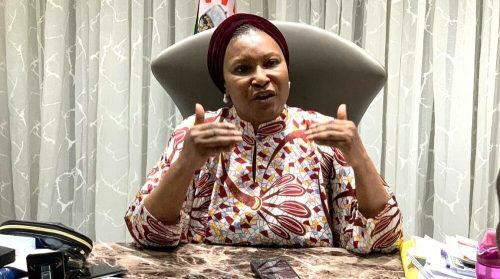
The Federal High Court in Abuja rejected an ex-parte application seeking to bar Senator Ireti Kingibe from participating in the activities of the African Democratic Congress (ADC).
Justice Peter Lifu declined the request from Wuse Ward leaders, ruling that such an order could not be granted without first hearing from the senator.
Instead, the judge ordered the ward leaders said to be loyal to the Minister of the FCT, Nyesom Wike, to put the senator on notice to appear in court to join issues with them on their grievances.
Justice Lifu in a ruling on Thursday held that discretion in such a request for prohibition from party activities and in political matters must be exercised judicially and judiciously.
The judge said justice would be met in the case of the plaintiffs only when the side of the defendant is heard on its merit, along with that of the plaintiffs.
Consequently, the judge ordered that Senator Ireti Kingibe should be served with all court processes by the plaintiffs to enable her become aware of the suit and to prepare her defense.
The judge fixed April 20, 2026, for the plaintiffs and the serving senator to appear before him for hearing of all applications in the matter.
Those who sued the senator in the suit marked FHC/ABJ/ CV/539/2026 are Okezuo Godfrey Anayo and Isaiah Ojonugwa Samuel, on behalf of themselves and ward members as plaintiffs. The senator is the sole defendant.
In their ex-parte application, Kingibe representing the FCT in the Senate was said to have been suspended on March 10, 2026 by her Wuse Ward executives following allegations of anti-party activities and disregard of your cnstitution of the ADC.
In the ex- parte application filed on their behalf by a Senior Advocate of Nigeria, SAN, Kolawole Olowookere, the aggrieved ADC members in Wuse Ward applied for an order of interim injunction restraining Kingibe from parading herself as a member of party, pending the hearing and determination of their motion on notice for interlocutory injunction.
They also asked the judge to restrain the senator from performing any function, attending meetings or performing activities reserved for ADC members or representing the party in any activities.
Besides, the Ward Executive Committee had asked that she be restrained from further interfering with the administration of the ward, ward register and other activities.
The suit was predicated on five grounds among which are that Mrs Kingibe was placed on suspension due to anti-party activities, gross misconduct and confiscation of the ward statutory records.
They argued that the suspension followed due process as enshrined in the ADC constitution and ratified by the two thirds majority of the EXCO members.
They averred that despite the communication of the suspension to Kingibe, she has continued to hold parallel meetings, issue press statements as an ADC member, and using her security details to intimidate the executive committee.
“Her actions constitute flagrant disregard to the internal mechanism of the party,” the plaintiffs stated.
Meanwhile, a lawyer, Abubakar Marshall who claimed to be representing the senator, announced that he had filed a preliminary objection against the suit. He added that it was served on M. S. Garba, who stood for the plaintiffs at Thursday’s proceedings.
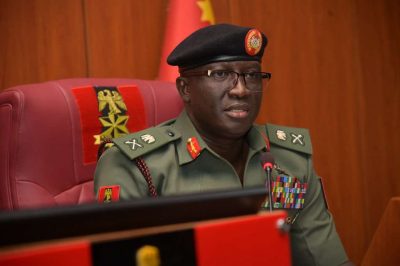
The Chief of Army Staff (COAS), Lieutenant General Waidi Shaibu, visited Jos, Plateau State, on Thursday, April 2, 2026, to lead a high-powered security assessment following recent security breaches.
The visit was aimed at strengthening public confidence and reinforcing ongoing efforts to stabilize affected communities.
Colonel Appolonia Anele, acting Director, Army Public Relations, said in a statement that the visit forms part of ongoing efforts to restore calm and entrench lasting peace across the state.
According to the statement, upon arrival, the COAS was received by the Executive Governor of Plateau State, Caleb Mutfwang, in a clear demonstration of strong civil-military cooperation and a shared commitment to addressing emerging security challenges.
The statement said the COAS received a comprehensive operational briefing from the General Officer Commanding 3 Division and Commander, Joint Task Force Operation ENDURING PEACE, Major General Folusho Oyinlola, who highlighted ongoing operations and proactive measures being implemented in synergy with other security agencies to contain threats, protect lives and property, and stabilise affected communities.
“As part of his engagements, Lieutenant General Shaibu also interacted with community leaders and residents, reassuring them of the unwavering commitment of the Nigerian Army to safeguarding all law-abiding citizens.
He urged residents to remain calm, vigilant and supportive of security agencies by complying with the curfew and cooperating fully with ongoing operations and investigations, while going about their lawful activities.
The chairman of Jos North Local Government Area, Hon. Dachung Bagos, commended the COAS for the timely visit, noting that the presence of the nation’s top military leadership would boost public confidence and reinforce trust in ongoing security efforts.

Gumi Defends Dialogue As Sole Solution To Nigeria’s Insecurity

Court Clears Senator Ireti Kingibe To Remain Active In ADC

COAS Shaibu Hits Jos To Restore Peace, Public Confidence

President Tinubu Appoints New PTDF Executive, Reappoints TCN Head

Simi Welcomes Second Child With Adekunle Gold

United Nigeria Airlines Staff Suspended After Viral Amputee Abuse Video

Pay Your Fare: AIG Cracks Down On Officers Boarding For Free

INEC Removes David Mark, Aregbesola From ADC Leadership Portal

JUST IN: FG Approves Friday 3, Monday 6, as Easter Public Holidays

When 8 million Customers Trust You, Safety Cannot Be an Afterthought
-
 News2 days ago
When 8 million Customers Trust You, Safety Cannot Be an Afterthought
-

 News2 days ago
El-Rufai Back In Detention After Temporary Compassionate Release
-
 News1 day ago
United Nigeria Airlines Staff Suspended After Viral Amputee Abuse Video
-
 News2 days ago
2027: Kwankwaso’s Exit Marks End Of NNPP – Kwankwasiyya Movement
-
 News1 day ago
JUST IN: FG Approves Friday 3, Monday 6, as Easter Public Holidays
-
 News1 day ago
Pay Your Fare: AIG Cracks Down On Officers Boarding For Free
-

 News2 days ago
Lagos CP Withdraws Taskforce From Traffic Duties
-
 News1 day ago
INEC Removes David Mark, Aregbesola From ADC Leadership Portal