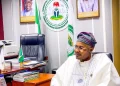


The President Bola Ahmed Tinubu administration likes to psychologically anesthetize Nigerians who are grieving from the hurt of its economic policies (petrol price spike, electricity tariff hike, devaluation of the naira, etc.) by saying Nigerians are only undergoing transitory pains in the service of a forthcoming permanent prosperity.
I have repeatedly called this an intentional lie. I have done so from the benefit of my knowledge of the outcomes of such policies in other countries, including in Nigeria from 1986 to 1993 when Ibrahim Badamasi Babangida implemented a Structural Adjustment Program (SAP) as dictated by the World Bank and the IMF, which is similar to Tinubu’s “reforms.”
I have also made recurrent references in the past to countries that have made progress precisely because they defied the economic template Tinubu is implementing now. I highlight the case of Malaysia in the late 1990s to support my point.
But let’s start with SAP in Nigeria. In 1986, self-described military president Ibrahim Badamasi Babangida was persuaded by the IMF and the World Bank to “restructure and diversify” Nigeria’s economy.
The restructuring and diversification led to the removal of subsidies on petrol (all past regimes called petrol price spikes “subsidy removal”), devaluation of the naira (now it’s known by the fancy term “floating of the naira”), deregulation (that is, allowing market forces to regulate the economy while the government takes the back seat), privatization (i.e., selling off of Nigeria’s national patrimony to a few moneybags), etc.
The immediate aftereffect of this IMF-endorsed “restructuring” (Tinubu calls his “reform”) of the economy was a never-before-seen inflationary conflagration, which eroded the purchasing power of the average Nigerian. It produced widespread hardship similar to what Nigerians are going through at this moment.
Petrol price spike and privatization led to job losses and a deepening of the unemployment crisis. Reduction in government spending, particularly on social services, led to declines in healthcare and education quality. Poverty rates also increased as a direct consequence of the removal of subsidies for fuel and basic services.
I distinctly remember all the rhetorical maneuvers that officials of the IBB regime used to fray nerves, and they are awfully similar to what honchos of the Tinubu regime now use: it will get worse before it gets better, there is light at the end of the tunnel, there is no gain without pain, Nigeria simply can’t afford to fund subsidies, our economy would collapse if we don’t restructure the economy, the current system is unsustainable, we’ll all smile and appreciate the wisdom of this temporary sacrifice when the gains start coming, etc.
By 1993 when IBB left power, Nigeria became firmly secured in the economic toilet. Manufacturing collapsed, social unrest rose, and brain drain (which is now called “japa”) started and blossomed, and hopelessness was democratized.
Someone very close to IBB who nonetheless opposed his IMF-backed economic “restructuring” told me he asked one of IBB’s IMF/World Bank-appointed finance ministers a few years ago what happened to the “gains” they promised would replace the “pains” people underwent between 1986 and 1993?
He reported him as saying the gains didn’t materialize because the “restructuring” wasn’t implemented faithfully. Meanwhile, thousands of people died, and millions of people were destabilized because of this “restructuring.” I can bet that Tinubu and his defenders would give the same excuse when they dig Nigeria deeper into the depths of despair at the end of their “reforms.”
In a 1995 report titled “Structural Adjustment and the Spreading Crisis In Latin America,” we see the same scenario repeated throughout the developing countries of South and Central America. Everywhere subsidies were removed, currency devalued, and so-called market forces given a free reign, the result is always the same: devastation, poverty, hopelessness, death of the middle class, etc.
The report instructively noted: “Mexico is one of many cases worldwide where adjustment and the free market have not only failed to alleviate poverty, but have further polarized the country and led to disaster, economic and social. World Bank and IMF officials continued to say — right up to the current crisis — that adjustment’s attack on poverty would take time, but, after more than a dozen years of adjustment in Mexico, things have never been worse than they are today, and there is no light at the end of the tunnel. There must be a point at which these institutions acknowledge that their strategy has failed and needs to be abandoned, and that a new, more democratically determined approach to the country’s development has to be taken.”
But it’s not inevitable that governments in developing countries should follow the IMF/World Bank’s ruinous prescriptions.
Many countries with leaders who have guts and who care for the welfare of their people resist these institutions. And it often turns out that the only countries that are witnessing inclusive growth and development are countries that have chosen to depart from the hell-paved path created by the IMF and the World Bank.
For example, in 1997, when Thailand, Malaysia, Indonesia, and South Korea faced economic headwinds and turned to the IMF and the World Bank for financial bailout, they were offered help with the usual conditionalities attached: budget cuts, subsidy removal, currency devaluation, etc.
Malaysian Prime Minister Mahathir Mohamed rejected the conditions. He said they would choke off economic growth, bankrupt companies, and cause massive unemployment in his country. So, he went counter to the counsel of the IMF. Instead of budget cuts, he increased government spending. Instead of currency devaluation, he defended the ringgit, Malaysia’s currency, by fixing it to the US dollar. Malaysia recovered from the economic crisis faster than its IMF-obedient neighbors.
During “A Meeting of Minds” dialogue organized by Forbes magazine in 2009, the magazine’s chief executive officer and editor-in-chief, Steve Forbes, asked Mahathir how and why he bucked the IMF and did better than countries that slavishly obeyed it.
“Fortunately, I am not a financier,” he said. “I know very little about economics, so I do things which are not quite off props.
When people tell me that the right way to handle a crisis like that is to obey the IMF and the World Bank, I thought otherwise. I actually examined their prescriptions, and I found that those prescriptions would actually make matters worse, so I didn’t see why I should be following them.”
I am glad Mahathir attributed his success in standing up to the IMF to his not being a financier and knowing “very little about economics.” It’s as if he was talking about Nigeria’s gaggle of slavish, brain-dead, self-impressed, IMF-controlled know-things who pass themselves off as “economic experts” and who have popularized the aggravating idiocy that subsidies are bad and must be removed because they are supposedly bad for the economy and don’t benefit the poor.
Now we know the truth. We need more people who “know very little about economics” and a lot about commonsense to make economic decisions for Nigeria.
The questions people with lots of common sense and very little knowledge of “economics” should ask are, what does it profit a national economy if a government increases the cost of production for manufacturing companies through sharp spikes in the cost of petrol and electricity?
What benefits does a country derive from a policy that causes mass pauperization, which ensures that everyday citizens can’t afford the basic things of life, not to talk of discretionary spending? Recession kicks in when people have no money to spend.
How does a country get light at the end of the tunnel when its policies trigger inflation and a once-in-a-generation cost-of-living crisis because it devalued its currency under the instruction of far-flung economic institutions notorious for instigating mass misery in developing countries and that are concerned more for “their loans, not on growth,” as Mahathir once put it?
How can a country surrender its economic sovereignty to a foreign entity and tell its citizens to expect a bumper harvest in an undefined future?
The only benefit of the ongoing “economic reforms,” according to Tinubu and his officials, is that it is bringing in more money for the government. And what does the government do with the money? Fritter it away in frivolities while people starve and die.
Even if the money will be used to build or renew infrastructure—we all know it won’t—if this is achieved at the expense of pauperizing the great majority of our people, it is still worthless.
Only people who are alive and healthy use infrastructure. The time to know very little economics and have lots of commonsense is now because the lofty “tomorrow” Tinubu’s IMF economic policies are promising will never come. It never came for countries that implemented similar policies.