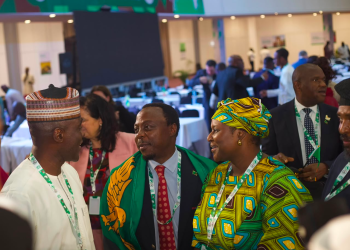


Professor of Economic History at the Obafemi Awolowo University, Ile Ife, Adetunji Ogunyemi, speaks on the amendment of the Finance Act 2020 by the National Assembly to accommodate windfall levy on banks’ profits on foreign exchange transactions.
The lawyer, public finance expert submits that the policy is perfectly in order, asking banks to see it as contribution to national development. Excerpts:
The windfall levy generated some debate in the polity with government justifying it as the right thing to do in order to strike a balance in the key sectors of the economy. How justified is this levy on banks’ foreign exchange gains?
Nigeria is currently in dire straits financially and generally speaking economically. It is within the power of the government of the Federation going by its stated exclusive jurisdiction in the First Schedule Part I of the constitution of the Federal Republic of Nigeria to make such laws and to direct such policies and actions as to ensure peace, good order and good government in Nigeria. Therefore, if Nigeria is in dire straits and some Nigerians, whether persons or bodies or corporate organisations, that have been feeding fat on the system, especially when that feeding fat is not directly a function of their own productive energies, then it behoves the Federal Government to ensure a balancing of duties and responsibilities within the system such that a resource-deficient sector of the economy can benefit from the resource-surplus part through what is called economic stabilisation. So, to me, it is perfectly in order to amend the Finance Act 2020 in order to accommodate the collection of this one-off levy on the windfall that the banks in the financial system have benefited from on foreign exchange transactions in the last one year. To me, it is perfectly in order and it is part of the duties of the government to stabilise the economy and also redistribute wealth.
Part of the arguments of those kicking against the policy is that allowing the windfall levy on banks may create uncertainty about the future as government may come with another windfall tax in some other sectors. Is this fear justified?
A situation of paralysis needs a shock therapy to bring it to normalcy. In 1929 up to 1932, there were decisions made in the United States under Herbert Hoover to stabilise the economy by ensuring that government deliberately pumps into the economy huge expenditure financed under public-private partnership arrangement. Nigeria is in such a situation now as the United States was under Hoover. So, it is not out of place to request that that banks that have made unplanned, spontaneous, unpredicted, sudden income to donate to the system a portion of their profits. This levy is actually on their windfall which is not part of their projections in their respective budgets. So, there is nothing that is malicious about this levy. After all, the levy is not for the benefit of persons. It is for the benefit of the public and it is in order.
Naturally, the Chartered Institute of Bankers of Nigeria (CIBN) has risen in defence of the banks to say asking them to pay a windfall levy amounts to double taxation because banks have already paid Companies Income Tax. What do you make of this argument?
I disagree absolutely with such stance from CIBN. What of the progressive deductions that the banks have been making with respect to ATM withdrawals by both the depositors and the withdrawers? Banks charge N20 per transaction and at times N50. Many of these deductions are actually illegal and the CBN should have asked them to return the money to their customers. These deductions run into billions of naira. But it would seem that the CBN did not want to rock the boat and has allowed the banks to earn some income for their stabilisation so that when a request for re-capitalisation would come, they would have something to use for that purpose. So, the banks can’t approbate and reprobate at the same time. They can’t be placing unlimited charges on their customers and expect government not to come in with a decision to stabilise the system. The windfall levy is a patriotic call made on the banks to contribute to the system. The banks should not see it as a tax. After all, it is a one-off levy. At any rate, why are the banks trying to shy away from their responsibility of contributing to the system? Their wealth comes from the commonwealth of Nigeria. Is that not? If your wealth comes from the commonwealth of a country and that country is in dire straits and it calls upon you to pay a levy on profits arising from your unpredicted income, I don’t think that it is out of place for them to obey such call to help fatherland.
Are there special benefits from a windfall tax?
The benefits are many. One, insofar as the government will not pump the revenue arising from this windfall levy on banks into the general budget, then there is no problem. But if government puts the revenue into the general budget and uses it to fund recurrent expenditure, that is going to be unacceptable. However, if government pumps the money from the windfall tax specifically into certain projects, for example, the Sokoto-Badagry Highway, the coastal road, the Port Harcourt-Maiduguri railway, etc, it is going to be absolutely correct. It can also be used for industrial development through the Bank of Industry or specifically into some agricultural projects such as dam development and so on. These are the specific areas the money can be channelled into. But I would advise that the government uses the revenue to fund critical projects such as the Lagos-Calabar Coastal road, the Sokoto-Badagry Highway, Port Harcourt-Maiduguri rail line, expansion of the standard gauge from Ibadan to Abuja and then onward to Kaduna. These are the critical projects that will create a trickle-down effect on the economy to jumpstart it from its doldrums and provoke productive enterprises among business concerns.
The three tiers of government have been smiling to the banks every month on account of huge revenue collected by the FederaI Inland Revenue Service (FIRS) for the Federation. Shouldn’t focus shift to the other two tiers of government who have been getting more money since the removal of petrol subsidy by President Bola Tinubu?
That is what we call financial injustice in the system.
Actually, many governors in Nigeria, maybe for political correctness, did not say much about the issue of workers conflicting with the Federal Government on the issue of minimum wage neither did they support the Federal Government to do at least some defence within the realm so that citizens will not be unnecessarily agitated and then begin disturbances. But the truth of the matter is that the respective governments of the states of the federation today are now earning at least 40 per cent more than what they were earning before. It behoves them to come forward to explain to Nigerians why some A, and B, C policies have been done in their favour by the Federal Government. For example, the removal of subsidy from petrol has helped states that were previously in debts like Osun State to begin to successfully and significantly exit those debts and be able to pay workers. But do they give the credit to the Federal Government? The answer is No. The states have been giving the credit to themselves as if they conjured up the fat allocations they are now getting. Whereas, we know it is directly as a result of the fact that the FAAC has been to get more money through removal of subsidy and the efficient revenue collection by FIRS. This is why the states have now been financially strong to do their capital projects. Some of these states are even doing a kind of subtle blackmail to give a dog a bad name in order to hang it. Otherwise, if your income has increased as a result of government policy, why can’t the states explain to their citizens and spend the money to make things better for the citizens in their respective states? They have put all the burden on the Federal Government. It is a shame.
Do you think the recent Supreme Court judgment which states that allocations should be paid directly into the accounts of local government areas will also help bring down tension and enhance development at the grassroots?
I support the Federal Government’s view, position and policy on this and for the Attorney General of the Federation to approach the Supreme Court for interpretation of the constitution and to make declarative orders. This is perfectly in order. This is actually how to govern a country. Do not forget that the local government councils in Nigeria are 768 and not 774. This is provided in Section 3 subsection 6 of the 1999 Constitution as amended. There six area councils in Abuja and if you add this number, you will get 774. But the area councils in Abuja are not local government councils.
The Supreme Court ruled on this in 2002 in the Attorney General of the Federation versus Attorney General of Abia State and 35 others. But let us not go there. The truth of the matter is that the 768 local government councils in Nigeria will now directly benefit from their allocations pursuant to Section 162 of the Constitution. The Supreme Court judgment is just half of the battle won. The other half of the battle to be won is to ensure that election into local government councils is not conducted by State Independent Electoral Commissions (SIECs). There should be an amendment to the Electoral Act for that purpose so that the same election will be conducted by INEC in order that there will be a level-playing field. The SIECs are actually not independent of the governors who appoint their officers. But it is a good thing that local governments are now going to get their allocations directly from FAAC beginning from this month, that is July.
Quote “The windfall levy is a patriotic call made on the banks to contribute to the system. The banks should not see it as a tax. After all, it is a one-off levy.”