
News
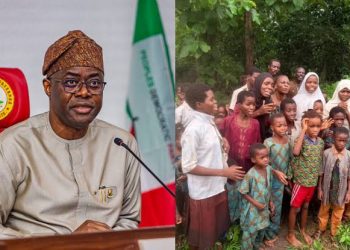
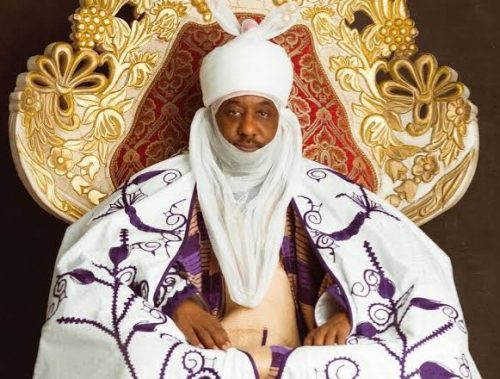
Emirship Tussle: I Don’t Care If I’m Removed Again – Sanusi
Sanusi remained focused on the bigger picture, emphasizing the importance of unity and historical continuity within the Kano Emirate.
In a candid and extensive interview with Sun Newspaper, Emir Muhammadu Sanusi II, the former Governor of the Central Bank of Nigeria (CBN), declared his willingness to face removal again if it ensures the preservation of the Kano Emirate as a unified entity.
Sanusi attributed the current crisis within the Emirate to the immediate past administration in Kano State, led by former Governor Abdullahi Umar Ganduje.
Sanusi, reinstated as the 16th Emir of Kano following a Federal High Court ruling, emphasized the historical and cultural significance of the Kano Emirate, which has existed for over a millennium. “For me, even now that I am here, only God knows how long I will be here. I can die tomorrow.
“Another governor can come tomorrow and say that he has removed me, it doesn’t matter. But I am happy if he does not touch the emirate,” Sanusi stated.
He expressed his gratitude to the current government and the Kano State Assembly for restoring the emirate to its original state.
“I am happy that I will not leave a history that it was during my time that these 1000 years of history was destroyed. So, I am grateful to this government, grateful to this Assembly that they have corrected that, that we have the emirate restored to what it was and Insha’Allah that when I die or when I leave, the person who inherits will inherit what we had,” he explained.
Sanusi’s comments followed a Federal High Court decision that invalidated the Kano State government’s repeal of the Kano Emirates Council Law 2024. This law had led to the removal of Alhaji Aminu Ado Bayero as the Emir of Kano and the creation of four new emirates—Bichi, Rano, Karaye, and Gaya—by Ganduje’s administration.
The court’s ruling directed all parties to maintain the status quo ante, effectively reinstating Sanusi as the Emir.
Human rights lawyer Femi Falana, SAN, criticized the court rulings, describing them as “highly erroneous” and lacking constitutional justification under Sections 251 and 254 (C). Despite these legal controversies, Sanusi remained focused on the larger picture, stressing the importance of the Kano Emirate’s unity and historical continuity.
Sanusi recounted the long-standing unity within the Kano Emirate, contrasting it with other regions where new emirates were created due to ethnic and religious diversity. He argued that Kano, a largely homogeneous society, did not require such divisions. “Nobody asked for new emirates. So, what we are dealing with is a situation where somebody divided us,” he remarked.
He elaborated on the damage inflicted by the previous administration’s restructuring, comparing it to the arbitrary colonial borders drawn by Europeans. “You don’t create emirs for people. Somebody who, for one thousand years, has never been under you, somebody now decrees that this is your king. How?” Sanusi questioned, particularly criticizing the creation of the Bichi Emirate, which was historically governed by a village head.
Sanusi highlighted the complex history and the cohesive fabric of the Kano Emirate, criticizing the arbitrary creation of new emirates and kingmaker positions. “You’re dealing with Kano. You’re not dealing with me. It’s not about me as a person. It’s about our history, our culture,” he stressed.
Providing a historical background, Sanusi explained that the Kano Emirate predated Nigeria and even the Sokoto Jihad. “The Kano Emirate was not created by the Nigerian Constitution. The Emirate existed before Nigeria. The Kano Emirate existed before the Sokoto Jihad. Even Uthman Danfodio did not create the Kano Emirate,” he said.
He noted that the division of the Emirate disrupted centuries-old traditions and governance structures. “This is the right they claimed for themselves for their contribution to the Jihad. How does somebody now take Mr. A and say I’m creating a fifth kingmaker in Mr. A’s family? What right do you have to join those four? How? What did you do that gives you the right to be a kingmaker?” Sanusi asked.
Sanusi underscored the importance of understanding the historical and cultural context of the Kano Emirate, warning against arbitrary changes that could damage its legacy. “Now, just like the British partitioned Africa, you divided what had existed over a period of time. People need to understand what this government did, because people don’t understand what that law was and the kinds of damage it did to our history’s fabric,” he said.
Despite the political and legal turmoil, Sanusi remains committed to preserving the unity and integrity of the Kano Emirate. “It’s about the system, not about me or any individual,” he affirmed, reflecting his dedication to the Emirate’s continuity and historical significance.
News
Just In: Tinubu’s 2027 Re-election Bid Begins As Faleke Picks Up Official Forms
James Faleke, a member of the House of Representatives and founder of the Tinubu Support Group (TSG), has officially picked up the All Progressives Congress (APC) presidential nomination forms for President Bola Tinubu’s 2027 re-election bid.
The forms, which include the Expression of Interest and Nomination forms, were obtained on April 28, 2026, following a payment of ₦100 million. This move effectively kicks off the President’s campaign for a second term.
The APC National Organising Secretary, Suleiman Argungu, on Tuesday in Abuja, declared the process open and presented the Expression of Interest and Nomination forms to Faleke, who also serves as the founder of the Tinubu Support Groups.
The Independent National Electoral Commission has scheduled the Presidential and National Assembly elections for Saturday, January 16, 2027, while governorship and State Houses of Assembly elections will hold on Saturday, February 6, 2027.
The commission also announced that party primaries, including the resolution of related disputes, will run from April 23, 2026, to May 30, 2026.
INEC further stated that campaigns for the presidential and National Assembly elections will begin on August 19, 2026, while those for governorship and state assembly elections will commence on September 9, 2026.
More details later…
News
USD To NGN: Current Exchange Rates For April 28, 2026
The Nigerian Naira maintained a steady yet cautious position against the US Dollar as the market opened for trading today, Tuesday, April 28, 2026.
Financial analysts are observing localised fluctuations in liquidity across both the official Nigerian Foreign Exchange Market (NFEM) and the parallel market segments.
Official Market (NFEM) Activity
In the early trading hours of the official window, the Naira showed resilience, trading at approximately 1,360.19 NGN per 1 USD. This follows a trend of minor adjustments as the FMDQ Securities Exchange records ongoing transactions from institutional buyers and sellers. The rate has seen slight volatility since the market opened, moving from an initial 1,359.23 NGN to its current level as demand and supply forces seek a daily equilibrium.
The Central Bank of Nigeria continues to monitor the official window closely, ensuring that the transparency of the “willing buyer, willing seller” model supports price discovery while mitigating drastic shocks to the local currency.
Parallel Market Trends
The informal parallel market continues to operate at a premium, reflecting the immediate retail demand for the greenback. In major cities such as Lagos, Kano, and Port Harcourt, currency dealers are quoting the Dollar between 1,480 NGN and 1,495 NGN.
The gap between the NFEM and the parallel market remains a focal point for economic observers, as it often indicates the level of unmet demand in the official sectors. Traders in the parallel market suggest that small-scale importers and individual travelers are the primary drivers of the current activity in the informal sector this morning.
Factors Affecting Today’s Rate
Today’s market performance is being influenced by several key macroeconomic factors. Global oil prices remain a significant driver, providing the necessary foreign exchange reserves to support the Naira. Additionally, internal market liquidity is being shaped by the clearance of corporate foreign exchange backlogs and seasonal demand for international payments.
As the day progresses, participants expect the market to remain within the current range unless there is a significant intervention or a shift in global market sentiment. Stakeholders are advised to keep track of the closing rates later today to gauge the definitive performance of the Naira for the midweek trading period.
News
2027: Sanwo-Olu Officially Endorses Obafemi Hamzat As Successor
Lagos State Governor Babajide Sanwo-Olu has officially endorsed his deputy, Dr. Obafemi Hamzat, as his preferred successor for the 2027 governorship election.
The announcement was made on Monday, April 27, 2026, during a meeting at the Lagos House, Marina, where Hamzat formally declared his intention to run.
In the past few weeks, Hamzat has received widespread endorsement from political and community leaders across the state during his various consultative visits.
Recall that the Speaker of the Lagos State House of Assembly, Mudashiru Obasa, had expressed support for Hamzat’s governorship bid.
Also, the Chief of Staff to the President, Femi Gbajabiamila; Senator representing Lagos East, Tokunbo Abiru; and former Minister of Finance and Coordinating Minister of the Economy, Wale Edun, and other stakeholders have endorsed Hamzat’s gubernatorial bid.
Details shortly…
-
News2 days ago2027 Elections: Sources Reveal Why Obasa Might Seek House Of Reps Seat
-
News1 day agoJournalists Blocked From Covering High-Profile Treason Hearing
-
News1 day agoMalami Hits Back; Sues EFCC To Reclaim Seized Assets
-
News1 day ago2027: Sanwo-Olu Officially Endorses Obafemi Hamzat As Successor
-
News2 days agoNNPC Refineries: Obasanjo Predicts Permanent Failure
-
News8 hours agoUSD To NGN: Current Exchange Rates For April 28, 2026
-
News7 hours agoJust In: Tinubu’s 2027 Re-election Bid Begins As Faleke Picks Up Official Forms