
Education
ASUU strike: ‘No headway as lecturers damn court order, fight on’


Despite Wednesday’s judgment by the National Industrial Court, Abuja Division, the prolonged industrial action by the Academic Staff Union of Universities, ASUU, is far from being over.
The Court, while ruling in a motion filed by the Federal Government, ordered the lecturers to resume work immediately.
The Court invoked section 18 of the Trade Dispute Act and national interest of the Nigerian students to grant the request of the Federal Government for an order of injunction against the lecturers.
Justice Polycap Hamman compelled the lecturers to go back to work.
However, the university lecturers, who have been clamouring for the payment of their withheld salaries, are not ready to give up very easily.
Before the government approached the court, it had tried using ‘no-work-no-pay to break the lecturers’ ranks. When that did not work, a certain breakaway faction also tried to scuttle the strike, but that strategy failed too, prompting the government to approach the Industrial Court.
The judgement of the Court came as a big relief to the Federal Government, with the Minister of Labour and Employment, Sen. Chris Ngige, declaring that the Committee of Vice Chancellors would be asked to re-open the universities for teaching and learning.
A delighted Ngige said the judgment was a case of ‘no-victor, no-vanquished’, stressing that the ruling does not preclude further negotiation between the Federal Government and ASUU.
He said: “The ruling is in the best interest of the nation. It is a win-win situation for all of us- government, students, lecturers- all Nigerians indeed. I have just gotten the order of court asking ASUU to go back to work.
“It is a sound judgment. It is ‘no victor, no vanquished’. You doctors in academics are for now members of ASUU, but, you are here, even though you have dissociated yourself and you are working. We want to thank you for working and teaching your students.
“The court ruling does not preclude us from going on with further negotiation and consultations. The pro-chancellors met Mr. President and made some demands, such as topping up government offer and seeing whether there could be some bailout. Mr. President said in considering it, he will consult stakeholders. So, he is going to consult everybody.”
However, ASUU is not on the same page with Ngige as the president, Professor Emmanuel Osodeke, did not give any hint that the strike will end anytime soon.
Osodeke, during an interview on Channels Television on Wednesday night, instead warned about the far-reaching effects of the judgement.
According to him, the outcome of the verdict would be catastrophic.
“Let me tell you the catastrophe of what has just happened. The last time this happened was during the military era.
“I can assure you, when this strike is over, a large number of our lecturers are going to migrate from this country. When you are using force to push your lecturers to class.
“First of all, they said, ‘If we owe them, if we don’t pay them, they will come and beg us.’ Seven months, it didn’t work. Our members are still alive. And then, they went to court, you want to force them. It is a catastrophe,” Osodeke said.
It is unclear what could be the next line of action by the Federal Government, as well as the National Associations of Nigerian Students, NANS, which started civil action on Monday as a measure to compel both the FG and the ASUU to find a common ground.
The students’ body announced on Wednesday that no form of political campaign would be allowed unless the strike is called off.
Addressing a press conference at Ogun NUJ Secretariat, Abeokuta, the Chairman, NANS National Taskforce on #EndASUUStrikeNow, Raymond Ojo, said the blocking of roads and ports is just a warning.
“If the government fails to conclude all the negotiation and agreement with ASUU within the frame of two weeks, they will witness more protests and rallies all over the country, they will also witness the annoyance, anger and frustration of Nigerian students who have been at home for the past seven months.
“We promise them that we will not allow any political campaign to be held across the country until we are back to class,” he warned.
While the ASUU heads for the Appeal Court as it has already indicated, there are indications that the Government is ready to use the court order and enforce the reopening of universities.
But a cross section of lecturers, who spoke to DAILY POST, indicated unwillingness to obey the order pending when their salaries are paid.








The Edo State Police Command confirmed on Saturday, that all suspects involved in the viral bullying incident at the Igbinedion Education Centre in Benin City have been arrested.
Videos that went viral from the school showed some students being beaten, flogged and kicked by supposed senior students.
The state command, in a statement by its spokesman, Eno Ikoedem, said the arrests were made after investigation and the suspects would be charged to the family court in accordance with laws guiding juvenile justice and child protection.
The statement read, “The Edo State Police Command wishes to update the general public on the viral bullying incident which has generated widespread concern and public reactions across the state.
“Following a thorough and painstaking investigation, the Command confirms that all individuals directly connected to the incident have been identified, while those implicated have been apprehended and are being charged to the family court in accordance with extant laws guiding juvenile justice and child protection.
“Preliminary investigations revealed that the incident originated on Thursday 5/03/2026 when two female students, names withheld, both aged 14, had a disagreement with a fellow student. During the altercation, the said student reportedly uttered offensive words directed at their late father, specifically saying, ‘Ogun kill your papa.’
“Angered by the remark, the girls allegedly attacked the student after school hours. In the course of the assault, a parent, who had come to pick up her son, intervened but the two girls, still enraged, turned on the woman, physically confronting her and dragging her clothes. The school management subsequently intervened and expelled the girls for engaging in violent conduct.
“On the following day (06/03/2026), a retaliatory incident occurred. The male student, whose mother was earlier assaulted, attacked the victim in the viral video in what has been identified as a revenge assault, which was recorded and posted by one of the students. The victim being the brother of the girls that assaulted his mother.
“The Commissioner of Police has ordered the immediate deployment and intensification of the Operation Safe Schools Initiative across secondary schools in Edo State, with a mandate to identify the gap in supervision and leverage lessons learnt in this matter, to prevent a recurrence.
“Additionally, the Police Campaign Against Cultism and Other Vices has been mobilised to engage students and school administrators through advocacy, sensitisation, and reorientation programmes.
“The Command, therefore, urges parents, guardians, and school authorities to take greater responsibility in the moral upbringing and supervision of their children and wards, while advising students to shun violence and report grievances through appropriate channels.
“While appealing to members of the public to remain calm, the command assures that proactive steps were being taken to ensure that justice is not only served but that measures are also emplaced to prevent a reoccurrence.”
The command stated that it remained committed to maintaining law and order and safeguarding all residents, especially children.
JomogNews reported that the Edo State Ministry of Education, through the permanent secretary, Edith Ebomoyi, condemned the violent act.
Ebomoyi, in a statement, said such behaviour was completely unacceptable and ran contrary to the values of discipline, respect, and safety, which all educational institutions in Edo State were expected to uphold.
The school also expelled the students involved and assured that such acts would not happen again.
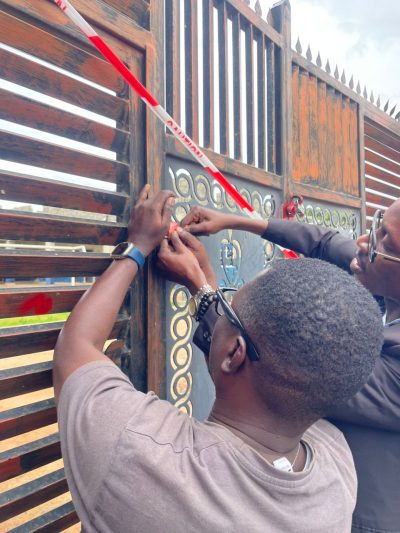
Lagos State government has sealed Tower College of Health Sciences in Gberigbe, Ikorodu, for operating an illegal nursing program.
A joint enforcement team on Thursday, comprising officials of the Lagos State Ministry of Health through the Directorate of Nursing Services (DNS), the Nursing and Midwifery Committee of Lagos State, and the National Association of Nigerian Nurses and Midwife (NANNM), Lagos State branch, with men of the Rapid Response Squad (RRS), stormed the school premises to enforce the closure.
During the operation, the Director of the college, Femi Ajekigbe was arrested and has been taken into custody for questioning and further legal action by the State.
Speaking to journalists after the closure, Mrs Sola Aketi, the Director of Nursing Services, Lagos State Ministry of Health noted that the institution had been notified of the imminent closure after an inspection team from the Nursing and Midwifery Committee of the state had earlier visited the institution in January 20, 2025, to assess its compliance with standards but several irregularities were uncovered.
According to her, the team led by Dr. Oladapo Olawale, alongside Nurse Ilawole, Comrade Ayobami Amusan and Comrade Idowu Osuntuyi reported that Tower College of Health Sciences failed to meet basic academic and infrastructural requirements for nursing education and consequently lacked accreditation from the Nursing and Midwifery Council of Nigeria, NMCN.
She confirmed that Tower College is just one of many unaccredited institutions operating in Lagos and vowed to extend the clampdown to other illegal nursing schools as the State will no longer condone such dangerous death traps.
Aketi said, “As a result of this closure, the illegal institution will cease all nursing training and educational activities with immediate effect.
“We have several of these schools across the state, and we will not stop until they are all shut down.
“Any further operation of the college is be considered unauthorized and dangerous to the people of Ikorodu and Lagos in general,” she added.
She warned that activities of these unapproved health institutions are dangerous and inimical to the well-being of any society and weaken the state healthcare delivery system.
Dr. Olawale Oladapo, who led the team in January 20, 2025 had advised the Association and the state government that the school lacked basic requirements needed for accreditation and so included in his report the immediate closure of the illegal school for the safety of the people.
In his report, he observed that, “the school had no demonstration room, no hospital affiliation for clinical postings, and no hostel accommodation for students who shockingly were already in their 300 level without undergoing any clinical training and resource verification from the nursing council.
“The inspection committee, however, recommended the immediate closure of the school, withdrawal of all students, and also the licenses of individuals parading themselves as nursing tutors without approval,” Oladapo noted.
Following the report, the Nursing and Midwifery Committee of the State and the Lagos State Ministry of Health issued a formal closure notice dated 20th February 2025, signed by Dr. Olawale Oladapo, Secretary of the Committee.
The letter stated that the decision to close the institution was due to failure to meet the minimum standards for accreditation as outlined in NMCN regulations, non-compliance with repeated warnings to correct identified deficiencies and evidence of substandard training and education, posing risks to the health, safety, and wellbeing of students and the public.
The premises have since been sealed and placed under surveillance to prevent any further unauthorized operation of the college as contrary action will be considered unauthorized and may result in legal action.
The Nigerian Education Loan Fund (NELFUND) on Sunday said that the student loan scheme has crossed one million applications on its official portal.
The organisation noted that this marked one of the biggest uptake levels for a government-backed social scheme since the start of President Bola Tinubu’s administration.
NELFUND, in a statement by the Director, Strategic Communications, Oseyemi Oluwatuyi, stated that the milestone comes barely one year after the programme’s launch on 24 May 2024, describing it as proof that the student loan initiative is gaining strong national traction and public trust.
It said that over ₦116bn has so far been disbursed to students across universities, polytechnics and colleges of education in Nigeria, covering institutional charges and upkeep allowances.
The Managing Director of NELFUND, Akintunde Sawyerr, said the development reflected the impact of the President Tinubu Renewed Hope policy drive on access to higher education.
The statement explained: “Crossing the one-million mark represents more than data; it represents renewed hope for a generation of Nigerians determined to rise above financial barriers to education.
“It is a testament to visionary leadership, sound policy design, and the collective efforts of all stakeholders driving this transformative agenda.”
NELFUND reiterated that it is committed to continuous process improvement to make sure “every qualified Nigerian student, regardless of background or location, can access education funding with transparency, efficiency, and dignity.”
The agency described the programme as non-discriminatory — saying it benefits Nigerians across religions and ethnic backgrounds — and is helping to unify national aspirations through equal learning opportunities.
It said it remains focused on ensuring “no Nigerian is denied the opportunity to learn, grow or contribute to national progress because of financial limitations.”

Gumi Defends Dialogue As Sole Solution To Nigeria’s Insecurity

Court Clears Senator Ireti Kingibe To Remain Active In ADC

COAS Shaibu Hits Jos To Restore Peace, Public Confidence

President Tinubu Appoints New PTDF Executive, Reappoints TCN Head

Simi Welcomes Second Child With Adekunle Gold

United Nigeria Airlines Staff Suspended After Viral Amputee Abuse Video

Pay Your Fare: AIG Cracks Down On Officers Boarding For Free

INEC Removes David Mark, Aregbesola From ADC Leadership Portal

JUST IN: FG Approves Friday 3, Monday 6, as Easter Public Holidays

When 8 million Customers Trust You, Safety Cannot Be an Afterthought
-
 News2 days ago
When 8 million Customers Trust You, Safety Cannot Be an Afterthought
-

 News2 days ago
2027: Kwankwaso’s Exit Marks End Of NNPP – Kwankwasiyya Movement
-
 News1 day ago
United Nigeria Airlines Staff Suspended After Viral Amputee Abuse Video
-

 News2 days ago
Lagos CP Withdraws Taskforce From Traffic Duties
-
 News1 day ago
JUST IN: FG Approves Friday 3, Monday 6, as Easter Public Holidays
-
 News1 day ago
Pay Your Fare: AIG Cracks Down On Officers Boarding For Free
-
 News17 hours ago
COAS Shaibu Hits Jos To Restore Peace, Public Confidence
-
 News1 day ago
INEC Removes David Mark, Aregbesola From ADC Leadership Portal