
News
FG Loses Out, NASS Affirms States’ Power To Collect VAT


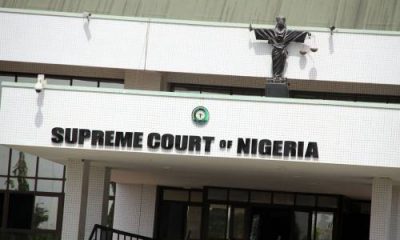
The Federal Government’s plan to retain the collection of Value Added Tax despite a Federal High Court ruling, hit a brick wall on Tuesday as the National Assembly rejected a proposal seeking to shift the collection of VAT from the concurrent to the exclusive legislative list, effectively leaving the decision to the Supreme Court which is hearing the matter.
A Federal High Court had last year ruled that states had the powers to collect VAT. However, the Federal Government opposed the ruling and continued to collect VAT while it projected that it will collect N2.2tn in 2022 through the Federal Inland Revenue Service.
The regime of President Muhammadu Buhari also incorporated VAT collection in its Finance Act 2021 and included it in its 2022 budget, a move that put the government on a collision course with the Southern Governors’ Forum.
Also, the Federal Inland Revenue Service was reported to have lobbied the National Assembly by sending a proposal to the House of Representatives seeking to move VAT collection to the exclusive list. Although the tax agency denied this claim, the National Assembly accepted the proposal and sent it to its constitutional amendment committee.
On Tuesday, the National Assembly, voted on 68 amendments recommended by the Joint Senate and House of Representatives’ Special Ad Hoc Committee on the Review of the 1999 Constitution.
44 senators vote against VAT on exclusive list, 41 in favour
A Bill for an Act to Alter Part I of the Second Schedule to the Constitution of the Federal Republic of Nigeria, 1999 to include Value Added Tax on the exclusive legislative list failed at the upper legislative chamber
A total of 95 senators registered to vote and 85 voted. While 41 voted in favour of VAT being collected exclusively by the Federal Government, 44 voted against it while no one abstained. In the end, the bill failed because it did not meet the minimum 73 votes.
In the House of Representatives, about 209 lawmakers voted to retain VAT on the concurrent list while 91 voted for it to be placed on the exclusive list.
LASG, A’Ibom hail N’Assembly
Reacting to the development, the Lagos State Government, which is a party to the suit before the Supreme Court and has passed a law on VAT collection, said the National Assembly deserves commendation.
The Commissioner for Information, Mr. Gbenga Omotoso, said any decision that would promote federalism should be commended.
He added, “I think the lawmakers have done well. If they have said now that the states have the right to collect VAT, it is good because that has been the question that the judiciary has been asked to answer, and if the Lagos State Government and some other state governments are pushing for this, at the National Assembly it is wisdom.
“It is the right way to go. I think they deserve kudos; they deserve applause because in my own view, it is a ‘no victor, no vanquished’ situation. It is good for democracy. It is a victory for the rule of law. It is a victory for equity, for justice. It is a victory for what is right as against what is not right.”
In a similar vein, the Akwa Ibom State Government said it was in support of any move that would expedite the country’s move towards true federalism.
The Commissioner of Information and Strategy, Ini Ememobong, described the National Assembly act as a move in the right direction.
He said “The state government, like other forward looking private and corporate citizens, is supportive of every attempt to increase the speed of our travel to true federalism. This act by the National Assembly is a march in the right direction. The government of Akwa Ibom State led by Governor Udom Emmanuel has been at the lead of this advocacy and therefore welcomes this development.”
VAT needs further review – Gombe
However, the Gombe State Government, which had previously kicked against states collecting VAT, said on Tuesday that the issue of VAT collection still needed to be reviewed further.
The Commissioner for Information, Julius Ishaya, said the latest development is more complex than a lot of people understand.
Ishaya who made this disclosure to one of our correspondents said, “For us aside from passing it as a law, there will be a need for states to sit down and sort out things.
“For instance VAT is value added tax on goods and services. If you buy airtime, instead of it being done at the organisation’s head office, it is meant for them to separate it to know cards used around the Gombe area and remit the VAT to the state unlike what was obtained in the recent past.
“That is the complicated issue, there is more than meets the eye but it is not a simple thing as people expect. We will increase our productivity and other economic activities to make sure we attract value addition.”
Lawmakers reject pro-women bills
However, the gender bills failed to pass despite the fact that Aisha Buhari, the President’s wife had on Wednesday last week, stormed the Senate and House chambers in company with female ministers to lobby the lawmakers as the committee laid its report.
Also on Tuesday, Dolapo Osinbajo, wife to the Vice-President, Prof Yemi Osinbajo, accompanied by the Minister of Women Affairs, Pauline Tallen, observed as members of the House voted on the recommendations by the committee, and watched as the lawmakers voted against the gender bills.
The rejected proposals either failed to get the required two-third or four-fifth votes in the 360-member House or they were voted against by a majority of the lawmakers in both chambers.
In the Senate, a bill seeking special seats for women at the National Assembly and state Houses of Assembly failed to scale through. While 91 senators registered to vote on the bill, 30 voted for it, 58 against it and three abstained.
Similarly, the senators voted against a bill seeking affirmative action for women in political party administration. 91 registered, 90 voted out of the figure 34 voted yes, 53 no and three abstained. The bill which was meant to guarantee inclusivity of women in governance failed as it could not garner at 73 votes needed for it to be passed.
All the bills relating to women failed to pass but for the Speaker of the House, Femi Gbajabiamila, who vetoed Bill 68 which proposed a 35 per cent quota for women in the presidential and state cabinets.
When the House voted on the proposal electronically, 226 members voted for it, 70 voted against it while four others abstained.
Gbajabiamila, however, pleaded with the lawmakers to allow the last remaining gender related bill to pass.
The Majority Leader, Ado Doguwa, however, moved for an amendment of the clause to reduce the percentage to 20, while Babajimi Benson seconded the motion.
Instead of electronic voting on the amendment, the Speaker called for voice vote. While the nays were louder than the ‘ayes’, Gbajabiamila ruled that the ayes had it.
Other rejected proposals include Bill 13 which sought to “provide for the procedure for passing a Constitution alteration bill where the President withhold assent.” While the amendment required four-fifth or 288 votes, it failed to pass when put to vote twice.
Another is Bill 15 which sought to “provide for the procedure of removing presiding officers of the legislature.”
Also failing to meet the required votes was Bill 35 to “provide for special seat for women in the National and state Houses of Assembly;” Bill 36 to “expand the scope of citizenship by registration;” Bill 37 to “provide for affirmative action for women in political party administration;” and Bill 38 to “provide criteria for qualification to become an indigene of a state in Nigeria.”
Bill 42 which sought to “expand immunity to the legislative and judicial arms of government” also failed to garner the required number of votes.
For independent candidacy in presidential, governorship, National Assembly, state Houses of Assembly and local government area council elections, as proposed by Bill 58, 269 lawmakers gave their votes; 28 voted against the proposal, while three others abstained.
However, Bill 59 which proposed Diaspora voting failed to pass, with 58 members voting for it and 240 others voting against it.
Another proposal that required four-fifth votes was contained in Bill 64, which sought to “further define acts that constitute torture, inhuman or degrading treatment.” It, however, failed to get up to 288 votes.
Bills for LGA, legislative autonomy scale through
The House passed Bill 1 to “abrogate the State Joint Local Government Account and provide for a special account into which shall be paid all allocations due to local government councils from the Federation Account and from the government of the state.”
It also passed Bill 2 to “establish local government as a tier of government and guarantee their democratic existence, tenure and for related matters.”
Bill 9 which sought to “provide for the financial independence of state Houses of Assembly and state Judiciary” also passed.
The House also passed Bill 17 which sought to “establish the federal revenue court and the revenue court of a state.”
States get powers to run prisons, airports
Also, the House passed Bills 30, 31, 32 and 33 to move airports; fingerprints, identification and criminal records; prisons (and re-designate it as Correctional Services); railway; and power generation, transmission and distribution from the Exclusive Legislative List to the Concurrent Legislative List, respectively.
Also passed was Bill 39 to “empower the Revenue Mobilisation Allocation and Fiscal Commission to enforce compliance with remittance of accruals into and disbursement of revenue from the Federation Account and streamline the procedure for reviewing the Revenue Allocation Formula.”
While Bill 44 is to “specify the period within which the president or the governor of state shall present the Appropriation Bill before the National Assembly or House of Assembly,” Bill 45 seeks to require the president or governors to submit the names of persons nominated as ministers or commissioners within 30 days of taking the oath of office for confirmation by the Senate or state House of Assembly.”
The House passed Bill 46 to include presiding officers of the National Assembly in the membership of the National Security Council; approved the establishment of a ‘State Security Council’ in Bill 47; and passed Bill 55 which sought to include former Heads of the National Assembly in the Council of State.
AGF, minister of justice separated
While passing Bill 51 to establish the Office of the Accountant –General of the Federal Government separate from the Office of the Accountant –General of the Federation, the House also approved establishment of the Office of the Attorney–General of the Federation and of the state, separate from the Office of the Minister of Justice or Commissioners for Justice of the state “in order to make the offices of attorneys–general independent and insulated from partisanship.”
Independent candidacy in presidential, governorship, National Assembly, Houses of Assembly and local government council elections scaled through at the senate. 94 senators registered to vote, 89 voted in support while five voted against.
As the lawmakers voted against gender bills, Gbajabiamila had threatened that records showing how they voted would be made public.
However, the details had not been made available as of 10pm on Tuesday when this report was filed
Amendments at variance with restructuring – Sagay
Reacting to the amendments, Legal luminary, Prof. Itse Sagay (SAN), said the amendments were not a positive step towards restructuring but the exact opposite.
Sagay said this on Channels Television’s ‘Politics Today’ programme on Tuesday.
The senior advocate said in a real federation, there are only two tiers of government- the federal and the state.
He said ideally, the states ought to determine the number of local governments within their domain. He said that the autonomy granted to the local governments by the National Assembly undermines the spirit of federalism.



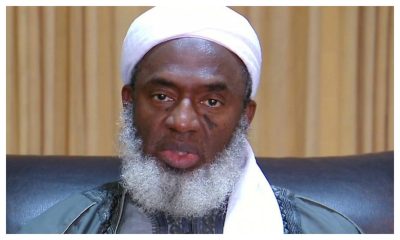
Islamic cleric Sheikh Ahmad Gumi recently defended his past interactions with armed groups, stating he “took the bull by the horns” in 2021 as a necessary step to address Nigeria’s insecurity.
In a post shared on Facebook on Thursday, Gumi said decades of neglect of disadvantaged populations had created deep socio-economic inequalities, leaving many youths vulnerable to manipulation by external forces seeking to destabilise the country.
According to him, the widening gap between the rich and the poor has turned many young people into “ready-made foot soldiers” in cycles of violence that enable the exploitation of Nigeria’s resources.
He also criticised the political class for being largely unresponsive, while noting that the intellectual community is preoccupied with survival struggles.
Reflecting on his past efforts, Gumi said he “took the bull by the horns” in 2021 by attempting to reintegrate violent elements into society rather than allowing them to be further radicalised.
He wrote: “Nigeria for decades has ignored the underprivileged section of its society. There is a significant socio-economic discrepancy, and the society is stratified. This makes our teaming youth ready-made foot soldiers for any foreign interest trying to divide us and rule. To plunder our resources while we are involved in a vicious circle of violence.
”Unfortunately, the political class is unattentive while the intelligentsia is held hostage in the struggle for existence.
“In 2021, I took the bull by the horns in an attempt to bring some of these uncouth elements back to our fold rather than letting them be exploited by the devil.
“I still believe this is the only way out of our predicament. However, it needs the political will and determination to achieve.
“May Allah bring peace back to our nation.”
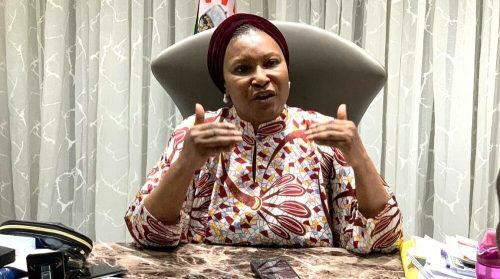
The Federal High Court in Abuja rejected an ex-parte application seeking to bar Senator Ireti Kingibe from participating in the activities of the African Democratic Congress (ADC).
Justice Peter Lifu declined the request from Wuse Ward leaders, ruling that such an order could not be granted without first hearing from the senator.
Instead, the judge ordered the ward leaders said to be loyal to the Minister of the FCT, Nyesom Wike, to put the senator on notice to appear in court to join issues with them on their grievances.
Justice Lifu in a ruling on Thursday held that discretion in such a request for prohibition from party activities and in political matters must be exercised judicially and judiciously.
The judge said justice would be met in the case of the plaintiffs only when the side of the defendant is heard on its merit, along with that of the plaintiffs.
Consequently, the judge ordered that Senator Ireti Kingibe should be served with all court processes by the plaintiffs to enable her become aware of the suit and to prepare her defense.
The judge fixed April 20, 2026, for the plaintiffs and the serving senator to appear before him for hearing of all applications in the matter.
Those who sued the senator in the suit marked FHC/ABJ/ CV/539/2026 are Okezuo Godfrey Anayo and Isaiah Ojonugwa Samuel, on behalf of themselves and ward members as plaintiffs. The senator is the sole defendant.
In their ex-parte application, Kingibe representing the FCT in the Senate was said to have been suspended on March 10, 2026 by her Wuse Ward executives following allegations of anti-party activities and disregard of your cnstitution of the ADC.
In the ex- parte application filed on their behalf by a Senior Advocate of Nigeria, SAN, Kolawole Olowookere, the aggrieved ADC members in Wuse Ward applied for an order of interim injunction restraining Kingibe from parading herself as a member of party, pending the hearing and determination of their motion on notice for interlocutory injunction.
They also asked the judge to restrain the senator from performing any function, attending meetings or performing activities reserved for ADC members or representing the party in any activities.
Besides, the Ward Executive Committee had asked that she be restrained from further interfering with the administration of the ward, ward register and other activities.
The suit was predicated on five grounds among which are that Mrs Kingibe was placed on suspension due to anti-party activities, gross misconduct and confiscation of the ward statutory records.
They argued that the suspension followed due process as enshrined in the ADC constitution and ratified by the two thirds majority of the EXCO members.
They averred that despite the communication of the suspension to Kingibe, she has continued to hold parallel meetings, issue press statements as an ADC member, and using her security details to intimidate the executive committee.
“Her actions constitute flagrant disregard to the internal mechanism of the party,” the plaintiffs stated.
Meanwhile, a lawyer, Abubakar Marshall who claimed to be representing the senator, announced that he had filed a preliminary objection against the suit. He added that it was served on M. S. Garba, who stood for the plaintiffs at Thursday’s proceedings.

The Chief of Army Staff (COAS), Lieutenant General Waidi Shaibu, visited Jos, Plateau State, on Thursday, April 2, 2026, to lead a high-powered security assessment following recent security breaches.
The visit was aimed at strengthening public confidence and reinforcing ongoing efforts to stabilize affected communities.
Colonel Appolonia Anele, acting Director, Army Public Relations, said in a statement that the visit forms part of ongoing efforts to restore calm and entrench lasting peace across the state.
According to the statement, upon arrival, the COAS was received by the Executive Governor of Plateau State, Caleb Mutfwang, in a clear demonstration of strong civil-military cooperation and a shared commitment to addressing emerging security challenges.
The statement said the COAS received a comprehensive operational briefing from the General Officer Commanding 3 Division and Commander, Joint Task Force Operation ENDURING PEACE, Major General Folusho Oyinlola, who highlighted ongoing operations and proactive measures being implemented in synergy with other security agencies to contain threats, protect lives and property, and stabilise affected communities.
“As part of his engagements, Lieutenant General Shaibu also interacted with community leaders and residents, reassuring them of the unwavering commitment of the Nigerian Army to safeguarding all law-abiding citizens.
He urged residents to remain calm, vigilant and supportive of security agencies by complying with the curfew and cooperating fully with ongoing operations and investigations, while going about their lawful activities.
The chairman of Jos North Local Government Area, Hon. Dachung Bagos, commended the COAS for the timely visit, noting that the presence of the nation’s top military leadership would boost public confidence and reinforce trust in ongoing security efforts.

Gumi Defends Dialogue As Sole Solution To Nigeria’s Insecurity

Court Clears Senator Ireti Kingibe To Remain Active In ADC

COAS Shaibu Hits Jos To Restore Peace, Public Confidence

President Tinubu Appoints New PTDF Executive, Reappoints TCN Head

Simi Welcomes Second Child With Adekunle Gold

United Nigeria Airlines Staff Suspended After Viral Amputee Abuse Video

Pay Your Fare: AIG Cracks Down On Officers Boarding For Free

INEC Removes David Mark, Aregbesola From ADC Leadership Portal

JUST IN: FG Approves Friday 3, Monday 6, as Easter Public Holidays

When 8 million Customers Trust You, Safety Cannot Be an Afterthought
-
 News2 days ago
When 8 million Customers Trust You, Safety Cannot Be an Afterthought
-

 News2 days ago
El-Rufai Back In Detention After Temporary Compassionate Release
-
 News1 day ago
United Nigeria Airlines Staff Suspended After Viral Amputee Abuse Video
-
 News2 days ago
2027: Kwankwaso’s Exit Marks End Of NNPP – Kwankwasiyya Movement
-
 News1 day ago
JUST IN: FG Approves Friday 3, Monday 6, as Easter Public Holidays
-
 News1 day ago
Pay Your Fare: AIG Cracks Down On Officers Boarding For Free
-

 News2 days ago
Lagos CP Withdraws Taskforce From Traffic Duties
-
 News15 hours ago
COAS Shaibu Hits Jos To Restore Peace, Public Confidence