
News
Federal Govt To Put Wheat On Import Restriction List
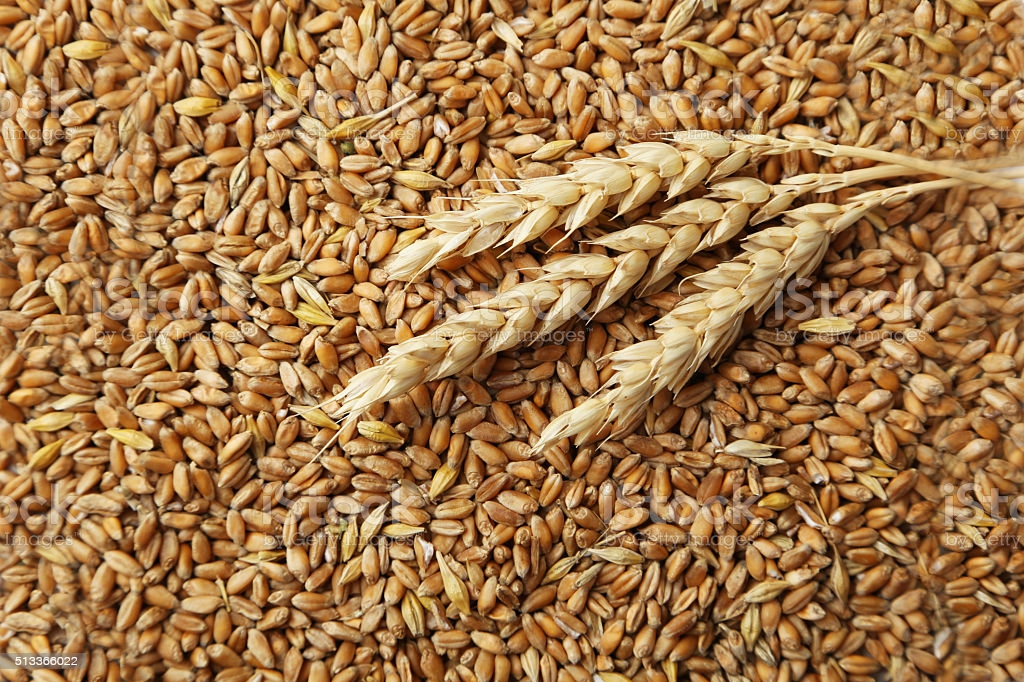
WHEAT used to produce many staple food items, including bread and biscuit, will soon join the list of items restricted from official forex allocation by the Central Bank of Nigeria (CBN), it was learnt at the weekend.
The implication of this is that any firm that requires imported wheat for its operation will seek alternative source of forex after the imposition of the restriction by the apex bank.
The CBN said at the weekend that $2 billion is spent annually to import wheat, thereby depleting the country’s foreign reserves.
According to the apex bank, only one per cent (about 63,000 metric tonnes) of wheat out of the five to six million metric tonnes (MT) of wheat consumed in Nigeria is produced locally.
To fill the gap, the CBN plans to jump start a massive local production of wheat.
A CBN source said: “Any moment from now, wheat will be added to the forex restriction list”.
The government, the source explained, has imported hybrid wheat seeds for dry season farming as part of efforts to boost local production.
He said the CBN’s arrangement is to put wheat farmers in a position to meet the high demand for the item.
Wheat’s flour is used to make bread, noodles, pasta, biscuits (cookies), semolina and some beverages like wheat beer and Malted milk.
Director, Development Finance Department at the CBN, Mr. Philip Yila Yusuf, told a wheat conference and stakeholders’ engagement in Abuja at the weekend.
“Wheat is the second highest contributor to the country’s food import bill putting pressure on the country’s foreign reserve”.
Rice, which is now on the restriction list, is the highest.
Yusuf said the apex bank’s intervention had become critical due to rising local demand for wheat and the inability to meet that demand.
He said: “The CBN plans to address key problems in the value chain through financing massive production of wheat in Nigeria and seeks to facilitate sustained availability of high yield seed variety in the country and to improve general productivity.
“There was enormous challenge before the CBN, which would require concerted efforts to address.”
He said there was enormous potential in wheat value chain enough to make significant impact in the agricultural sector.
The CBN will focus attention on the wheat value chain for 2021/2022 dry season planting, after sustainable progress made across the rice and maize value chain”.
Other imported agricultural items that gulp a lot of foreign exchange but are on CBN’s Forex restriction list are rice, poultry products and fish.
At the conference, Kano State Governor Abdullahi Ganduje, urged the CBN to expedite action on releasing funds, stressing that partnership among stakeholders in wheat production value chains remained critical to boosting Nigeria’s quest to be self-sufficient in wheat production.
Ganduje, who was represented by his deputy, Dr. Nasiru Yusuf Gawuna, appealed to stakeholders to be transparent in their dealings and to commence preparation for both farming and production of wheat.
Agriculture and Rural Development Minister Mohammed Abubakar, who was represented by Abdullahi Garba, expressed dismay that the country’s wheat import bills had continued to increase in recent years.
He urged stakeholders to collaborate to reverse the trend by investing more in the value chain.

News
Oyo 2027: Adelabu Quits As Power Minister To Focus On Guber Race
The Minister of Power, Adebayo Adelabu has formally resigned from his position in the Federal Government to pursue his governorship ambition in Oyo State.
In a resignation letter dated April 22, 2026, and addressed to the President, Adelabu stated that his resignation will take effect on April 30, 2026, to enable him to focus on his governorship ambition in Oyo State.
The letter, routed through the Office of the Secretary to the Government of the Federation, stated that he was stepping down with “a deep sense of honour and profound gratitude.”
He wrote, “I write with a deep sense of honour and profound gratitude to formally tender my resignation as the Honourable Minister of Power of the Federal Republic of Nigeria. This resignation is to take effect on 30th April 2026, in order to allow sufficient time for a smooth and orderly handover of responsibilities.”
Adelabu thanked the President for the opportunity to serve, describing his appointment as a privilege.
He said, “Your Excellency, I remain sincerely grateful for the privilege and confidence you reposed in me by appointing me to serve our great nation in this capacity.
“It has been a rare honour to contribute to national development under your leadership and to play a role in advancing reforms in the power sector—one of the most critical foundations of Nigeria’s industrial growth and economic transformation.”
The former minister said his resignation was to enable him focus fully on his governorship ambition in Oyo State, citing provisions of the amended electoral law.
He added, “My decision to step down is informed by my intention to focus fully on my gubernatorial ambition in Oyo State. This aspiration, which dates back to 2016 during my service as Deputy Governor of the Central Bank of Nigeria, ultimately led to my voluntary resignation from the Central Bank in 2018 in order to pursue the same goal.”
“In line with the provisions of the Amended Electoral Act 2026, which preclude political office holders from contesting elections, I consider it both appropriate and necessary to resign at this time.”
Adelabu’s exit marks a major political development ahead of the next electoral cycle, particularly in Oyo State, where he is expected to contest the governorship election.
News
Wale Edun, Musa Dangiwa Resigned Voluntarily, Not Sacked – Presidency
The Presidency has clarified that Wale Edun (former Finance Minister) and Ahmed Musa Dangiwa (former Housing Minister) voluntarily resigned from their positions and were not sacked by President Tinubu.
In a statement released this evening April 22, presidential media aide, Bayo Onanuga, said that contrary to public opinions, Wale Edun resigned on health grounds while Dangiwa also tendered his resignation and thanked the President for the opportunity given him to serve in the Federal Executive Council.
Onanuga stated that Edun, who clocked 70 on Monday and has battled recent ill health, fittingly submitted his resignation letter on his birthday, thanking the President for the opportunity to serve Nigeria.
“It has been a pleasure and privilege to serve your administration and the Renewed Hope Agenda, Under your leadership, Nigeria has emerged stronger, more resilient and more internationally respected. I wish you and the administration every success in the future” he wrote
Onanuga stated that on Tuesday, before the Office of the Secretary of the Government of the Federation announced his departure from the Cabinet, Edun paid a valedictory visit to the President at the Villa and held an hour-long discussion with the president and then left to focus on his private businesses.
The presidential aide stated that President Tinubu has expressed deep appreciation to Edun and Dangiwa for their dedicated service and significant contributions to the administration’s economic reform programme and wished them continued success in their future endeavours.
‘’In the same vein, the President has urged the new Minister of Finance, Taiwo Oyedele, to consolidate ongoing reforms and advance the administration’s fiscal and economic objectives with renewed focus, discipline, and innovation.
President Tinubu will shortly send the ministerial nominee for housing, Muttaqha Rabe Darma, also from Katsina, like Dangiwa, to the Senate for confirmation” the statement concluded
News
Unity Bank, Experts Advocate Green Investment, Climate Innovation To Drive Economic Resilience
Nigeria’s retail lender, Unity Bank Plc, alongside leading climate innovation experts, has called for increased investment in the green economy and the adoption of frontier technologies as critical pathways to driving economic resilience and reducing the impact of climate change on vulnerable populations across Africa.
The call was made during a thought-provoking webinar hosted by the Bank to commemorate this year’s Earth Day, themed “The True Cost of Climate Change and Who Pays?”. Climate experts and stakeholders convened to examine the human, economic, and institutional costs of climate change, while spotlighting practical solutions to address its growing impact.
In his opening remarks, Unity Bank’s Head of Strategy and Innovation, Ibukun Coker, emphasised the urgency of addressing climate risks from both a societal and business perspective.
He said: “Climate change is no longer a distant or abstract challenge. It is an existential threat with direct consequences for individuals, businesses, and economies. At Unity Bank, we recognise the role institutions must play in incorporating sustainability in project financing, supporting businesses and promoting solutions that build resilience in communities where we operate.”
The webinar featured Chinwe Udo-Davis, Founder and CEO of Instollar, and Oluwatosin Ajide, Programme Manager at the Nigeria Climate Innovation Centre, both of whom provided insights into the drivers of climate change and the pathways to mitigation and adaptation.
Speaking during the session, Udo-Davis highlighted the disproportionate burden which climate change places on underserved communities and the need for inclusive solutions.
“The true cost of climate change is not evenly distributed. Communities with the least resources are often the most affected, whether through energy poverty, environmental degradation, or limited access to sustainable alternatives. Addressing this imbalance requires intentional investment in clean energy solutions that are both accessible and scalable.”
Ajide underscored the importance of coordinated, system-wide approaches in tackling climate challenges, particularly through innovation and policy alignment.
“Climate change is fundamentally a structural problem, and its solution requires a paradigm shift: from innovation and policy to financing and implementation. Stakeholders must work collaboratively to drive solutions that are sustainable and inclusive.”
The session also explored emerging opportunities in climate technology, renewable energy, and ecosystem financing, reinforcing the role of innovation and cross-sector collaboration in building long-term resilience.
By hosting the webinar, Unity Bank continues to demonstrate its commitment to advancing sustainability-focused dialogue and supporting initiatives that promote responsible growth and environmental stewardship.
The initiative underscores the Bank’s broader strategic focus on environmental sustainability as well as its commitment to financial inclusion.
-
News16 hours agoMass Burial For 30 ISWAP Insurgents Following Lethal NAF Strikes In Borno
-
News18 hours agoNo Solar Permits Needed For Private Homes In Lagos, SSA Confirms
-
News1 day agoCourt Sentences Dismissed NECO Employee To 24 Years Over Fake Diploma
-
News18 hours agoLagos Sets Rules, Penalties For April 25 Sanitation Relaunch
-
News14 hours agoUnity Bank, Experts Advocate Green Investment, Climate Innovation To Drive Economic Resilience
-
Breaking News1 day agoTinubu Appoints New Ministers, Sacks Edun, Dangiwa In Minor Shake-Up
-
News11 hours agoWale Edun, Musa Dangiwa Resigned Voluntarily, Not Sacked – Presidency
-
News9 hours agoOyo 2027: Adelabu Quits As Power Minister To Focus On Guber Race