
Connect with us

News

Life And Times Of Nigeria’s Late Army Chief, General Ibrahim Attahiru

Published

on

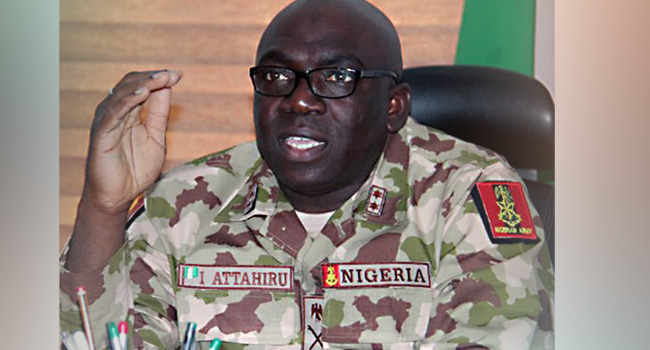
The Nigeria’s Chief of Army Staff, Lt. Gen. Ibrahim Attahiru who died in an air crash in Kaduna on Friday, was born on August 10, 1966.

Interestingly, he hailed from Doka in Kaduna, the State he passed away.

He was appointed  as an Army Chief by President Muhammadu Buhari in January 2021 along with General Leo Irabor – Chief of Defence Staff; Vice Admiral A. Z. Gambo – Chief of Naval Staff, and Air Marshal I. O. Amao – Chief of Air Staff.

Within four months, the Nigerian Army under Attahiru recorded considerable success. Though troops were lost, several terrorists were eliminated.

The military launched a series of assault in the Sambisa general area and sects’ hideouts. Attahiru regularly visited Borno, the epicenter of the insurgency in Nigeria.

Under him, Operation Tura Takai Bango, the military’s first major operation this year to degrade threats in the North-East emerged. It was victorious.

The Multinational Joint Task Force (MNJTF) is assisting the offensive. Boko Haram commanders, Abul-Bas, Ibn Habib, Ali Bor and Maleum Modu, among others fell to firepower.

In February, Attahiru announced plan to launch the second phase of year 2021 counter-insurgency operation.

On various occasions, he hailed the synergy between the air and ground forces, and credited successes to the partnership.

The top military officer died three weeks after renaming the Operation in the North-East from Operation Lafiya Dole (OPLD) to Operation Hadin Kai (OPHK).

Army spokesman, Brig. Gen. Mohammed Yerima explained that the decision was taken based on the need to re-align for better efficiency.

“The renaming is in line with the COAS vision of having an Army repositioned to professionally defeat all adversaries”, Yerima noted.

He quoted Attahiru as saying the complete defeat of insurgency is a process that requires the stakeholders’ participation, using all elements of national power.

Before their appointments, Irabor and Attahiru were Commander and Deputy Commander at the Training and Doctrine Command (TRADOC) of the Nigerian Army, in Minna, Niger State.

Established in 1981, TRADOC is a research-oriented formation. The Command is charged with doctrinal training and combat development.

It supervises and coordinates research and development of all training schools, depots and the command college of the Nigerian Army.

TRADOC serves as a major senior think-tank and a liaison centre between the Army and educational establishments to ensure professional development of officers.

It also serves as headquarters for directing the operational tasks of various divisions of the Army that are on deployment.

Annually, TRADOC conducts and supervises the Senior Staff Course Qualifying Examination (SSCQE) for officers in the ranks of Major and Captain across all units.

Attahiru served as Theatre Commanders of Operation Lafiya Dole, the central outfit of the Army in North-Eastern Nigeria.

Irabor handed over the leadership of the unit to Attahiru on May 30, 2017.

Attahiru obtained a Graduate Diploma from the University of Nairobi, Kenya and holds Master’s degrees from the Nigerian Defence Academy and Salford University in the United Kingdom.

He attended the National Defence College, Kenya; the Chinese Peoples Liberation Army Special Forces Academy, Shijiazhuang, Hebei Province,; Bournemouth University, United Kingdom; and the Geneva Centre for Security Policy.

Attahiru served as the Deputy Director Office of Military Secretary; Director, Army Public Relations; Commanding Officer, 146 Battalion in the Bakassi Peninsula; Commander, 13 Brigade (Pulo Shield) in the South-South; and the General Officer Commanding 82nd Division, Enugu.

He was the Deputy Chief of Policy and Plans at the Army Headquarters; Chief of Defence Transformation and Innovation, and Chief of Defence Logistics, at Defence Headquarters Abuja.

Attahiru was on different contingents of the ECOWAS Monitoring Group (ECOMOG), United Nations Mission in Sierra Leone (UNAMSIL) and the United Nations Mission in Liberia (UNMIL).

As Theatre Commander in Borno, Attahiru created dugouts along the crossing points of terrorists, to deny them freedom of action and stem the conduct of their nefarious activities, before launching Mobile Strike Teams (MSTs).

The teams reinforced the Mobile Brigade Concept (MBC) adopted in the Theatre to facilitate the quick defeat of enemies of the state.

 

News

Oyo 2027: Adelabu Quits As Power Minister To Focus On Guber Race

Published

on

By

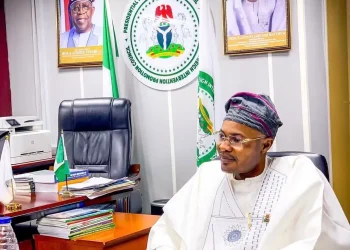
The Minister of Power, Adebayo Adelabu has formally resigned from his position in the Federal Government to pursue his governorship ambition in Oyo State.

In a resignation letter dated April 22, 2026, and addressed to the President, Adelabu stated that his resignation will take effect on April 30, 2026, to enable him to focus on his governorship ambition in Oyo State.

The letter, routed through the Office of the Secretary to the Government of the Federation, stated that he was stepping down with “a deep sense of honour and profound gratitude.”

He wrote, “I write with a deep sense of honour and profound gratitude to formally tender my resignation as the Honourable Minister of Power of the Federal Republic of Nigeria. This resignation is to take effect on 30th April 2026, in order to allow sufficient time for a smooth and orderly handover of responsibilities.”

Adelabu thanked the President for the opportunity to serve, describing his appointment as a privilege.

He said, “Your Excellency, I remain sincerely grateful for the privilege and confidence you reposed in me by appointing me to serve our great nation in this capacity.

“It has been a rare honour to contribute to national development under your leadership and to play a role in advancing reforms in the power sector—one of the most critical foundations of Nigeria’s industrial growth and economic transformation.”

The former minister said his resignation was to enable him focus fully on his governorship ambition in Oyo State, citing provisions of the amended electoral law.

He added, “My decision to step down is informed by my intention to focus fully on my gubernatorial ambition in Oyo State. This aspiration, which dates back to 2016 during my service as Deputy Governor of the Central Bank of Nigeria, ultimately led to my voluntary resignation from the Central Bank in 2018 in order to pursue the same goal.”

“In line with the provisions of the Amended Electoral Act 2026, which preclude political office holders from contesting elections, I consider it both appropriate and necessary to resign at this time.”

Adelabu’s exit marks a major political development ahead of the next electoral cycle, particularly in Oyo State, where he is expected to contest the governorship election.

Continue Reading

News

Wale Edun, Musa Dangiwa Resigned Voluntarily, Not Sacked – Presidency

Published

on

By

The Presidency has clarified that Wale Edun (former Finance Minister) and Ahmed Musa Dangiwa (former Housing Minister) voluntarily resigned from their positions and were not sacked by President Tinubu.

In a statement released this evening April 22, presidential media aide, Bayo Onanuga, said that contrary to public opinions, Wale Edun resigned on health grounds while Dangiwa also tendered his resignation and thanked the President for the opportunity given him to serve in the Federal Executive Council.

Onanuga stated that Edun, who clocked 70 on Monday and has battled recent ill health, fittingly submitted his resignation letter on his birthday, thanking the President for the opportunity to serve Nigeria.

“It has been a pleasure and privilege to serve your administration and the Renewed Hope Agenda, Under your leadership, Nigeria has emerged stronger, more resilient and more internationally respected. I wish you and the administration every success in the future” he wrote

Onanuga stated that on Tuesday, before the Office of the Secretary of the Government of the Federation announced his departure from the Cabinet, Edun paid a valedictory visit to the President at the Villa and held an hour-long discussion with the president and then left to focus on his private businesses.

The presidential aide stated that President Tinubu has expressed deep appreciation to Edun and Dangiwa for their dedicated service and significant contributions to the administration’s economic reform programme and wished them continued success in their future endeavours.

‘’In the same vein, the President has urged the new Minister of Finance, Taiwo Oyedele, to consolidate ongoing reforms and advance the administration’s fiscal and economic objectives with renewed focus, discipline, and innovation.

President Tinubu will shortly send the ministerial nominee for housing, Muttaqha Rabe Darma, also from Katsina, like Dangiwa, to the Senate for confirmation” the statement concluded

Continue Reading

News

Unity Bank, Experts Advocate Green Investment, Climate Innovation To Drive Economic Resilience

Published

on

By

Nigeria’s retail lender, Unity Bank Plc, alongside leading climate innovation experts, has called for increased investment in the green economy and the adoption of frontier technologies as critical pathways to driving economic resilience and reducing the impact of climate change on vulnerable populations across Africa.

The call was made during a thought-provoking webinar hosted by the Bank to commemorate this year’s Earth Day, themed “The True Cost of Climate Change and Who Pays?”. Climate experts and stakeholders convened to examine the human, economic, and institutional costs of climate change, while spotlighting practical solutions to address its growing impact.

In his opening remarks, Unity Bank’s Head of Strategy and Innovation, Ibukun Coker, emphasised the urgency of addressing climate risks from both a societal and business perspective.

He said: “Climate change is no longer a distant or abstract challenge. It is an existential threat with direct consequences for individuals, businesses, and economies. At Unity Bank, we recognise the role institutions must play in incorporating sustainability in project financing, supporting businesses and promoting solutions that build resilience in communities where we operate.”

The webinar featured Chinwe Udo-Davis, Founder and CEO of Instollar, and Oluwatosin Ajide, Programme Manager at the Nigeria Climate Innovation Centre, both of whom provided insights into the drivers of climate change and the pathways to mitigation and adaptation.

Speaking during the session, Udo-Davis highlighted the disproportionate burden which climate change places on underserved communities and the need for inclusive solutions.

“The true cost of climate change is not evenly distributed. Communities with the least resources are often the most affected, whether through energy poverty, environmental degradation, or limited access to sustainable alternatives. Addressing this imbalance requires intentional investment in clean energy solutions that are both accessible and scalable.”

Ajide underscored the importance of coordinated, system-wide approaches in tackling climate challenges, particularly through innovation and policy alignment.

“Climate change is fundamentally a structural problem, and its solution requires a paradigm shift: from innovation and policy to financing and implementation. Stakeholders must work collaboratively to drive solutions that are sustainable and inclusive.”

The session also explored emerging opportunities in climate technology, renewable energy, and ecosystem financing, reinforcing the role of innovation and cross-sector collaboration in building long-term resilience.

By hosting the webinar, Unity Bank continues to demonstrate its commitment to advancing sustainability-focused dialogue and supporting initiatives that promote responsible growth and environmental stewardship.

The initiative underscores the Bank’s broader strategic focus on environmental sustainability as well as its commitment to financial inclusion.

Continue Reading

Trending