
Connect with us

News

NRS Gets N40.71trillion Revenue Target For 2026

Published

on

. Surpasses 2025 target of N25.2 trillion, rakes in N28.3 trillion


. Edun, Adedeji, Tegbe reiterate hope in new tax laws


The Nigeria Revenue Service (NRS), formerly known as the Federal Inland Revenue Service (FIRS), broke its record revenue collection performance, posting N28.3 trillion to surpass the set target of N25.2 trillion for the year 2025.


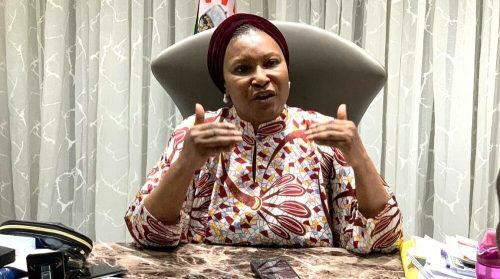
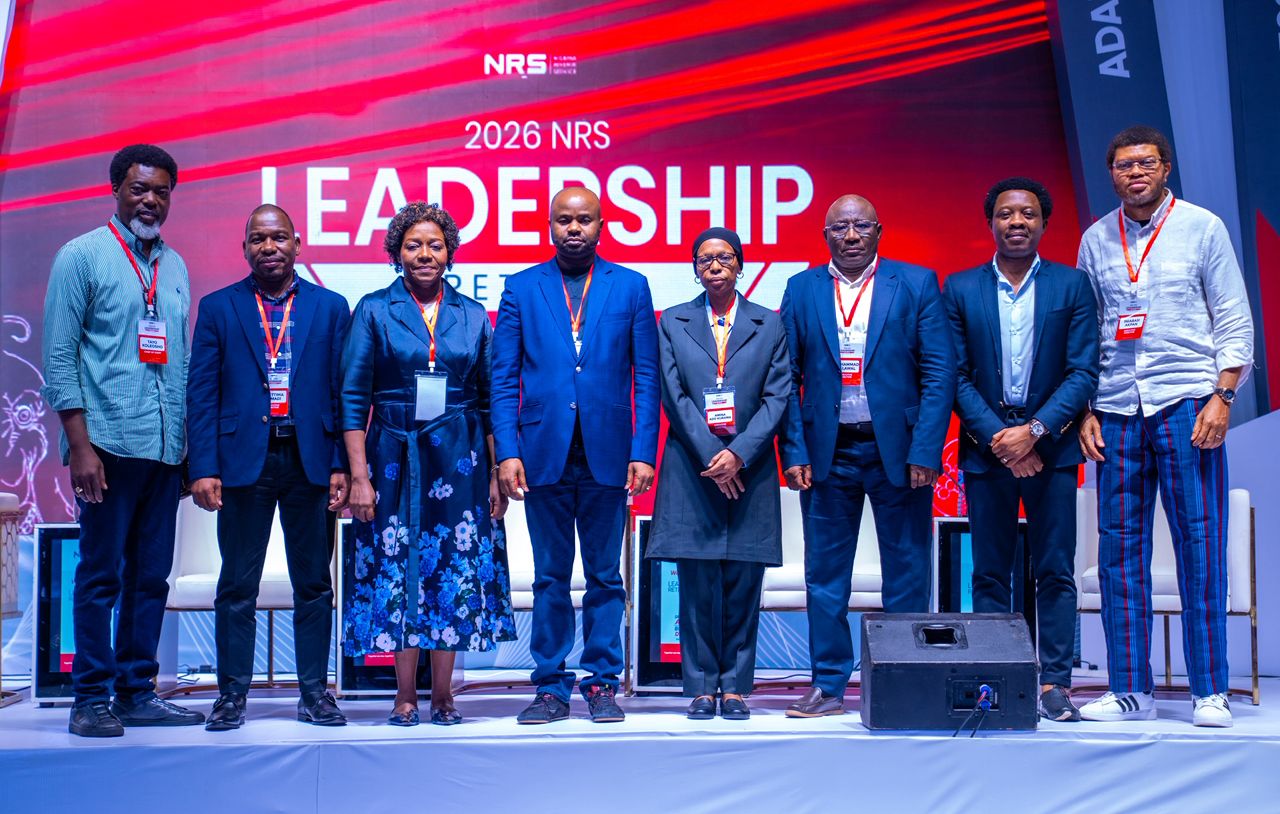
This was disclosed on behalf of the NRS executive chairman, Zacch Adedeji, by the Executive Director, Government and Large Taxpayers Group, Ms Amina Ado Kurawa, at the opening of a two-day management retreat with the theme “Designed to Adapt, Built to Deliver” held at the Congress Hall, Transcorp Hilton Hotel in Abuja, on Tuesday.


Ms Ado, according to a statement signed by Dare Adekanmbi, Special Adviser (Media) to the NRS chairman, also revealed that the revenue collection target for the revenue administration agency for 2026 has been set at N40.71 trillion, 44 per cent higher than the target for 2025.


Speaking earlier, the NRS chairman charged the management and staff members of the agency to do away with old beliefs, noting that the credibility of Nigeria’s revenue architecture and confidence in the Nigerian economy rest on their hands.


Adedeji said, “If we walk into the future with rigid beliefs, we will build walls where bridges are required. But if we lead with honesty, courage, and an open mind, we will build an institution worthy of this moment.


“Recently, I reflected deeply on an article in the Harvard Business Review titled ‘The Hidden Beliefs That Hold Leaders Back.’ Its central argument is both simple and confronting: leaders rarely fail because they lack intelligence, experience, or strategy. More often, they fall short because of the invisible beliefs they carry about themselves, about others, and about what leadership should look like, beliefs that quietly shape decisions, behaviours, and outcomes.


“The Nigeria Revenue Service will not be defined by what we say in this room. It will be defined by who we become after we leave it.”


The Executive Director, while giving a breakdown of the 2025 collection figures and how the agency surpassed the last target by 12 per cent, said non-oil taxes accounted for N21.4 trillion of the collection, against N18 trillion projected.


Total oil tax collection, according to her, came to N6.8 trillion, representing 95 per cent of the N7.2 trillion target set for the sector.


Both oil and non-oil tax revenue grew year on year by 19 per cent and 35 per cent, respectively.


“For the year 2025, oil tax revenue totalled N6.6trillion, representing a growth of 19 per cent over the N5.8 trillion realized during the corresponding period in 2024.


“Non-oil tax revenue for 2025 exceeded the 2024 total, reaching N21.5 trillion compared to N15.9 trillion for the same period in 2024—representing a growth of 35 per cent.


“This growth was driven by administrative enhancements, broadening of the Withholding system, digitalization efforts, improved tax compliance initiatives and stronger enforcement tactics introduced by NRS,” the statement said.


The statement added that the 44 per cent increase in the target for the agency was based on the expanded mandate of NRS to be a revenue system integrator for the country, including the collection of royalty hitherto the responsibility of the Nigerian Upstream Petroleum Regulatory Commission (NUPRC) and so on.


Earlier, the Minister of Finance and Coordinating Minister of the Economy, Mr Wale Edun, who joined the event virtually, charged Nigerians to rely more on made-in-Nigeria products, saying this would reduce revenue losses.


“We talk about buying from West Africa or trading with Africa as a whole, but intra-Nigerian trade is critical. We all know what spending in Nigeria does for the economy; we know what it does for the revenue targets of NRS.


“The debt service that was paid by the developing countries in 2024 was 163 billion dollars, while the overseas development assistance that came in was 42 billion dollars. The foreign direct investment and the private sector funding that came in from abroad to developing countries were just 97 billion dollars.


“So, you can see that, as developing countries, the flow of funding. What we are giving out is more than we are getting through these various categories.


“Clearly, it is what we do for ourselves internally that is going to be important at this time,” he said.


He reiterated the government’s desire to deliver in the areas of fiscal reforms and revenue mobilisation, saluting the management and staff of NRS for not just the pivotal but indispensable role they play in domestic revenue mobilisation.


Also speaking, the chairman of the National Tax Policy Implementation Committee, Joseph Tegbe, stressed the need for clinical delivery and execution of the tax laws.


Tegbe said that the quality of execution would ultimately determine whether the reform would succeed or merely join a long list of well-intentioned initiatives that failed to transform outcomes.


He explained that the country’s continued dependence on what he described as volatile oil revenues exposes it to shocks beyond control, “while rising public expenditure demands stable, predictable, and sustainable domestic revenue.


“History will judge this reform not simply by the revenues it generates, but by the trust it rebuilds between the Nigerian state and its citizens.


“It is essential that we are clear about the role of the Nigeria Revenue Service. NRS is not just another agency. It is the nation’s revenue system integrator,” he said.

News

Gov. Makinde Promotes 14 High Chiefs To Obas, Presents Staff Of Office

Published

on

By

Oyo State Governor Seyi Makinde, on Friday elevated 14 high chiefs and Baales in Oyo town to the status of crown-wearing Obas.

Representing the governor, Deputy Governor Bayo Lawal presented the staff and instruments of office at a coronation ceremony held at Oliveth Heights in Oyo West Local Government Area.

The elevation is intended to strengthen traditional institutions and enhance grassroots governance.

The newly elevated monarchs include the Alaaguo of Aguoland, Oba David Oyediran; the Baba Eyaji of Oyo, Oba Afonja Mukaila; the Alajagba of Oyo, Oba Samuel Odurinde; the Ona-Isokun of Oyo, Oba Isiaka Tella-Titiloye; the Onimileke of Imileke, Oyo, Oba Fakayode Alowonle; the Onigbudugbu of Gbudugbu, Oyo, Oba Salawu Oyeniran; the Oloodu of Ojongbodu, Oba Olaniyi Adegboye; and the Alapa-Ara of Apa-Ara, Oba Tijani Ajeigbe.

Others are the Onidode of Idodeland, Oba Oyeleke Yusuff; the Iba Samu of Oyo Empire, Oba Lamidi Jimoh; the Alago-Oja of Ago-Oja Land, Oba Ganiyu Busari; the Agbaaki of Oyo, Oba Asimiyu Jimoh; the Alakeitan of Akeitan, Oba Jimoh Oyeleye; and the Elepe of Iseke, Oba Abel Oyekan.

Makinde, whose speech was read by his deputy, said the elevation of the chiefs underscored his administration’s commitment to strengthening traditional institutions and promoting peace and development at the grassroots.

He, therefore, congratulated the newly crowned monarchs, saying their ascension to the status of crown-wearing Obas was both a recognition of their leadership and a reaffirmation of the enduring relevance of traditional institutions in governance, peacebuilding, and grassroots community development.

The governor said, “The State Government holds traditional rulers in high esteem because of their roles as custodians of culture, promoters of unity and partners in progress.

“I want to urge you all (the monarchs) to uphold integrity, fairness and service to your people. Your reigns should be characterized by peace, inclusiveness and support for government programmes aimed at improving citizens’ welfare in their domains.”

In his welcome address, the Commissioner for Local Government and Chieftaincy Matters, Ademola Ojo, described the event as historic and culturally significant, adding that it represented not just the installation of royal fathers but a reaffirmation of Oyo’s rich heritage and enduring traditions.

He said the Yoruba traditional institution, one of the oldest and most revered in Africa, remains central to governance, culture, and unity in Oyo land.

“The beaded crown is a sacred symbol of authority, service and divine responsibility, and those who wear it are called to lead with integrity, courage and compassion.”

The commissioner commended the governor for approving and sponsoring the programme, adding that the coronation of 14 Obas at once symbolised unity, continuity, and renewal within Oyo land.

He reaffirmed the government’s commitment to strengthening collaboration with traditional rulers for conflict resolution, cultural preservation, and community mobilisation.

Dignitaries at the event included the Olubadan of Ibadanland, Oba Rashidi Ladoja, represented by the Asipa Olubadan, Oba Hamidu Ajibade; former Speaker of the state Assembly, Monsurat Sunmonu; members of the 10th Oyo Assembly from the Oyo geopolitical zone; top government functionaries; and political leaders.

The PUNCH reports that the Supreme Court of Nigeria, sitting in Abuja, has been asked to restrain the state government from creating, recognising, or elevating the chieftaincy stool of Baale Ago-Oja, pending the determination of an appeal before it.

In a motion on notice dated January 30, 2026, and filed in Appeal No. SC/404/2018, the Alaafin of Oyo is seeking orders of interlocutory and mandatory injunctions against the Governor of Oyo State and the Attorney-General of Oyo State.

The motion, brought pursuant to Order 2 Rule 28(1) of the Supreme Court Rules, 2014 (as amended), and the inherent powers of the court under Section 6(6)(b) of the 1999 Constitution, seeks to halt all actions relating to the Baale Ago-Oja chieftaincy pending the final determination of the appeal.

The suit was instituted by the late Alaafin of Oyo, Oba Lamidi Adeyemi III.

The Alaafin is asking the apex court to restrain the governor and the attorney-general from “creating or re-creating, establishing or re-establishing the chieftaincy stool of Baale Ago-Oja” and from “appointing, approving or recognising” Alhaji Ganiyu Busari as holder of the stool.

He is also seeking an order restraining the state government from “recognising or further recognising, dealing or further dealing with” Busari as Baale Ago-Oja, as well as stopping any elevation of the chieftaincy from Part III (Minor Chief) to Part II (Recognised Chief).

In addition, the applicant is asking the court to restrain the respondents from “installing or crowning the appellant as the Oloja of Ago-Oja on February 13, 2026, at Olivet High School, Oyo, or at any other venue whatsoever.”

The motion further urges the Supreme Court to set aside Oyo State Gazette No. 01, Vol. 50 of January 17, 2025, “in so far as it relates to the elevation of the Baale Ago-Oja chieftaincy.”

According to the motion, “any attempt to revive, recognise or elevate a chieftaincy stool already declared non-existent by courts of competent jurisdiction amounts to a disregard of subsisting judgments and is capable of prejudicing the appeal now pending before this Honourable Court.”

The applicant, therefore, urged the apex court to “grant the reliefs sought and make such further orders as this Honourable Court may deem fit in the circumstances of this case.”

The appeal and accompanying motion are yet to be fixed for hearing.

Continue Reading

News

Nigeria Decides 2027: INEC Unveils Official Timetable And Key Poll Dates

Published

on

By

The Independent National Electoral Commission (INEC) has officially announced the timetable for the 2027 General Elections. Chairman Prof. Joash Amupitan released the schedule on Friday, February 13, 2026, during a press conference in Abuja.

He said Governorship and state assembly elections will also hold the same day on March 6, 2027, two weeks after the presidential election. Amupitan said with the announcement of the time table the Commission had formally set in motion the electoral process in line with constitutional and legal requirements.

He explained that the tenure of the President, Vice President, Governors, and Deputy Governors except in Anambra, Bayelsa, Edo, Ekiti, Imo, Kogi, Ondo, and Osun states will expire on May 28, 2027, while the National and State Assemblies dissolve on June 8, 2027.

Amupitan said pursuant to Sections 76(2), 116 (2), 132 (2) and 178 (2) of the Constitution of the Federal Republic of Nigeria, 1999 (as amended), elections to the said offices shall hold not earlier than 150 days and not later than 30 days before the expiration of the term of office of` the last holder of that office.

He added that the action is taken pursuant to the provisions of the Constitution of the Federal Republic of Nigeria, 1999 (as amended) and section 28(1) of the Electoral Act, 2022, which mandate the Commission to publish the Notice of Election not later than 360 days before the date appointed for the election.

“In exercise of the powers conferred on the Commission by the Constitution of the Federal Republic of Nigeria, 1999 (as amended) and the Electoral Act, 2022 and of all other powers enabling it in that behalf, the Commission hereby sets in motion the electoral process for the 2027 General Elections and fixes the date for the 2027 General Elections as follows:

“Presidential & National Assembly- 20th February 2027. Governorship & State Houses of Assembly- 6th March 2027”

INEC in the timetable published said political parties are required to submit their registers of members to INEC between April 22 and May 21, 2026, ahead of party primaries which will take place from May 22 to June 20, 2026.

The submission of nomination forms for presidential and National Assembly candidates will run from July 14 to July 28, 2026, while governorship and state assembly candidates will submit their forms between August 11 and August 25, 2026.

INEC said it will publish the personal particulars of candidates (Form EC9) on August 4, 2026, for national elections, and September 1, 2026, for state elections.

The commission has also outlined deadlines for withdrawal or replacement of candidates, publication of final candidate lists, and commencement of public campaigns.

Campaigns for the presidential and National Assembly elections are set to start on September 23, 2026, while state-level campaigns will begin on October 7, 2026.

INEC said campaigning ends 24 hours before the respective election dates.

Other key dates include the publication of the official register of voters on January 11, 2027, and the notice of poll on January 21, 2027, in line with the Electoral Act, 2022.

Submission of polling agents’ names is due by December 22, 2026, for national elections, and January 5, 2027, for state elections.

Amupitan said the detailed Timetable and Schedule of Activities have been uploaded to the Commission’s official website and circulated to all registered political parties and relevant stakeholders.

He directed all the 36 Resident Electoral Commissioners and that of the FCT are directed to publish this Notice in each constituency in respect of which an election is to be held.

He said the dates reflect the commitment of the commission to ensuring that our electoral processes are transparent, credible, and adhere to the provisions of our laws.

Amupitan warned against speculation by some individuals who had circulated unofficial election timetables, describing such acts as misleading.

He also noted that INEC is closely monitoring the ongoing Electoral Act amendment process at the National Assembly, but will act strictly according to existing law until any changes are formally enacted.

The Chairman urged political parties to strictly adhere to the timetable for primaries, submission of nomination forms, and campaigns, and stressed that INEC would enforce compliance to ensure credible elections.

Highlighting the Commission’s preparedness, Amupitan said INEC is committed to expanding the use of technology, updating the voters’ register, collaborating with security agencies, and intensifying voter education ahead of the elections.

He called on all political actors and citizens to ensure peaceful conduct throughout the electoral process, stating, “The success of the 2027 General Elections is a collective responsibility.


Continue Reading

News

Professor Ayeleru @ 60: Portrait of a Life that Teaches Beyond the Classroom 

Published

on

By

By Dare Adekanmbi

Today, we must pause—deliberately—from whatever else may beckon for our attention. Let associates, friends, colleagues, and well-wishers, from far and near, dust off their dancing shoes and, bedecked in their finest apparel, make their way to Trenchard Hall, University of Ibadan. There, we the participants converge to celebrate the archpriest as he marks his diamond anniversary. 


Three scores, as street lingo would have it, no be joke—especially against the backdrop of the 2025 UN data that places Nigeria’s average life expectancy at 54.6 years.


Who is today’s archpriest? He is a man with clean hands and a pure heart; one who does not put his trust in idols; blessed by God with a sound mind in a healthy body: Professor Lateef Babatunde Ayeleru, a fellow of the Nigerian Academy of Letters, FNAL, and immediate past Director/Chief Executive Office of the Nigeria French Language Village, Badagry, Lagos State. 


I met Professor Ayeleru during my journalism career, specifically in the build-up to the 2015 governorship election in Oyo State. As an investigative journalist with a penchant for exclusives, I engaged political grandees across party lines within the state’s ever-shifting political terrain. At that time, two dominant schools of thought shaped Oyo politics: the Rashidi Ladoja Bodija School and the Abiola Ajimobi Marines. Prof, as the celebrant is fondly called, was one of the leading eggheads of the Bodija School.


We bonded almost instantly—drawn together by our shared Humanities background and our common roots in Obafemi Awolowo University, Ile-Ife, that fiery furnace where many of us were forged.


Several encounters stand out. At the height of preparations for Governor Abiola Ajimobi’s second-term bid, his spokesperson published an article in the Tribune containing what many considered outlandish claims against Senator Rashidi Ladoja, who had emerged as the sitting governor’s most formidable nemesis. Prof and I held a virtual meeting to dissect the piece. Before dawn the next day, an intellectually robust response had germinated from his fecund pen.


It was my professional duty to ensure Ladoja’s right of reply, and Prof’s article was consequently deployed—lavishly—by the paper. The rejoinder not only rattled Governor Ajimobi but reportedly compelled him to instruct his media team to temporarily sheath their swords against Ladoja. Such was the force of Prof’s reasoned intervention. His writings elevated political discourse in Oyo State and resonated even on the national stage.


Yet his contributions extended far beyond polemical writing. Professor Ayeleru convened like-minded academics in his office to engage Ladoja in rigorous intellectual sessions—cross-fertilising ideas and preparing him for the gubernatorial debate organised by Splash FM, the state’s pioneering private radio station.


In celebrating my diamond mentor, we are not merely marking the passage of time; we are honouring six decades of excellence, service, and inspiration. A distinguished scholar, Prof firmly believes that knowledge without humility leads only to ruin. Outside the arena of intellectual engagement, one could scarcely guess that he has attained the summit of academic pursuit.


Students and close associates admire his humility, quiet strength, and unwavering commitment to fairness and truth. His principled stance has always been clear: true achievement is not measured solely by the volume of publications, but by the lives enlightened, enriched, and transformed along the way.


At 60, the life of this Professor of French, Applied Linguistics and African Literatures reminds us that greatness is sustained not by position, but by consistency of values and depth of purpose. He has mentored generations with patience, discipline, and generosity. Many of his former students are now professors, professionals, leaders, and scholars who embody the ideals he modelled—explaining why his influence remains potent far beyond the classroom. Professor Ayeleru stands as a moral exemplar—demonstrating that leadership is best expressed through service, wisdom, and ethical clarity.

My family and I join numerous well-wishers to celebrate Professor Ayeleru and this remarkable milestone with gratitude and admiration. It is my earnest prayer that his pitcher will not break at the fountain, and that the Almighty God will continue to strengthen and confirm him in all goodness. Félicitations et joyeux anniversaire, mon chef. 


Adekanmbi, one of Professor Tunde Ayeleru’s numerous mentees, wrote in from Ibadan, Oyo State. 


Continue Reading

Trending