
News
How Nigeria Can Move From Potential To Economic Prosperity—Zacch Adedeji
. Says diversified exports must be anchored on innovation, complex products
Chairman of the Nigeria Revenue Service (NRS), Dr Zacch Adedeji, has canvassed a paradigm shift in dependence on raw material exports to one that embrace ideas, innovation and the production of complex products as a pathway to sustainable economic growth and national prosperity.
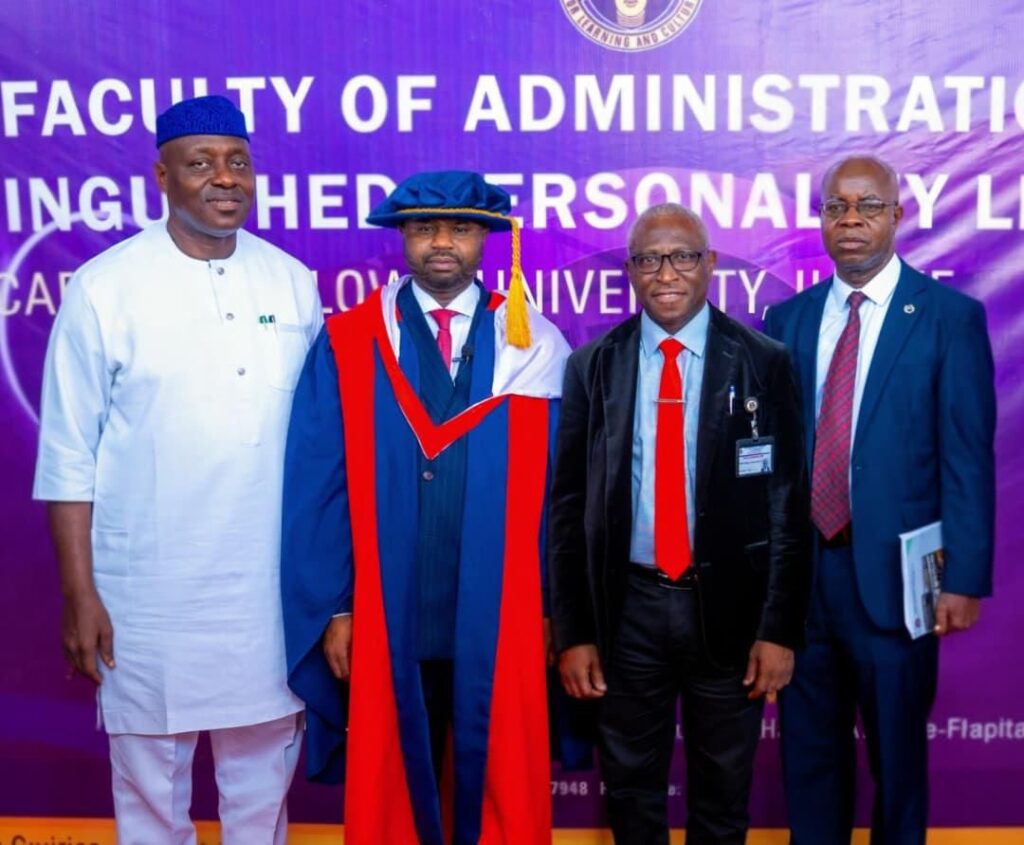
Adedeji made the submission while delivering the maiden distinguished personality lecture of the Faculty of Administration, Obafemi Awolowo University (OAU), Ile-Ife, Osun State, on Thursday.
A statement by his Special Adviser on Media, Dare Adekanmbi, said Adedeji, in the lecture entitled, ‘From Potential to Prosperity: Export-led Economy’, stressed the need to rethink growth through the lens of complexity by not just producing more of the same stuff.
He lamented that Nigeria possesses a high-tech oil sector and low-productivity informal sector as well as lacking “the vibrant, labour-absorbing industrial base that serves as a bridge to higher complexity.”
The NRS boss stated that Nigeria witnessed stagnation in its exportation drive for three decades between 1998 to 2023, and only added six new products in its export basket list between 2008 and 2023.
“Because of our current position, the Harvard Atlas concluded that we are positioned to take advantage of very few opportunities to diversify using what we already know.”
Adedeji urged Nigeria to learn from the world by comparative study of success and failure like Vietnam, Bangladesh, Indonesia, South Africa and Brazil.
“We are not just looking at numbers in a vacuum; we are looking at the strategic choices made by nations like Vietnam, Indonesia, Bangladesh, Brazil, and South Africa over the same twenty-five-year period. While there are many ways to underperform, the path to success is remarkably consistent: it is defined by a clear strategy to build economic complexity.
“When we put these stories together, the divergence is clear. Vietnam used global trade to build a resilient, complex economy, while the others remained dependent on natural resources or a single low-tech niche.
“There are three big lessons here for us in Nigeria as we think about our roadmap. First, avoiding the resource curse is necessary, but it is not enough. You need a proactive strategy to build productive capabilities.
“Vietnam’s success came from integrating itself into Global Value Chains (GVCs). They positioned themselves as the assembly hub for the world’s electronics, importing high-tech parts and exporting finished products.
“This allowed them to “borrow” technology and management skills from abroad to build their own know-how.
“Nigeria, on the other hand, remains a supplier of raw materials to these chains, not an active participant within them. We must realise that productive capabilities are not permanent. The examples of South Africa and Brazil show us that you can actually lose your industrial edge if you are not careful. Over-reliance on the easy path of resource extraction creates economic and political incentives that crowd out the difficult, long-term work of building an industrial base.”
He added that for Nigeria, which is at an even earlier stage of development and even less diversified than these nations, the warning is stark.
“Relying solely on our natural endowments isn’t just a path to stagnation; it’s a path to regression. The global economy increasingly rewards knowledge and complexity, not just what you can dig out of the ground. If we want to move from potential to prosperity, we must stop being just a source of raw materials and start being a source of ideas, innovation, and complex products.
He added that President Bola Tinubu has already begun the difficult work of rebuilding the economy to ensure collective knowledge to innovate, produce and build a resilient economy.
“The journey from potential to prosperity is not a short one, but with the right map and the right resolve, it is a journey we can finally complete,’ he added.

News
Oceangate Engineering To Appeal Federal High Court Ruling over Forfeiture of Assets
Oceangate Engineering Oil & Gas Limited has said it will appeal to the recent ruling of the Federal High Court ordering the forfeiture of certain assets.
Barr. Nnenna Onyeaso, the Company Secretary said in a statement on Thursday insisting that neither the company nor its leadership was found guilty of any wrongdoing.
Onyeaso said that the firm has described the court’s decision as a civil asset forfeiture order based on suspicion rather than proof, stressing that the judgment did not establish any criminal liability against the organisation.

According to her, the company maintain that it has already directed its legal team to file an appeal, expressing confidence in the judicial process and the outcome of a thorough review of the case.
“To be clear, this ruling is a civil asset forfeiture order with no finding of wrongdoing against Oceangate or its leadership.
“The court’s decision rested on a legal standard of suspicion, not proof, and it is one we intend to pursue fully through the appeals process,” she said in a statement.
The firm secretary also said that Oceangate has reiterated its belief in the rule of law, noting that the appellate system exists to address such outcomes.
She added that the company remained confident that the facts of the case will ultimately affirm its integrity and business practices.
Onyeaso said that the firm also emphasised that its operations remained unaffected, stating that it continues to provide employment for many Nigerians while contributing to the country’s energy sector and broader economy.
“We have always believed in the ability of the judicial process, and that belief has not wavered,” she added.
She noted that Oceangate further expressed appreciation to its employees, partners, and clients for their continued support amid the development, assuring stakeholders of its commitment to transparency and accountability.
The Secretary said that the company reaffirmed its confidence in Nigeria as a viable destination for investment, describing the country as a land of equity, growth, and opportunity.
“We remain committed to the continued growth of our business and the communities we serve as we are optimistic that justice will prevail at the end of the legal process.
News
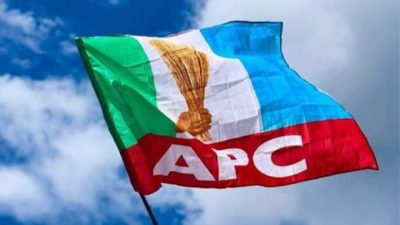
Anti-Party Activities: Rivers APC Takes Disciplinary Action Against Fubara
The Rivers State chapter of the All Progressives Congress (APC) has suspended a prominent member, Fubara Dagogo, following his legal attempts to halt the party’s national convention.
The decision was taken by the Ward 4 Executive Committee after allegations of anti-party activities and gross misconduct were levelled against the party chieftain.
The crisis arose after Dagogo took legal action against the APC over its upcoming national convention.
He approached a Federal High Court in Abuja, requesting an order to halt the party’s planned event.
In his suit, Dagogo alleged that he was unjustly prevented from contesting for the position of National Vice-Chairman (South-South).
Although Dagogo reportedly paid N5.1 million for the nomination form, he claimed the party refused to provide the required documents to formalize his candidacy.
He subsequently petitioned the court to suspend the South-South zonal congress and recognize his eligibility for the position.
Additionally, he sought the nullification of any election conducted without his participation and demanded N100 million in damages for what he described as marginalization.
However, the leadership of his ward in Bonny viewed this legal move as a direct violation of the party’s internal discipline.
The Ward Chairman, Richard Ibani, announced the suspension, stating that the resolution was passed during a committee meeting held on March 16.
The document confirming his removal was signed by the Ward Secretary, Donald Jumbo, and 21 other executive members.
The ward leaders maintained that Dagogo’s actions were an embarrassment to the party and a breach of the APC Constitution 2022 as amended. Specifically, they cited Article 21.2 (I), (II), and (VII), which deal with party discipline and the conduct of members.
In a strongly worded statement, the committee noted that they had previously cautioned members against acts that could ridicule the party.
They stated: “The ward exco has always advised its members to desist from actions capable of ridiculing our party, but your recent actions have shown that you are not willing to respect and abide by the constitution and actions of our great party.”
The suspension is indefinite and took effect immediately.
The ward leadership has also called on the state secretariat to uphold the resolution and apply further necessary actions.
News
Sterling Bank Charts Way Forward For Nigeria’s Transport, Logistics Sector
Industry leaders, policymakers, financiers, and innovators convened in Lagos today for the inaugural Nigeria Transport & Logistics Summit (NTLS) 2026, hosted by Sterling Bank at Eko Hotel & Suites, to forge actionable strategies for building a faster, more connected Nigeria through transport, mobility, and logistics.
Held under the theme “Funding the Engine of Growth,” the summit positioned Nigeria’s transport and logistics sector as a critical but under-leveraged driver of productivity, regional integration, and economic growth. Transport, mobility, and logistics collectively form the backbone of the Nigerian economy, yet chronic underinvestment, infrastructure deficits, and limited access to financing have long constrained its potential.
Transport, mobility, and logistics collectively form the backbone of Nigeria’s economy. While the logistics sub-sector alone contributes approximately ₦1 trillion to national GDP, experts estimate that the broader transport and logistics market exceeds ₦15 trillion in potential value. Yet persistent infrastructure gaps, inefficiencies, financing constraints, and policy fragmentation continue to limit the sector’s full impact.
NTLS 2026 brought together senior government officials, regulators, infrastructure operators, investors, development partners, and private sector leaders to address critical priorities including multimodal connectivity, airport and road modernization, energy-efficient mobility, digital trade facilitation, and innovative financing frameworks.
Speaking at the summit, Sterling Bank’s Managing Director and CEO, Mr. Abubakar Suleiman, represented by Sterling One Foundation CEO, Mrs. Olapeju Ibekwe, called for urgent, coordinated action to fix the systems that move Nigeria’s economy forward.

L-R Olapeju Ibekwe, CEO, Sterling One Foundation; Darlington Nwankwo, Divisional Head, Renewable Energy, Mobility and Tourism, Sterling Bank; Oluwaseun Osiyemi, Honorable Commissioner for Transportation, Lagos State: and Moyomade Akinyosoye, Divisional Head, Institutional Banking, Sterling Bank, at the recently concluded Nigeria Transport and Logistics Summit, hosted by Sterling Bank in Lagos recently.
He emphasized that while Nigeria’s transport and logistics challenges, ranging from port congestion to inefficient corridors and high operating costs, are well documented the real opportunity lies in effective execution.
“We must move beyond diagnosing the problem to building integrated, modern logistics systems that can power productivity at scale. This means fixing our ports, strengthening logistics corridors, improving road and rail connectivity, and embedding efficiency across the value chain.”
“Nigeria’s competitiveness, both regionally and globally will increasingly depend on how effectively we move goods, people, and services. The time for incremental change has passed; what is required now is bold, coordinated execution across public and private sectors,” Abubakar concluded.
Also speaking at the event, the Divisional Head, Renewable Energy, Mobility and Tourism at Sterling Bank, Mr. Darlington Nwankwo, described logistics as the backbone of trade, industry, and national competitiveness.
He noted that while the sector contributes just under four percent to Nigeria’s GDP, estimated at approximately ₦15trillion, its true economic impact is significantly larger when viewed as an enabler of productivity across agriculture, manufacturing, and trade.
“We must be deliberate about fixing the logistics backbone of the economy if we are to unlock the growth we need. Nigeria’s trade competitiveness is directly linked to the efficiency of its logistics corridors, from ports to inland distribution networks.”
“At Sterling, we see our role as connecting capital to execution, designing financing solutions that do not just fund infrastructure but unlock entire value chains. This includes supporting multimodal transport systems, enabling cleaner mobility solutions, and partnering with both government and private sector players to reduce investment risk. The opportunity before us is not just to fix what is broken, but to build a logistics ecosystem that is faster, more efficient, and globally competitive.”
Lagos State Commissioner for Transportation, Mr. Oluwaseun Osiyemi, echoed the call for bold ideas, strategic investments, and forward-looking policies, describing the summit as a vital platform to shape the future of movement, trade, and connectivity in Nigeria. He urged policymakers to move swiftly from planning to implementation, called on investors to support infrastructure and innovation, and encouraged industry leaders to champion efficiency, sustainability, and accountability.
In his keynote address, Professor Biodun Adedipe grounded these ambitions in hard realities, noting that with nearly 90 percent of Nigeria’s logistics dependent on road transport, the country faces mounting congestion and maintenance costs that demand diversification into rail and more durable infrastructure. He cautioned that economic transformation requires patience, with meaningful results unlikely to materialise in under 18 months.
Panel discussions throughout the day focused on reducing logistics costs, strengthening aviation and road integration, modernizing downstream energy distribution, and accelerating the adoption of cleaner and more sustainable mobility solutions.
The summit concluded with a call for sustained public-private collaboration, stronger regulatory coordination, and the creation of structured financing vehicles to de-risk infrastructure investments.
As Nigeria seeks to strengthen its regional trade position and unlock non-oil export growth, NTLS 2026 marks a decisive step toward building a more integrated, resilient, and globally competitive transport and logistics ecosystem.
-
News2 days agoOndo Court Sentences 21-Year-Old Emmanuel Akpan To Death For Employer’s Murder
-
News1 day agoFULL LIST: New UK Visa and Citizenship Costs For Nigerians, Global Applicants
-
News1 day agoTinubu Govt Only Detained El-Rufai Because They Fear Him – Dalung
-
Security & Crime21 hours agoCourt Remands 30-Year-Old For Fatal Stabbing Of Elderly Mother
-
News23 hours agoOgun Nurse Remanded Over Abortion, Murder Of NYSC Member
-
News18 hours agoFuel Price Relief: Dangote Refinery Announces Major Cut
-
News8 hours agoSterling Bank Charts Way Forward For Nigeria’s Transport, Logistics Sector
-
News8 hours agoAnti-Party Activities: Rivers APC Takes Disciplinary Action Against Fubara