
Connect with us

News

Outrage Greets Closure Of Kudirat Abiola Case As Supreme Court Cites Lagos Government’s Abandonment

Published

on

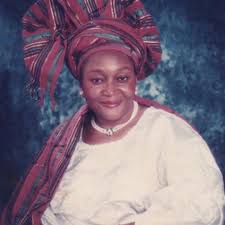
Family, senior advocates and civil society organisations have lashed out at the Lagos State Government over the closure of the murder case of Alhaja Kudirat Abiola by the Supreme Court, after it was established that the state abandoned its appeal against the acquittal of Maj Hamza Al-Mustapha (retd.) for nine years.

The apex court, in a unanimous judgment delivered by a five-man panel on Thursday, ruled that the state government failed to take any legal steps to prosecute its appeal within the period granted to it, thereby effectively abandoning the case.

The ruling sparked national outrage over the unresolved assassination of the wife of the winner of the June 12, 1993 presidential election, the late Chief MKO Abiola.

Kudirat was assassinated in Lagos on June 4, 1996, at the height of nationwide protests against the annulment of the June 12 election by the regime of the late Gen Sani Abacha.

Her killing became one of the most symbolic tragedies of the pro-democracy struggle, representing the extreme measures deployed to silence opposition voices during military rule.

Al-Mustapha, the former Chief Security Officer to Abacha, alongside Mohammed Abacha and Lateef Shofolahan, was arraigned for conspiracy and murder.

On January 30, 2012, a Lagos High Court sentenced the trio to death by hanging.

However, the Court of Appeal, on July 12, 2013, overturned the conviction, citing weak and unreliable evidence, and discharged and acquitted the accused.

Unwilling to accept the verdict at the time, the Lagos State Government approached the Supreme Court in 2014 and was granted leave to appeal out of time.

A seven-man panel led by the then acting Chief Justice of Nigeria, Justice Walter Onnoghen, ordered the state to file its notice of appeal within 30 days, following its claim that it needed time to review the case and challenge the appellate court’s findings.

However, nine years later, when the matter came up again before the Supreme Court, it emerged that the state government had neither filed the required processes nor taken any steps to pursue the appeal.

Delivering the lead judgment, Justice Uwani Aba-Aji described the failure of the Lagos State Government to act as “inexcusable”.

She noted that despite being duly served with hearing notices and being aware of the proceedings since 2020, the state neither entered an appearance nor offered any explanation for its absence.

The court held that nine years was more than sufficient time for the appellant to file the required processes.

Consequently, the appeal marked SC/CR/45/2014 was dismissed, while a related appeal, SC/CR/6/2014, was also struck out on the same grounds.

The ruling effectively brought to an end all legal efforts to reopen the prosecution of Al-Mustapha over the murder of Kudirat Abiola.

This, however, triggered reactions from the Abiola family, human rights groups, civil society actors and senior legal practitioners.

Reacting, the son of the slain activist, Jamiu Abiola, described the abandonment of the case as unjustifiable and painful.

He said that those responsible for her death and those who aided them to evade justice would face divine retribution, describing the nine-year delay as prolonged emotional torture for the family.

Explaining that 2026 marks the 30th anniversary of her assassination, Jamiu said, “This is one of those scenarios in which the more you look, the less you will see, hence speculations here and there. There was no reason for the case to be abandoned.

“My mother fought for democracy and was killed by agents acting on behalf of the military government of Abacha. She was a 44-year-old unarmed woman whose struggle was just.”

Speaking further, he said, “The same God who took Abacha away will punish all the culprits involved in her murder and this prolonged emotional torture of her children, and may God also punish every single person helping these murderers evade justice for any reason.”

A Senior Advocate of Nigeria, Ebun-Olu Adegboruwa, also expressed disappointment, saying the Lagos State Government squandered public trust and resources by failing to follow through on a case that symbolised the struggle for democracy.

“Lagos had been the centre of the struggle for a better nation, and Mrs Kudirat Abiola was at the centre of that struggle. For that woman to die in that way and for the state to abandon the appeal is totally unfortunate,” he said, adding that history would not forgive such an act,” he added.

The Country Director of Amnesty International Nigeria, Isa Sanusi, also faulted the Lagos State Government, describing the Supreme Court ruling as a reflection of institutional failure.

He said, “It is really unfortunate. It means that the Lagos State Government has failed everyone. This is something that the government of Lagos should be ashamed of because the crime took place in Lagos and they have the responsibility to provide all support, all investigation and deploy all resources to make sure that there is justice so that her family will have closure.”

Sanusi called for an independent inquiry into atrocities committed during and after the June 12 struggle and compensation for victims’ families.

Similarly, the Convener of the Youth Rights Campaign in Lagos, Hassan Taiwo, popularly known as Soweto, described the development as “justice denied”.

“This is more or less the final nail in the coffin of June 12. What will follow now is that somebody like Al-Mustapha will even be given a presidential award, and before you know it, he becomes a candidate of major political parties and begins to win elections. Nigeria is a crime scene.”

However, a senior legal practitioner, Victor Okpara, SAN, said criminal prosecution depended largely on the quality of evidence, noting that if the evidence was weak, pursuing an appeal might have been futile.

“Sometimes you might have a good case, but you might not have the evidence. If the investigation is porous, there is very little a lawyer or a judge can do.”

Also, Olusegun Fabunmi, SAN, said changes in government and personnel could have affected the continuity of the case, adding that the state might have reviewed the matter and found no basis to proceed.

But human rights lawyer, Femi Falana, SAN, who in 2022 dragged the Federal Government before the ECOWAS Court of Justice in Abuja on behalf of the Abiola children over the unlawful killing of their mother, said the closure of the appeal did not exhaust the quest for justice.

Falana told Sunday PUNCH, “On June 4, 1986, Mrs Kudirat Abiola was brutally killed in Lagos by gunmen. Barnabas Jabilla Msheila, also known as Sergeant Rogers, a key member of General Abacha’s killer squad, later confessed that it was Major Hamza Al-Mustapha who gave him the gun with which he snuffed life out of Mrs Abiola, the wife of the winner of the 1993 presidential election, MKO Abiola.

“Major Al-Mustapha was tried, found guilty of the cold-blooded murder of Mrs Abiola and sentenced to death by the Lagos State High Court. However, he was freed by the Court of Appeal on the grounds that Sergeant Rogers later recanted and withdrew his confessional statement.

“But in the case of Mohammed Abacha versus The State, the Supreme Court confirmed that it was Al-Mustapha who gave the gun to Rogers for the killing of Kudirat. The justices then wondered why Rogers and others who took part in the murder had not been charged.

“Six years later, I was present at the Oputa Human Rights Panel of Inquiry when Sergeant Rogers again confessed that he gunned down Mrs Abiola on the instruction of Major Al-Mustapha.

“He broke down in tears and expressed regret that he was used to carry out the satanic assignments of killing Kudirat and attempting to assassinate Senator Abraham Adesanya, Chief Alex Ibru, Chief Segun Osoba and others. Till today, he has never withdrawn that oral testimony before the Oputa Panel.

When contacted, the Lagos State Attorney-General and Commissioner for Justice, Mr Lawal Pedro (SAN), said he had just been informed of the ruling and would study the case files before making an official comment.

“I heard of it. It is an old case, and I became Attorney-General in 2023, so I don’t know what has happened, but let me look at the record. It is when I look at the record that I would be able to give you the full details,” he said.

SOURCE

News

Makinde Only In PDP Because He’s Not Seeking Re-election – Otitoju

Published

on

By

Babajide Kolade-Otitoju, the Director of News at TVC News, recently stated that Oyo State Governor Seyi Makinde would likely have defected from the People’s Democratic Party (PDP) if he was still serving his first term.

Otitoju stated this on Friday on TVC’s ‘Breakfast Show’.

He described the National Convention of the Peoples Democratic Party, PDP, in Ibadan last November as a mere waste of time.

“People must show good judgment at a critical phase. What was the point of having that convention? Two courts told you not to go ahead but you went ahead.

“I may not be a fan of former Senate President Bukola Saraki but if he says something that makes sense, I will be the first to admit it. He made sense when he said let’s go for caretaker. What’s the point of not listening to him?

“Later you will be shouting that the ruling party is behind your crisis, meanwhile you are the architect of your own misfortunes. You created this problem.

“If Makinde were in his first term, he would have fled like the dancing governor because his second term would have been in danger,” Otitoju said.

Continue Reading

News

Corruption Probe: Court Grants ICPC Access To Data On El-Rufai’s Seized Gadgets

Published

on

By

The Federal High Court in Abuja has granted the Independent Corrupt Practices and Other Related Offences Commission (ICPC) permission to access and forensically examine about 14 sets of electronic devices seized from the residence of former Kaduna State Governor, Nasir El-Rufai.

Justice Joyce Abdulmalik issued the order yesterday while ruling on an ex-parte motion filed by the ICPC and moved by its lawyer, Dr. Osuobeni Akponimisingha.

The commission said it needed to access the devices for inspection, forensic examination and extraction of data in furtherance of its ongoing investigation of the former governor.

The devices include a Sony HD-EGS storage device, an ITB Transcend storage device, a Toshiba storage device, a Samsung mobile phone, a Nokia mobile phone – N958GB, a Blackberry mobile phone device and a Google IDEOS phone.

Others are a Samsung storage device – SPO802N, a Remarkable tablet, an Apple MacBook Pro – black, a Seagate FreeAgent Desk external drive, a ZTE mobile phone, 10 pieces of flash drives and a Microcell memory card.

Justice Abdulmalik, in the ruling, granted the commission access to the gadgets “for inspection, forensic examination and forensic extraction of data, including public documents, WhatsApp conversations, text messages, pictures, call logs and related information, and to analyse same forensically or otherwise from the said electronic devices which were seized in the course of investigation for the purpose of investigation activity.”

El-Rufai is currently before the same court challenging the search of his house and seeking, among others, N1 billion in compensation.

Listed as respondents in the suit, marked FHC/ABJ/CS/345/2026, are the ICPC; the Chief Magistrate at the Magistrate’s Court of the FCT, Abuja; the Inspector-General of Police (IGP); and the Attorney-General of the Federation (AGF).

El-Rufai is challenging the propriety of the recent search of his Asokoro, Abuja residence by agents of the ICPC, during which some items were recovered.

The former governor, who is seeking a number of reliefs, wants the court to declare that the search warrant issued on February 4 by the Chief Magistrate of the Magistrate’s Court of the FCT (2nd respondent), authorising the search of his residence and seizure of items, was invalid, null and void.

He also wants a declaration that the search warrant is “null and void for lack of particularity, material drafting errors, ambiguity in execution parameters, overbreadth and absence of probable cause, thereby constituting an unlawful and unreasonable search in violation of Section 37 of the Constitution.”

El-Rufai is urging the court to declare that the alleged invasion and search of his residence at House 12, Mambilla Street, Aso Drive, Abuja, on February 19 at about 2 pm by agents of the ICPC and the IGP, who were armed with the said warrant, amounted to a gross violation of his rights to dignity of the human person, personal liberty, fair hearing and privacy under Sections 34, 35, 36 and 37 of the Constitution.

He is also asking the court to award N1,000,000,000.00 (one billion naira) “as general, exemplary and aggravated damages against the respondents jointly and severally for the violations of the applicant’s fundamental rights, including trespass, unlawful seizure and the resultant psychological trauma, humiliation, distress, infringement of privacy and reputational harm.”

He contends that the search warrant was fundamentally defective, lacking specificity in the description of items to be seized, containing material typographical errors, ambiguous execution terms, overbroad directives and no verifiable probable cause.

He argued that the lack of specificity in the warrant contravenes Sections 143–148 of the Administration of Criminal Justice Act 2015, Section 36 of the ICPC Act 2000 and constitutional protections against arbitrary intrusions.

According to him, Section 143 of the ACJA requires that an application for a search warrant be supported by information in writing and on oath, setting forth reasonable grounds for suspicion, which he said was absent in this case, as evidenced by the incomplete initiating clause.

He said Section 144 mandates particular descriptions of the place to be searched and the items sought to prevent general warrants, adding that the search was conducted without legal justification and in a manner that inflicted humiliation and distress.

El-Rufai further argued that execution of the said invalid warrant on February 19 resulted in an unlawful invasion of his premises, constituting violations of the rights to dignity (Section 34), personal liberty (Section 35), fair hearing (Section 36) and privacy (Section 37) of the Constitution.


Continue Reading

News

Beyond My Wildest Dreams: Disu Opens Up During Handover From Egbetokun

Published

on

By

The Inspector-General of Police, Olatunji Disu, on Thursday paid glowing tribute to his predecessor, Kayode Egbetokun, recalling their early professional relationship while serving under President Bola Tinubu during his tenure as governor of Lagos State.

During the pulling-out ceremony held in honour of Egbetokun at the Force Headquarters in Abuja, marking the retirement of the former police chief, the new Inspector-General of Police (IGP), Olatunji Disu, reflected on his unexpected rise to the position, stating that he “never dreamed” of becoming the IG.

In his remarks, Disu described Egbetokun’s career as one marked by dedication, professionalism and strong leadership, noting that a defining chapter in the former IG’s career was his service as Chief Security Officer to the Lagos State Governor at a time when Tinubu was in office.

He said it was during that period that their professional paths first intersected.

“A defining chapter in his professional life was his service in Lagos State Government House, where he served as Chief Security Officer to the Governor of Lagos State, at a time when His Excellency, Senator Bola Tinubu, now President of the Federal Republic of Nigeria, was Governor.

“It was during that period that our professional paths intersected in a most memorable way.

“While IGP Egbetokun (retd.) served as Chief Security Officer to the governor, I had the honour of serving as Aide-de-Camp to the same governor.

“Working together under demanding circumstances, we shared the responsibility of ensuring the safety and security of the Governor and the Government of Lagos State,” Disu said.

The police chief said neither of them could have imagined at the time that years later, Egbetokun would rise to become the Inspector General of Police and that he would eventually succeed him in the same office.

According to him, the development reflected how years of service and dedication sometimes align in unexpected ways.

“At that time, neither of us could have imagined that years later, destiny would place him at the helm of the Nigeria Police Force as Inspector General of Police, and that I would have the honour of succeeding him in that office.

“It is indeed one of those remarkable coincidences of history that reminds us how the threads of service sometimes weave themselves across time in unexpected ways,” he said.

Disu noted that throughout his career, Egbetokun rose steadily through the ranks, serving in various command, operational and training capacities across the country.

He highlighted Egbetokun’s leadership roles, including commanding the Rapid Response Squad in Lagos, Police Mobile Force operations, and serving as Area Commander in Osogbo and Gusau.

The IGP also commended Egbetokun’s contributions to police training and capacity development, citing his service as Commandant of the Police Training School, Ikeja, and later as Deputy Commandant of the Police College, Ikeja.

He said Egbetokun’s tenure as Inspector General was guided by a vision to build a professionally competent, service-driven, rule-of-law-compliant and people-friendly police force.

According to him, the former police chief implemented reforms to strengthen operational efficiency, enhance professionalism, improve personnel development, and deepen public trust in policing.

Disu added that Egbetokun emphasised intelligence-driven policing, strengthened training and reinforced institutional values such as discipline, accountability and service.

He further noted that Egbetokun’s leadership style, characterised by calmness, intellectual depth, and strategic foresight, helped guide the Nigeria Police Force through complex security challenges during his tenure.

In his speech, Egbetokun highlighted key reforms and institutional improvements achieved during his tenure as the Inspector-General of Police.

According to him, his administration pursued reforms to reinforce professionalism, promote merit-based advancement, and strengthen intelligence-led policing.

He noted that as part of the reforms, the Intelligence Bureau was expanded and upgraded to a full department headed by a Deputy Inspector-General of Police, while the Legal and Medical units were elevated to directorate status to improve institutional efficiency and service delivery.

Egbetokun also said the Force further developed its cybercrime centre into a sophisticated facility capable of monitoring Nigeria’s cyberspace and supporting modern investigations.

He added that investigative and operational capacity was strengthened through improvements to the National Criminal Database and enhanced professional training for operators across commands up to the divisional level.

The former police chief said operational presence was expanded through the establishment of additional Police Mobile Force squadrons, new Area Commands and Divisions, as well as the creation of the Special Intervention Squad, which he said had recorded notable successes across the country.

He also said progress was made in improving police infrastructure, including the completion of barracks redevelopment projects in Kano and Kaduna and the commissioning of modern state command headquarters in Ogun and Adamawa states.

Egbetokun, who was appointed on June 19, 2023, by President Tinubu, resigned on February 24, paving the way for the appointment of Disu.

In 2024, the IG’s continued stay in office sparked widespread controversy after Egbetokun officially reached the mandatory retirement age of 60 on September 4.

However, his stay in office was extended following the amendment to the Police Act.

Continue Reading

Trending