
News
U.S. Lawmakers Propose Sanctions On 12 Nigerian Governors Over Religious Freedom Concerns
A major diplomatic row is brewing between Nigeria and the United States as the US Congress considers a bill seeking to impose sanctions on 12 northern governors, traditional rulers, and senior judges accused of complicity in what American lawmakers describe as “Christian genocide” and religious persecution under Nigeria’s Sharia and blasphemy laws.
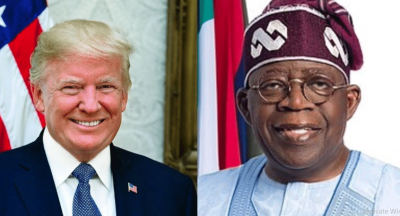
The development follows US President, Donald Trump’s, recent decision to redesignate Nigeria as a “Country of Particular Concern (CPC)” for alleged systemic violations of religious freedom.
In a post on Truth Social on Friday, Trump lamented what he called the “mass killing of Christians” in Nigeria and directed Congressman Riley Moore, Chairman Tom Cole, and the House Appropriations Committee to investigate and report back to him immediately.
“Thousands of Christians are being killed in Nigeria. Radical Islamists are responsible for this mass slaughter. America cannot fold its hands while these atrocities continue,” Trump said.
At the heart of the controversy is a bill titled the Nigeria Religious Freedom Accountability Act of 2025, sponsored by Republican Senator Ted Cruz.
The bill formally designates Nigeria as a Country of Particular Concern and seeks direct sanctions against public officials and religious authorities accused of promoting or tolerating attacks on Christians and other religious minorities.
Under the proposal, the US Secretary of State would, within 90 days of the bill’s passage, submit a list of Nigerian officials, including governors, judges, and monarchs, who have “promoted, enacted, or maintained blasphemy laws” or “tolerated violence by non-state actors invoking religious justification.”
Those named could face penalties under Executive Order 13818, the Global Magnitsky Human Rights Accountability framework, including visa bans, asset freezes, and financial restrictions.
Northern States In Focus
The bill targets states where Sharia-based penal codes have been enacted, beginning with Zamfara State under then-Governor Ahmad Sani Yerima in 1999.
Within two years, 11 other northern states, Kano, Sokoto, Katsina, Bauchi, Borno, Jigawa, Kebbi, Yobe, Kaduna, Niger, and Gombe, adopted similar Sharia legal frameworks.
The system expanded Sharia’s jurisdiction from personal and family law to criminal and public morality, creating parallel Islamic courts alongside secular ones.
In contrast, states like Kwara, Kogi, Benue, Nasarawa, Taraba, and Adamawa still operate under conventional law, restricting Sharia to personal matters such as marriage, inheritance, and family disputes.
Tensions flared recently when the Supreme Council for Sharia announced plans to set up offices in Oyo and Ogun States, both in southern Nigeria.
The announcement triggered public uproar and clashes between Muslim and Christian groups before the council clarified that the move was to establish arbitration panels for Muslim-related disputes, not formal Sharia courts.
While defending the bill before the Senate, Senator Cruz accused Nigerian authorities of turning a blind eye to religious violence and institutionalising discriminatory laws.
He said, “Religious persecution and violence against Christians and other minorities in Nigeria is endemic.
“Since 2009, over 52,000 Christians have been murdered, 20,000 churches and faith institutions destroyed, and dozens of villages wiped out. The federal and state governments have failed to act, and in many cases, they are complicit.”
The senator alleged that the implementation of Sharia law since 2000 had emboldened extremist groups and legalised persecution under the guise of religious morality.
The proposed US legislation also criticises Nigeria’s blasphemy provisions, which exist in nearly all northern legal codes.
States such as Kano, Bauchi, Sokoto, and Katsina have drawn global attention for issuing death sentences over alleged blasphemy, including cases involving minors and musicians accused of “insulting Islam.”
News
Terror Surge: Tinubu Demands Results from Security Chiefs
President Bola Tinubu met with security chiefs, including Tunji Disu, the inspector-general of police (IGP) in a closed-door session on Thursday to address a series of “rising terror attacks” across the country.
The meeting followed an escalation in violence, including recent deadly raids in Benue, Plateau, and Borno states.
The nearly two-hour meeting, held at the State House in Abuja, began in the afternoon after the security chiefs arrived discreetly and ended around 5:10 p.m.
Those in attendance included Christopher Musa, minister of defence; Nuhu Ribadu, national security adviser (NSA); Adeola Ajayi, the director-general of the Department of State Services (DSS); and Olufemi Oluyede, chief of defence staff (CDS).
Others were Waidi Shaibu, the chief of army staff; Kelvin Aneke, chief of air staff; and Idi Abbas, chief of naval staff.
As of the time of filing this report, details of the meeting had yet to be issued by the presidency.
However, there are indications that the sit-down may centre around the rising terror attacks and intensified assaults on military outposts across Nigeria, particularly in the north-east, which culminated in the recent killing of several high-ranking officers.
On Monday, a commanding officer of the Nigerian Army was killed following an attack by suspected fighters of the Islamic State West Africa Province (ISWAP) on a military base in Kukawa, Borno state.
The attack came about a week after suspected Boko Haram and ISWAP fighters attempted to attack military positions in Ngoshe, Gwoza LGA of Borno.
On Tuesday, Nigerian troops repelled an early-morning attack by suspected ISWAP fighters on a military base in Doron Baga, Kukawa LGA of the state.
Speaking during an interfaith breaking of the fast with members of the Nigerian Armed Forces at the presidential villa in Abuja last Friday, Tinubu said the country would “ultimately prevail against all forms” of insecurity.
The president said the efforts of the security forces had continued to weaken terrorist groups and bandits operating in different parts of the country.
He assured the armed forces of continued investment in modern equipment, intelligence, and logistics to strengthen their operational effectiveness.
News
2027 Shakeup: 12 Lawmakers Defect To APC, ADC
In a major political shake-up on Thursday,12 members of the House of Representatives formally defected from their various political parties to the All Progressives Congress (APC) and the African Democratic Congress (ADC).
The Deputy Speaker, Benjamin Kalu, announced the defections during a plenary session, citing internal party crises and leadership disputes as the primary reasons for the lawmakers’ exit.
Of the 12 lawmakers who defected, six left the Peoples Democratic Party for the APC. Five members abandoned the Labour Party and the PDP for the ADC, while one member moved from the Young Progressives Party to the ADC.
The development has heightened concerns about growing instability within political parties ahead of the 2027 general elections.
Those who defected from the PDP to the APC are James Barka (Adamawa), Kwamoti Bitrus Laori (Adamawa), Zakaria Nyampa (Adamawa), Kobis Thimnu (Adamawa), Midala Balami (Borno), and Mohammed Bargaja (Sokoto).
Lawmakers who defected to the ADC include Afam Victor Ogene (Anambra), Peter Aniekwe (Anambra), Lilian Orogbu (Anambra), Jessey Onakalusi (Lagos), and Murphy Osaro Omoruyi (Edo).
The Deputy Speaker of the House, Benjamin Kalu, who presided over plenary, disclosed that some other members had also written to the leadership of the House notifying it of their intention to leave their current parties.
He, however, said the letters and the destination parties of the lawmakers would not be disclosed in their absence.
While announcing the names of the defectors, Kalu said the reasons given by the lawmakers were similar to those previously cited by others who had defected. He added that the House would not read the letters during the session in order to save time.
According to him, the letters would only be read when the concerned lawmakers are present on the floor of the House.
During Wednesday’s plenary, Garba Inuwa and Abdullahi El-Rasheed from Gombe, as well as Mohammed Audu (Taraba) and Joshua Obika (FCT), defected to the APC, while Adewale Adebayo (Osun) left the PDP for the Accord Party.
News
World War III Fears: Zelensky Reveals Warning To Trump
In a series of tense exchanges spanning late 2025 and early 2026, Ukrainian President, Volodymyr Zelensky has repeatedly warned Donald Trump and the international community that Russia’s invasion of Ukraine has already escalated into the beginning of World War III due to Russian aggression and its growing alliances.
While Zelensky has warned that Vladimir Putin’s actions are dragging the world into a global conflict, Trump has frequently flipped this narrative, accusing Zelensky of “gambling with World War Three” by refusing to make immediate concessions for a peace deal.
“I said that we would have World War III. The President (Trump) didn’t hear me…him with his guys,” Zelensky said in a televised interview on Wednesday.
“I’m not sure they (the United States) can estimate that Russia will support Iran with weapons, drones, and missiles. And—100 percent—it’s helping now with air defense.”
Pointing to the situation in his country, Zelensky said the next stage of the Iranian war could be troop deployment, saying there are 10,000 North Korean soldiers currently in Russia.
“Yes, they are on the territory of Russia, but they can come to Ukraine,” he presumed. “It can be the same with Iran; Russia can send troops.”
Zelensky said countries in the Middle East have remained neutral on the Ukrainian conflict because of their long history of economic relations with Moscow.
“They understand Russia is the aggressor but are not loud about it or strong on sanctions,” he said. “Now they are beginning to understand what it means to live under attacks.”
Reports in Western media suggest Russia is sharing drone warfare strategy learned in Ukraine with Iran, potentially boosting Tehran’s ability to hit U.S. and Gulf interests in the Middle East.
The war, now on Day 13, has affected at least a dozen countries, with no ceasefire indication in sight. The U.S. has struck thousands of targets and has not indicated boots on the ground.
“They (Iran) are pretty much at the end of the line,” President Trump said Wednesday night. “It doesn’t mean we’re going to end it immediately.”