
Connect with us

News

Lagos APC, GAC In Dilemma Over Seyi Tinubu’s Rumoured 2027 Guber Ambition

Published

on

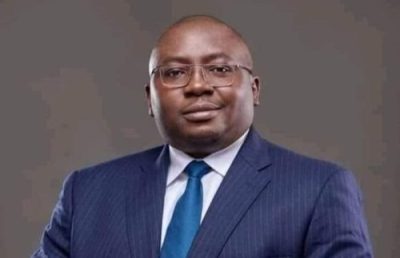
Tensions are reportedly growing within the Lagos chapter of the All Progressives Congress, APC, and its influential Governance Advisory Council, GAC, over the rumoured governorship ambition of Seyi Tinubu, son of President Bola Ahmed Tinubu.

At just 39 years old, Seyi Tinubu is being tipped by several youths and diaspora groups as the next ideal candidate to lead Lagos State.

His endorsements from the Coalition of Nigerian Youth Leaders, The Future Platform, and some Nigerian communities abroad have given wind to speculation that he may soon throw his hat into the governorship race.

Although he has yet to make a formal declaration, insiders say underground efforts to lobby for his candidacy are already in full gear.

If Seyi Tinubu, 39, emerges as governor in 2027, he would set a new record as the youngest person to lead Lagos State since its creation in 1967.

Currently, that record is held by Babatunde Fashola, who became governor at age 43 in 2007.

But far from being met with a resounding welcome, the development has placed the party and its leadership in a difficult position.

The GAC, a 30-man powerful and highly influential political organ founded by President Tinubu himself when he was governor in 1999, is reportedly divided over the prospect of Seyi emerging as the APC’s governorship flag bearer.

The group, headed by Prince Tajudeen Olusi, has 30 members, including ex-governors, ex-deputy governors, ex-speakers, former and incumbent senators as well as elder statesmen and women.

Since Tinubu’s exit as governor in 2007, the GAC has operated as the unseen hand behind Lagos’ political machinery, often deciding who gets what within the state’s structure.

It was instrumental in the emergence of former governors Babatunde Fashola and Akinwunmi Ambode and later Governor Babajide Sanwo-Olu.

However, the possibility of Seyi Tinubu stepping into the frame has raised questions about political dynasty, merit and the direction of the party in the country’s most strategic state.

DAILY POST observed that some stakeholders are worried that fielding Seyi, who lacks any track record of political office, could backfire, especially with Lagos being a politically sophisticated and economically complex state.

Critics argue that his only known role so far is as CEO of Loatsad Promomedia Ltd, an outdoor advertising firm.

For a state of over 20 million people and massive infrastructural needs, many within the APC question whether youthful energy alone is enough to handle such a task.

One senior party source from Oshodi-Isolo, described the move as “political arrogance.”

He suggested that it would send the wrong message for the president’s son to govern Lagos while his father seeks re-election in 2027.

“It would feel like dictatorship, not democracy. We risk alienating the electorate,” the source said.

Others, however, strongly disagree.

They pointed to global and local political dynasties to support their argument.

A pro-Seyi supporter, Laken Agbaje, from Alimosho, cited examples like the Philippines, where Ferdinand Marcos Sr was president while his son served as governor and the United States, where George W. Bush governed Texas after his father, George H. W. Bush, served as president.

They also referenced the Saraki family of Kwara State, where both father and son held the governor’s seat at different times.

“Seyi is a constitutional Nigerian with political rights. If the people want him and the party clears him, why not?” the APC chieftain said, while noting that Seyi enjoys significant goodwill among Lagos youth and digital-savvy voters.

Following the growing push for Seyi Tinubu’s governorship candidacy, sources indicate that he is strategically positioning some of his loyalists to contest for key positions, including chairman roles, in the upcoming local government elections in Lagos State.

This move has sparked concern among residents, who have raised alarms over what they described as “undue interference” in the electoral process.

In the 2023 presidential election, President Bola Tinubu lost Lagos State to Peter Obi of the Labour Party, a development many interpreted as a warning sign of waning political dominance in his traditional stronghold.

This, observers believe, could be further compounded if Seyi Tinubu emerges as the APC governorship candidate, as such a move may deepen voter resentment and hinder the party’s chances of reclaiming broad support across the state.

Still, for many party loyalists, the issue is not only about political dynasty or competence, but fairness and equity.

Lagos State is divided into five administrative districts known as IBILE: Ikorodu, Badagry, Ikeja, Lagos Island and Epe.

The last four governors of the state, including Tinubu, Fashola, Ambode and Sanwo-Olu, have hailed from Lagos Island and Epe.

In fact, Alhaji Lateef Jakande, the first civil governor of the state also claimed to be a native of Lagos Island.

This leaves Ikorodu, Badagry and Ikeja without representation at the top.

The clamour for zoning has gained traction, with many party members arguing that it is high time the governorship seat rotated to other underrepresented districts, particularly Ikorodu or Badagry.

It was gathered that during a recent meeting in Epe, the issue of Seyi Tinubu’s potential governorship ambition came up among Lagos APC stakeholders.

However, the matter was quickly flagged and set aside, as Seyi has yet to officially declare his intentions to the party or its key stakeholders.

This has left many in the party uncertain about how to proceed, with some urging caution until Seyi formally makes his move.

However, DAILY POST learnt that a faction within the party is silently backing Babajimi Benson, a member of the House of Representatives, representing the Ikorodu Federal Constituency as the next governor of the state.

Another top APC source, who spoke on the condition of anonymity, said, “The GAC and APC stakeholders are increasingly worried over Tinubu’s silence on the growing calls for his son’s governorship bid.

“The lack of clarity is creating a sense of uncertainty within the party and many of us are unsure how to proceed without guidance from the president himself.”

 

News

Union Bank Of Nigeria Marks International Women’s Month 2026 With Inclusion-First “Give to Gain” Campaign

Published

on

By

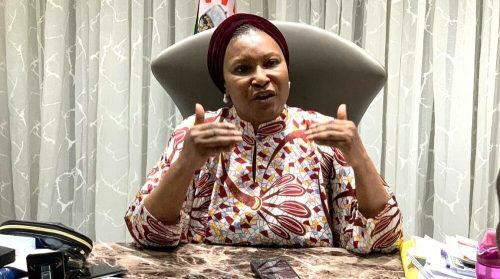
In observance of International Women’s Month 2026, Union Bank of Nigeria reaffirms its commitment to gender equity through a focused initiative centred on women living with disabilities and women raising children with disabilities.

Aligned with the global theme “Give to Gain,” the Bank’s campaign “Give to Gain: Creating Pathways for Inclusion and Endless Opportunities” centres the lived experiences of women living with disabilities and underscores the need for intentional systems of support for social and economic advancement.

Throughout March, Union Bank will implement targeted initiatives to expand access, foster inclusion, and unlock sustainable opportunities. Activities include a flagship event which held at

The Stable, its multipurpose venue in Surulere, Lagos, on Saturday. The event convened women with disabilities, caregivers, supporting organisations, and advocates for dialogue, mentorship, and resource sharing.

L-R: Chief Talent Officer, Union Bank of Nigeria, Omayuli Wale-Ajayi; Head, Corporate Banking, Union Bank of Nigeria, Ali Kadiri; Head, Retail and SME Business, Union Bank of Nigeria, Vivian Imoh-Ita; Founder/Executive Director, Deaf International Foundation, Funmilola Ogunro; MD/CEO, Union Bank of Nigeria, Yetunde Oni; SouthWest Coordinator, Nigeria Association of the Blind, Adenike Olorundare; Women Leader, Lagos Chapter, Nigeria Association of the Blind, Olubukola Salako; Executive Director, Corporate Bank & Business Banking Lagos & West, Union Bank of Nigeria, Taiwo Shote; Chief Brand and Marketing Officer, Union Bank of Nigeria, Olufunmilola Aluko; Regional Executive, Business Banking SouthWest and Lagos, Union Bank of Nigeria, Emmanuel Aihevba, and Lead Innovation, Events and Platform Management, Union Bank of Nigeria, Chiamaka Moses during the Bank’s commemoration of International Women’s Day 2026 at the Stable, Surulere, Lagos recently.

Complementary efforts include outreach to disability support facilities and collaboration with educational institutions to distribute learning materials to female students with disabilities. Tailored mentorship programmes will build confidence and capability in education, entrepreneurship, and careers. Through its women’s banking proposition alpher and strategic partnerships, the Bank will also deliver business sustainability training specifically designed for women living with disabilities and women raising children with disabilities.
Internally, Union Bank will activate WeHub — its employee-led women’s network — to strengthen inclusive culture and support professional growth across the organisation.

These actions reflect Union Bank’s long-standing commitment to advancing equity for underserved communities — and align with the United Nations Sustainable Development Goals 5 (Gender Equality) and 10 (Reduced Inequalities). For Union Bank, these are not frameworks to cite; they are commitments to live out.

Olufunmilola Aluko, Chief Brand and Marketing Officer, Union Bank of Nigeria, stated that “At Union Bank, inclusion is not an abstract ideal; it is a deliberate choice. While many conversations around women’s empowerment are important and necessary, women living with disabilities and women raising children with disabilities are too often left out entirely. This year’s theme, ‘Give to Gain,’ reflects exactly what we believe: that when we intentionally open access, support, and opportunity to these women, the value created extends to families, communities, and society at large.”

Union Bank’s IWD 2026 campaign is a statement of intent: that true inclusion requires us to go further, reach deeper, and serve those who have waited longest for a seat at the table. In 2026, Union Bank is committed to ensuring that a seat exists — and that it is built to last.

Continue Reading

News

Just In: Dangote Refinery Announces Petrol, Diesel Price Reduction

Published

on

By

The Dangote Petroleum Refinery officially reduced its gantry prices for petrol (PMS) and diesel (AGO) following a series of price hikes earlier in the week.

According to a new pricing template released by the refinery on March 10, 2026, the gantry price of petrol has been reduced by N100, dropping from N1,175 to N1,075 per litre.

The refinery also stated that the price of PMS for coastal supply will now be N1,050 per litre. The difference in price reflects additional costs linked to maritime distribution.

Similarly, the price of Automotive Gas Oil (diesel) has been reduced to N1,430 per litre at the gantry, down from the previous N1,620 per litre. This represents a decrease of N190 per litre.

The refinery noted that these gantry prices do not include regulatory charges from the Nigerian Midstream and Downstream Petroleum Regulatory Authority (NMDPRA).

Meanwhile, JomogNews earlier reported on Monday that Dangote Petroleum Refinery raised its gantry PMS price to N1,175 per litre — the third upward adjustment in seven days

The refinery communicated the new ex-depot price to marketers and depot operators, up ₦180 from the N995 per litre announced last week Friday, an 18.1 per cent increase in three days.


Continue Reading

News

Drama At Rivers Assembly Over Nominee’s ‘I don’t pay tax’ Statement

Published

on

By

A video circulating online has captured a tense moment during the screening of commissioner nominees submitted by Governor Siminalayi Fubara to the Rivers State House of Assembly.

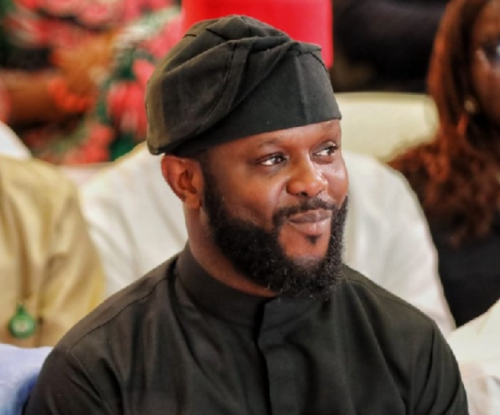
The footage seen shows the Speaker of the Assembly, Martin Amaewhule, questioning one of the nominees, Charity Deemua, over the status of her tax clearance certificate.

During the screening of commissioner nominees, the Rivers State House of Assembly rejected nominee Charity Deemua after she claimed that as a politician, she did not pay taxes.

Speaker Martin Amaewhule and other lawmakers expressed shock at the statement, leading to the rejection of her nomination along with three others due to lack of tax compliance.

During the screening session, Amaewhule pointed out that the nominee’s tax clearance appeared outdated.

“I just wanted to know, so there’s no current tax clearance. Madam has not been paying tax since 2018. I just wanted to know if she’s been exempted from paying taxes. So let her tell us now,” the Speaker said.

Responding, Deemua explained that she had not had a steady source of income in recent years.

“Like I said before, I’m a politician, I don’t have work,” she stated.

When asked to clarify her employment history, Deemua told the lawmakers that she had previously served briefly in government.

“I was a member, a commissioner in the Rivers State House of Assembly Service Commission,” she said.

Amaewhule then pressed further about her role in a local government caretaker committee.

“When were you? Hold on… local government caretaker committee member, right?” the Speaker asked.

“I was just three months there,” Deemua replied.

“When? When was that?” Amaewhule asked.

“And I think November last year,” she responded.

“November when? What year?” the Speaker asked again.

“2025,” she answered.

The Speaker then questioned whether she earned income during that period.

“You were not paid salary? Were you not paid salary?” Amaewhule asked.

“In the caretaker committee, we were paid,” Deemua admitted.

“You were paid? Yes. Is that not income? But you said you have not had any income from 2018 to date as a politician. So no tax clearance, and that’s what you are telling Rivers people. Madam, that is not nice. You are misleading the 10th Rivers State House of Assembly,” Amaewhule said.

In response, Deemua apologised and suggested she could address the issue.

“I’m sorry, Mr. Speaker. But I think I can still go back for…,” she began before being interrupted.

“No, but you say you have not had any income now,” Amaewhule replied before moving on to the next nominee.

The video of the exchange has since drawn reactions online, with many Nigerians asking that if politicians say they don’t work, what exactly are taxpayers paying for.

See video:


Continue Reading

Trending