
Connect with us

News

NNPC Removes MDs Of Port Harcourt, Warri, Kaduna Refineries In Major Shake-Up

Published

on

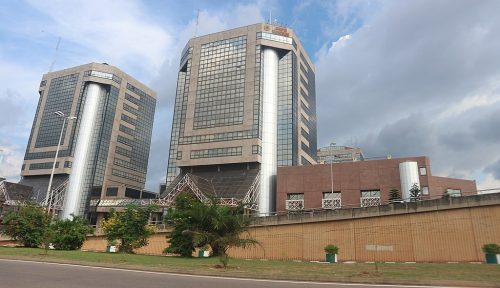
The new management of the Nigerian National Petroleum Company Limited has fired the managing directors of the three refineries under the purview of NNPCL.

The refineries include the Port Harcourt Refining Company, Warri Refining and Petrochemical Company, and the Kaduna Refining and Petrochemical Company.

Some other senior officials of the national oil firm were also asked to leave, among them is Bala Wunti, a former chief of the National Petroleum Investment Management Services, a subsidiary of NNPCL.

The new management also asked many officials with one year to their various retirement dates to leave.

Although the company’s spokesperson, Olufemi Soneye, did not respond to enquiries on the matter when contacted, multiple impeccable sources at the firm familiar with development confirmed the shakeup by the new management team.

Recall that President Bola Tinubu, in a sudden move on April 2, 2025, sacked the former NNPCL Group Chief Executive Officer, Mele Kyari, and other board members of the national oil company, as part of a broader overhaul to boost Nigeria’s crude and gas output. Kyari had been at the helm of the national oil company since 2019.

Sources at the Presidency had told The PUNCH that the sack of Kyari and those affected at the time stemmed from mounting concern over performance and a failure to meet key production targets.

They said the shake-up was a performance-based reshuffle, arguing that those previously in charge “were going in circles” and some of them had “become part of the problem, rather than the solution.”

One official, who spoke on condition of anonymity because he was not authorised to speak on the matter officially, told our correspondent, “The President did this because of their performance, because we needed to do things differently. The former people were taking us in circles, and then some of them became part of the problem.

“There needs to be a new direction. You need new people to bring new energy into the system. Look at them. Every one of them is capable. They are core industry professionals, real industry experts who know the industry inside and out. They are not politicians. This is the first time we have an entire cast of technocrats.”

Another official said, “It is not about (Kyari’s) age. The NNPCL is a limited liability company and is not governed by civil service rules. So, it’s not about his age. There is always a need to get new brains that can deliver in new directions. The President has his mandate, which is clearly stated in the statement. He gave them his performance metrics, such as the amount of crude we produce. He asked them to review all blocks because we want to know which ones are producing and which are not.

“We have to optimise those that are not producing. He wants them to review all our assets within a certain period and give us good production. By 2030, they must be producing 3,000,000 barrels per day, and between now and 2027, we must stabilise at 2,000,000 per day. Then, gas, we must produce 10 billion cubic meters between now and 2030. These are performance metrics, and that is how it should be done.

“But the former system was not giving us that. They have been around the same spot for years. Our OPEC quota has not improved much since 1973. We have not been able to meet them. That is why reforms are important.”

In the statement issued at midnight by the presidency, Tinubu also appointed the new 11-man board with Bayo Ojulari as the Group CEO and Musa Ahmadu-Kida as non-executive chairman.

Ojulari, the new NNPC Limited Group CEO, hails from Kwara State. Until his new appointment, he was Executive Vice President and Chief Operating Officer of Renaissance Africa Energy Company. His Renaissance recently led a consortium of indigenous energy firms in the landmark acquisition of the entire equity holding in the Shell Petroleum Development Company of Nigeria, worth $2.4bn.

Speaking on the latest shakeup that swept the managers of the three refineries under NNPCL management, a source at the company, who spoke to one of our correspondents in confidence due to a lack of authorisation to speak on the matter, said, “The three MDs have been asked to leave.

“They include the MDs of Port Harcourt Refining Company, Kaduna Refining and Petrochemical Company, and the Warri Refining and Petrochemical Company. Some other senior managers were asked to leave as well.”

Another official at the company confirmed this, stating that “Bala Wunti was also affected. Several of them who have a year to retirement were asked to go. Maryam Idrisu was appointed Managing Director of NNPC Trading.” NNPC Trading is the subsidiary responsible for all crude oil transactions.

Soneye still didn’t respond to inquiries or give official confirmation on the issue, as questions sent to his WhatsApp line were not answered. However, it was gathered that the continued poor performance of the refineries contributed to the exit of the managing directors.

On Tuesday, The PUNCH exclusively reported that the NNPCL came under fire as the $897m Warri refinery revamp flopped. The report also stated that the Port Harcourt refinery had been struggling at under 40 per cent. production capacity

Industry operators and experts questioned the operational integrity of the Nigerian National Petroleum Company Limited, particularly regarding transparency, efficiency, and overall management of Nigeria’s refineries under its purview.

This was after the revelation that the Warri Refining and Petrochemical Company has remained shut since January 25, 2025, due to safety issues in its Crude Distillation Unit Main Heater.

An April 2025 document on the Midstream and Downstream sector obtained from the Nigerian Midstream and Downstream Petroleum Regulatory Authority revealed that the refinery, which consumed $897.6m in maintenance costs, failed to produce Premium Motor Spirit (petrol) and was shut down barely a month after former NNPCL boss, Kyari, declared it operational.

Industry operators and experts described this as disheartening, while further findings showed that the Port Harcourt Refining Company, which resumed operations in November 2024, had been operating below 40 per cent capacity.
News

Makinde Only In PDP Because He’s Not Seeking Re-election – Otitoju

Published

on

By

Babajide Kolade-Otitoju, the Director of News at TVC News, recently stated that Oyo State Governor Seyi Makinde would likely have defected from the People’s Democratic Party (PDP) if he was still serving his first term.

Otitoju stated this on Friday on TVC’s ‘Breakfast Show’.

He described the National Convention of the Peoples Democratic Party, PDP, in Ibadan last November as a mere waste of time.

“People must show good judgment at a critical phase. What was the point of having that convention? Two courts told you not to go ahead but you went ahead.

“I may not be a fan of former Senate President Bukola Saraki but if he says something that makes sense, I will be the first to admit it. He made sense when he said let’s go for caretaker. What’s the point of not listening to him?

“Later you will be shouting that the ruling party is behind your crisis, meanwhile you are the architect of your own misfortunes. You created this problem.

“If Makinde were in his first term, he would have fled like the dancing governor because his second term would have been in danger,” Otitoju said.

Continue Reading

News

Beyond My Wildest Dreams: Disu Opens Up During Handover From Egbetokun

Published

on

By

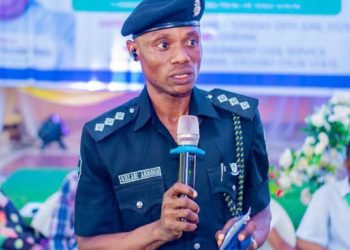
The Inspector-General of Police, Olatunji Disu, on Thursday paid glowing tribute to his predecessor, Kayode Egbetokun, recalling their early professional relationship while serving under President Bola Tinubu during his tenure as governor of Lagos State.

During the pulling-out ceremony held in honour of Egbetokun at the Force Headquarters in Abuja, marking the retirement of the former police chief, the new Inspector-General of Police (IGP), Olatunji Disu, reflected on his unexpected rise to the position, stating that he “never dreamed” of becoming the IG.

In his remarks, Disu described Egbetokun’s career as one marked by dedication, professionalism and strong leadership, noting that a defining chapter in the former IG’s career was his service as Chief Security Officer to the Lagos State Governor at a time when Tinubu was in office.

He said it was during that period that their professional paths first intersected.

“A defining chapter in his professional life was his service in Lagos State Government House, where he served as Chief Security Officer to the Governor of Lagos State, at a time when His Excellency, Senator Bola Tinubu, now President of the Federal Republic of Nigeria, was Governor.

“It was during that period that our professional paths intersected in a most memorable way.

“While IGP Egbetokun (retd.) served as Chief Security Officer to the governor, I had the honour of serving as Aide-de-Camp to the same governor.

“Working together under demanding circumstances, we shared the responsibility of ensuring the safety and security of the Governor and the Government of Lagos State,” Disu said.

The police chief said neither of them could have imagined at the time that years later, Egbetokun would rise to become the Inspector General of Police and that he would eventually succeed him in the same office.

According to him, the development reflected how years of service and dedication sometimes align in unexpected ways.

“At that time, neither of us could have imagined that years later, destiny would place him at the helm of the Nigeria Police Force as Inspector General of Police, and that I would have the honour of succeeding him in that office.

“It is indeed one of those remarkable coincidences of history that reminds us how the threads of service sometimes weave themselves across time in unexpected ways,” he said.

Disu noted that throughout his career, Egbetokun rose steadily through the ranks, serving in various command, operational and training capacities across the country.

He highlighted Egbetokun’s leadership roles, including commanding the Rapid Response Squad in Lagos, Police Mobile Force operations, and serving as Area Commander in Osogbo and Gusau.

The IGP also commended Egbetokun’s contributions to police training and capacity development, citing his service as Commandant of the Police Training School, Ikeja, and later as Deputy Commandant of the Police College, Ikeja.

He said Egbetokun’s tenure as Inspector General was guided by a vision to build a professionally competent, service-driven, rule-of-law-compliant and people-friendly police force.

According to him, the former police chief implemented reforms to strengthen operational efficiency, enhance professionalism, improve personnel development, and deepen public trust in policing.

Disu added that Egbetokun emphasised intelligence-driven policing, strengthened training and reinforced institutional values such as discipline, accountability and service.

He further noted that Egbetokun’s leadership style, characterised by calmness, intellectual depth, and strategic foresight, helped guide the Nigeria Police Force through complex security challenges during his tenure.

In his speech, Egbetokun highlighted key reforms and institutional improvements achieved during his tenure as the Inspector-General of Police.

According to him, his administration pursued reforms to reinforce professionalism, promote merit-based advancement, and strengthen intelligence-led policing.

He noted that as part of the reforms, the Intelligence Bureau was expanded and upgraded to a full department headed by a Deputy Inspector-General of Police, while the Legal and Medical units were elevated to directorate status to improve institutional efficiency and service delivery.

Egbetokun also said the Force further developed its cybercrime centre into a sophisticated facility capable of monitoring Nigeria’s cyberspace and supporting modern investigations.

He added that investigative and operational capacity was strengthened through improvements to the National Criminal Database and enhanced professional training for operators across commands up to the divisional level.

The former police chief said operational presence was expanded through the establishment of additional Police Mobile Force squadrons, new Area Commands and Divisions, as well as the creation of the Special Intervention Squad, which he said had recorded notable successes across the country.

He also said progress was made in improving police infrastructure, including the completion of barracks redevelopment projects in Kano and Kaduna and the commissioning of modern state command headquarters in Ogun and Adamawa states.

Egbetokun, who was appointed on June 19, 2023, by President Tinubu, resigned on February 24, paving the way for the appointment of Disu.

In 2024, the IG’s continued stay in office sparked widespread controversy after Egbetokun officially reached the mandatory retirement age of 60 on September 4.

However, his stay in office was extended following the amendment to the Police Act.

Continue Reading

News

Terror Surge: Tinubu Demands Results from Security Chiefs

Published

on

By

President Bola Tinubu met with security chiefs, including Tunji Disu, the inspector-general of police (IGP) in a closed-door session on Thursday to address a series of “rising terror attacks” across the country.

The meeting followed an escalation in violence, including recent deadly raids in Benue, Plateau, and Borno states.

The nearly two-hour meeting, held at the State House in Abuja, began in the afternoon after the security chiefs arrived discreetly and ended around 5:10 p.m.

Those in attendance included Christopher Musa, minister of defence; Nuhu Ribadu, national security adviser (NSA); Adeola Ajayi, the director-general of the Department of State Services (DSS); and Olufemi Oluyede, chief of defence staff (CDS).

Others were Waidi Shaibu, the chief of army staff; Kelvin Aneke, chief of air staff; and Idi Abbas, chief of naval staff.

As of the time of filing this report, details of the meeting had yet to be issued by the presidency.

However, there are indications that the sit-down may centre around the rising terror attacks and intensified assaults on military outposts across Nigeria, particularly in the north-east, which culminated in the recent killing of several high-ranking officers.

On Monday, a commanding officer of the Nigerian Army was killed following an attack by suspected fighters of the Islamic State West Africa Province (ISWAP) on a military base in Kukawa, Borno state.

The attack came about a week after suspected Boko Haram and ISWAP fighters attempted to attack military positions in Ngoshe, Gwoza LGA of Borno.

On Tuesday, Nigerian troops repelled an early-morning attack by suspected ISWAP fighters on a military base in Doron Baga, Kukawa LGA of the state.

Speaking during an interfaith breaking of the fast with members of the Nigerian Armed Forces at the presidential villa in Abuja last Friday, Tinubu said the country would “ultimately prevail against all forms” of insecurity.

The president said the efforts of the security forces had continued to weaken terrorist groups and bandits operating in different parts of the country.

He assured the armed forces of continued investment in modern equipment, intelligence, and logistics to strengthen their operational effectiveness.


Continue Reading

Trending