
Connect with us

News

Global Leaders, Stakeholders Commit To Bold Solutions For Africa At ASIS 3.0

Published

on

The Africa Social Impact Summit (ASIS) 2024, co-convened by The Sterling One Foundation and the United Nations, was held at the Eko Convention Center from July 25-26.

This landmark event highlighted the importance of collaboration across sectors, bringing together private sector organizations, NGOs, and other stakeholders to tackle Africa’s most pressing challenges.

A significant outcome of the summit was the commitment to developing a resource allocation framework aimed at addressing healthcare issues across the continent. ASIS 2024, the largest hybrid gathering of leaders in the African development sphere, underscored the crucial role of the private sector in driving innovative and sustainable solutions for Africa’s future.

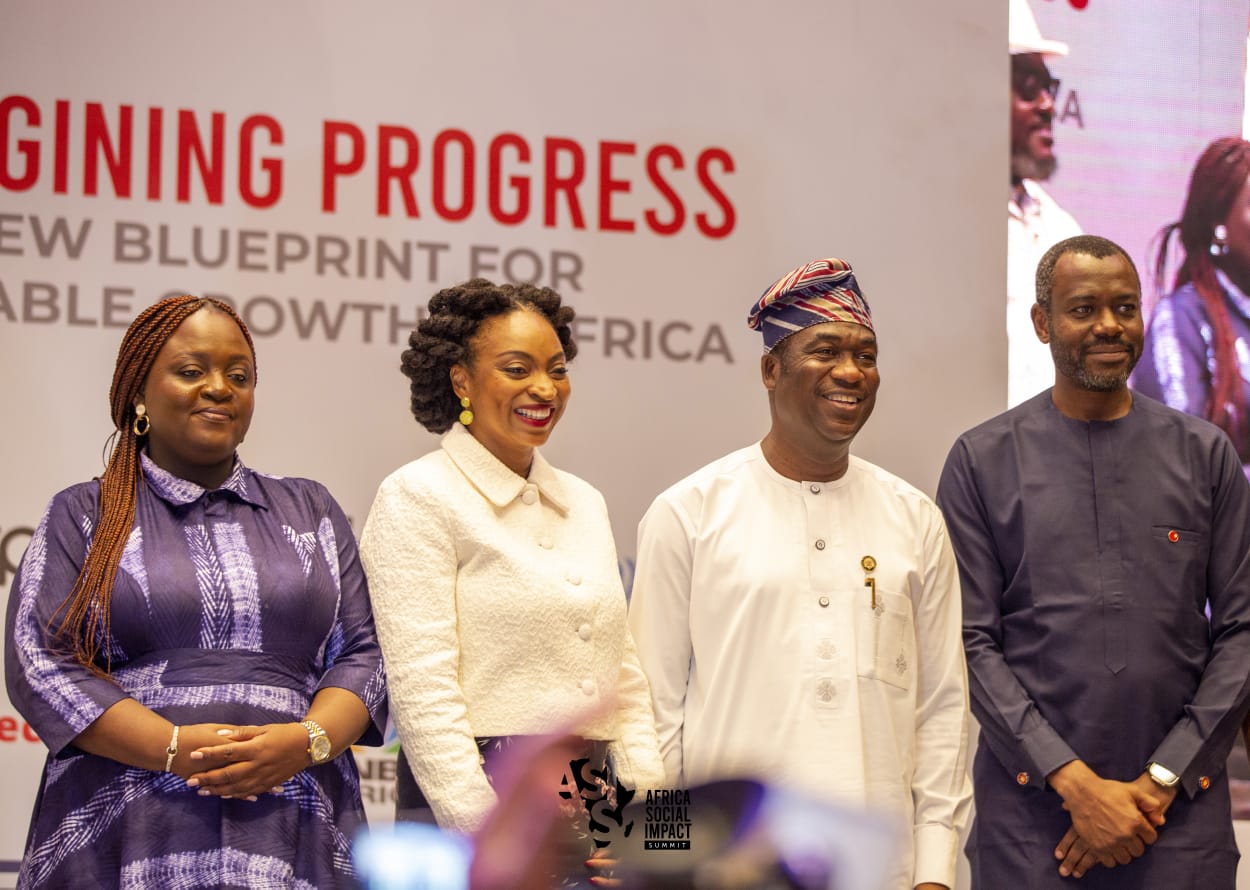
L-R; Olapeju Ibekwe, CEO, Sterling One Foundation; Dr. Jumoke Oduwole, Special adviser to the President of Nigeria on Presidential Enabling Business Environment Council (PEBEC) and Investment; Obafemi Hamzat, Deputy Governor, Lagos State, and Abubakar Suleiman, MD/CEO, Sterling Bank and member of the Board of Trustees, Sterling One Foundation at the Africa Social Impact Summit in Lagos recently.

The event kicked off with a keynote address by United Nations Deputy Secretary-General Amina Mohammed. “Sustainable growth must include climate resilience, leveraging technology, and private sector innovations,” she stated, urging attendees to “recommit to the 2030 agenda with a focus on inclusivity, impact, and inspiration.”

A diverse gathering of government officials, business executives, and development experts participated in the summit. Olapeju Ibekwe, CEO of The Sterling One Foundation, emphasized the necessity of collaboration: “No single entity can address the multifaceted challenges we face. Through partnerships, we can harness diverse expertise and resources to tackle issues ranging from healthcare to climate resilience.”

An Investor Roundtable, organized by the Lagos State Government in collaboration with various organizations, opened the summit. Lagos State Executive Governor Babajide Sanwo-Olu’s presence underscored the government’s commitment to fostering a favorable environment for sustainable development.

Throughout the summit, the indispensable role of the private sector in Africa’s future growth was a recurring theme. Abubakar Suleiman, CEO of Sterling Bank, noted, “Creating a market for social impact means ensuring there is information, trust, and efficient allocation of resources.”

Deputy Governor of Lagos State Obafemi Hamzat presented the “THEMES PLUS” initiative, which promotes development in crucial sectors. “ASIS 2024 must serve as a catalyst for collaboration and action,” Hamzat declared, highlighting the importance of public-private partnerships.

Jumoke Oduwole, representing Vice President Kashim Shettima, called for a paradigm shift in economic thinking. “It is time for action; we must move beyond rhetoric and focus on solutions with tangible impact,” she asserted. “Africa can lead the way in a new model that balances prosperity, the environment, and equity.”

A significant highlight was the “Bold Actions Meeting” on the second day, where fifteen commissioners of health from various Nigerian states convened to focus on healthcare challenges. Zouera Yousouffou, CEO of the Aliko Dangote Foundation, candidly addressed the need for a shift from diagnosis to intervention. “Africa does not have the necessary resources or organizational framework to address health-related problems,” she said.

ABC Health CEO Mories Atoki pointed out the politicization of partnerships as a major barrier, while Dr. Tayo Aduloju, CEO of the Nigerian Economic Summit Group, stressed the importance of delivering tangible outcomes over empty promises.

The summit also tackled the integration of displaced persons into the workforce. A panel led by H.E. Mrs. Toyin Saraki, founder of Wellbeing Foundation Africa, discussed strategies for the economic empowerment of this vulnerable population, featuring insights from UNHCR representatives and refugees.

Professor Akin Abayomi, Lagos State Commissioner of Health, highlighted the foundational importance of moral leadership and education, noting, “Leaders don’t just happen; they are made through education and training.”

The summit facilitated the formation of new partnerships aimed at addressing healthcare, climate resilience, and economic empowerment. Attendees committed to actionable plans, including the development of a resource allocation framework and initiatives to integrate displaced persons into the workforce.

ASIS 2024 brought together top leaders from diverse sectors, underscoring a collaborative approach to sustainable development. The active participation of high-level officials and experts, combined with the tangible commitments made, reinforces the credibility and impact of the summit.

News

I Delivered $15m Agency Cash To Ex-NIMASA DG Akpobolokemi, EFCC Witness Tells Court

Published

on

By

A prosecution witness, Captain Ezekiel Bala-Agaba, testified in a Lagos Federal High Court on Thursday, that he personally delivered $15 million in cash to former NIMASA DG, Patrick Akpobolokemi.

The witness, Bala-Agaba, a former Executive Director of Maritime Safety, Shipping Development and Marine Operations at NIMASA, made the disclosure while testifying before Justice Ayokunle Faji of the Federal High Court in Lagos.

Captain Agaba, who appeared as the 15th prosecution witness, told the court that funds meant for pipeline surveillance were withdrawn from NIMASA’s accounts, converted into dollars, and handed over to Dr Akpobolokemi.

According to him, the money was taken to a Bureau de Change, which converted it into $15 million before the cash was delivered to the NIMASA office on Burma Road, Apapa, Lagos.

He said he subsequently took the money to the office of the then Director-General.

“The money was sent to a Bureau de Change, which later brought the dollar equivalent to our office at Burma Road, Apapa, Lagos. I asked my Personal Assistant, Ekene Nwakuche, to carry the bag and follow me to the Director-General’s office,” he told the court.

The witness explained that he collected the bag from his aide before entering the office.

“When we got to the door of the Director-General’s office, I collected the bag from him and asked him to wait outside. I then personally delivered the sum of $15 million to the Director-General.”

The witness was initially a defendant in the case but later opted to testify for the prosecution.

While being led in evidence by prosecuting counsel, Suleiman Suleiman, he explained the chain of command within NIMASA and how financial approvals were processed in the agency.

According to him, the Director-General is the overall head of the agency and issues instructions to directors, who then implement policies in line with the NIMASA Act.

He told the court that he chaired the agency’s Intelligence Committee, which was responsible for certain security-related operations.

“As chairman of the committee, I oversaw its activities and reported directly to the Director-General, Dr. Patrick Akpobolokemi,” he said.

During the proceedings, the witness was also shown a document containing a letter from Access Bank to the Economic and Financial Crimes Commission (EFCC) detailing transactions in NIMASA’s accounts between 2013 and 2015.

When asked how much money he took to the former Director-General, Agaba replied: “$15 million.”

After listening to the testimony, Justice Faji adjourned the matter until April 22 and 23 for cross-examination of the witness.

The EFCC had in December 2015 arraigned Dr. Akpobolokemi and seven others before the court on a 30-count charge bordering on conspiracy, fraudulent conversion of funds and money laundering.

Those charged alongside the former NIMASA boss include, Warredi Enisuoh, Governor Juan, Ugo Frederick, Timi Alari, as well as Alkenzo Limited and Penniel Engineering Services Limited.

They pleaded not guilty to the offences.

The anti-graft agency alleged that the defendants conspired to divert funds running into over N1.15 billion under the guise of providing security intelligence in Nigeria’s maritime domain.

According to the EFCC, the NIMASA Intelligence Committee allegedly received N1,153,000,000 between December 2013 and July 2015.

Investigations further revealed that several companies contracted to execute the intelligence operations were either unregistered or lacked the capacity to perform the services, while some were allegedly linked to the defendants.

The prosecution also alleged that the defendants nominated or owned many of the companies used to execute the contracts.

One of the charges stated that the defendants conspired to commit offences punishable under the Money Laundering (Prohibition) Act, 2012.


Continue Reading

News

CBN Bars Chronic Loan Defaulters from Accessing New Banking Services

Published

on

By

The Central Bank of Nigeria (CBN) has issued a directive to all financial institutions to immediately restrict certain banking services for large-ticket borrowers with non-performing loans (NPLs).

This move is aimed at strengthening credit discipline and protecting the stability of the Nigerian financial system following a rise in the industry’s NPL ratio to approximately 7%, exceeding the regulatory 5% threshold.

This order is specifically targeted at large-ticket obligors.

The CBN issued the directive in a circular to banks on Monday.

The latest instruction comes almost a week after the CBN asked financial institutions to stress test.

It is uncertain if the two directives are connected or what may have triggered the loan-related instruction, but the apex bank said it furthers its mandate to protect Nigeria’s financial system.

“In furtherance of its mandate to promote a sound financial system, protect depositors, and enhance prudential compliance within the banking sector, the Central Bank of Nigeria (CBN) hereby directs all banks to restrict non-performing large ticket obligors, whose activities pose systemic risk to the financial system, from accessing specified banking services,” the circular reads in part.

“Any large-ticket obligor with a non-performing facility recorded in the CRMS and/or any licensed private credit bureau shall not be granted additional credit facilities. For the purpose of this restriction, credit facilities include loans and other forms of direct credit.

“In addition, such obligors shall not be granted banking facilities or contingent liabilities such as bankers’ confirmations, letters of credit, performance bonds, or advance payment guarantees.”


Continue Reading

News

Makinde Only In PDP Because He’s Not Seeking Re-election – Otitoju

Published

on

By

Babajide Kolade-Otitoju, the Director of News at TVC News, recently stated that Oyo State Governor Seyi Makinde would likely have defected from the People’s Democratic Party (PDP) if he was still serving his first term.

Otitoju stated this on Friday on TVC’s ‘Breakfast Show’.

He described the National Convention of the Peoples Democratic Party, PDP, in Ibadan last November as a mere waste of time.

“People must show good judgment at a critical phase. What was the point of having that convention? Two courts told you not to go ahead but you went ahead.

“I may not be a fan of former Senate President Bukola Saraki but if he says something that makes sense, I will be the first to admit it. He made sense when he said let’s go for caretaker. What’s the point of not listening to him?

“Later you will be shouting that the ruling party is behind your crisis, meanwhile you are the architect of your own misfortunes. You created this problem.

“If Makinde were in his first term, he would have fled like the dancing governor because his second term would have been in danger,” Otitoju said.

Continue Reading

Trending