
News
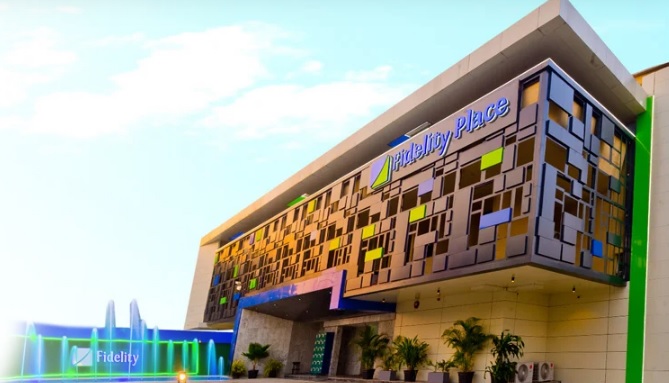
Fidelity Bank’s Consistent Strong Growth Excites Investors
Fidelity Bank Plc has recorded an average annual profit growth of 64 per cent over the past three years, underlining its resilience as one of Nigeria’s fastest growing companies.
The bank has also seen rapid expansion in customer base and assets as total balance sheet size leapt from N2.1 trillion to N6.2 trillion, the sixth largest in the Nigerian banking industry. The balance sheet was driven by a hefty total deposit of more than N4 trillion, equally the sixth biggest in the industry.
A review of the audited reports and accounts of Fidelity Bank between 2023 and 2020 showed double-digit growths over the years with cumulative average annual growth rate (CAGR) in earnings, profitability and assets significantly above average industry rate and within the best performance among publicly quoted companies.
Average annual profit growth rate of 64 per cent underscores Fidelity Bank’s fundamental strength as an inflation-hedging investment. The operational growth strengthens the overall return outlook of the bank, which share price has delivered an average annual capital gain of more than 100 per cent in five years at the stock market.
Several experts’ reviews have said the bank’s strong historical performance is a major attraction for its ongoing combined rights and public offer.
Fidelity Bank is offering a rights issue of 3.2 billion ordinary shares of 50 kobo each at N9.25 per share. The bank is also simultaneously offering 10 billion ordinary shares of 50 kobo each to the general investing public at N9.75 per share.
The acceptance and application lists for the rights issue and public offer, which opened on Thursday, June 20, 2024, are scheduled to close on Monday, July 29, 2024. The rights issue has been pre-allotted on the basis of one new ordinary share for every 10 existing ordinary shares held as at the close of business on Friday, January 05, 2024.
Fidelity Bank’s gross earnings rose successively from N206 billion in 2020 to N251 billion, N337 billion and N556 billion in 2021, 2022 and 2023 respectively, representing average annual growth of 39 per cent. Profit before tax has grown consecutively from N28 billion in 2020 to N124 billion in 2023. Profit after tax jumped from N26.65 billion in 2020 to N99.45 billion in 2023. Earnings per share has also grown from 92 kobo in 2020 to N3.11 in 2023, showing the headroom for increased dividends to shareholders.
The bank’s profitability has been driven by continuous increase in market share, a strong commitment to national economic growth with supports for businesses and high customer trust.
Fidelity Bank’s total assets has grown successively from N2.11 trillion in 2019 to N2.76 trillion in 2020 and consecutively to N3.28 trillion, N3.99 trillion and N6.23 trillion in 2021, 2022 and 2023 respectively. Shareholders’ funds have also grown successively from N234.03 billion in 2019 to N273.53 billion, N285.29 billion, N314.36 billion and N437.31 billion in 2020, 2021, 2022 and 2023 respectively.
Total deposit has grown by an average annual growth of 33 per cent from N1.7 trillion in 2020 to N4.02 trillion in 2023. A breakdown underlined a strong customer confidence with low-cost deposit accounting for 97.4 per cent of total deposit.
Low-cost deposit has grown at a faster CAGR of 44 per cent over the period, rising from N1.31 trillion in 2020 to N3.91 trillion in 2023. Savings accounts had also doubled over the period from N424 billion in 2020 to N881 billion in 2023, representing average annual growth rate of 28 per cent.
Fidelity Bank has more than 8.0 million customers, with 5.1 million of these customers on digital channels, underlining the strength of the bank’s robust information and communication technology.
As customers increasingly entrust the bank with their funds, Fidelity Bank has also shown equally aggressive commitment to national economic growth with average annual growth of 32 per cent in net loans.
Net loans have grown successively from N1.32 trillion in 2020 to N1.66 trillion, N2.12 trillion and N3.09 trillion in 2021, 2022 and 2023 respectively. The above average growth in loans shows Fidelity Bank’s famed supports for Nigerian businesses. The bank’s loans portfolio is the fifth largest in the Nigerian banking industry.
A frontline industrialist and a customer of the bank, Dr Kamoru Yusuf, Founder of KAM Holding, said Fidelity Bank has been exceptional in supporting the development of Nigerian companies.
Yusuf, whose group has metamorphosed into a global business conglomerate operating in three countries across two continents, confirmed that KAM Holding has benefited immensely from financial supports from Fidelity Bank.
He said investing in Fidelity Bank will be an investment in the growth of Nigerian economy and companies like KAM Holding, the nation’s largest wholly indigenous metal and steel production company.
He underlined the relationship between increased capital for a business-focused bank like Fidelity Bank and the overall development of the Nigerian economy.
There are strong indications that the bank will sustain its impressive growth record in the years ahead. Already, interim report and account of the bank for the first quarter ended March 31, 2024 showed that the bank started the current business year on stronger footing with three-digit growths across key performance indicators.
The three-month report showed that gross earnings increased by 89.9 per cent to N192.1 billion in first quarter 2024. The bank’s top-line performance continued to be driven by broad-based growths across income lines with interest income rising by 90.7 per cent and non-interest income growing by 84 per cent in first quarter 2024.
Growth in interest income was primarily spurred by a higher yield environment and strong earning assets base, while the increase in non-interest income was led by double-digit growth in account maintenance charges, foreign exchange (forex)-related income, trade, banking services, and remittances, supported by increased customer transactions.
Profit before tax doubled by 120 per cent to N39.5 billion in first quarter 2024 as against N17.9 billion in first quarter 2023. The bank’s performance was driven by expanding market share with total deposit rising by 17 per cent within the three months to N4.7 trillion, compared with N4 trillion recorded at the end of 2023.
The bank also increased its supports for national economic growth with net loans and advances rising by 21 per cent from N3.1 trillion at the end of 2023 to N3.7 trillion by March 2024.
News
I Delivered $15m Agency Cash To Ex-NIMASA DG Akpobolokemi, EFCC Witness Tells Court
A prosecution witness, Captain Ezekiel Bala-Agaba, testified in a Lagos Federal High Court on Thursday, that he personally delivered $15 million in cash to former NIMASA DG, Patrick Akpobolokemi.
The witness, Bala-Agaba, a former Executive Director of Maritime Safety, Shipping Development and Marine Operations at NIMASA, made the disclosure while testifying before Justice Ayokunle Faji of the Federal High Court in Lagos.
Captain Agaba, who appeared as the 15th prosecution witness, told the court that funds meant for pipeline surveillance were withdrawn from NIMASA’s accounts, converted into dollars, and handed over to Dr Akpobolokemi.
According to him, the money was taken to a Bureau de Change, which converted it into $15 million before the cash was delivered to the NIMASA office on Burma Road, Apapa, Lagos.
He said he subsequently took the money to the office of the then Director-General.
“The money was sent to a Bureau de Change, which later brought the dollar equivalent to our office at Burma Road, Apapa, Lagos. I asked my Personal Assistant, Ekene Nwakuche, to carry the bag and follow me to the Director-General’s office,” he told the court.
The witness explained that he collected the bag from his aide before entering the office.
“When we got to the door of the Director-General’s office, I collected the bag from him and asked him to wait outside. I then personally delivered the sum of $15 million to the Director-General.”
The witness was initially a defendant in the case but later opted to testify for the prosecution.
While being led in evidence by prosecuting counsel, Suleiman Suleiman, he explained the chain of command within NIMASA and how financial approvals were processed in the agency.
According to him, the Director-General is the overall head of the agency and issues instructions to directors, who then implement policies in line with the NIMASA Act.
He told the court that he chaired the agency’s Intelligence Committee, which was responsible for certain security-related operations.
“As chairman of the committee, I oversaw its activities and reported directly to the Director-General, Dr. Patrick Akpobolokemi,” he said.
During the proceedings, the witness was also shown a document containing a letter from Access Bank to the Economic and Financial Crimes Commission (EFCC) detailing transactions in NIMASA’s accounts between 2013 and 2015.
When asked how much money he took to the former Director-General, Agaba replied: “$15 million.”
After listening to the testimony, Justice Faji adjourned the matter until April 22 and 23 for cross-examination of the witness.
The EFCC had in December 2015 arraigned Dr. Akpobolokemi and seven others before the court on a 30-count charge bordering on conspiracy, fraudulent conversion of funds and money laundering.
Those charged alongside the former NIMASA boss include, Warredi Enisuoh, Governor Juan, Ugo Frederick, Timi Alari, as well as Alkenzo Limited and Penniel Engineering Services Limited.
They pleaded not guilty to the offences.
The anti-graft agency alleged that the defendants conspired to divert funds running into over N1.15 billion under the guise of providing security intelligence in Nigeria’s maritime domain.
According to the EFCC, the NIMASA Intelligence Committee allegedly received N1,153,000,000 between December 2013 and July 2015.
Investigations further revealed that several companies contracted to execute the intelligence operations were either unregistered or lacked the capacity to perform the services, while some were allegedly linked to the defendants.
The prosecution also alleged that the defendants nominated or owned many of the companies used to execute the contracts.
One of the charges stated that the defendants conspired to commit offences punishable under the Money Laundering (Prohibition) Act, 2012.
News
CBN Bars Chronic Loan Defaulters from Accessing New Banking Services
The Central Bank of Nigeria (CBN) has issued a directive to all financial institutions to immediately restrict certain banking services for large-ticket borrowers with non-performing loans (NPLs).
This move is aimed at strengthening credit discipline and protecting the stability of the Nigerian financial system following a rise in the industry’s NPL ratio to approximately 7%, exceeding the regulatory 5% threshold.
This order is specifically targeted at large-ticket obligors.
The CBN issued the directive in a circular to banks on Monday.
The latest instruction comes almost a week after the CBN asked financial institutions to stress test.
It is uncertain if the two directives are connected or what may have triggered the loan-related instruction, but the apex bank said it furthers its mandate to protect Nigeria’s financial system.
“In furtherance of its mandate to promote a sound financial system, protect depositors, and enhance prudential compliance within the banking sector, the Central Bank of Nigeria (CBN) hereby directs all banks to restrict non-performing large ticket obligors, whose activities pose systemic risk to the financial system, from accessing specified banking services,” the circular reads in part.
“Any large-ticket obligor with a non-performing facility recorded in the CRMS and/or any licensed private credit bureau shall not be granted additional credit facilities. For the purpose of this restriction, credit facilities include loans and other forms of direct credit.
“In addition, such obligors shall not be granted banking facilities or contingent liabilities such as bankers’ confirmations, letters of credit, performance bonds, or advance payment guarantees.”
News
Makinde Only In PDP Because He’s Not Seeking Re-election – Otitoju
Babajide Kolade-Otitoju, the Director of News at TVC News, recently stated that Oyo State Governor Seyi Makinde would likely have defected from the People’s Democratic Party (PDP) if he was still serving his first term.
Otitoju stated this on Friday on TVC’s ‘Breakfast Show’.
He described the National Convention of the Peoples Democratic Party, PDP, in Ibadan last November as a mere waste of time.
“People must show good judgment at a critical phase. What was the point of having that convention? Two courts told you not to go ahead but you went ahead.
“I may not be a fan of former Senate President Bukola Saraki but if he says something that makes sense, I will be the first to admit it. He made sense when he said let’s go for caretaker. What’s the point of not listening to him?
“Later you will be shouting that the ruling party is behind your crisis, meanwhile you are the architect of your own misfortunes. You created this problem.
“If Makinde were in his first term, he would have fled like the dancing governor because his second term would have been in danger,” Otitoju said.
-
News1 day agoWorld War III Fears: Zelensky Reveals Warning To Trump
-
News1 day ago2027 Shakeup: 12 Lawmakers Defect To APC, ADC
-
News23 hours agoTerror Surge: Tinubu Demands Results from Security Chiefs
-
News2 days agoTensions Rise As Makoko Communities Vow To Resist Relocation Order
-
News8 hours agoMakinde Only In PDP Because He’s Not Seeking Re-election – Otitoju
-
News16 hours agoBeyond My Wildest Dreams: Disu Opens Up During Handover From Egbetokun
-
News12 hours agoCorruption Probe: Court Grants ICPC Access To Data On El-Rufai’s Seized Gadgets
-
News7 hours agoCBN Bars Chronic Loan Defaulters from Accessing New Banking Services