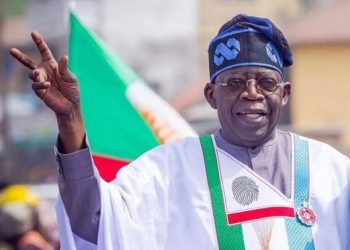


The Presidency yesterday rejected a New York Times (NYT) report that blamed the prevailing economic woes on President Bola Tinubu’s policies.
A statement by the Special Adviser to the President on Information and Strategy, Bayo Onanuga, said economic problems were bequeathed to the Tinubu Administration.
Onanuga said the NYT’s report was jaundiced and failed to mention the positive aspects of the economy and the policies being initiated to cushion the effects on the citizens.
Insisting that the NYT got its facts wrong, the special adviser said the fuel subsidy regime and the multiple exchange rates were unsustainable, adding that they had bled the economy.
“Ruth Maclean and Ismail Auwal’s feature story with the title: ‘Nigeria confronts its worst economic crisis in a generation’, published on June 11 appeared typically predetermined and followed the usually denigrating way foreign media establishments reported African countries for several decades”, Onanuga said.
The government, the statement said, has been working hard to address food inflation and restore economic growth.
The statement reads: “Because of the misleading slant of the report, we need to clear up some misconceptions conveyed by the reporters as regards the economic policies of the Tinubu administration that came into power at the end of May 2023.
“Most significant about the report was that it painted the dire experiences of some Nigerians amid the inflationary spiral of the last year and blamed it all on the policies of the new administration.
The report, based on several interviews, is at best jaundiced, all gloom and doom, as it never mentioned the positive aspects in the same economy as well as the ameliorative policies being implemented by the central and state governments.
“To be sure, President Tinubu did not create the economic problems Nigeria faces today. He inherited them. As a respected economist in our country once put it, Tinubu inherited a dead economy.
“The economy was bleeding and needed quick surgery to avoid being plunged into the abyss, as happened in Zimbabwe and Venezuela.
“This was the background to the policy direction taken by the government in May/June 2023: the abrogation of the fuel subsidy regime and the unification of the multiple exchange rates.
“For decades, Nigeria had maintained a fuel subsidy regime that gulped $84.39 billion between 2005 and 2022 from the public treasury in a country with huge infrastructural deficits and in high need of better social services for its citizens.
“The state oil firm, NNPC, the sole importer, had amassed trillions of naira in debts for absorbing the unsustainable subsidy payments in its books. By the time President Tinubu took over the leadership of the country, there was no provision made for fuel subsidy payments in the national budget beyond June 2023. The budget itself had a striking feature: it planned to spend 97 per cent of revenue servicing debt, with little left for recurrent or capital expenditure.
“The previous government had resorted to massive borrowing to cover such costs. Like oil, the exchange rate was also being subsidised by the government, with an estimated $1.5 billion spent monthly by the CBN to ‘defend’ the currency against the unquenchable demand for the dollar by the country’s import-dependent economy.
“By keeping the rate low, arbitrage grew as a gulf existed between the official rate and the rate being used by over 5000 BDCs that were previously licensed by the Central Bank.
“What was more, the country was failing to fulfill its remittance obligations to airlines and other foreign businesses, such that FDIs and investment in the oil sector dried up, and notably Emirate Airlines cut off the Nigerian route.
“President Tinubu had to deal with the cancer of public finance on the first day by rolling back the subsidy regime and the generosity that spread to neighbouring countries. Then, his administration floated the naira.”
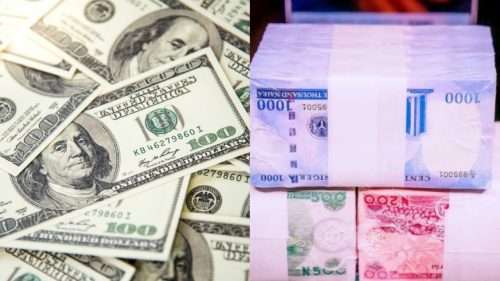
The statement, however, noted that the economy is already showing signs of stability, with the naira regaining strength and inflation slowing down, noting that the exchange rate had improved to below N1500 to the dollar, with prospects of further appreciation to between N1000 and N1200 by year-end.
It also noted that the economy recorded a trade surplus of N6.52 trillion in Q1, and long-term investors are returning, including a $2.25 billion loan from the World Bank.
It further said while food inflation remains a challenge, the government is working to increase agricultural production and reduce costs.
States like Lagos and Akwa Ibom have set up retail shops to sell raw food items at lower prices, while the federal government has invested in dry-season farming, and the CBN has given fertiliser worth N100 billion to farmers.
It added that with the efforts, inflation is expected to be tamed soon, bringing relief to Nigerians, adding that the economic reforms implemented by the Tinubu administration have restored confidence, making Nigeria “bankable” again.
“After some months of the storm, with the naira sliding as low as N1,900 to the US dollar, some stability is being restored, though there remain some challenges. The exchange rate is now below N1500 to the dollar, and there are prospects that the naira could regain its muscle and appreciate to between N1000 and N1200 before the end of the year.
“The economy recorded a trade surplus of N6.52 trillion in Q1, as against a deficit of N1.4 trillion in Q4 of 2023. Portfolio investors have streamed in as long-term investors. When Diageo wanted to sell its stake in Guinness Nigeria, it had the Singaporean conglomerate, Tolaram, ready for the uptake.
“With the World Bank extending a $2.25 billion loan and other loans by the AfDB and Afreximbank coming in, Nigeria has become bankable again. This is all because the reforms being implemented have restored some confidence.
“The inflationary rate is slowing down, as shown in the figures released by the National Bureau of Statistics for April. Food inflation remains the biggest challenge, and the government is working very hard to rein it in with increased agricultural production.
“The Tinubu administration and the 36 states are working assiduously to produce food in abundance to reduce the cost. Some state governments, such as Lagos and Akwa Ibom, have set up retail shops to sell raw food items to residents at a lower price than the market price.”
Onanuga listed other interventions made by the government to include: heavy investment in dry-season farming; provision of incentives to produce wheat, maize, and rice farmers and the donation of N100 billion worth of fertiliser to farmers by the CBN.
He added the plan announced by the six Southwest governors to invest massively in agriculture.
Onanuga said: “With all the plans being executed, inflation, especially food inflation, will soon be tamed. Nigeria is not the only country in the world facing a rising cost of living crisis.
The U.S., too, is contending with a similar crisis, with families finding it hard to make ends meet. U.S. Treasury Secretary Janet Yellen raised this concern recently.
“Europe is similarly in the throes of a cost-of-living crisis. As those countries are trying to confront the problem, the Tinubu administration is also working hard to overturn the economic problems in Nigeria.
“Our country faced economic difficulties in the past, an experience that has been captured in folk songs. Just like we overcame then, we shall overcome our present difficulties very soon.”