
Connect with us

News

Palliative: Financial Expert Warns Tinubu Against Sharing N8,000 To Poor Nigerians

Published

on

A financial expert, Gbenga Adeoye, has asked President Bola Tinubu to quench the plan by his government to distribute N8,000 to 12 million poor Nigerians in six months.

Recall that the President, on Thursday, requested N500 billion from the National Assembly, supposedly to be distributed to poor Nigerians as palliatives to cushion the effects of the fuel subsidy removal.

In the letter, Tinubu explained that his government would transfer N8,000 a month to 12 million poor and low-income households with a multiplying effect on about 60 million individuals.

But Adeoye, in an interview with DAILY POST, told the President that he would not be able to cushion the effect of subsidy removal through the planned distribution of N8,000.

While alluding to the fact that Tinubu was prepared for the job due to the actions he took immediately after he assumed office, Adeoye, however, said “I have been disturbed by the plan of the Tinubu government to give N8,000 cash palliative to 12 million poor Nigerians for six months.”

Explaining why the cash palliative should be avoided, the Chartered Accountant said that N8,000 to 12 million Nigerians will amount to N96 billion a month and N576 billion in six months.

“Cash palliative does not befit a country that has not reached optimal production level, it is good in a country that has attained optimal production level but the people are restricted from going out to work. An example of such is the United States of America where cash was distributed during COVID-19 Restrictions because people could not go out to perform their economic activities,” he explained.

In his recommendations, the Tax expert suggested that the Federal Government acquire 200 buses per senatorial district at N30m per bus, stressing that N666 billion would be spent on acquiring 22,200 buses.

“This will reduce the cost of transportation if handed over to relevant stakeholders to manage.

“Ensure regular maintenance and run it as a pure business but regulate the rate based on locations. Make monthly tickets available. USE card over time like in OYSTER Card in the UK.

“Ensure there are savings from the income generated from the buses to be able to replace them after five years. Let no politician use the bus for free.

“All Nigerians will benefit from this as most people will no longer have to worry about the high cost of petrol,” he stated.

The lawyer also suggested giving N1,000,000 to 600,000 entrepreneurs, who will engage in petty businesses and will be able to employ four other Nigerians.

”The money, he said, should be paid back over a period of 10 years at a 2 or 5 percent maximum rate and if possible, at no interest since N576bn proposed by Federal Government is a free gift anyway.”

Adeoye informed that this will create 3 million direct and indirect employments.

Expressing further concerns about the planned N8,000 palliative, he asked: “How do we determine the poor Nigerians? How do we ensure the spread across the country? What will N8,000 do monthly?”

The UK Arbitrator said, “In my considered opinion, that move will not solve the poverty problem and hardship arising from fuel Subsidy removal.

”To give N8,000 per month is to give N266.67 per day. This will not produce the desired result as it means giving less than N90 per meal if it is assumed that the so-called poor will eat three times daily.

“The worst aspect of cash palliative is that people return to their level at the end of the programme, and that will cause more havoc after 6 months and can lead to unrest.

“Lastly I repeat, Mr President, please do not give out cash palliative of N576b. The amount is too much for such and the two alternatives enumerated above will have better impact than N266.67 per day to 12 million Nigerians.”
News

Union Bank Of Nigeria Marks International Women’s Month 2026 With Inclusion-First “Give to Gain” Campaign

Published

on

By

In observance of International Women’s Month 2026, Union Bank of Nigeria reaffirms its commitment to gender equity through a focused initiative centred on women living with disabilities and women raising children with disabilities.

Aligned with the global theme “Give to Gain,” the Bank’s campaign “Give to Gain: Creating Pathways for Inclusion and Endless Opportunities” centres the lived experiences of women living with disabilities and underscores the need for intentional systems of support for social and economic advancement.

Throughout March, Union Bank will implement targeted initiatives to expand access, foster inclusion, and unlock sustainable opportunities. Activities include a flagship event which held at

The Stable, its multipurpose venue in Surulere, Lagos, on Saturday. The event convened women with disabilities, caregivers, supporting organisations, and advocates for dialogue, mentorship, and resource sharing.

L-R: Chief Talent Officer, Union Bank of Nigeria, Omayuli Wale-Ajayi; Head, Corporate Banking, Union Bank of Nigeria, Ali Kadiri; Head, Retail and SME Business, Union Bank of Nigeria, Vivian Imoh-Ita; Founder/Executive Director, Deaf International Foundation, Funmilola Ogunro; MD/CEO, Union Bank of Nigeria, Yetunde Oni; SouthWest Coordinator, Nigeria Association of the Blind, Adenike Olorundare; Women Leader, Lagos Chapter, Nigeria Association of the Blind, Olubukola Salako; Executive Director, Corporate Bank & Business Banking Lagos & West, Union Bank of Nigeria, Taiwo Shote; Chief Brand and Marketing Officer, Union Bank of Nigeria, Olufunmilola Aluko; Regional Executive, Business Banking SouthWest and Lagos, Union Bank of Nigeria, Emmanuel Aihevba, and Lead Innovation, Events and Platform Management, Union Bank of Nigeria, Chiamaka Moses during the Bank’s commemoration of International Women’s Day 2026 at the Stable, Surulere, Lagos recently.

Complementary efforts include outreach to disability support facilities and collaboration with educational institutions to distribute learning materials to female students with disabilities. Tailored mentorship programmes will build confidence and capability in education, entrepreneurship, and careers. Through its women’s banking proposition alpher and strategic partnerships, the Bank will also deliver business sustainability training specifically designed for women living with disabilities and women raising children with disabilities.
Internally, Union Bank will activate WeHub — its employee-led women’s network — to strengthen inclusive culture and support professional growth across the organisation.

These actions reflect Union Bank’s long-standing commitment to advancing equity for underserved communities — and align with the United Nations Sustainable Development Goals 5 (Gender Equality) and 10 (Reduced Inequalities). For Union Bank, these are not frameworks to cite; they are commitments to live out.

Olufunmilola Aluko, Chief Brand and Marketing Officer, Union Bank of Nigeria, stated that “At Union Bank, inclusion is not an abstract ideal; it is a deliberate choice. While many conversations around women’s empowerment are important and necessary, women living with disabilities and women raising children with disabilities are too often left out entirely. This year’s theme, ‘Give to Gain,’ reflects exactly what we believe: that when we intentionally open access, support, and opportunity to these women, the value created extends to families, communities, and society at large.”

Union Bank’s IWD 2026 campaign is a statement of intent: that true inclusion requires us to go further, reach deeper, and serve those who have waited longest for a seat at the table. In 2026, Union Bank is committed to ensuring that a seat exists — and that it is built to last.

Continue Reading

News

Just In: Dangote Refinery Announces Petrol, Diesel Price Reduction

Published

on

By

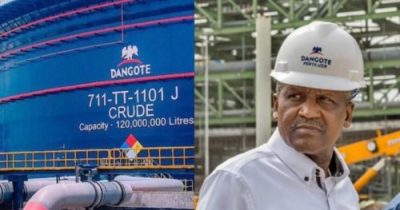
The Dangote Petroleum Refinery officially reduced its gantry prices for petrol (PMS) and diesel (AGO) following a series of price hikes earlier in the week.

According to a new pricing template released by the refinery on March 10, 2026, the gantry price of petrol has been reduced by N100, dropping from N1,175 to N1,075 per litre.

The refinery also stated that the price of PMS for coastal supply will now be N1,050 per litre. The difference in price reflects additional costs linked to maritime distribution.

Similarly, the price of Automotive Gas Oil (diesel) has been reduced to N1,430 per litre at the gantry, down from the previous N1,620 per litre. This represents a decrease of N190 per litre.

The refinery noted that these gantry prices do not include regulatory charges from the Nigerian Midstream and Downstream Petroleum Regulatory Authority (NMDPRA).

Meanwhile, JomogNews earlier reported on Monday that Dangote Petroleum Refinery raised its gantry PMS price to N1,175 per litre — the third upward adjustment in seven days

The refinery communicated the new ex-depot price to marketers and depot operators, up ₦180 from the N995 per litre announced last week Friday, an 18.1 per cent increase in three days.


Continue Reading

News

Drama At Rivers Assembly Over Nominee’s ‘I don’t pay tax’ Statement

Published

on

By

A video circulating online has captured a tense moment during the screening of commissioner nominees submitted by Governor Siminalayi Fubara to the Rivers State House of Assembly.

The footage seen shows the Speaker of the Assembly, Martin Amaewhule, questioning one of the nominees, Charity Deemua, over the status of her tax clearance certificate.

During the screening of commissioner nominees, the Rivers State House of Assembly rejected nominee Charity Deemua after she claimed that as a politician, she did not pay taxes.

Speaker Martin Amaewhule and other lawmakers expressed shock at the statement, leading to the rejection of her nomination along with three others due to lack of tax compliance.

During the screening session, Amaewhule pointed out that the nominee’s tax clearance appeared outdated.

“I just wanted to know, so there’s no current tax clearance. Madam has not been paying tax since 2018. I just wanted to know if she’s been exempted from paying taxes. So let her tell us now,” the Speaker said.

Responding, Deemua explained that she had not had a steady source of income in recent years.

“Like I said before, I’m a politician, I don’t have work,” she stated.

When asked to clarify her employment history, Deemua told the lawmakers that she had previously served briefly in government.

“I was a member, a commissioner in the Rivers State House of Assembly Service Commission,” she said.

Amaewhule then pressed further about her role in a local government caretaker committee.

“When were you? Hold on… local government caretaker committee member, right?” the Speaker asked.

“I was just three months there,” Deemua replied.

“When? When was that?” Amaewhule asked.

“And I think November last year,” she responded.

“November when? What year?” the Speaker asked again.

“2025,” she answered.

The Speaker then questioned whether she earned income during that period.

“You were not paid salary? Were you not paid salary?” Amaewhule asked.

“In the caretaker committee, we were paid,” Deemua admitted.

“You were paid? Yes. Is that not income? But you said you have not had any income from 2018 to date as a politician. So no tax clearance, and that’s what you are telling Rivers people. Madam, that is not nice. You are misleading the 10th Rivers State House of Assembly,” Amaewhule said.

In response, Deemua apologised and suggested she could address the issue.

“I’m sorry, Mr. Speaker. But I think I can still go back for…,” she began before being interrupted.

“No, but you say you have not had any income now,” Amaewhule replied before moving on to the next nominee.

The video of the exchange has since drawn reactions online, with many Nigerians asking that if politicians say they don’t work, what exactly are taxpayers paying for.

See video:


Continue Reading

Trending