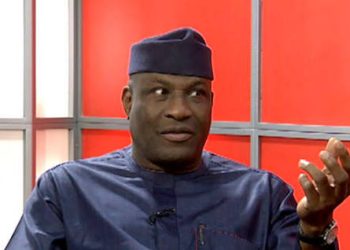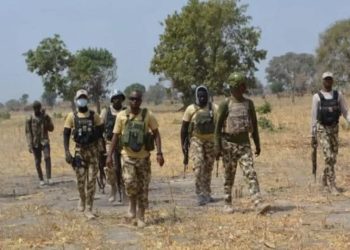

One of the national leaders of the All Progressives Congress (APC), Asiwaju Bola Tinubu, yesterday, spoke for the first time on the lingering herders/farmers crisis, saying the two classes of people were victims of circumstances and therefore needed help.
Tinubu, a presidential hopeful, however, called on President Muhammadu Buhari to convene a stakeholders’ security meeting of state governors, senior security officials, herder and farmer representatives, along with traditional rulers and religious leaders to resolve the seemingly intractable herder-farmer crisis.
In a statement personally signed, Tinubu, who had been accused of maintaining an undignified silence on the crisis, canvassed a holistic approach to resolving the crisis.
“The purpose of this meeting would be to hammer out a set of working principles to resolve the crisis”, he said, arguing that, both the farmers and the herders needed help and that to help the herders at the expense of the farmers would not augur well for the country.
According to him, “Both innocent and law-abiding farmers and herders need to be recompensed for the losses they have suffered. Both need further assistance to break the current cycle of violence and poverty.”
“After the federal government’s initiated meeting, governors of each state should convene follow-up meetings in their states to refine and add flesh to the universal principles by adjusting them to the particular circumstances of their states.
“In addition to religious and traditional leaders and local farmer and herder representatives, these meetings shall include the state’s best security minds along with experts in agriculture (livestock and farming), land use and water management to draw specific plans for their states,” he explained.
Tinubu admitted that the herder-farmer dispute had taken on acute and violent dimensions and had cost too many innocent lives while destroying the property and livelihoods of many others, in addition to aggravating ethnic sentiment and political tension.
He noted that despite the efforts of some of those in positions of high responsibility and public trust, the crisis had not significantly abated, and as such, expressed regrets that those, who should know better had incited matters by tossing about hate-tainted statements that fell dangerously short of the leadership they claimed to provide.
His words: “We all must get hold of our better selves to treat this matter with the sobriety it requires.”
While calling for a united front to confront the crisis, Tinubu urged Nigerians to resist the urge of casting the crisis as an ethnic confrontation.
“More to the point, those who cast this as exclusively a matter of ethnic confrontation are mistaken. This is no time for reckless chauvinism of any kind, on either side of this dispute. This matter is not ethnic in factual origin or actual causation although in the minds and hearts of too many, it has become ethnic in recrimination and impulsive action,” he said.
To come up with a lasting solution, the former Lagos State governor suggested rolling back violence, because according to him, only when the violence and the illogic of it are halted, can logic and reason prevail.
He said, “Until the violence is rolled back, we cannot resolve the deep problems that underlie this conflict. We will neither be able to uplift the farmer from his impoverished toil nor move the herder toward the historic transformation, which he must make.”
He contended that even though security was vital to resolving the crisis, the government must go beyond enhanced security to resolve the matter.
“Yet, as vital as security is to the resolution of this matter, we must realise security measures alone will not suffice. Enhanced security may be the necessary first step, but it cannot be the only step. Nor do we resolve this by hitching ourselves to emotional, one-dimensional answers.
“More to the point, those who cast this as exclusively a matter of ethnic confrontation are mistaken. This is no time for reckless chauvinism of any kind, on either side of this dispute. This matter is not ethnic in factual origin or actual causation although in the minds and hearts of too many it has become ethnic in recrimination and impulsive action.
“There have been sporadic disputes in the past but this one is more severe. The reasons for the greater violence of this current dispute are myriad. Economic hardship and its resultant dislocation, proliferation of weapons, generalised increase in criminality, and weakening of social institutions all play a role.
“Desertification, increased severity and length of the dry season, diminution of water resources, impairment of land fertility and population growth, also contribute in no small measure. Thus, any durable solution must get at most, if not all, of these issues,” he stated.
He, however, identified several factors he said were responsible for the escalation in the herder-farmer disputes.
According to him, economic hardship and its resultant dislocation, proliferation of weapons, generalised increase in criminality, and weakening of social institutions all play a role.
According to him, “Desertification, increased severity and length of the dry season, diminution of water resources, impairment of land fertility and population growth also contribute in no small measure. Thus, any durable solution must get at most, if not all, of these issues.”
Tinubu said farmers have a right to farm their land unmolested while herders have a right to raise their livestock without undue interference.
However, when conflict between these groups arises to such an extent, he said the government must set forth clear principles and policies to remove the tension, in order to allow both to proceed toward their stated goals and to live in harmony and according to their respective rights.
“Just as I cannot go into your house and take your shirt, because I do not have one of like colour, no one can destroy the crops of a farmer or seize the cattle of a herder simply, because such destruction sates their anger or their selfish, short-term interests.
“If such a condition were to hold, then, all would turn into chaos; all would be in jeopardy of being lost. To destroy the crops or seize the property of the innocent farmer or herder is nothing if not an act of criminality,” he pointed out.
Tinubu said the situation of the herder had become untenable, stating that, “Their nomadic ways fall increasingly in conflict with the dictates of modern society. This way of life is centuries old and steeped in tradition.
“We can never condone or accept violence as a valid response to any hardship. However, we all must recognise and understand the sense of dislocation caused by the sudden passing of such a longstanding social institution.”
The presidential hopeful explained that the dispute between herders and farmers was borne out of situational exigencies, stating that an ethnically fuelled response would be to vociferously defend the nomadic way believing this tack would somehow protect the herder and cast the speaker as an ethnic champion.
To this end, he warned, “careless words cannot shield the herder from relentless reality. Such talk will only delude him into believing that he can somehow escape the inevitable. We do both herder and farmer grave injustice by allowing the herder to continue as he is – fighting a losing battle against modernity and climate change.”
Tinubu said the country has a decision to make and consequently asked: “Do we attempt the hard things that decency requires of us to right the situation? Or do we allow ourselves to be slave to short term motives that appeal to base instinct that run afoul of the democratic principles upon which this republic is founded and for which so many have already sacrificed so much? In the question itself, lies the answer.”
Among others, Tinubu suggested the need to maintain reasonable and effective law enforcement presence in affected areas; help the herders’ transition to more sedentary but more profitable methods of cattle-rearing; assist farmers increase productivity by supporting or providing subvention for their acquisition of fertilizer, equipment and machinery and, also, by establishing commodity boards to guarantee minimum prices for important crops.
Also, he called for the establishment of a permanent panel in each state as a forum for farmers, herders, security officials and senior state officials to discuss their concerns, mitigate contention and identify trouble and douse it before it erupts.