
Connect with us

News

Fort Hare Professor Expelled From SA Over Bigamous Marriage After Renouncing Nigeria Citizenship

Published

on

A Nigerian professor, Edwin Okey Chikata Ijeoma, who previously renounced his Nigerian citizenship, has been expelled from South Africa over bigamous marriage.

Ijeoma, a professor of public sector economics at the University of Fort Hare (UFH) in the Eastern Cape had his citizenship revoked by the Ministry of Home Affairs after he fraudulently relied on a bigamous marriage to a South African woman to obtain naturalisation and citizenship.

Prof. Ijeoma arrived in South Africa from Nigeria on a study permit in 1998 to pursue academic studies at the University of Pretoria. He obtained a PhD in economics in 2003.
Nigerian professor who renounced his citizenship expelled from South African over bigamous marriage

According to DispatchLIVE, Ijeoma took home affairs on review to the Bhisho high court, but in a 2020 judgment the court held the minister had not erred in finding Ijeoma had made false representations about his marital status to the department or in determining his SA citizenship was null and void.

Acting judge Mickey Mfenyana has denied Ijeoma leave to appeal her ruling, stating another court will not differ from her finding that he was disingenuous, if not dishonest, and that there was no reason to interfere with the minister’s decision.

The confirmation of the home affairs action rendering him an undesirable inhabitant of the country means Ijeoma, who previously renounced his Nigerian citizenship, has nowhere else to go.

The head of the UFH school of public administration is under suspension by the university in connection with the illegal registration of axed health MEC Sindiswa Gomba for an honours degree in public administration when she was not entitled to register for postgraduate studies.

Ijeoma was granted permanent residence in SA in the same year he graduated from Tukkies, having been exempted from immigration restrictions due to his marriage to a local woman two years earlier.

In 2005 he was granted SA citizenship through naturalisation but by 2007 he had divorced his South African wife, ostensibly because the couple was unable to conceive a child.

He was then joined in SA by a Nigerian woman, Anne Tomo. Home affairs officials were tipped off that Ijeoma had committed bigamy by marrying the SA woman after Tomo in her application for permanent residence, attached a copy of her 1993 marriage to him in Nigeria.

Officials said Ijeoma’s sole mission in marrying the SA woman was to acquire citizenship.

In her original judgment, Mfenyana found Ijeoma had presented contradictory reasons for his bigamous actions — that, as an African man, he believed he was entitled to marry more than one wife; and that he represented himself as single because he was not aware SA recognised customary marriages.

She said he failed to disclose the existence of his marriage in Nigeria on three occasions: when he applied for permanent residence in SA, when he got married in the country and when he applied for citizenship.

Slating the highly qualified academic “who by his own admission is of good and sound mind and an intellectual giant”, she said it was highly improbable that, throughout his stay in the country and his encounters with immigration matters, he remained ignorant of the implications of not disclosing his Nigerian marriage.

Ijeoma told the court he obtained a permanent residence permit because of his “good and sound character” rather than his marriage to the SA woman.

He said home affairs had failed to take into account his contribution to SA as a result of his work as an academic and within the New Partnership for Africa’s Development.

Mfenyana said the exemption certificate clearly indicated the marriage was the basis for his exemption and Ijeoma had also admitted during a 2015 plea for home affairs to have compassion on him, that he obtained citizenship by naturalisation as a result of the marriage.

Home affairs provided the court with the certificate for Ijeoma’s marriage in Nigeria to dispel the notion it was a customary marriage. In any case, the Nigeria Marriage Act prohibited marriage where one of the parties was already married to another person under customary law.

In two immigration submissions in SA, when he had to indicate an immediate family member still residing in Nigeria, Ijeoma listed Anne Ijeoma as his sister.
Officials also said Ijeoma would have remained a permanent resident for five years had he not been exempted because of his marriage to the SA citizen.

Mfenyana said the court’s role was not to reconsider the minister’s decision but to review it for legality and reasonableness. The court found the minister was bound by the law, which determined the misrepresentation which Ijeoma had committed was a criminal offence.
UFH spokesperson Thandi Mapukata said she would need time to check with the university’s human resources department what steps might be taken after the court’s finding against Ijeoma.

“The university wasn’t aware of this development until now. We will contact law enforcement agencies to obtain a full briefing.”
Advertisement

News

I Delivered $15m Agency Cash To Ex-NIMASA DG Akpobolokemi, EFCC Witness Tells Court

Published

on

By

A prosecution witness, Captain Ezekiel Bala-Agaba, testified in a Lagos Federal High Court on Thursday, that he personally delivered $15 million in cash to former NIMASA DG, Patrick Akpobolokemi.

The witness, Bala-Agaba, a former Executive Director of Maritime Safety, Shipping Development and Marine Operations at NIMASA, made the disclosure while testifying before Justice Ayokunle Faji of the Federal High Court in Lagos.

Captain Agaba, who appeared as the 15th prosecution witness, told the court that funds meant for pipeline surveillance were withdrawn from NIMASA’s accounts, converted into dollars, and handed over to Dr Akpobolokemi.

According to him, the money was taken to a Bureau de Change, which converted it into $15 million before the cash was delivered to the NIMASA office on Burma Road, Apapa, Lagos.

He said he subsequently took the money to the office of the then Director-General.

“The money was sent to a Bureau de Change, which later brought the dollar equivalent to our office at Burma Road, Apapa, Lagos. I asked my Personal Assistant, Ekene Nwakuche, to carry the bag and follow me to the Director-General’s office,” he told the court.

The witness explained that he collected the bag from his aide before entering the office.

“When we got to the door of the Director-General’s office, I collected the bag from him and asked him to wait outside. I then personally delivered the sum of $15 million to the Director-General.”

The witness was initially a defendant in the case but later opted to testify for the prosecution.

While being led in evidence by prosecuting counsel, Suleiman Suleiman, he explained the chain of command within NIMASA and how financial approvals were processed in the agency.

According to him, the Director-General is the overall head of the agency and issues instructions to directors, who then implement policies in line with the NIMASA Act.

He told the court that he chaired the agency’s Intelligence Committee, which was responsible for certain security-related operations.

“As chairman of the committee, I oversaw its activities and reported directly to the Director-General, Dr. Patrick Akpobolokemi,” he said.

During the proceedings, the witness was also shown a document containing a letter from Access Bank to the Economic and Financial Crimes Commission (EFCC) detailing transactions in NIMASA’s accounts between 2013 and 2015.

When asked how much money he took to the former Director-General, Agaba replied: “$15 million.”

After listening to the testimony, Justice Faji adjourned the matter until April 22 and 23 for cross-examination of the witness.

The EFCC had in December 2015 arraigned Dr. Akpobolokemi and seven others before the court on a 30-count charge bordering on conspiracy, fraudulent conversion of funds and money laundering.

Those charged alongside the former NIMASA boss include, Warredi Enisuoh, Governor Juan, Ugo Frederick, Timi Alari, as well as Alkenzo Limited and Penniel Engineering Services Limited.

They pleaded not guilty to the offences.

The anti-graft agency alleged that the defendants conspired to divert funds running into over N1.15 billion under the guise of providing security intelligence in Nigeria’s maritime domain.

According to the EFCC, the NIMASA Intelligence Committee allegedly received N1,153,000,000 between December 2013 and July 2015.

Investigations further revealed that several companies contracted to execute the intelligence operations were either unregistered or lacked the capacity to perform the services, while some were allegedly linked to the defendants.

The prosecution also alleged that the defendants nominated or owned many of the companies used to execute the contracts.

One of the charges stated that the defendants conspired to commit offences punishable under the Money Laundering (Prohibition) Act, 2012.


Continue Reading

News

CBN Bars Chronic Loan Defaulters from Accessing New Banking Services

Published

on

By

The Central Bank of Nigeria (CBN) has issued a directive to all financial institutions to immediately restrict certain banking services for large-ticket borrowers with non-performing loans (NPLs).

This move is aimed at strengthening credit discipline and protecting the stability of the Nigerian financial system following a rise in the industry’s NPL ratio to approximately 7%, exceeding the regulatory 5% threshold.

This order is specifically targeted at large-ticket obligors.

The CBN issued the directive in a circular to banks on Monday.

The latest instruction comes almost a week after the CBN asked financial institutions to stress test.

It is uncertain if the two directives are connected or what may have triggered the loan-related instruction, but the apex bank said it furthers its mandate to protect Nigeria’s financial system.

“In furtherance of its mandate to promote a sound financial system, protect depositors, and enhance prudential compliance within the banking sector, the Central Bank of Nigeria (CBN) hereby directs all banks to restrict non-performing large ticket obligors, whose activities pose systemic risk to the financial system, from accessing specified banking services,” the circular reads in part.

“Any large-ticket obligor with a non-performing facility recorded in the CRMS and/or any licensed private credit bureau shall not be granted additional credit facilities. For the purpose of this restriction, credit facilities include loans and other forms of direct credit.

“In addition, such obligors shall not be granted banking facilities or contingent liabilities such as bankers’ confirmations, letters of credit, performance bonds, or advance payment guarantees.”


Continue Reading

News

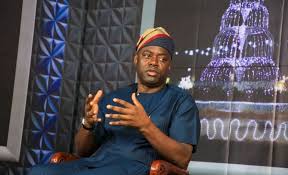
Makinde Only In PDP Because He’s Not Seeking Re-election – Otitoju

Published

on

By

Babajide Kolade-Otitoju, the Director of News at TVC News, recently stated that Oyo State Governor Seyi Makinde would likely have defected from the People’s Democratic Party (PDP) if he was still serving his first term.

Otitoju stated this on Friday on TVC’s ‘Breakfast Show’.

He described the National Convention of the Peoples Democratic Party, PDP, in Ibadan last November as a mere waste of time.

“People must show good judgment at a critical phase. What was the point of having that convention? Two courts told you not to go ahead but you went ahead.

“I may not be a fan of former Senate President Bukola Saraki but if he says something that makes sense, I will be the first to admit it. He made sense when he said let’s go for caretaker. What’s the point of not listening to him?

“Later you will be shouting that the ruling party is behind your crisis, meanwhile you are the architect of your own misfortunes. You created this problem.

“If Makinde were in his first term, he would have fled like the dancing governor because his second term would have been in danger,” Otitoju said.

Continue Reading

Trending