
News
Oyedele Projects N1tn Yearly Revenue Potential From Lagos Property Tax


Chairman of the Presidential Fiscal Policy and Tax Reforms Committee, Taiwo Oyedele, has said that it was possible for Lagos State to generate up to N1tn annually from property tax if the potential in the sector is harnessed.
Oyedele said this on Tuesday in his keynote speech at the Tax Reform Summit 2026 titled, ‘From Reforms to Results: The Lagos Implementation Roadmap, Creating a Tax Environment that Works for All’, convened by the Office of the Special Adviser on Taxation and Revenue and the Lagos State Treasury Office.
While emphasising the need for standardisation, transparency, and harmonisation of tax practices to reduce compliance costs and improve taxpayer confidence at the subnational levels, Oyedele highlighted the potential for tax revenue from properties with just two million taxable properties in Lagos valued at N100m, generating N1tn annually in taxes.
He said, “Part of what you want me to speak to is also on property as a sustainable revenue anchor.
Property taxation is one of the most underutilised yet stable revenue sources available to states and local governments.
When done properly, property tax is difficult to evade. It grows with urban development, so it’s funding itself and aligns payment with visible public services. Every naira we collect, we invest back into the community. As you provide roads, potable water and other infrastructure, the value of those properties goes up. Living standards go up, and in turn, they finance even more development. However, success depends on proper property enumeration, accurate valuation, transparent dealing and predictable enforcement. All of those must work together.”
Speaking further on property tax, Oyedele asserted that data is critical to bringing in property tax: “Data is critical, a credible database of taxpayers, and not just taxpayers. The value of property is part of your tax base. How many people are employed and earning income is part of the size of your tax base, including a reliable valuation for those properties. I’ve said this before, and I’ll say it again: if just two million properties are taxable in Lagos State for property tax purposes, and they are worth an average of N100m, and you tax at just 0.5 per cent of the valuation. That’s N1tn every year invested back into the community. It can only grow.”
The tax man challenged Lagos State to demonstrate leadership as it relates to data and the enactment of the legal framework for tax operations at the subnational level.
He asserted, “One critical area for Lagos State is to demonstrate leadership in the quality of data for fiscal and economic planning, from the property register to fiscalisation and the taxpayer database for individuals. I think that, you know, in Nigeria today, the number of active individual taxpayers is under 10 million for the whole country. I think that’s the number we should have for Lagos State, and I think we need to make that possible. We cannot achieve all of these if we do not pay attention to data.
“So, what’s my call to action? I encourage us to focus on how best to make collaborative implementation work, not whether we want to collaborate. That question is not available anymore. Once we have the will, we will always find a way. To serve as a legal framework for collaboration, the Presidential Fiscal Policy and Tax Reform Committee, working with the Joint Revenue Board, has drafted a model tax harmonisation law for the consideration and enactment by states. So, we are glad to have our distinguished lawmakers in the room. Ekiti State, Zamfara, Anambra and Kano have passed the law already in their respective states, so we are expecting Lagos State to be the next. Revenue collection across agencies within the state also needs to be harmonised into the Lagos State Internal Revenue Service. There is a reason why the revenue agency knows how to collect taxes. When you ask other people to collect revenue in whatever form or shape, you promote inefficiency, which does not help anyone. Reform succeeds when states and local governments collaborate, and we rely on data rather than instinct or discretion.”
Oyedele also emphasised the importance of subnationals to the tax reform, saying, “We (must) leverage technology for transparency so that service delivery is not only visible but also commensurate to taxes. Collective tax reform is not an event. It’s a process, and it requires courage, consistency and work. Everyone was in doubt that courage was there for any reform, like taxes. Now that that has been cleared. In closing, the future of Nigeria’s fiscal sustainability will be decided not only in Abuja but also in states and local governments across the country. Country, if we get some national taxation rights, especially harmonisation of taxes and how we collect them, including property taxation, we create a stable, fair and predictable revenue base that supports growth, equity and inclusive development.”
In his opening remarks at the summit, the Governor of Lagos State, Babajide Sanwo-Olu, also reiterated that the success of Nigeria’s tax reform agenda will depend largely on effective implementation at the state level, with the state positioning itself as a leading sub-national driver of the reforms.
“As the Federal Government advances reforms to harmonise tax laws, strengthen VAT administration, improve coordination across tiers of government, and separate tax policy from administration, Lagos State is positioning itself as a leading sub-national in the implementation of these reforms. Our focus is not merely compliance with new frameworks but effective execution that delivers real value to citizens and businesses. This is why the theme of this summit, ‘The Lagos Implementation Road Map’, is particularly significant. It signals our readiness to move beyond policy conversations to practical implementation. In Lagos, tax reform is being approached as a governance reform, anchored on simplicity, transparency, digital efficiency, and fairness.
“Taxation is ultimately a social contract. People comply willingly when they trust that the government is responsible, accountable, and responsive. In Lagos State, tax revenues are continuously reinvested into transport infrastructure, healthcare delivery, education, security, environmental resilience, and targeted social protection programmes, all in alignment with our THEMES+ Development Agenda. As national reforms place greater emphasis on consumption-based taxation, data integration, and taxpayer protection, Lagos is strengthening its systems to ensure ease of compliance, efficient dispute resolution, and a predictable tax environment that encourages investment and innovation.”
Sanwo-Olu affirmed that the success of Nigeria’s tax reform journey will depend not only on legislation at the federal level but also on effective implementation at the state level.
“Lagos State is ready to play its leadership role by aligning policy with practice, strengthening inter-governmental collaboration, and maintaining continuous engagement with the private sector and professional bodies,” he added.
The Special Adviser to the Lagos State Governor on taxation and revenue, Abdul-Kabir Ogungbo, in his convener’s speech, spotlighted the solution expected from the summit.
He said, “A critical outcome we therefore seek is the establishment of a standardised revenue portal across all Local Governments/LCDAs, seamlessly interfacing with state revenue systems and fully aligned with the national Tax Identification Number framework, using the National Identification Number as the foundational identifier within our ecosystem. For instance, a taxpayer in Ketu and another in Alimosho should be distinctly and uniquely identifiable within a centralised database.
Beyond revenue collection, this capability enables effective governance. When social support or palliatives are to be distributed, the State must be able to accurately identify beneficiaries across all Local Governments/LCDAs through a unified and credible data system. In addition, we aim to establish a transparent and measurable framework for revenue mobilisation, one that clearly defines, on a need-to-know and need-to-use basis, what the State and the Local Governments are able to collect. This clarity strengthens accountability, planning, and performance monitoring across all tiers of government within the State.”
Highlighting the position of Lagos in the economic dynamics of the country, Ogungbo said the state’s annual budgetary estimates should be higher.
“It may interest us all to note that the cumulative budget of Conference 57, combined with the budget of the state government, still revolves around less than N5tn, which is below 10 per cent of the Federal Government’s budget trajectory, despite the scale of responsibility borne by Lagos. This responsibility includes a disproportionate share of Nigeria’s population, economic activity, and infrastructure demand.
Furthermore, when we place the Lagos State budget projection side by side with the Federal Government budget, this reality underscores the urgent need to intensify collective efforts towards achieving a sustainable revenue target for Lagos State in the range of N10tn to N15tn annually if we are to meet our developmental obligations to over 30 million residents. This situation further highlights the urgency of collectively reforming revenue mobilisation to match the scale, complexity, and dynamism of the Lagos economy and its needs.”


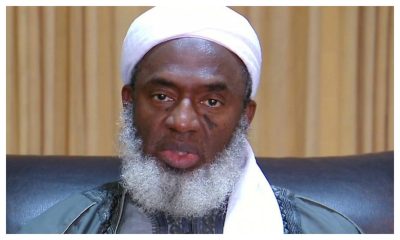
Islamic cleric Sheikh Ahmad Gumi recently defended his past interactions with armed groups, stating he “took the bull by the horns” in 2021 as a necessary step to address Nigeria’s insecurity.
In a post shared on Facebook on Thursday, Gumi said decades of neglect of disadvantaged populations had created deep socio-economic inequalities, leaving many youths vulnerable to manipulation by external forces seeking to destabilise the country.
According to him, the widening gap between the rich and the poor has turned many young people into “ready-made foot soldiers” in cycles of violence that enable the exploitation of Nigeria’s resources.
He also criticised the political class for being largely unresponsive, while noting that the intellectual community is preoccupied with survival struggles.
Reflecting on his past efforts, Gumi said he “took the bull by the horns” in 2021 by attempting to reintegrate violent elements into society rather than allowing them to be further radicalised.
He wrote: “Nigeria for decades has ignored the underprivileged section of its society. There is a significant socio-economic discrepancy, and the society is stratified. This makes our teaming youth ready-made foot soldiers for any foreign interest trying to divide us and rule. To plunder our resources while we are involved in a vicious circle of violence.
”Unfortunately, the political class is unattentive while the intelligentsia is held hostage in the struggle for existence.
“In 2021, I took the bull by the horns in an attempt to bring some of these uncouth elements back to our fold rather than letting them be exploited by the devil.
“I still believe this is the only way out of our predicament. However, it needs the political will and determination to achieve.
“May Allah bring peace back to our nation.”
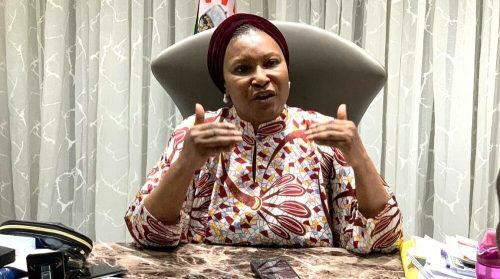
The Federal High Court in Abuja rejected an ex-parte application seeking to bar Senator Ireti Kingibe from participating in the activities of the African Democratic Congress (ADC).
Justice Peter Lifu declined the request from Wuse Ward leaders, ruling that such an order could not be granted without first hearing from the senator.
Instead, the judge ordered the ward leaders said to be loyal to the Minister of the FCT, Nyesom Wike, to put the senator on notice to appear in court to join issues with them on their grievances.
Justice Lifu in a ruling on Thursday held that discretion in such a request for prohibition from party activities and in political matters must be exercised judicially and judiciously.
The judge said justice would be met in the case of the plaintiffs only when the side of the defendant is heard on its merit, along with that of the plaintiffs.
Consequently, the judge ordered that Senator Ireti Kingibe should be served with all court processes by the plaintiffs to enable her become aware of the suit and to prepare her defense.
The judge fixed April 20, 2026, for the plaintiffs and the serving senator to appear before him for hearing of all applications in the matter.
Those who sued the senator in the suit marked FHC/ABJ/ CV/539/2026 are Okezuo Godfrey Anayo and Isaiah Ojonugwa Samuel, on behalf of themselves and ward members as plaintiffs. The senator is the sole defendant.
In their ex-parte application, Kingibe representing the FCT in the Senate was said to have been suspended on March 10, 2026 by her Wuse Ward executives following allegations of anti-party activities and disregard of your cnstitution of the ADC.
In the ex- parte application filed on their behalf by a Senior Advocate of Nigeria, SAN, Kolawole Olowookere, the aggrieved ADC members in Wuse Ward applied for an order of interim injunction restraining Kingibe from parading herself as a member of party, pending the hearing and determination of their motion on notice for interlocutory injunction.
They also asked the judge to restrain the senator from performing any function, attending meetings or performing activities reserved for ADC members or representing the party in any activities.
Besides, the Ward Executive Committee had asked that she be restrained from further interfering with the administration of the ward, ward register and other activities.
The suit was predicated on five grounds among which are that Mrs Kingibe was placed on suspension due to anti-party activities, gross misconduct and confiscation of the ward statutory records.
They argued that the suspension followed due process as enshrined in the ADC constitution and ratified by the two thirds majority of the EXCO members.
They averred that despite the communication of the suspension to Kingibe, she has continued to hold parallel meetings, issue press statements as an ADC member, and using her security details to intimidate the executive committee.
“Her actions constitute flagrant disregard to the internal mechanism of the party,” the plaintiffs stated.
Meanwhile, a lawyer, Abubakar Marshall who claimed to be representing the senator, announced that he had filed a preliminary objection against the suit. He added that it was served on M. S. Garba, who stood for the plaintiffs at Thursday’s proceedings.
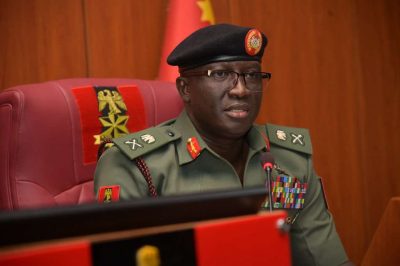
The Chief of Army Staff (COAS), Lieutenant General Waidi Shaibu, visited Jos, Plateau State, on Thursday, April 2, 2026, to lead a high-powered security assessment following recent security breaches.
The visit was aimed at strengthening public confidence and reinforcing ongoing efforts to stabilize affected communities.
Colonel Appolonia Anele, acting Director, Army Public Relations, said in a statement that the visit forms part of ongoing efforts to restore calm and entrench lasting peace across the state.
According to the statement, upon arrival, the COAS was received by the Executive Governor of Plateau State, Caleb Mutfwang, in a clear demonstration of strong civil-military cooperation and a shared commitment to addressing emerging security challenges.
The statement said the COAS received a comprehensive operational briefing from the General Officer Commanding 3 Division and Commander, Joint Task Force Operation ENDURING PEACE, Major General Folusho Oyinlola, who highlighted ongoing operations and proactive measures being implemented in synergy with other security agencies to contain threats, protect lives and property, and stabilise affected communities.
“As part of his engagements, Lieutenant General Shaibu also interacted with community leaders and residents, reassuring them of the unwavering commitment of the Nigerian Army to safeguarding all law-abiding citizens.
He urged residents to remain calm, vigilant and supportive of security agencies by complying with the curfew and cooperating fully with ongoing operations and investigations, while going about their lawful activities.
The chairman of Jos North Local Government Area, Hon. Dachung Bagos, commended the COAS for the timely visit, noting that the presence of the nation’s top military leadership would boost public confidence and reinforce trust in ongoing security efforts.

Gumi Defends Dialogue As Sole Solution To Nigeria’s Insecurity

Court Clears Senator Ireti Kingibe To Remain Active In ADC

COAS Shaibu Hits Jos To Restore Peace, Public Confidence

President Tinubu Appoints New PTDF Executive, Reappoints TCN Head

Simi Welcomes Second Child With Adekunle Gold

United Nigeria Airlines Staff Suspended After Viral Amputee Abuse Video

Pay Your Fare: AIG Cracks Down On Officers Boarding For Free

INEC Removes David Mark, Aregbesola From ADC Leadership Portal

JUST IN: FG Approves Friday 3, Monday 6, as Easter Public Holidays

When 8 million Customers Trust You, Safety Cannot Be an Afterthought
-
 News1 day ago
When 8 million Customers Trust You, Safety Cannot Be an Afterthought
-
 News1 day ago
United Nigeria Airlines Staff Suspended After Viral Amputee Abuse Video
-
 News2 days ago
El-Rufai Back In Detention After Temporary Compassionate Release
-
 News2 days ago
2027: Kwankwaso’s Exit Marks End Of NNPP – Kwankwasiyya Movement
-
 News1 day ago
JUST IN: FG Approves Friday 3, Monday 6, as Easter Public Holidays
-
 News1 day ago
Pay Your Fare: AIG Cracks Down On Officers Boarding For Free
-

 News2 days ago
Lagos CP Withdraws Taskforce From Traffic Duties
-
 News1 day ago
INEC Removes David Mark, Aregbesola From ADC Leadership Portal