
News
We Can No Longer Afford Revenue System Built On Single Commodity — FIRS Boss


Nigeria must design a tax system that is broad-based, technology-enabled and trusted by citizens as the country’s revenue challenge is not merely about the numbers but structure, mindset and execution, Zacch Adedeji, chairman of the Federal Inland Revenue Service (FIRS), has said.
Adedeji, who spoke while delivering the maiden edition of Distinguished Lecture Series of the University of Ilesa, Osun State, on Friday, explained that revenue diversification is no longer a policy preference but a national imperative.
Speaking on the topic Economic Resilience in an Era of Dwindling Revenue, Adedeji said it was important to restructure the productive base of the economy from crude oil and embrace a system with multiple engines of growth in agro-processing, digital economy, creative industry and solid minerals, among others.
A statement by Dare Adekanmbi, Special Adviser (Media) to the FIRS chairman as saying “We have made some gains, but resilience demands more than marginal improvements. It requires structural change, bold reforms and unwavering commitment to fiscal sustainability.”
“The first pillar is the need to generate more revenue from within fairly, efficiently, and sustainably. Nigeria cannot continue to depend on volatile oil revenues or foreign loans to fund development.
“We must build a tax system that reflects the true size and structure of our economy. This requires moving beyond a narrow band of large, formal companies and capturing economic activities in the informal sector, the digital economy, and high-net-worth individuals who remain outside the tax net.
“It also involves closing compliance gaps through stronger enforcement, simplified procedures, and better taxpayer education. With digital innovations like TaxPro Max, e-Tax Clearance Certificate, and tax intelligence, FIRS is already leading the way in automating compliance and making tax administration smarter and more data-driven. Domestic revenue mobilisation is not just a fiscal task, it is a nation-building strategy,” Adedeji said.
He noted that FIRS as the nation’s central tax authority was already helping Nigeria transition from vulnerability to strength.
“FIRS is not just a tax collector. It is a strategic institution at the heart of Nigeria’s fiscal sustainability agenda, and it is undergoing one of the most profound transformations in its history.
“To rebuild public trust in the tax system, we are modernising not just our systems but also our mindset and culture towards greater professionalism, integrity and service orientation.
“FIRS is not waiting for resilience to be handed to it. We are building it from the ground up. Through automation, legal reforms, multi-level collaboration, and institutional renewal, we are laying the fiscal foundation for a Nigeria that can weather storms, adapt to change and grow sustainably,” he added.
Speaking earlier, the Vice-Chancellor of the institution, Professor Taiwo Asaolu, said the two years old institution aims to use the public lecture as a platform for discourse on pressing global and national issues, while seeking sustainable solutions to the nation’s economic challenges.

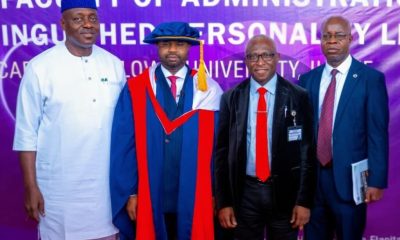
CAPTION L-R, The Orangun of Oke-Ila, Oba Adedokun Abolarinwa; the chairman of the Federal Inland Revenue Service (FIRS) and guest lecturer, Dr Zacch Adedeji; the Vice-Chancellor, University of Ilesha, Professor Taiwo Asaolu, during the maiden edition of the varsity’s distinguished lecture series delivered by Adedeji at the institution, on Friday. Photo credit: Victor Onarinde








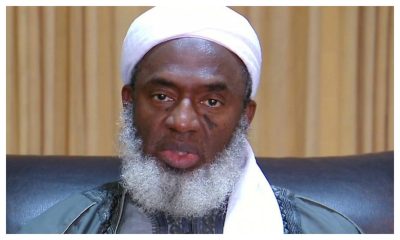
Islamic cleric Sheikh Ahmad Gumi recently defended his past interactions with armed groups, stating he “took the bull by the horns” in 2021 as a necessary step to address Nigeria’s insecurity.
In a post shared on Facebook on Thursday, Gumi said decades of neglect of disadvantaged populations had created deep socio-economic inequalities, leaving many youths vulnerable to manipulation by external forces seeking to destabilise the country.
According to him, the widening gap between the rich and the poor has turned many young people into “ready-made foot soldiers” in cycles of violence that enable the exploitation of Nigeria’s resources.
He also criticised the political class for being largely unresponsive, while noting that the intellectual community is preoccupied with survival struggles.
Reflecting on his past efforts, Gumi said he “took the bull by the horns” in 2021 by attempting to reintegrate violent elements into society rather than allowing them to be further radicalised.
He wrote: “Nigeria for decades has ignored the underprivileged section of its society. There is a significant socio-economic discrepancy, and the society is stratified. This makes our teaming youth ready-made foot soldiers for any foreign interest trying to divide us and rule. To plunder our resources while we are involved in a vicious circle of violence.
”Unfortunately, the political class is unattentive while the intelligentsia is held hostage in the struggle for existence.
“In 2021, I took the bull by the horns in an attempt to bring some of these uncouth elements back to our fold rather than letting them be exploited by the devil.
“I still believe this is the only way out of our predicament. However, it needs the political will and determination to achieve.
“May Allah bring peace back to our nation.”
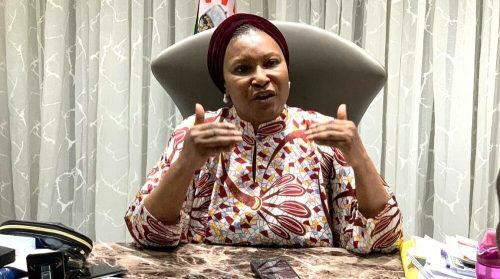
The Federal High Court in Abuja rejected an ex-parte application seeking to bar Senator Ireti Kingibe from participating in the activities of the African Democratic Congress (ADC).
Justice Peter Lifu declined the request from Wuse Ward leaders, ruling that such an order could not be granted without first hearing from the senator.
Instead, the judge ordered the ward leaders said to be loyal to the Minister of the FCT, Nyesom Wike, to put the senator on notice to appear in court to join issues with them on their grievances.
Justice Lifu in a ruling on Thursday held that discretion in such a request for prohibition from party activities and in political matters must be exercised judicially and judiciously.
The judge said justice would be met in the case of the plaintiffs only when the side of the defendant is heard on its merit, along with that of the plaintiffs.
Consequently, the judge ordered that Senator Ireti Kingibe should be served with all court processes by the plaintiffs to enable her become aware of the suit and to prepare her defense.
The judge fixed April 20, 2026, for the plaintiffs and the serving senator to appear before him for hearing of all applications in the matter.
Those who sued the senator in the suit marked FHC/ABJ/ CV/539/2026 are Okezuo Godfrey Anayo and Isaiah Ojonugwa Samuel, on behalf of themselves and ward members as plaintiffs. The senator is the sole defendant.
In their ex-parte application, Kingibe representing the FCT in the Senate was said to have been suspended on March 10, 2026 by her Wuse Ward executives following allegations of anti-party activities and disregard of your cnstitution of the ADC.
In the ex- parte application filed on their behalf by a Senior Advocate of Nigeria, SAN, Kolawole Olowookere, the aggrieved ADC members in Wuse Ward applied for an order of interim injunction restraining Kingibe from parading herself as a member of party, pending the hearing and determination of their motion on notice for interlocutory injunction.
They also asked the judge to restrain the senator from performing any function, attending meetings or performing activities reserved for ADC members or representing the party in any activities.
Besides, the Ward Executive Committee had asked that she be restrained from further interfering with the administration of the ward, ward register and other activities.
The suit was predicated on five grounds among which are that Mrs Kingibe was placed on suspension due to anti-party activities, gross misconduct and confiscation of the ward statutory records.
They argued that the suspension followed due process as enshrined in the ADC constitution and ratified by the two thirds majority of the EXCO members.
They averred that despite the communication of the suspension to Kingibe, she has continued to hold parallel meetings, issue press statements as an ADC member, and using her security details to intimidate the executive committee.
“Her actions constitute flagrant disregard to the internal mechanism of the party,” the plaintiffs stated.
Meanwhile, a lawyer, Abubakar Marshall who claimed to be representing the senator, announced that he had filed a preliminary objection against the suit. He added that it was served on M. S. Garba, who stood for the plaintiffs at Thursday’s proceedings.
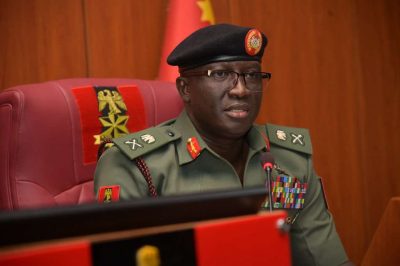
The Chief of Army Staff (COAS), Lieutenant General Waidi Shaibu, visited Jos, Plateau State, on Thursday, April 2, 2026, to lead a high-powered security assessment following recent security breaches.
The visit was aimed at strengthening public confidence and reinforcing ongoing efforts to stabilize affected communities.
Colonel Appolonia Anele, acting Director, Army Public Relations, said in a statement that the visit forms part of ongoing efforts to restore calm and entrench lasting peace across the state.
According to the statement, upon arrival, the COAS was received by the Executive Governor of Plateau State, Caleb Mutfwang, in a clear demonstration of strong civil-military cooperation and a shared commitment to addressing emerging security challenges.
The statement said the COAS received a comprehensive operational briefing from the General Officer Commanding 3 Division and Commander, Joint Task Force Operation ENDURING PEACE, Major General Folusho Oyinlola, who highlighted ongoing operations and proactive measures being implemented in synergy with other security agencies to contain threats, protect lives and property, and stabilise affected communities.
“As part of his engagements, Lieutenant General Shaibu also interacted with community leaders and residents, reassuring them of the unwavering commitment of the Nigerian Army to safeguarding all law-abiding citizens.
He urged residents to remain calm, vigilant and supportive of security agencies by complying with the curfew and cooperating fully with ongoing operations and investigations, while going about their lawful activities.
The chairman of Jos North Local Government Area, Hon. Dachung Bagos, commended the COAS for the timely visit, noting that the presence of the nation’s top military leadership would boost public confidence and reinforce trust in ongoing security efforts.

Gumi Defends Dialogue As Sole Solution To Nigeria’s Insecurity

Court Clears Senator Ireti Kingibe To Remain Active In ADC

COAS Shaibu Hits Jos To Restore Peace, Public Confidence

President Tinubu Appoints New PTDF Executive, Reappoints TCN Head

Simi Welcomes Second Child With Adekunle Gold

United Nigeria Airlines Staff Suspended After Viral Amputee Abuse Video

Pay Your Fare: AIG Cracks Down On Officers Boarding For Free

INEC Removes David Mark, Aregbesola From ADC Leadership Portal

JUST IN: FG Approves Friday 3, Monday 6, as Easter Public Holidays

When 8 million Customers Trust You, Safety Cannot Be an Afterthought
-
 News1 day ago
When 8 million Customers Trust You, Safety Cannot Be an Afterthought
-
 News1 day ago
United Nigeria Airlines Staff Suspended After Viral Amputee Abuse Video
-

 News2 days ago
El-Rufai Back In Detention After Temporary Compassionate Release
-
 News2 days ago
2027: Kwankwaso’s Exit Marks End Of NNPP – Kwankwasiyya Movement
-
 News1 day ago
JUST IN: FG Approves Friday 3, Monday 6, as Easter Public Holidays
-

 News2 days ago
Lagos CP Withdraws Taskforce From Traffic Duties
-
 News1 day ago
Pay Your Fare: AIG Cracks Down On Officers Boarding For Free
-
 News1 day ago
INEC Removes David Mark, Aregbesola From ADC Leadership Portal