
News
Nigeria As A ‘Country Of Particular Concern’ Designation By Donald Trump

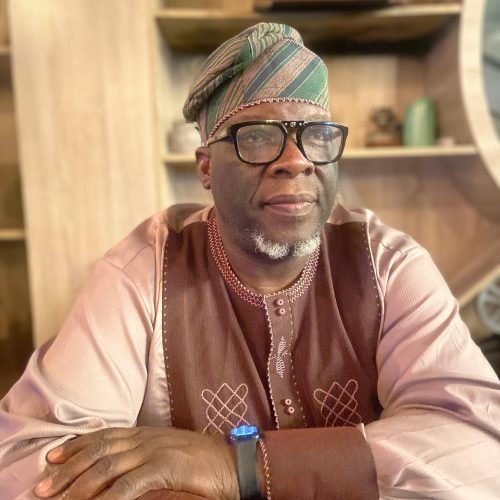
We continue to be gaslighted by the Trump administration that the insecurity pervading Nigeria is a kind of genocide against the Christian community.
Donald Trump wants to stop the killings by sending military forces to the country and we are to believe that this is a kind of love for our nation and people that is yet to be seen.
Yes, there are killings in some parts of the country but the killings are not targeted against the Christians only but a widespread one against other religions and majorly in Muslim dominated areas. The extremists wearing the garbs of Islam and better known as Boko haram, Iswap and others are daily being engaged by the Nigerian forces in many battle fronts.
Donald Trump’s concern raises a lot of suspicions and may not be in best interests of the people of Nigeria as we have seen the roles of America and the West’s interventions in countries like Afghanistan, Libya, Haiti, Ukraine and so and so forth.
These interventions have never bore good fruits and instead have spiralled bigger chaoses in those countries. The problems created by these interventions keep multiplying and God forbid we end experiencing such in West Africa through the intervention of America and the West.
Have we thought of the colossal refugee crisis this will cause to Africa and by extension the entire world? Nigeria as a country may be a nation of particular interest to the administration of Donald Trump simply because of the economic gains the President and his allies will reap as bounties of war and further crisis from the military intervention.
Clearly the resultant refugee influx will not be of particular concern to the American leader and his allies because Nigerians are not Caucasians and will therefore be excluded from being resettled in the West.
A war of attrition by Trump’s soldiers of fortune are not what Nigeria needs in its yearnings for peace, security and stability against Islamic extremists troubling the Northern parts of the country but a grip and deep cut to the oxygen of the terrorist organisations from the friends and allies of the American government.
A new world order is desirable and inevitable for peace to reign in the world as we must relegate to the past where America sees herself as world police.
It’s becoming increasingly clear that American declaration is not rooted in either Christianity or Islam but driven purely by national interest and the strategic calculations ahead of the next presidential election in Nigeria. This is a desperate attempt to overlord and undermine the democratic process in the country.
However, the Nigerian government needs to step up its efforts against insecurity in the country. It needs to challenge the military brass to take action against the terrorists and their allied evil forces rampaging through the country.
It beggars belief that in this age of advanced drone technology, satellite imagery, and precision heat-mapping, our government still hasn’t invested in the necessary infrastructure to decisively root out these so-called terrorists hiding in our forests and beyond. With the level of technological capability available globally,
Nigeria has no excuse for allowing these groups to continue operating freely. It’s high time our leaders matched rhetoric with real strategic action, rather than relying on external narratives and interventions that rarely serve our national interest
Dr George Ogunjimi, Lawyer, Historian, Journalist and World Affairs Commentator writes from Hertfordshire, UK.




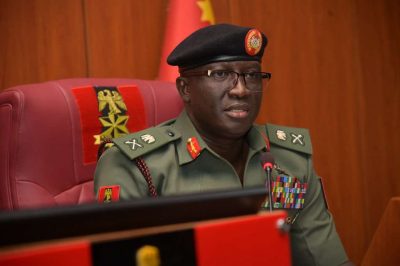
The Chief of Army Staff (COAS), Lieutenant General Waidi Shaibu, visited Jos, Plateau State, on Thursday, April 2, 2026, to lead a high-powered security assessment following recent security breaches.
The visit was aimed at strengthening public confidence and reinforcing ongoing efforts to stabilize affected communities.
Colonel Appolonia Anele, acting Director, Army Public Relations, said in a statement that the visit forms part of ongoing efforts to restore calm and entrench lasting peace across the state.
According to the statement, upon arrival, the COAS was received by the Executive Governor of Plateau State, Caleb Mutfwang, in a clear demonstration of strong civil-military cooperation and a shared commitment to addressing emerging security challenges.
The statement said the COAS received a comprehensive operational briefing from the General Officer Commanding 3 Division and Commander, Joint Task Force Operation ENDURING PEACE, Major General Folusho Oyinlola, who highlighted ongoing operations and proactive measures being implemented in synergy with other security agencies to contain threats, protect lives and property, and stabilise affected communities.
“As part of his engagements, Lieutenant General Shaibu also interacted with community leaders and residents, reassuring them of the unwavering commitment of the Nigerian Army to safeguarding all law-abiding citizens.
He urged residents to remain calm, vigilant and supportive of security agencies by complying with the curfew and cooperating fully with ongoing operations and investigations, while going about their lawful activities.
The chairman of Jos North Local Government Area, Hon. Dachung Bagos, commended the COAS for the timely visit, noting that the presence of the nation’s top military leadership would boost public confidence and reinforce trust in ongoing security efforts.
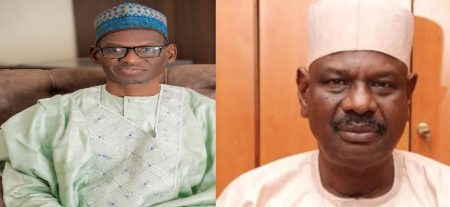
President Bola Ahmed Tinubu has appointed Professor Shu’aibu Shehu Aliyu as the new Executive Secretary of the Petroleum Technology Development Fund (PTDF) and renewed the tenure of Engineer Sule Ahmed Abdulaziz as the Managing Director/CEO of the Transmission Company of Nigeria (TCN).
Announced by Special Adviser Bayo Onanuga, these appointments are effective immediately.
Aliyu is said to replace Ahmed Galadima Aminu, who recently resigned to participate in the 2027 governorship election in Adamawa State.
In a statement by one of the President’s Spokespersons, Bayo Onanuga, on Thursday, April 02, Tinubu also renewed Engineer Sule Ahmed Abdulaziz’s appointment as the Managing Director/Chief Executive Officer of the Transmission Company of Nigeria (TCN) for a second and final term.
These appointments are said to take effect immediately.
The statement reads: “President Bola Ahmed Tinubu, GCFR, has appointed Professor Shu’aibu Shehu Aliyu as the Executive Secretary of the Petroleum Technology Development Fund (PTDF). He replaces Ahmed Galadima Aminu, who recently resigned to participate in the 2027 governorship election in Adamawa State.
“President Tinubu has also renewed Engineer Sule Ahmed Abdulaziz’s appointment as the Managing Director/Chief Executive Officer of the Transmission Company of Nigeria (TCN) for a second and final term.
“Both appointments take immediate effect.
“Professor Aliyu, the new PTDF helmsman, is a distinguished academic and seasoned administrator with extensive experience in research, education, and institutional leadership. His appointment underscores the President’s commitment to strengthening key institutions in the petroleum sector and advancing capacity development for Nigeria’s energy industry.
“The President expects him to leverage his wealth of experience to reposition the PTDF for greater impact in human capital development, innovation, and strategic support for the oil and gas sector in line with national priorities.
“President Tinubu renewed Engineer Abdulaziz’s appointment following a comprehensive assessment of his performance and leadership of the nation’s transmission network.
“Under his stewardship, TCN has recorded notable improvements in grid stability, transmission capacity expansion, and system modernisation, reinforcing its critical role in Nigeria’s electricity value chain.
“Engr. Abdulaziz brings over three decades of experience in the power sector and has also strengthened regional electricity integration through his leadership in the West African Power Pool (WAPP).
“President Tinubu urges both appointees to discharge their responsibilities with diligence, integrity, and a strong sense of national service, in alignment with the Renewed Hope Agenda.”
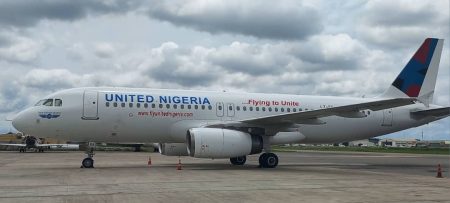
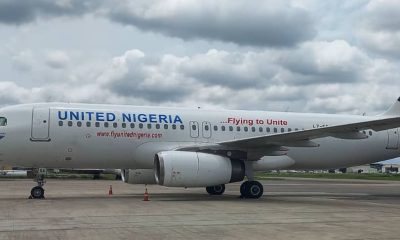
The Management of United Nigeria Airline on Wednesday says it has suspended a female staff member for alleged unprofessional treatment of Ms. Doris Akonanya, an amputee passenger.
The airline, in a statement signed by Chibuike Uloka, its Public Relations Officer, on Wednesday, also said it had commenced investigation into the incident which happened on March 30.
Akonanya, an amputee, had lamented through a viral video that she received subhuman treatment while trying to catch a flight from Abuja to Yenegoa, Bayelsa State.
She said she arrived at the airport early and bought her ticket but was denied the assurance that she needed by a particular staff member who was supposed to process her boarding.
The passenger exonerated the Airline for the dehumanising treatment but demanded that the female staff member involved should be called to order.
The airline, however, condemned the incident and expressed unreserved apology to the lady and members of her family for the ugly incident.
The company said the action did not reflect the ethics, values and vision of the company, noting that the safety, dignity, and well-being of all passengers remained their priority.
“United Nigeria Airlines wishes to confirm receipt of an incident report involving a passenger with reduced mobility, Ms. Doris Akonanya, during the check-in process for Flight UN0526 from Abuja to Yenagoa on March 30.
“The report includes allegations of unprofessional conduct by a particular staff regarding her condition.
“The staff member involved has been suspended and a full investigation commenced,
“We are engaging all relevant parties to establish the facts and will take appropriate action in line with our policies of zero tolerance to any form of misconduct.
“We are particular about passengers with reduced mobility who require additional care and support,” he said.
The airline said it had been in direct contact with the passenger and her family, to whom it had extended apologies, and assured them that their concerns would be addressed.
It said it operated a zero-tolerance policy for any form of misconduct, discrimination, or abuse, and is firmly committed to providing safe, respectful, and accessible travel for all.
“We will continue to strengthen our training, processes, and oversight to prevent a recurrence,” he said.
(NAN)

COAS Shaibu Hits Jos To Restore Peace, Public Confidence

President Tinubu Appoints New PTDF Executive, Reappoints TCN Head

United Nigeria Airlines Staff Suspended After Viral Amputee Abuse Video

Pay Your Fare: AIG Cracks Down On Officers Boarding For Free

INEC Removes David Mark, Aregbesola From ADC Leadership Portal

JUST IN: FG Approves Friday 3, Monday 6, as Easter Public Holidays

When 8 million Customers Trust You, Safety Cannot Be an Afterthought

2027: Kwankwaso’s Exit Marks End Of NNPP – Kwankwasiyya Movement

Lagos CP Withdraws Taskforce From Traffic Duties

El-Rufai Back In Detention After Temporary Compassionate Release
-
 News2 days ago
Tinubu’s $6bn External Borrowing Request Gets Senate Nod
-
 News1 day ago
When 8 million Customers Trust You, Safety Cannot Be an Afterthought
-
 News17 hours ago
United Nigeria Airlines Staff Suspended After Viral Amputee Abuse Video
-
 News1 day ago
El-Rufai Back In Detention After Temporary Compassionate Release
-
 News1 day ago
2027: Kwankwaso’s Exit Marks End Of NNPP – Kwankwasiyya Movement
-
 News20 hours ago
JUST IN: FG Approves Friday 3, Monday 6, as Easter Public Holidays
-
 News2 days ago
Plateau Crisis: Tinubu Summons Gov Mutfwang, Orders Security Crackdown
-
 News17 hours ago
Pay Your Fare: AIG Cracks Down On Officers Boarding For Free