
Breaking News
Fubara Resumes As Rivers State Governor After Tinubu Ends Emergency Rule
“The Governor, His Excellency Siminalayi Fubara, the deputy governor, Her Excellency Ngozi Nma Odu, and members of the Rivers State House of Assembly and the speaker, Martins Amaewhule, will resume work in their offices from 18 September 2025.”

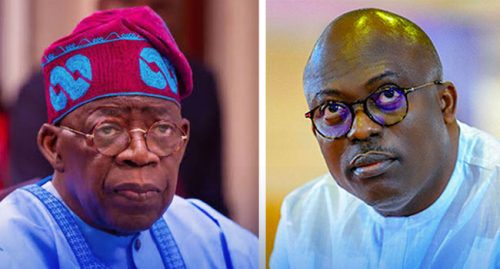
President Bola Tinubu has announced the suspension of emergency rule in Rivers State, which began six months ago.
In a statement released by the Presidency on Wednesday, Tinubu asked Siminalayi Fubara, the suspended governor, to resume work on Thursday, September 18.
The President also asked the Deputy Governor, Ngozi Nma Odu, and members of the Rivers State House of Assembly to resume their duties.
Tinubu had declared a state of emergency in Rivers State six months ago.
Tinubu, while lifting the state of emergency in the oil rich state on Wednesday, said, “It therefore gives me great pleasure to declare that the emergency in Rivers State of Nigeria shall end with effect from midnight today.
“The Governor, His Excellency Siminalayi Fubara, the deputy governor, Her Excellency Ngozi Nma Odu, and members of the Rivers State House of Assembly and the speaker, Martins Amaewhule, will resume work in their offices from 18 September 2025.”
Read the full text here:
STATEMENT BY HIS EXCELLENCY, BOLA AHMED TINUBU, PRESIDENT OF THE FEDERAL REPUBLIC OF NIGERIA, ON THE CESSATION OF THE STATE OF EMERGENCY IN RIVERS STATE
My Fellow countrymen and, in particular, the good people of Rivers State.
I am happy to address you today on the state of emergency declaration in Rivers State.
You will recall that on 18th March, 2025, I proclaimed a state of emergency in the state. In my proclamation address, I highlighted the reasons for the declaration. The summary of it for context is that there was a total paralysis of governance in Rivers State, which had led to the Governor of Rivers State and the House of Assembly being unable to work together. Critical economic assets of the State, including oil pipelines, were being vandalised. The State House of Assembly was crisis-ridden, such that members of the House were divided into two groups. Four members worked with the Governor, while 27 members opposed the Governor. The latter group supported the Speaker. As a result, the Governor could not present any Appropriation Bill to the House, to enable him to access funds to run Rivers State’s affairs. That serious constitutional impasse brought governance in the State to a standstill. Even the Supreme Court, in one of its judgments in a series of cases filed by the Executive and the Legislative arms of Rivers State against each other, held that there was no government in Rivers State. My intervention and that of other well-meaning Nigerians to resolve the conflict proved abortive as both sides stuck rigidly to their positions to the detriment of peace and development of the State.
It therefore became painfully inevitable that to arrest the drift towards anarchy in Rivers State, I was obligated to invoke the powers conferred on me by Section 305 of the 1999 Constitution, as amended, to proclaim the state of emergency. The Offices of the Governor, Deputy Governor, and elected members of the State House of Assembly were suspended for six months in the first instance. The six months expire today, September 17th, 2025.
I thank the National Assembly, which, after critically evaluating the justification for the proclamation, took steps immediately, as required by the Constitution, to approve the declaration in the interest of peace and order in Rivers State. I also thank our traditional rulers and the good people of Rivers State for their support from the date of the declaration of the state of emergency until now.
I am not unaware that there were a few voices of dissent against the proclamation, which led to their instituting over 40 cases in the courts in Abuja, Port Harcourt, and Yenagoa, to invalidate the declaration. That is the way it should be in a democratic setting. Some cases are still pending in the courts as of today. But what needs to be said is that the power to declare a state of emergency is an inbuilt constitutional tool to address situations of actual or threatened breakdown of public order and public safety, which require extraordinary measures to return the State to peace, order and security. Considered objectively, we had reached that situation of total breakdown of public order and public safety in Rivers State, as shown in the judgment of the Supreme Court on the disputes between the Executive and the Legislative arm of Rivers State. It would have been a colossal failure on my part as President not to have made that proclamation.
As a stakeholder in democratic governance, I believe that the need for a harmonious existence and relationship between the executive and the legislature is key to a successful government, whether at the state or national level. The people who voted us into power expect to reap the fruits of democracy. However, that expectation will remain unrealizable in an atmosphere of violence, anarchy, and insecurity borne by misguided political activism and Machiavellian manipulations among the stakeholders.
I am happy today that, from the intelligence available to me, there is a groundswell of a new spirit of understanding, a robust readiness, and potent enthusiasm on the part of all the stakeholders in Rivers State for an immediate return to democratic governance. This is undoubtedly a welcome development for me and a remarkable achievement for us. I therefore do not see why the state of emergency should exist a day longer than the six months I had pronounced at the beginning of it.
It therefore gives me great pleasure to declare that the emergency in Rivers State of Nigeria shall end with effect from midnight today. The Governor, His Excellency Siminalayi Fubara, the deputy governor, Her Excellency Ngozi Nma Odu, and members of the Rivers State House of Assembly and the speaker, Martins Amaewhule, will resume work in their offices from 18 September 2025.
I take this opportunity to remind the Governors and the Houses of Assembly of all the States of our country to continue to appreciate that it is only in an atmosphere of peace, order, and good government that we can deliver the dividends of democracy to our people. I implore all of you to let this realisation drive your actions at all times.
I thank you all.
Long live the Federal Republic of Nigeria.



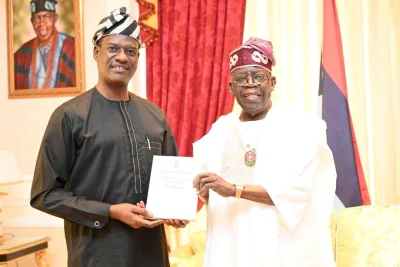
President Bola Ahmed Tinubu has officially nominated Chairman of the Presidential Committee on Fiscal Policy and Tax Reforms, Dr. Taiwo Oyedele as the new Minister of State for Finance.
Oyedele replaces Dr. Doris Anite-Uzoka, who has been redeployed to the Ministry of Budget and National Planning as Minister of State, her third portfolio in the administration.
The President on Tuesday conveyed Oyedele’s nomination to the Senate for confirmation in a letter to the Senate President, Godswill Akpabio, according to a statement by his Special Adviser on Information and Strategy, Bayo Onanuga, on Tuesday.
Until Tinubu nominated him as a minister, Oyedele from Ikaram, Akoko, Ondo State, was the chairman of the Presidential Committee on Fiscal Policy and Tax Reforms, which overhauled Nigeria’s tax system.
The 50-year-old is an economist, accountant, and public policy expert who led the comprehensive overhaul of Nigeria’s tax system through the Presidential Committee on Fiscal Policy and Tax Reforms.
The committee, inaugurated in August 2023, delivered four executive bills that consolidated over 60 taxes into fewer than 10 statutes and introduced significant reforms, including zero income tax for Nigerians earning N800,000 annually or less.
The Tax Reform Acts, which became effective on January 1, 2026, also exempted small businesses with turnover below N50m from company income tax, capital gains tax, and development levy.
Other provisions include a 50 per cent tax deduction for companies hiring new workers for three years, a 50 per cent deduction for wage increases to the lowest-paid employees, and a five-year corporate tax holiday for agricultural enterprises.
Oyedele attended Yaba College of Technology, where he obtained a Higher National Diploma in Accountancy and Finance, before proceeding to Oxford Brookes University for a BSc in Applied Accounting.
He also completed executive education programmes at the London School of Economics, Yale University, the Gordon Institute of Business Science, and the Harvard Kennedy School.
Oyedele spent 22 years at PricewaterhouseCoopers, joining in 2001 and rising to become the Fiscal Policy Partner and Africa Tax Leader before his appointment to head the tax reform committee.
He is currently a professor at Babcock University in Ogun State and a visiting scholar at the Lagos Business School.
As Minister of State for Finance, Oyedele is expected to oversee the implementation of the tax reforms he championed, particularly as the government seeks to improve revenue generation and deepen economic reforms.
Anite-Uzoka, who is being redeployed to the Ministry of Budget and National Planning, previously served as Minister of State for Industry, Trade and Investment before her appointment as Minister of State for Finance.
The Senate is expected to screen and confirm Oyedele’s nomination in the coming weeks, following which he will be sworn in to assume his ministerial duties.
The Finance Ministry, currently led by Wale Edun as substantive minister, oversees fiscal policy, revenue mobilisation, debt management, and economic planning.

Taiwo Adegbodu, one half of the popular Nigerian gospel duo Adegbodu Twins, has passed away.
The tragic news was officially confirmed by his twin brother and musical partner, Kehinde Adegbodu, through a heartfelt post on the duo’s official Facebook handle.
In a heartfelt post, Kehinde conveyed his profound grief over the loss of both his brother and ministry partner.
He wrote: “TAIWO, why will you leave me and your kids without notification?
My heart is bleeding, Lord how do you want me to cope without him?
God why? This is too much for me to bear!!!”
Taiwo and Kehinde Adegbodu were renowned in gospel circles for their spirited worship sessions, twin-stage performances, and dynamic ministrations, which resonated with churches and Christian gatherings across Nigeria.
Their music and live performances earned them a devoted following, particularly in the South-West region.
As of the time of this report, the cause of Taiwo Adegbodu’s death and details of his funeral arrangements have not been disclosed.
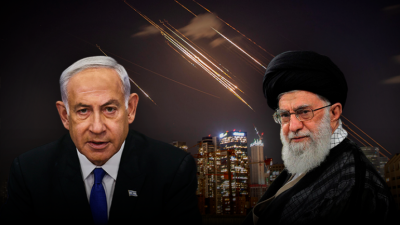
Israeli Prime Minister Benjamin Netanyahu has stated there are growing signs that Iranian Supreme Leader Ayatollah Ali Khamenei has been killed following a massive joint military operation by Israel and the United States.
Netanyahu spoke in a televised address on Saturday evening saying that Israel’s military campaign in Iran will go on “as long as it is needed”, adding that the conflict will bring about “true peace”.
According to the Israeli leader, everyone knows that “such a murderous regime” should not have nuclear weapons that can “continue threatening the entire humankind”.
“We would like to thank the brave Iranian people, that they are being freed of those horrific ties with that regime,” he said.
He said that “Signs show that Khameini is no longer with us,” adding that airstrikes have destroyed Khameini’s compound.
“All indications show this tyrant is no longer with us,” he said.
This contradicts reports from the Iranian foreign ministry earlier claiming that the supreme leader and Iran’s president were both “safe and sound”.
Addressing the Iranian people, who he described as ‘courageous’, Netanyahu said the strikes will help them “unshackle themselves from tyranny”.
He said that Iranian people have a “once in a generation chance” to overthrow the Iranian regime, he said
He urged them to “take to the streets en masse” and “get the job done”.
It is “high time you came together” and “unite for a historic mission”, he said.
“This is an opportunity to do something. Do not sit with your arms crossed, because this moment will come and you will be demanded to go out of the streets in the masses, because you have to complete this work, and you have to bring down and eradicate this regime.”
Netanyahu said they managed to target senior members of Iran’s nuclear operation as well as senior officials.

Plateau Crisis: Tinubu Summons Gov Mutfwang, Orders Security Crackdown

Tinubu’s $6bn External Borrowing Request Gets Senate Nod

When 8 million Customers Trust You, Safety Cannot Be an Afterthought

COURT UPDATE: Nasir El-Rufai Resumes Trial After Mother’s Passing

South African Locals Clash With Nigerians Over Disputed Igbo King Coronation

LIRS EXTENDS DEADLINE FOR FILING OF INDIVIDUAL ANNUAL INCOME TAX RETURNS TO APRIL 14, 2026

Polaris Bank Strengthens Legacy of Excellence with Major Renovation of Historic Faculty Building at University of Ibadan

President Tinubu Donates Salaries To Families Of Fallen Heroes, Injured Soldiers

Political Giants Unite: Ribadu, Tambuwal, and Gov. Sani Attend El-Rufai’s Mother’s Burial

NDLEA Seizes Cocaine Hidden In Stockfish Heads Bound For India
-
 News17 hours ago
LIRS EXTENDS DEADLINE FOR FILING OF INDIVIDUAL ANNUAL INCOME TAX RETURNS TO APRIL 14, 2026
-
 News16 hours ago
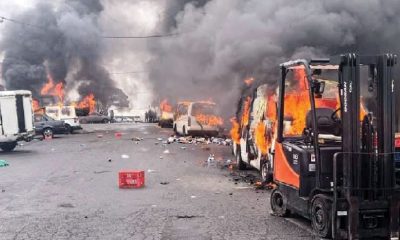
South African Locals Clash With Nigerians Over Disputed Igbo King Coronation
-
 News1 day ago
Polaris Bank Strengthens Legacy of Excellence with Major Renovation of Historic Faculty Building at University of Ibadan
-
 News13 hours ago
COURT UPDATE: Nasir El-Rufai Resumes Trial After Mother’s Passing
-
 News11 hours ago
When 8 million Customers Trust You, Safety Cannot Be an Afterthought
-
 News8 hours ago
Tinubu’s $6bn External Borrowing Request Gets Senate Nod
-
 News4 hours ago
Plateau Crisis: Tinubu Summons Gov Mutfwang, Orders Security Crackdown